Night terrors are a common condition among children, where episodes of panic occur during deep sleep, blending sleep and wakefulness. In these moments, your child may appear awake, yet they are actually deep in sleep. The good news is that this phenomenon is not as frightening as it may seem, but rather a natural reaction. According to the experts at Tatmeen, understanding the causes and mechanisms of night terrors can reduce your confusion and help you handle the situation with calm and safety, restoring peaceful sleep for your child at home.
What Are Night Terrors in Children, and Why Do They Occur in This Way?
Night terrors are episodes that happen during deep sleep, often in the first third of the night. They are classified as sleep disorders under the term "parasomnia." The child may suddenly sit up, scream or cry, sweat, and breathe rapidly, with hands and feet moving nervously. During this moment, they are between sleep and wakefulness, so they may not recognize you or respond to your embrace as expected. Afterward, they calm down and return to sleep, and in the morning, they often don’t remember anything that happened. Night terrors often appear in early childhood and decrease for most children as they grow older, even if it initially seems like they won’t end.
The Difference Between Night Terrors and Nightmares
Nightmares typically occur later, with the child waking up fully aware, seeking reassurance, and remembering the dream. Night terrors, however, happen early in deep sleep, with the child being confused and difficult to calm, and they often forget it afterward. This difference changes your response: with nightmares, we comfort and talk; with night terrors, we focus on safety and calm.
Why Do Night Terrors Occur? Common and Simple Triggers
There is often no single cause. The most likely contributing factor is insufficient or disrupted sleep, as the child enters deep sleep when they are extremely tired. Episodes may also increase with stress, changes in routine, travel, or sleeping in a new place. Sometimes, illness and fever play a role, and sometimes there is a familial factor. It may also be associated with sleepwalking in some children. If you notice heavy snoring, pauses in breathing, or excessive daytime tiredness despite sleep, consider evaluating sleep disorders like obstructive sleep apnea, as they can increase the frequency of episodes in some children.
What to Do During a Night Terror Episode?
You don’t need to "win" over the episode, but rather get through it with minimal disruption. In most cases, it is not recommended to forcibly wake the child, as that may prolong the confusion. Focus on the following:
Stay close and calm, remembering that the episode usually lasts just a few minutes.
Do not shake them or turn on bright lights; use a soft voice: "I’m here."
Gently guide their movement only to prevent falling or injury.
After the episode ends, get them back to sleep without asking too many questions.
For safety, remove obstacles near the bed, secure windows, and close doors that may lead to stairs. If the child moves a lot, avoid high beds as much as possible.
How to Reduce the Frequency of Night Terrors Over Weeks?
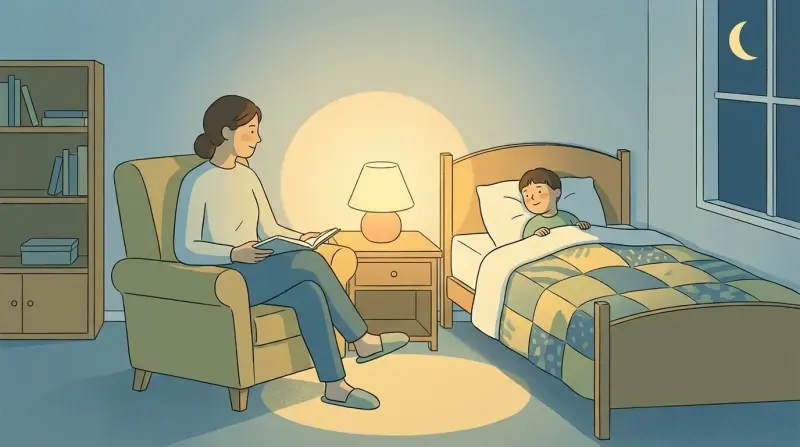
Start with the basics: enough sleep and a consistent schedule. Many children’s episodes improve simply by going to bed earlier on a regular basis. An hour before bedtime, reduce screen time and noise, and replace it with a simple nightly routine, such as reading a short story or practicing slow breathing.
Along the way, remember that daily stress may be hiding behind the sleep episode. At Tatmeen, specialists note that some children may not express their anxiety through words, but it shows up in their sleep and behavior. Scheduling a session with Tatmeen could help you discover what’s stressing your child and build calming tools suited to them at home and school.
Proactive Waking When the Episode Happens at a Consistent Time
If episodes occur almost at the same time, you can try proactive waking: gently waking the child about 15 minutes before the expected time and allowing them to go back to sleep. This method, mentioned in NHS tips, may reduce episodes in some children after about two weeks.
When is it Best to Consult a Specialist?
Seek medical help if the episodes are very frequent, long, or involve injury risks, or if they are accompanied by frequent sleepwalking, excessive daytime sleepiness, snoring, or breathing pauses, or if they begin suddenly at an older age. Also, if the child has gone through a difficult experience or shows clear signs of anxiety, early support can protect them and your family.
And finally..
Night terrors in children are more frightening for parents than they are painful for the child, as the child often doesn’t remember them. Calm, safety, and regular sleep are key to improvement. If you feel that the situation is draining your energy or perpetuating anxiety in your home, you can schedule a session with a specialist via Tatmeen to help you create a realistic plan that suits your child’s age and your family’s routine.
Frequently Asked Questions
Do Night Terrors Indicate a Serious Psychological Problem?
Usually not. Many children go through them for a period and they decrease with regular sleep and reduced exhaustion. However, if they are linked to severe anxiety, occurred after trauma, or are accompanied by clear behavioral changes, consulting a specialist would be reassuring.
Is it Better to Wake My Child During the Episode?
Typically, no. The child is in deep sleep, and waking them may increase confusion and extend the episode. It is better to stay close, protect them from harm, and use a calm voice until the episode passes.
How Long Does the Episode Last, and When Can I Expect it to Stop?
It usually lasts a few minutes and may recur at intervals. Many children improve gradually with age. If it persists regularly for weeks despite consistent sleep patterns or causes injuries, discuss the issue with a doctor.
A writer and researcher specializing in psychiatry, she focuses on mental health and the human emotions we experience but cannot always find the words to name. She writes about us—about humanity and the human experience—and simplifies complex topics to offer content that helps us better understand ourselves and life, ultimately making us feel less alone.
Every Tatmeen article is reviewed by care providers licensed by the Saudi Commission for Health Specialties, so what you read is accurate and trustworthy.
This article builds understanding and does not replace a licensed care provider.
In immediate danger?
If you or someone you know is in danger, call an ambulance on 997 or go to the nearest emergency department.
{"data":{"id":"28d64a2a-f5bb-4094-9cb2-d9bdf1c84df5","slug":"night-terrors-in-children","arTitle":"الفزع الليلي عند الأطفال: فهم سريع وتهدئة آمنة","enTitle":"Night Terrors in Children: Quick Understanding and Safe Calming","thumbnailAltText":"a mother reading a bed-time story to her son to help him overcome his night fears and fall asleep","estimatedReadingTime":5,"likesCount":156,"writer":{"id":"3ab72b74-f26f-4337-9b47-3114b0f90de5","arBio":"كاتبة وباحثة متخصصة في مجال الطب النفسي، تهتم بموضوعات الصحة النفسية وبالمشاعر الإنسانية التي نختبرها ولا نجد دائمًا الكلمات لتسميتها. تكتب عنّا؛ عن الإنسان وتجربته، وتبسّط الموضوعات المعقّدة لتقدّم محتوى يساعدنا على فهم ذواتنا والحياة أكثر، ويجعلنا نشعر بأننا بوحدة أقل.","enBio":"A writer and researcher specializing in psychiatry, she focuses on mental health and the human emotions we experience but cannot always find the words to name. She writes about us—about humanity and the human experience—and simplifies complex topics to offer content that helps us better understand ourselves and life, ultimately making us feel less alone.","user":{"slug":"ayat-alnajar","arFullName":"آيات النجار","enFullName":"Ayat Al-Najjar","publicProfileImageUrl":"https://cdn.tatmeen.sa/public/profile-images/02384455-68fa-40b6-ad05-609fde65cafa/21b9a610dde5dfc6d37af110c23e9c7ab3946be080c281beb000debf4f7d31a6.webp","publicProfileImage96Url":"https://cdn.tatmeen.sa/public/profile-images/02384455-68fa-40b6-ad05-609fde65cafa/21b9a610dde5dfc6d37af110c23e9c7ab3946be080c281beb000debf4f7d31a6-w96.webp","publicProfileImage192Url":"https://cdn.tatmeen.sa/public/profile-images/02384455-68fa-40b6-ad05-609fde65cafa/21b9a610dde5dfc6d37af110c23e9c7ab3946be080c281beb000debf4f7d31a6-w192.webp"}},"arContent":"","enContent":"","productionDocument":{"headings":[],"faqs":[{"question":"Do Night Terrors Indicate a Serious Psychological Problem?","answer":"<p><span style=\"color:#000000\">Usually not. Many children go through them for a period and they decrease with regular sleep and reduced exhaustion. However, if they are linked to severe anxiety, occurred after trauma, or are accompanied by clear behavioral changes, consulting a specialist would be reassuring.</span></p>"},{"question":"Is it Better to Wake My Child During the Episode?","answer":"<p><span style=\"color:#000000\">Typically, no. The child is in deep sleep, and waking them may increase confusion and extend the episode. It is better to stay close, protect them from harm, and use a calm voice until the episode passes.</span></p>"},{"question":"How Long Does the Episode Last, and When Can I Expect it to Stop?","answer":"<p><span style=\"color:#000000\">It usually lasts a few minutes and may recur at intervals. Many children improve gradually with age. If it persists regularly for weeks despite consistent sleep patterns or causes injuries, discuss the issue with a doctor.</span></p>"}],"beforeSourcesHtml":"<p></p>","sources":[],"afterSourcesHtml":"","blocks":[{"type":"html","html":"<p><span style=\"color:#000000\">Night terrors are a common condition among children, where episodes of panic occur during deep sleep, blending sleep and wakefulness. In these moments, your child may appear awake, yet they are actually deep in sleep. The good news is that this phenomenon is not as frightening as it may seem, but rather a natural reaction. According to the experts at Tatmeen, understanding the causes and mechanisms of night terrors can reduce your confusion and help you handle the situation with calm and safety, restoring peaceful sleep for your child at home.</span></p><h3><span style=\"color:#000000\"><strong>What Are Night Terrors in Children, and Why Do They Occur in This Way?</strong></span></h3><p><span style=\"color:#000000\">Night terrors are episodes that happen during deep sleep, often in the first third of the night. They are classified as sleep disorders under the term \"parasomnia.\" The child may suddenly sit up, scream or cry, sweat, and breathe rapidly, with hands and feet moving nervously. During this moment, they are between sleep and wakefulness, so they may not recognize you or respond to your embrace as expected. Afterward, they calm down and return to sleep, and in the morning, they often don’t remember anything that happened. Night terrors often appear in early childhood and decrease for most children as they grow older, even if it initially seems like they won’t end.</span></p><h3><span style=\"color:#000000\"><strong>The Difference Between Night Terrors and Nightmares</strong></span></h3><p><span style=\"color:#000000\">Nightmares typically occur later, with the child waking up fully aware, seeking reassurance, and remembering the dream. Night terrors, however, happen early in deep sleep, with the child being confused and difficult to calm, and they often forget it afterward. This difference changes your response: with nightmares, we comfort and talk; with night terrors, we focus on safety and calm.</span></p><h3><span style=\"color:#000000\"><strong>Why Do Night Terrors Occur? Common and Simple Triggers</strong></span></h3><p><span style=\"color:#000000\">There is often no single cause. The most likely contributing factor is insufficient or disrupted sleep, as the child enters deep sleep when they are extremely tired. Episodes may also increase with stress, changes in routine, travel, or sleeping in a new place. Sometimes, illness and fever play a role, and sometimes there is a familial factor. It may also be associated with sleepwalking in some children. If you notice heavy snoring, pauses in breathing, or excessive daytime tiredness despite sleep, consider evaluating sleep disorders like obstructive sleep apnea, as they can increase the frequency of episodes in some children.</span></p><h3><span style=\"color:#000000\"><strong>What to Do During a Night Terror Episode?</strong></span></h3><p><span style=\"color:#000000\">You don’t need to \"win\" over the episode, but rather get through it with minimal disruption. In most cases, it is not recommended to forcibly wake the child, as that may prolong the confusion. Focus on the following:</span></p><ul><li><p><span style=\"color:#000000\">Stay close and calm, remembering that the episode usually lasts just a few minutes.</span></p></li><li><p><span style=\"color:#000000\">Do not shake them or turn on bright lights; use a soft voice: \"I’m here.\"</span></p></li><li><p><span style=\"color:#000000\">Gently guide their movement only to prevent falling or injury.</span></p></li><li><p><span style=\"color:#000000\">After the episode ends, get them back to sleep without asking too many questions.</span></p></li></ul><p><span style=\"color:#000000\">For safety, remove obstacles near the bed, secure windows, and close doors that may lead to stairs. If the child moves a lot, avoid high beds as much as possible.</span></p><h3><span style=\"color:#000000\"><strong>How to Reduce the Frequency of Night Terrors Over Weeks?</strong></span></h3><p><span style=\"color:#000000\">Start with the basics: enough sleep and a consistent schedule. Many children’s episodes improve simply by going to bed earlier on a regular basis. An hour before bedtime, reduce screen time and noise, and replace it with a simple nightly routine, such as reading a short story or practicing slow breathing.</span></p><p><span style=\"color:#000000\">Along the way, remember that daily stress may be hiding behind the sleep episode. At Tatmeen, specialists note that some children may not express their anxiety through words, but it shows up in their sleep and behavior. <u>Scheduling a session with Tatmeen</u> could help you discover what’s stressing your child and build calming tools suited to them at home and school.</span></p><h3><span style=\"color:#000000\"><strong>Proactive Waking When the Episode Happens at a Consistent Time</strong></span></h3><p><span style=\"color:#000000\">If episodes occur almost at the same time, you can try proactive waking: gently waking the child about 15 minutes before the expected time and allowing them to go back to sleep. This method, mentioned in </span><a href=\"https://www.nhs.uk/conditions/night-terrors/\" target=\"_blank\" rel=\"nofollow noopener noreferrer\"><span style=\"color:#1155cc\"><u>NHS tips</u></span></a><span style=\"color:#000000\">, may reduce episodes in some children after about two weeks.</span></p><h3><span style=\"color:#000000\"><strong>When is it Best to Consult a Specialist?</strong></span></h3><p><span style=\"color:#000000\">Seek medical help if the episodes are very frequent, long, or involve injury risks, or if they are accompanied by frequent sleepwalking, excessive daytime sleepiness, snoring, or breathing pauses, or if they begin suddenly at an older age. Also, if the child has gone through a difficult experience or shows clear signs of anxiety, early support can protect them and your family.</span></p><h3><span style=\"color:#000000\"><strong>And finally..</strong></span></h3><p><span style=\"color:#000000\">Night terrors in children are more frightening for parents than they are painful for the child, as the child often doesn’t remember them. Calm, safety, and regular sleep are key to improvement. If you feel that the situation is draining your energy or perpetuating anxiety in your home, you can <u>schedule a session with a specialist via Tatmeen</u> to help you create a realistic plan that suits your child’s age and your family’s routine.</span></p>"}],"inlineCtaSignatures":[],"_experienceAliases":{"v":1,"fields":["html","bodyHtml"],"faqs":[0,1,2]}},"createdAt":"2026-05-27T21:00:00.000Z","updatedAt":"2026-06-04T19:52:06.248Z","disorderGroups":[{"id":"9fbda432-3713-400a-987b-3d56754a113e","slug":"children-and-adolescents","arName":"الأطفال والمراهقين","enName":"Children & Adolescents"},{"id":"1e82772d-a1a7-4d29-b475-be9d6b67ae02","slug":"common-mental-issues","arName":"اضطرابات نفسية شائعة","enName":"Common Mental Issues"}],"reviewer":{"arFullName":"فريق تطمين","enFullName":"Tatmeen team","slug":"tatmeen-team","kind":"organization"},"productionArticle":true,"promotionAllowed":false,"preparedCover":{"src":"https://cdn.tatmeen.sa/public/article-lcp/article-lcp-v2/sha256-b1e5c03d9dcf0ad003171156b232dfbb826bee1073002528d4aff727c1d7faa2/800-be09aa6c6c12b6897dd0836f185067375bf651e1926007089eb5616706faf670.avif","fallback":"https://cdn.tatmeen.sa/public/article-lcp/article-lcp-v2/sha256-b1e5c03d9dcf0ad003171156b232dfbb826bee1073002528d4aff727c1d7faa2/800-8f27917f2ca0206939fcf7a5dcb6484adfa584855588df70ba05f1bf4059ffcb.webp","directUrl":"https://cdn.tatmeen.sa/blog-cover/Tatmeen-1779978368257.webp","isGolden":true,"avifSrcset":"https://cdn.tatmeen.sa/public/article-lcp/article-lcp-v2/sha256-b1e5c03d9dcf0ad003171156b232dfbb826bee1073002528d4aff727c1d7faa2/400-d9314dac5bf4ca2cb5d6de65c237d79463306594bd853622d46ce6c85a8d5e2d.avif 400w, https://cdn.tatmeen.sa/public/article-lcp/article-lcp-v2/sha256-b1e5c03d9dcf0ad003171156b232dfbb826bee1073002528d4aff727c1d7faa2/640-39155d7e6c72eda0b2cd3f0220f21bb54bde4b153e6922df89956da068d1367a.avif 640w, https://cdn.tatmeen.sa/public/article-lcp/article-lcp-v2/sha256-b1e5c03d9dcf0ad003171156b232dfbb826bee1073002528d4aff727c1d7faa2/800-be09aa6c6c12b6897dd0836f185067375bf651e1926007089eb5616706faf670.avif 800w, https://cdn.tatmeen.sa/public/article-lcp/article-lcp-v2/sha256-b1e5c03d9dcf0ad003171156b232dfbb826bee1073002528d4aff727c1d7faa2/1200-aa5cec28c75d0d9abddc78f26802403adbd58650aad842a2d2a401d2ade68cb4.avif 1200w","webpSrcset":"https://cdn.tatmeen.sa/public/article-lcp/article-lcp-v2/sha256-b1e5c03d9dcf0ad003171156b232dfbb826bee1073002528d4aff727c1d7faa2/400-d0c852f0f0fa78cca3b4e53d78cc49c890c9415a62b3478e878786bde8b2399d.webp 400w, https://cdn.tatmeen.sa/public/article-lcp/article-lcp-v2/sha256-b1e5c03d9dcf0ad003171156b232dfbb826bee1073002528d4aff727c1d7faa2/640-387f21906392d2e6d5befb1c595c2619b4e3f6ae6f827480a8fd0638d6f3fdd8.webp 640w, https://cdn.tatmeen.sa/public/article-lcp/article-lcp-v2/sha256-b1e5c03d9dcf0ad003171156b232dfbb826bee1073002528d4aff727c1d7faa2/800-8f27917f2ca0206939fcf7a5dcb6484adfa584855588df70ba05f1bf4059ffcb.webp 800w, https://cdn.tatmeen.sa/public/article-lcp/article-lcp-v2/sha256-b1e5c03d9dcf0ad003171156b232dfbb826bee1073002528d4aff727c1d7faa2/1200-a8fd849c8608ff5401032a5d06ebbbacbe9fbaadccad0d0a9aafd398d9fe0fe7.webp 1200w","phoneAvifSrcset":"https://cdn.tatmeen.sa/public/article-lcp/article-lcp-v2/sha256-b1e5c03d9dcf0ad003171156b232dfbb826bee1073002528d4aff727c1d7faa2/400-d9314dac5bf4ca2cb5d6de65c237d79463306594bd853622d46ce6c85a8d5e2d.avif 400w, https://cdn.tatmeen.sa/public/article-lcp/article-lcp-v2/sha256-b1e5c03d9dcf0ad003171156b232dfbb826bee1073002528d4aff727c1d7faa2/640-39155d7e6c72eda0b2cd3f0220f21bb54bde4b153e6922df89956da068d1367a.avif 640w, https://cdn.tatmeen.sa/public/article-lcp/article-lcp-v2/sha256-b1e5c03d9dcf0ad003171156b232dfbb826bee1073002528d4aff727c1d7faa2/800-be09aa6c6c12b6897dd0836f185067375bf651e1926007089eb5616706faf670.avif 800w","phoneWebpSrcset":"https://cdn.tatmeen.sa/public/article-lcp/article-lcp-v2/sha256-b1e5c03d9dcf0ad003171156b232dfbb826bee1073002528d4aff727c1d7faa2/400-d0c852f0f0fa78cca3b4e53d78cc49c890c9415a62b3478e878786bde8b2399d.webp 400w, https://cdn.tatmeen.sa/public/article-lcp/article-lcp-v2/sha256-b1e5c03d9dcf0ad003171156b232dfbb826bee1073002528d4aff727c1d7faa2/640-387f21906392d2e6d5befb1c595c2619b4e3f6ae6f827480a8fd0638d6f3fdd8.webp 640w, https://cdn.tatmeen.sa/public/article-lcp/article-lcp-v2/sha256-b1e5c03d9dcf0ad003171156b232dfbb826bee1073002528d4aff727c1d7faa2/800-8f27917f2ca0206939fcf7a5dcb6484adfa584855588df70ba05f1bf4059ffcb.webp 800w","width":800,"height":447},"previewTaxonomy":{"groups":[{"id":"9fbda432-3713-400a-987b-3d56754a113e","slug":"children-and-adolescents","arName":"الأطفال والمراهقين","enName":"Children & Adolescents"},{"id":"1e82772d-a1a7-4d29-b475-be9d6b67ae02","slug":"common-mental-issues","arName":"اضطرابات نفسية شائعة","enName":"Common Mental Issues"}],"topics":[{"id":"aa57ccb9-d146-4629-8aa1-8b6d36c4c9ee","slug":"parenting-skills","arName":"تربية الأطفال","enName":"Parenting Skills","groupSlug":"children-and-adolescents","href":"/blog/category/children-and-adolescents/parenting-skills/"},{"id":"4c10d5ae-1b63-4868-901f-df8e1ce7f0d7","slug":"sleep-disorders","arName":"اضطرابات النوم","enName":"Sleep Disorders","groupSlug":"common-mental-issues","href":"/blog/category/common-mental-issues/sleep-disorders/"}],"tags":[{"id":"df684f2f-95c6-4603-afba-9a1061c94a62","slug":"sleep-disorders","arName":"اضطرابات النوم","enName":"Sleep Disorders"},{"id":"52aa8812-914e-495a-9ed5-13bec6c39a93","slug":"parents-children","arName":"الآباء والأطفال","enName":"Parents & Children"},{"id":"a7a7391b-bc2c-41de-91b1-7d701f1675b7","slug":"supporting-others","arName":"دعم شخص آخر","enName":"Supporting Someone Else"}]},"previewProviderRecommendations":[],"previewCareProviders":[],"previewDownload":null,"previewRelatedArticles":[{"id":"43ca67b8-3404-4a88-b3df-8e041a8d51f3","slug":"how-sleep-disorders-affect-mental-physical-health","route":"/blog/how-sleep-disorders-affect-mental-physical-health/","title":{"ar":"كيف تؤثر اضطرابات النوم على صحتك النفسية والجسدية؟","en":"How Do Sleep Disorders Affect Your Mental and Physical Health?"},"image":"https://cdn.tatmeen.sa/public/article-lcp/article-lcp-v2/sha256-5bfc6df6d74c8c43b13c2b96eae01b0fa656501c43bbcaea6702908917c41be5/800-a993176d5efb48d95cca6548e901cd03715c9d45d79acb5a2ab5e83b64e27748.webp","directImageFallback":"https://cdn.tatmeen.sa/blog-cover/Tatmeen-1775749970066.webp","arThumbnailAltText":"كيف تؤثر اضطرابات النوم على الصحة النفسية والجسدية","thumbnailAltText":"كيف تؤثر اضطرابات النوم على الصحة النفسية والجسدية","topic":{"label":{"ar":"اضطرابات نفسية شائعة","en":"Common Mental Issues"}},"readingTimeMinutes":5},{"id":"f1e2a888-ef81-49ad-a75f-d7d99c79e14a","slug":"Insomnia-and-its-relationship-to-sleep-deprivation","route":"/blog/Insomnia-and-its-relationship-to-sleep-deprivation/","title":{"ar":"الأرق – أسباب وأعراض وعلاج والعلاقة بينه وبين قلة النوم","en":"Insomnia: Causes, Symptoms, Treatment, and Sleep Deprivation"},"image":"https://cdn.tatmeen.sa/public/article-lcp/article-lcp-v2/sha256-043b35866b43d3928fa6e43100f41cde2c868718137f5408d324e584458dc8ed/600-d5d8bc7e4763c0198cc38bd8f4743d6982d753155328b0a65dcbf399f86050e7.webp","directImageFallback":"https://cdn.tatmeen.sa/blog-cover/1704816568714-Tatmeen-img-333","arThumbnailAltText":"Person lies in bed beside a digital clock displaying 02:32","thumbnailAltText":"Person lies in bed beside a digital clock displaying 02:32","topic":{"label":{"ar":"اضطرابات نفسية شائعة","en":"Common Mental Issues"}},"readingTimeMinutes":5},{"id":"b37fc06e-4901-4a15-a941-6066b6540a7b","slug":"Is-sleep-paralysis-a-mental-disorder","route":"/blog/Is-sleep-paralysis-a-mental-disorder/","title":{"ar":"هل شلل النوم مرض نفسي؟","en":"Is Sleep Paralysis a Mental Disorder?"},"image":"https://cdn.tatmeen.sa/public/article-lcp/article-lcp-v2/sha256-765495c4ec65678b00f19b55ed8b669efb3347b2e88a3d48439c0e4c03f8add2/600-cb748175e5cf2c38e7186fc7f1ea0c6006b2e144e26d0a093692cf9172746c53.webp","directImageFallback":"https://cdn.tatmeen.sa/blog-cover/1704733815220-Tatmeen-img-550","arThumbnailAltText":"Stylized person curled on their side with their head on a pillow","thumbnailAltText":"Stylized person curled on their side with their head on a pillow","topic":{"label":{"ar":"اضطرابات نفسية شائعة","en":"Common Mental Issues"}},"readingTimeMinutes":5},{"id":"c80a1f7c-0e3f-4065-ad9a-fe88722d1911","slug":"ramadan-sleep-disruption-body-clock","route":"/blog/ramadan-sleep-disruption-body-clock/","title":{"ar":" اضطراب النوم في رمضان وإعادة ضبط الساعة البيولوجية","en":"Sleep Disruption in Ramadan and Resetting Your Body Clock"},"image":"https://cdn.tatmeen.sa/public/article-lcp/article-lcp-v2/sha256-ea7a146f3630c56b4381ea61e5baee125730ad9f0abcc5fb6348c9a84ab550ce/800-4c6abb85d068c2a70c9406e934a7edf36cd46997d38eee560207b430bc739a3b.webp","directImageFallback":"https://cdn.tatmeen.sa/blog-cover/Tatmeen-1780666452636.webp","arThumbnailAltText":"a bedroom view of a mosque and distant ramadan hilal ","thumbnailAltText":"a bedroom view of a mosque and distant ramadan hilal ","topic":{"label":{"ar":"اضطرابات نفسية شائعة","en":"Common Mental Issues"}},"readingTimeMinutes":5}],"previewRelatedReadStates":{}},"locale":"en","device":"desktop","path":"/en/blog/night-terrors-in-children/","readingControls":false,"config":{"public":{"BUCKET_URL":"https://cdn.tatmeen.sa/","APP_BASE_URL":"https://tatmeen.sa","intercomAppId":"ppcnu9e3"}}}