

Rewriting History: How the Narcissist Distorts Memories and Flips Roles

Reviewed by: Abdulrahman Alzahrani
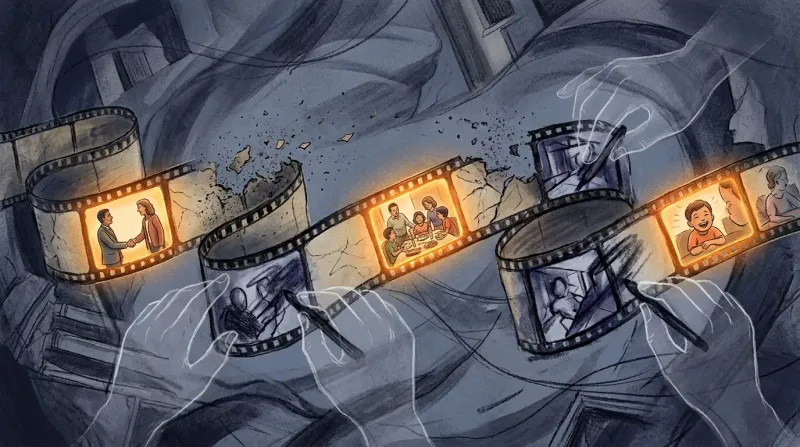
From the very first moment, rewriting history seems like a small trick in conversation—until you discover that the facts have changed before your eyes. You remember something one way, and they insist on the opposite. In this article, Tatmeen offers you a practical understanding of this painful dynamic, with clear tools to reclaim your inner story and protect your peace.
What does “rewriting history” mean in relationships?
The term is linked to what’s known as psychological manipulation or gaslighting: when someone pushes you to doubt your memory and intuition, turning truth into something negotiable. A Cleveland Clinic guide explains that the signs include denying mistakes, accusing you of exaggeration, and persistent questioning of your perception of events—along with practical tips for a calm response.
The difference between normal critique and manipulation
Constructive criticism talks about behavior and proposes a specific improvement; manipulation targets you: your memory is wrong, you’re too sensitive. The essential difference is that criticism leaves you with a plan, while manipulation leaves you doubting yourself.
Why does the narcissist resort to distorting memories?
In narcissistic envy, your success is read as a threat to their self-image. Rewriting history gives them an advantage: they evade responsibility, redistribute blame, and cement a narrative that serves their social or emotional leverage. It’s an attempt to keep the center of gravity in their hands—even at the cost of eroding your self-trust.
Your memory isn’t a tape recorder… how does the fogging happen?
Human memory is constructive, not photographic; it is reshaped with every recall, which makes it susceptible to suggestion, context shifts, and psychological pressure. A recent review highlights the neural and cognitive mechanisms that produce false or distorted memories, and explains how suggestion and repeated narratives can reshape what we remember. Understanding this nature doesn’t mean accepting manipulation; it explains why the argument feels endless.
How do you reclaim your story and protect yourself?
Name what’s happening… and restore your trust
Try a clear label: This is memory manipulation, or This is an attempt to rewrite history. Naming it puts you back in the driver’s seat and softens the impact of self-doubt.Write to anchor the narrative
Record the facts as soon as they occur: date, time, key phrases, witnesses, and relevant messages. The goal isn’t to win a case, but to protect your inner coherence when you revisit and verify.Short, confident boundaries
Use boundary phrases like: I won’t continue this conversation if my memory is questioned this way, or We can discuss solutions, not deny the facts. The shorter the sentence, the more effective it is.Don’t feed the spiral
Long debates open doors to endless alternative stories. Return to documented facts, give yourself a break, and change the channel of communication (for example, from a charged call to a concise message).Use trusted witnesses without turning it into sides
If possible, bring in a shared memory from a safe person. Not to embarrass the other party, but to set a realistic baseline that eases your internal confusion.Care for your nervous system
Repeated manipulation keeps you on alert. Try grounding techniques, deep breathing, and short walks. Calming the body restores your ability to think clearly and make wise decisions.A safe therapeutic space
Midway through, you may wonder: Am I the one imagining things? This is where booking a session with a professional can help. According to experts at Tatmeen, a first session isn’t a long-term commitment so much as a map: it identifies manipulation patterns in your relationship and works with you to set boundary strategies that fit your culture and life rhythm.
Common scenarios… and calm alternatives
You’re remembering wrong: Reply calmly: We may disagree, and these are my notes written at the time. If you’d like, we can continue later.
You’re the one who hurt me (role reversal): I respect your feelings, and I need us to acknowledge what happened first before we talk about our emotions.
You’re too sensitive: My feelings matter, and we’ll discuss the idea without labeling.
Every time you choose a brief, clear response, you cut off the spiral’s oxygen and revive your confidence.
And finally…
Rewriting history steals your certainty—but you are not without tools. By naming what’s happening, documenting the facts, and setting compassionate boundaries, you reclaim your inner voice. And if you need a safe space and a practical plan, on Tatmeen you can start a confidential conversation with a professional within minutes—book your session now to bring your story back to you, step by step.
Frequently Asked Questions
Do narcissists truly believe their version, or are they deliberately lying?
It can be both; sometimes they’re convinced by a narrative that protects their self-image, and sometimes they promote a version that serves them. What matters is the impact on you. Set boundaries, document the facts, and seek professional support to anchor reality within yourself.
How do I document without triggering a bigger conflict?
Write private notes after each incident: time, place, key statements. Keep emails and chats, and make a calm summary when needed. Documentation is for you first, not to indict the other person, and it’s used wisely only when necessary.
Does direct confrontation fix memory distortion?
Confrontation can feed denial and attack. It’s better to use short boundary language, reduce debate, and ask a professional to help craft a communication strategy. When your nerves settle and your narrative is anchored, decisions become clearer and safer.
What is your impression of this article?
Reviewed by

Abdulrahman Alzahrani
Start your journey to better mental health with our care providers


One step for you, start now
Download Tatmeen and find the care provider that’s right for you easly.
Download Tatmeen and join over 10,000 successful recovery stories

Related articles

We haven’t gotten to share any of our blog posts yet
Join Tatmeen's newsletter
Subscribe to our newsletter to get the latest articles and news