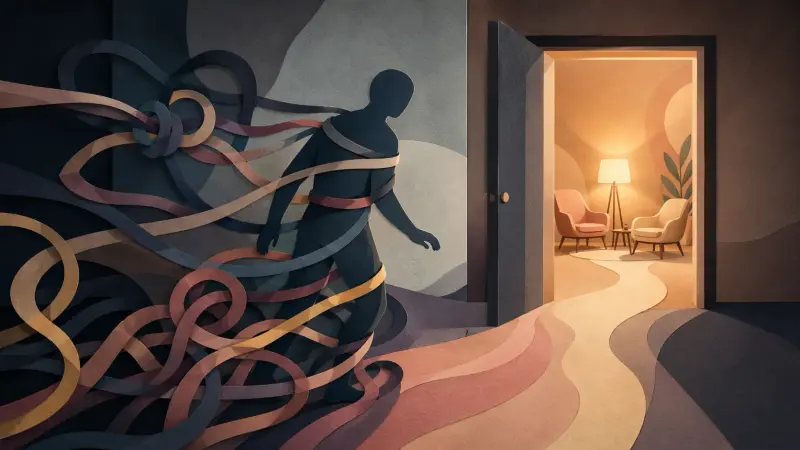
In these economic circumstances, money anxiety can appear suddenly—even for people who are used to managing their affairs calmly—because the world puts our sense of safety through a daily test. When bills and obligations pile up and the news keeps coming, the mind can enter a state of constant watchfulness, as if it’s scanning for an approaching danger. In this space, Tatmeen tries to remind you that you are not alone, and that understanding what’s happening inside you opens a door to balance: easing tension, organizing your thoughts, and taking small steps that protect your mental health.
Why Does Money Anxiety Feel Heavier During Crises?
In crises, it’s not only the numbers that change—it’s the feeling of stability. Uncertainty makes the brain read the future as a set of threatening possibilities, raising anxiety even before anything actually happens. You may notice the same questions repeating in your head: What if income decreases? What if expenses double? This isn’t weakness; it’s a natural human response when the ground under your feet feels unsteady.
Money anxiety feels heavier because money is tied to responsibility, dignity, and fulfilling obligations. In the Saudi context, household needs and extended-family responsibilities can overlap with the pressure to always appear composed—so silence itself becomes an extra burden.
How Does Financial Anxiety Affect Your Body and Mood?
Ongoing pressure shows up in the body before it shows up in words. It may come as insomnia, muscle tension, distraction, or irritability, and eating may shift between loss of appetite and emotional eating. Over time, you may feel your motivation drop and that even simple tasks require double the energy.
The World Health Organization notes that stress can increase with excessive news consumption, and that regular daily movement and reducing exposure to anxiety-provoking triggers help lower the intensity of the stress response. The idea is not to ignore reality, but to protect your nervous system from constant alarm so you can think clearly.
Realistic Planning vs. Anxious Rumination
Realistic planning calms you because it leads to a decision and a step. Anxious rumination is repeating the same scenarios with a sense of helplessness—and it often intensifies before sleep. Ask yourself: Will this thought lead me to a specific action now, or is it just spinning?
If it’s spinning, try setting time boundaries: a short window to review obligations and organize priorities, then “close the notebook” mentally and return to the present. Boundaries don’t cancel responsibility; they prevent anxiety from swallowing the day.
It may also help to divide anxiety into two circles: what you can influence now, and what you can’t. The first needs a simple plan; the second needs acceptance and reduced exposure to triggers. And when your mind returns to the second circle, remind it gently: I’ll come back to this during review time.
Psychological Skills That Restore Your Sense of Control
When money anxiety rises, the mind needs simple proof that you can still choose. According to specialists at Tatmeen, pressure often eases when we move from the question “What if?” to the question “What is the next step I can take today?” These skills won’t end the crisis, but they protect your psychological stability within it:
Name the anxiety instead of merging with it: This is financial anxiety, not a confirmed fact.
Calm the body: slow breathing with a longer exhale a few times.
Choose one action for today, then stop—rather than carrying everything at once.
Reduce random news scrolling and set a short time only for what you truly need.
Replace self-blame with compassionate realism: I’m under pressure, and it’s normal to feel tired.
We also suggest repeatedly helpful tools like movement, sleep as much as possible, connecting with a trusted person, and reducing habits that increase tension. Support here isn’t to cancel responsibility—it’s to reduce the isolation that amplifies fear. It’s important to notice that financial pressure may come with sadness and reduced enjoyment and motivation. That doesn’t necessarily mean a specific diagnosis, but it is a signal worth caring for.
How Do You Calm a Small “Collapse Moment” Without Escaping Reality?
There are moments that feel harsh: a payment deadline approaching, an unexpected call, or a family discussion that escalates. In that minute, start with the body, not the inner debate: relax your jaw and shoulders, ground yourself in what you can see around you, then make just one decision right now. After the wave settles, write down what triggered it: poor sleep, a late hour, or a certain kind of conversation. Knowing your triggers gives you a chance to prevent, instead of being surprised.
Protecting Psychological Stability at Home and at Work
Financial anxiety can make us more sensitive in relationships, so words may feel like accusations. Try shifting the conversation from Who is at fault? to What do we need right now? Gently clarifying boundaries reduces friction: what you can commit to, what needs postponing, and what can be shared.
At work, break tasks into small units and acknowledge completing them, so the day doesn’t become a mountain. And remember: seeking psychological guidance when needed isn’t failure—it’s a way to protect your health and productivity. Small moments of meaning—like a focused prayer, a walk, or quiet time with family—also return to your nervous system the sense that life is not only a crisis.
Finally…
You may not be able to control the path of the economy, but you can choose how you care for yourself within it: calming the body, organizing your thinking, and moving closer to support instead of isolation. If you feel money anxiety is lingering and draining your sleep and relationships, booking a session with a specialist through Tatmeen may give you tools that fit your circumstances.
Frequently Asked Questions
Is money anxiety normal, or a sign of something bigger?
Money anxiety is normal, especially with uncertainty. It becomes heavier when it lasts for weeks and affects sleep, focus, and relationships. In that case, focus on seeking support and tools for calming and organizing, rather than getting stuck labeling yourself or blaming yourself.
How do I stop overthinking before sleep?
Set an earlier time to unload thoughts onto paper, then close the topic with a clear sentence like: I’ll look at this tomorrow. Before sleep, focus on a long exhale, reduce news and stimulants, and make your room a space for rest—not for self-accounting.
What do I do if financial pressure causes tension with family?
Start by naming the feeling instead of accusations: I’m stressed and I need cooperation. Agree on short-term priorities, share responsibilities as much as possible, and set a weekly time to review matters calmly with mutual respect. If the conversation becomes heated, take a short break, then return.
A writer and researcher specializing in psychiatry, she focuses on mental health and the human emotions we experience but cannot always find the words to name. She writes about us—about humanity and the human experience—and simplifies complex topics to offer content that helps us better understand ourselves and life, ultimately making us feel less alone.
Every Tatmeen article is reviewed by care providers licensed by the Saudi Commission for Health Specialties, so what you read is accurate and trustworthy.
This article builds understanding and does not replace a licensed care provider.
Need someone to talk to?
Tatmeen's licensed care providers are available around the clock, and the app's urgent consultation connects you with one within minutes.
Download Tatmeen to explore care providers and booking options.
Smart matchingFour quick questions suggest the right care provider
Urgent consultationTalk to an available care provider within minutes
Free psychological measuresMore than 20 tests to understand how you are doing
Scan to download
{"data":{"id":"8d377bd5-96fc-4f07-afc8-2055f5d08884","slug":"money-anxiety-mental-stability","arTitle":"قلق المال وحماية الاستقرار النفسي في زمن الأزمات الاقتصادية","enTitle":"Money Anxiety and Protecting Psychological Stability in Times of Economic Crisis","thumbnailAltText":"Stressed person at desk with bills, dark cloud overhead symbolizing financial anxiety.","estimatedReadingTime":5,"likesCount":187,"writer":{"id":"3ab72b74-f26f-4337-9b47-3114b0f90de5","arBio":"كاتبة وباحثة متخصصة في مجال الطب النفسي، تهتم بموضوعات الصحة النفسية وبالمشاعر الإنسانية التي نختبرها ولا نجد دائمًا الكلمات لتسميتها. تكتب عنّا؛ عن الإنسان وتجربته، وتبسّط الموضوعات المعقّدة لتقدّم محتوى يساعدنا على فهم ذواتنا والحياة أكثر، ويجعلنا نشعر بأننا بوحدة أقل.","enBio":"A writer and researcher specializing in psychiatry, she focuses on mental health and the human emotions we experience but cannot always find the words to name. She writes about us—about humanity and the human experience—and simplifies complex topics to offer content that helps us better understand ourselves and life, ultimately making us feel less alone.","user":{"slug":"ayat-alnajar","arFullName":"آيات النجار","enFullName":"Ayat Al-Najjar","publicProfileImageUrl":"https://cdn.tatmeen.sa/public/profile-images/02384455-68fa-40b6-ad05-609fde65cafa/21b9a610dde5dfc6d37af110c23e9c7ab3946be080c281beb000debf4f7d31a6.webp","publicProfileImage96Url":"https://cdn.tatmeen.sa/public/profile-images/02384455-68fa-40b6-ad05-609fde65cafa/21b9a610dde5dfc6d37af110c23e9c7ab3946be080c281beb000debf4f7d31a6-w96.webp","publicProfileImage192Url":"https://cdn.tatmeen.sa/public/profile-images/02384455-68fa-40b6-ad05-609fde65cafa/21b9a610dde5dfc6d37af110c23e9c7ab3946be080c281beb000debf4f7d31a6-w192.webp"}},"arContent":"","enContent":"","productionDocument":{"headings":[{"id":"article-section-why-does-money-anxiety-feel-heavier-during-crises","text":"Why Does Money Anxiety Feel Heavier During Crises?"},{"id":"article-section-how-does-financial-anxiety-affect-your-body-and-mood","text":"How Does Financial Anxiety Affect Your Body and Mood?"},{"id":"article-section-realistic-planning-vs-anxious-rumination","text":"Realistic Planning vs. Anxious Rumination"},{"id":"article-section-psychological-skills-that-restore-your-sense-of-control","text":"Psychological Skills That Restore Your Sense of Control"},{"id":"article-section-how-do-you-calm-a-small-collapse-moment-without-escaping-reality","text":"How Do You Calm a Small “Collapse Moment” Without Escaping Reality?"},{"id":"article-section-protecting-psychological-stability-at-home-and-at-work","text":"Protecting Psychological Stability at Home and at Work"},{"id":"article-section-finally","text":"Finally…"}],"faqs":[{"question":"Is money anxiety normal, or a sign of something bigger?","answer":"<p><span style=\"color:#000000\">Money anxiety is normal, especially with uncertainty. It becomes heavier when it lasts for weeks and affects sleep, focus, and relationships. In that case, focus on seeking support and tools for calming and organizing, rather than getting stuck labeling yourself or blaming yourself.</span></p>"},{"question":"How do I stop overthinking before sleep?","answer":"<p><span style=\"color:#000000\">Set an earlier time to unload thoughts onto paper, then close the topic with a clear sentence like: <em>I’ll look at this tomorrow.</em> Before sleep, focus on a long exhale, reduce news and stimulants, and make your room a space for rest—not for self-accounting.</span></p>"},{"question":"What do I do if financial pressure causes tension with family?","answer":"<p><span style=\"color:#000000\">Start by naming the feeling instead of accusations: <em>I’m stressed and I need cooperation.</em> Agree on short-term priorities, share responsibilities as much as possible, and set a weekly time to review matters calmly with mutual respect. If the conversation becomes heated, take a short break, then return.</span></p>"}],"beforeSourcesHtml":"<p></p>","sources":[],"afterSourcesHtml":"","blocks":[{"type":"html","html":"<p><span style=\"color:#000000\">In these economic circumstances, money anxiety can appear suddenly—even for people who are used to managing their affairs calmly—because the world puts our sense of safety through a daily test. When bills and obligations pile up and the news keeps coming, the mind can enter a state of constant watchfulness, as if it’s scanning for an approaching danger. In this space, <strong>Tatmeen</strong> tries to remind you that you are not alone, and that understanding what’s happening inside you opens a door to balance: easing tension, organizing your thoughts, and taking small steps that protect your mental health.</span></p><h2 id=\"article-section-why-does-money-anxiety-feel-heavier-during-crises\" data-toc-heading tabindex=\"-1\"><span id=\"why-does-money-anxiety-feel-heavier-during-crises-1\" aria-hidden=\"true\"></span><span style=\"color:#000000\"><strong>Why Does Money Anxiety Feel Heavier During Crises?</strong></span></h2><p><span style=\"color:#000000\">In crises, it’s not only the numbers that change—it’s the feeling of stability. Uncertainty makes the brain read the future as a set of threatening possibilities, raising anxiety even before anything actually happens. You may notice the same questions repeating in your head: <em>What if income decreases? What if expenses double?</em> This isn’t weakness; it’s a natural human response when the ground under your feet feels unsteady.</span></p><p><span style=\"color:#000000\">Money anxiety feels heavier because money is tied to responsibility, dignity, and fulfilling obligations. In the Saudi context, household needs and extended-family responsibilities can overlap with the pressure to always appear composed—so silence itself becomes an extra burden.</span></p><h2 id=\"article-section-how-does-financial-anxiety-affect-your-body-and-mood\" data-toc-heading tabindex=\"-1\"><span id=\"how-does-financial-anxiety-affect-your-body-and-mood-2\" aria-hidden=\"true\"></span><span style=\"color:#000000\"><strong>How Does Financial Anxiety Affect Your Body and Mood?</strong></span></h2><p><span style=\"color:#000000\">Ongoing pressure shows up in the body before it shows up in words. It may come as insomnia, muscle tension, distraction, or irritability, and eating may shift between loss of appetite and emotional eating. Over time, you may feel your motivation drop and that even simple tasks require double the energy.</span></p><p><a href=\"https://www.who.int/news-room/questions-and-answers/item/stress?\" target=\"_blank\" rel=\"nofollow noopener noreferrer\"><span style=\"color:#1155cc\"><u>The World Health Organization</u></span></a><span style=\"color:#000000\"> notes that stress can increase with excessive news consumption, and that regular daily movement and reducing exposure to anxiety-provoking triggers help lower the intensity of the stress response. The idea is not to ignore reality, but to protect your nervous system from constant alarm so you can think clearly.</span></p><h2 id=\"article-section-realistic-planning-vs-anxious-rumination\" data-toc-heading tabindex=\"-1\"><span id=\"realistic-planning-vs-anxious-rumination-3\" aria-hidden=\"true\"></span><span style=\"color:#000000\"><strong>Realistic Planning vs. Anxious Rumination</strong></span></h2><p><span style=\"color:#000000\">Realistic planning calms you because it leads to a decision and a step. Anxious rumination is repeating the same scenarios with a sense of helplessness—and it often intensifies before sleep. Ask yourself: <em>Will this thought lead me to a specific action now, or is it just spinning?</em></span></p><p><span style=\"color:#000000\">If it’s spinning, try setting time boundaries: a short window to review obligations and organize priorities, then “close the notebook” mentally and return to the present. Boundaries don’t cancel responsibility; they prevent anxiety from swallowing the day.</span></p><p><span style=\"color:#000000\">It may also help to divide anxiety into two circles: what you can influence now, and what you can’t. The first needs a simple plan; the second needs acceptance and reduced exposure to triggers. And when your mind returns to the second circle, remind it gently: <em>I’ll come back to this during review time.</em></span></p><h2 id=\"article-section-psychological-skills-that-restore-your-sense-of-control\" data-toc-heading tabindex=\"-1\"><span id=\"psychological-skills-that-restore-your-sense-of-control-4\" aria-hidden=\"true\"></span><span style=\"color:#000000\"><strong>Psychological Skills That Restore Your Sense of Control</strong></span></h2><p><span style=\"color:#000000\">When money anxiety rises, the mind needs simple proof that you can still choose. According to specialists at <strong>Tatmeen</strong>, pressure often eases when we move from the question <em>“What if?”</em> to the question <em>“What is the next step I can take today?”</em> These skills won’t end the crisis, but they protect your psychological stability within it:</span></p><ul><li><p><span style=\"color:#000000\">Name the anxiety instead of merging with it: <em>This is financial anxiety, not a confirmed fact.</em></span></p></li><li><p><span style=\"color:#000000\">Calm the body: slow breathing with a longer exhale a few times.</span></p></li><li><p><span style=\"color:#000000\">Choose one action for today, then stop—rather than carrying everything at once.</span></p></li><li><p><span style=\"color:#000000\">Reduce random news scrolling and set a short time only for what you truly need.</span></p></li><li><p><span style=\"color:#000000\">Replace self-blame with compassionate realism: <em>I’m under pressure, and it’s normal to feel tired.</em></span></p></li></ul><p><span style=\"color:#000000\">We also suggest repeatedly helpful tools like movement, sleep as much as possible, connecting with a trusted person, and reducing habits that increase tension. Support here isn’t to cancel responsibility—it’s to reduce the isolation that amplifies fear. It’s important to notice that financial pressure may come with sadness and reduced enjoyment and motivation. That doesn’t necessarily mean a specific diagnosis, but it is a signal worth caring for.</span></p><h2 id=\"article-section-how-do-you-calm-a-small-collapse-moment-without-escaping-reality\" data-toc-heading tabindex=\"-1\"><span id=\"how-do-you-calm-a-small-collapse-moment-without-escaping-reality-5\" aria-hidden=\"true\"></span><span style=\"color:#000000\"><strong>How Do You Calm a Small “Collapse Moment” Without Escaping Reality?</strong></span></h2><p><span style=\"color:#000000\">There are moments that feel harsh: a payment deadline approaching, an unexpected call, or a family discussion that escalates. In that minute, start with the body, not the inner debate: relax your jaw and shoulders, ground yourself in what you can see around you, then make just one decision right now. After the wave settles, write down what triggered it: poor sleep, a late hour, or a certain kind of conversation. Knowing your triggers gives you a chance to prevent, instead of being surprised.</span></p><h2 id=\"article-section-protecting-psychological-stability-at-home-and-at-work\" data-toc-heading tabindex=\"-1\"><span id=\"protecting-psychological-stability-at-home-and-at-work-6\" aria-hidden=\"true\"></span><span style=\"color:#000000\"><strong>Protecting Psychological Stability at Home and at Work</strong></span></h2><p><span style=\"color:#000000\">Financial anxiety can make us more sensitive in relationships, so words may feel like accusations. Try shifting the conversation from <em>Who is at fault?</em> to <em>What do we need right now?</em> Gently clarifying boundaries reduces friction: what you can commit to, what needs postponing, and what can be shared.</span></p><p><span style=\"color:#000000\">At work, break tasks into small units and acknowledge completing them, so the day doesn’t become a mountain. And remember: seeking psychological guidance when needed isn’t failure—it’s a way to protect your health and productivity. Small moments of meaning—like a focused prayer, a walk, or quiet time with family—also return to your nervous system the sense that life is not only a crisis.</span></p><h2 id=\"article-section-finally\" data-toc-heading tabindex=\"-1\"><span id=\"finally-7\" aria-hidden=\"true\"></span><span style=\"color:#000000\"><strong>Finally…</strong></span></h2><p><span style=\"color:#000000\">You may not be able to control the path of the economy, but you can choose how you care for yourself within it: calming the body, organizing your thinking, and moving closer to support instead of isolation. If you feel money anxiety is lingering and draining your sleep and relationships,<u> booking a session</u> with a specialist through <strong>Tatmeen</strong> may give you tools that fit your circumstances.</span></p>"}],"inlineCtaSignatures":[],"_experienceAliases":{"v":1,"fields":["html","bodyHtml"],"faqs":[0,1,2]}},"createdAt":"2026-06-13T21:00:00.000Z","updatedAt":"2026-10-06T21:05:00.018Z","disorderGroups":[{"id":"1e82772d-a1a7-4d29-b475-be9d6b67ae02","slug":"common-mental-issues","arName":"اضطرابات نفسية شائعة","enName":"Common Mental Issues"},{"id":"4499a52a-06f8-4022-a64d-304e5eca51cc","slug":"life-challenges-and-stress","arName":"تحديات الحياة والضغوط","enName":"Life Challenges & Stress"}],"reviewer":{"arFullName":"فريق تطمين","enFullName":"Tatmeen team","slug":"tatmeen-team","kind":"organization"},"productionArticle":true,"promotionAllowed":true,"preparedCover":{"src":"https://cdn.tatmeen.sa/public/article-lcp/article-lcp-v2/sha256-b6d6695d3b6287bd98c7084f338bee3d6bffe57401bd7ec439974424ae3d5d30/800-9848a53d24926604bdc93b85ae376e57827b0496e4edd2ab5dfa91486cbc00d5.avif","fallback":"https://cdn.tatmeen.sa/public/article-lcp/article-lcp-v2/sha256-b6d6695d3b6287bd98c7084f338bee3d6bffe57401bd7ec439974424ae3d5d30/800-4cbc3c7593176b3e80a7a02b8cb5fa8539dfd1b4b6c3cbc6c141cf152e1e4c3f.webp","directUrl":"https://cdn.tatmeen.sa/blog-cover/Tatmeen-1781452447782.webp","isGolden":true,"avifSrcset":"https://cdn.tatmeen.sa/public/article-lcp/article-lcp-v2/sha256-b6d6695d3b6287bd98c7084f338bee3d6bffe57401bd7ec439974424ae3d5d30/400-9533fdf2cb01d31a39c07130d807a4755cc36dde1b55ee665fa5de5427f3d198.avif 400w, https://cdn.tatmeen.sa/public/article-lcp/article-lcp-v2/sha256-b6d6695d3b6287bd98c7084f338bee3d6bffe57401bd7ec439974424ae3d5d30/640-d2ebc670bd490c72de24c58a38b02c35efefa1b8d7be557812ea05cf4763e68f.avif 640w, https://cdn.tatmeen.sa/public/article-lcp/article-lcp-v2/sha256-b6d6695d3b6287bd98c7084f338bee3d6bffe57401bd7ec439974424ae3d5d30/800-9848a53d24926604bdc93b85ae376e57827b0496e4edd2ab5dfa91486cbc00d5.avif 800w, https://cdn.tatmeen.sa/public/article-lcp/article-lcp-v2/sha256-b6d6695d3b6287bd98c7084f338bee3d6bffe57401bd7ec439974424ae3d5d30/1200-9df005a0a2f2d1b2395faaf6cf5e6a325041f7292a811214f129190e08e88308.avif 1200w","webpSrcset":"https://cdn.tatmeen.sa/public/article-lcp/article-lcp-v2/sha256-b6d6695d3b6287bd98c7084f338bee3d6bffe57401bd7ec439974424ae3d5d30/400-573b3ef55324bf41fb6da423792bdcdb18fe0a8f1e70ffbe86505bf68d29c557.webp 400w, https://cdn.tatmeen.sa/public/article-lcp/article-lcp-v2/sha256-b6d6695d3b6287bd98c7084f338bee3d6bffe57401bd7ec439974424ae3d5d30/640-74e3db8935d39bffcf36116f41b6513fa811e8c405c9f688298c0f7df882eadb.webp 640w, https://cdn.tatmeen.sa/public/article-lcp/article-lcp-v2/sha256-b6d6695d3b6287bd98c7084f338bee3d6bffe57401bd7ec439974424ae3d5d30/800-4cbc3c7593176b3e80a7a02b8cb5fa8539dfd1b4b6c3cbc6c141cf152e1e4c3f.webp 800w, https://cdn.tatmeen.sa/public/article-lcp/article-lcp-v2/sha256-b6d6695d3b6287bd98c7084f338bee3d6bffe57401bd7ec439974424ae3d5d30/1200-17fdd4c9cc1aa25136f40bb5a1dd38710cd2ba4daddd8490fa5b4f2a0d65012c.webp 1200w","phoneAvifSrcset":"https://cdn.tatmeen.sa/public/article-lcp/article-lcp-v2/sha256-b6d6695d3b6287bd98c7084f338bee3d6bffe57401bd7ec439974424ae3d5d30/400-9533fdf2cb01d31a39c07130d807a4755cc36dde1b55ee665fa5de5427f3d198.avif 400w, https://cdn.tatmeen.sa/public/article-lcp/article-lcp-v2/sha256-b6d6695d3b6287bd98c7084f338bee3d6bffe57401bd7ec439974424ae3d5d30/640-d2ebc670bd490c72de24c58a38b02c35efefa1b8d7be557812ea05cf4763e68f.avif 640w, https://cdn.tatmeen.sa/public/article-lcp/article-lcp-v2/sha256-b6d6695d3b6287bd98c7084f338bee3d6bffe57401bd7ec439974424ae3d5d30/800-9848a53d24926604bdc93b85ae376e57827b0496e4edd2ab5dfa91486cbc00d5.avif 800w","phoneWebpSrcset":"https://cdn.tatmeen.sa/public/article-lcp/article-lcp-v2/sha256-b6d6695d3b6287bd98c7084f338bee3d6bffe57401bd7ec439974424ae3d5d30/400-573b3ef55324bf41fb6da423792bdcdb18fe0a8f1e70ffbe86505bf68d29c557.webp 400w, https://cdn.tatmeen.sa/public/article-lcp/article-lcp-v2/sha256-b6d6695d3b6287bd98c7084f338bee3d6bffe57401bd7ec439974424ae3d5d30/640-74e3db8935d39bffcf36116f41b6513fa811e8c405c9f688298c0f7df882eadb.webp 640w, https://cdn.tatmeen.sa/public/article-lcp/article-lcp-v2/sha256-b6d6695d3b6287bd98c7084f338bee3d6bffe57401bd7ec439974424ae3d5d30/800-4cbc3c7593176b3e80a7a02b8cb5fa8539dfd1b4b6c3cbc6c141cf152e1e4c3f.webp 800w","width":800,"height":447},"previewTaxonomy":{"groups":[{"id":"1e82772d-a1a7-4d29-b475-be9d6b67ae02","slug":"common-mental-issues","arName":"اضطرابات نفسية شائعة","enName":"Common Mental Issues"},{"id":"4499a52a-06f8-4022-a64d-304e5eca51cc","slug":"life-challenges-and-stress","arName":"تحديات الحياة والضغوط","enName":"Life Challenges & Stress"}],"topics":[{"id":"a4a99704-6315-4bfa-bee7-b4b022a171dc","slug":"fear-of-the-future","arName":"الخوف من المستقبل","enName":"Fear of the Future","groupSlug":"life-challenges-and-stress","href":"/blog/category/life-challenges-and-stress/fear-of-the-future/"},{"id":"4b322099-fefa-4ba7-a3d1-4130f206046a","slug":"anxiety","arName":"قلق","enName":"Anxiety","groupSlug":"common-mental-issues","href":"/blog/category/common-mental-issues/anxiety/"}],"tags":[{"id":"b17ecf79-93e3-43d7-8e38-1861533199ba","slug":"anxiety-panic-phobia","arName":"القلق والرهاب والهلع","enName":"Anxiety Phobias & Panic"},{"id":"9d6e68c1-9bb5-4364-a082-963aaf55f77f","slug":"burnout-stress","arName":"الاحتراق والإرهاق والضغط النفسي","enName":"Burnout Fatigue & Stress"},{"id":"d58e6187-021b-44a5-882c-245bccd77611","slug":"self-help-howto","arName":"مساعدة ذاتية / خطوات عملية","enName":"Self-Help / How-To"}]},"previewProviderRecommendations":[{"id":"278d5ac5-30ff-46ad-97be-c67cdd125836","slug":"dr-mohammed-alamari-8085","arFullName":"د. محمد العماري","enFullName":"Dr. Mohammed Alamari","publicProfileImageUrl":"https://cdn.tatmeen.sa/public/profile-images/278d5ac5-30ff-46ad-97be-c67cdd125836/69bdd11cb01784eed010eb9883403fd6ca4e4afcec739dcd6114fd8b85f133a8.webp","publicProfileImage96Url":"https://cdn.tatmeen.sa/public/profile-images/278d5ac5-30ff-46ad-97be-c67cdd125836/69bdd11cb01784eed010eb9883403fd6ca4e4afcec739dcd6114fd8b85f133a8-w96.webp","publicProfileImage192Url":"https://cdn.tatmeen.sa/public/profile-images/278d5ac5-30ff-46ad-97be-c67cdd125836/69bdd11cb01784eed010eb9883403fd6ca4e4afcec739dcd6114fd8b85f133a8-w192.webp","specialization":{"arName":"طبيب أسرة","enName":"Family Physician"},"profileImageUrl":"https://cdn.tatmeen.sa/public/profile-images/278d5ac5-30ff-46ad-97be-c67cdd125836/69bdd11cb01784eed010eb9883403fd6ca4e4afcec739dcd6114fd8b85f133a8-w192.webp","experienceYears":3,"consultantInfo":{"averageRating":{"average":4},"specialization":{"arGeneralName":"طبيب أسرة","enGeneralName":"Family Physician"}}},{"id":"dc4f4096-c96e-46ad-8e85-55c7104fbbf9","slug":"alya-alasiri-9292","arFullName":"علياء العسيري","enFullName":"Alya Alasiri","publicProfileImageUrl":"","publicProfileImage96Url":"","publicProfileImage192Url":"","specialization":{"arName":"أخصائي نفسي","enName":"Psychologist"},"profileImageUrl":"","experienceYears":4,"consultantInfo":{"averageRating":{"average":0},"specialization":{"arGeneralName":"أخصائي نفسي","enGeneralName":"Psychologist"}}},{"id":"6df31339-a6f5-4131-a603-3a7c7a34c143","slug":"joud-alodhayyani-9014","arFullName":"جود العتيبي","enFullName":"Joud Alotaibi","publicProfileImageUrl":"https://cdn.tatmeen.sa/public/profile-images/6df31339-a6f5-4131-a603-3a7c7a34c143/7bb005ef9d4315296aad2a7d142fb2af2cf89920a40b474fc5139b9530269282.webp","publicProfileImage96Url":"https://cdn.tatmeen.sa/public/profile-images/6df31339-a6f5-4131-a603-3a7c7a34c143/7bb005ef9d4315296aad2a7d142fb2af2cf89920a40b474fc5139b9530269282-w96.webp","publicProfileImage192Url":"https://cdn.tatmeen.sa/public/profile-images/6df31339-a6f5-4131-a603-3a7c7a34c143/7bb005ef9d4315296aad2a7d142fb2af2cf89920a40b474fc5139b9530269282-w192.webp","specialization":{"arName":"أخصائي نفسي","enName":"Psychologist"},"profileImageUrl":"https://cdn.tatmeen.sa/public/profile-images/6df31339-a6f5-4131-a603-3a7c7a34c143/7bb005ef9d4315296aad2a7d142fb2af2cf89920a40b474fc5139b9530269282-w192.webp","experienceYears":2,"consultantInfo":{"averageRating":{"average":3.5},"specialization":{"arGeneralName":"أخصائي نفسي","enGeneralName":"Psychologist"}}}],"previewCareProviders":[{"id":"09364052-c2a9-4c52-9717-7ce2093b8d0a","slug":"kholoud-alharbi-5221","arFullName":"خلود الحربي","enFullName":"Kholoud Alharbi","publicProfileImageUrl":"https://cdn.tatmeen.sa/public/profile-images/09364052-c2a9-4c52-9717-7ce2093b8d0a/4a0aeb81619e351b77f4323e3605a0a00acc7ca3c82ee7cc5ca2c9e8ef716049.webp","publicProfileImage96Url":"https://cdn.tatmeen.sa/public/profile-images/09364052-c2a9-4c52-9717-7ce2093b8d0a/4a0aeb81619e351b77f4323e3605a0a00acc7ca3c82ee7cc5ca2c9e8ef716049-w96.webp","publicProfileImage192Url":"https://cdn.tatmeen.sa/public/profile-images/09364052-c2a9-4c52-9717-7ce2093b8d0a/4a0aeb81619e351b77f4323e3605a0a00acc7ca3c82ee7cc5ca2c9e8ef716049-w192.webp","gender":"FEMALE","specialization":{"arName":"أخصائي نفسي","enName":"Psychologist"}},{"id":"6f037535-1dca-4b50-a8b2-5974b7323286","slug":"salah-althobaiti-9053","arFullName":"صلاح الثبيتي","enFullName":"Salah Althobaiti","publicProfileImageUrl":"https://cdn.tatmeen.sa/public/profile-images/6f037535-1dca-4b50-a8b2-5974b7323286/35b6bd7fad9b1e004c1835803eb9c1b56dcacd380685ec8bff141f0fb888005c.webp","publicProfileImage96Url":"https://cdn.tatmeen.sa/public/profile-images/6f037535-1dca-4b50-a8b2-5974b7323286/35b6bd7fad9b1e004c1835803eb9c1b56dcacd380685ec8bff141f0fb888005c-w96.webp","publicProfileImage192Url":"https://cdn.tatmeen.sa/public/profile-images/6f037535-1dca-4b50-a8b2-5974b7323286/35b6bd7fad9b1e004c1835803eb9c1b56dcacd380685ec8bff141f0fb888005c-w192.webp","gender":"MALE","specialization":{"arName":"أخصائي نفسي","enName":"Psychologist"}},{"id":"3cc806e8-616b-4884-9f21-a75b378580a2","slug":"aisha-al-hashim-8667","arFullName":"عائشة ال هاشم","enFullName":"Aisha Al Hashim","publicProfileImageUrl":"https://cdn.tatmeen.sa/public/profile-images/3cc806e8-616b-4884-9f21-a75b378580a2/27f523d03be4dcfa1f6a79f70c1773887434e698990d214cd990caec56a44798.webp","publicProfileImage96Url":"https://cdn.tatmeen.sa/public/profile-images/3cc806e8-616b-4884-9f21-a75b378580a2/27f523d03be4dcfa1f6a79f70c1773887434e698990d214cd990caec56a44798-w96.webp","publicProfileImage192Url":"https://cdn.tatmeen.sa/public/profile-images/3cc806e8-616b-4884-9f21-a75b378580a2/27f523d03be4dcfa1f6a79f70c1773887434e698990d214cd990caec56a44798-w192.webp","gender":"FEMALE","specialization":{"arName":"أخصائي نفسي","enName":"Psychologist"}},{"id":"94765496-dbdf-4631-a01b-7df5f788668d","slug":"abdullrahman-alhamoudi-3045","arFullName":"عبدالرحمن الحمودي","enFullName":"Abdulrahman Alhamoudi","publicProfileImageUrl":"https://cdn.tatmeen.sa/public/profile-images/94765496-dbdf-4631-a01b-7df5f788668d/2d49f6b6493c564afb6f50b6c3634231dff3a5cf8353acfab393d1b2a88037d1.webp","publicProfileImage96Url":"https://cdn.tatmeen.sa/public/profile-images/94765496-dbdf-4631-a01b-7df5f788668d/2d49f6b6493c564afb6f50b6c3634231dff3a5cf8353acfab393d1b2a88037d1-w96.webp","publicProfileImage192Url":"https://cdn.tatmeen.sa/public/profile-images/94765496-dbdf-4631-a01b-7df5f788668d/2d49f6b6493c564afb6f50b6c3634231dff3a5cf8353acfab393d1b2a88037d1-w192.webp","gender":"MALE","specialization":{"arName":"أخصائي نفسي","enName":"Psychologist"}},{"id":"618dba89-5b70-4b46-8304-741b7ac8ecd3","slug":"abdullah-mari-1311","arFullName":"عبدالله مرعي","enFullName":"Abdullah Mari","publicProfileImageUrl":"https://cdn.tatmeen.sa/public/profile-images/618dba89-5b70-4b46-8304-741b7ac8ecd3/6b4a3bfb59f8a304ca79083b32859b46baad2e1d692974a47c02c1f66bd11129.webp","publicProfileImage96Url":"https://cdn.tatmeen.sa/public/profile-images/618dba89-5b70-4b46-8304-741b7ac8ecd3/6b4a3bfb59f8a304ca79083b32859b46baad2e1d692974a47c02c1f66bd11129-w96.webp","publicProfileImage192Url":"https://cdn.tatmeen.sa/public/profile-images/618dba89-5b70-4b46-8304-741b7ac8ecd3/6b4a3bfb59f8a304ca79083b32859b46baad2e1d692974a47c02c1f66bd11129-w192.webp","gender":"MALE","specialization":{"arName":"أخصائي نفسي","enName":"Psychologist"}},{"id":"d4ffcb6b-90a7-45b6-b941-964866f4564b","slug":"dhaifallah-alhumaidi-1092","arFullName":"ضيف الله الحميدي","enFullName":"Dhaifallah Alhumaidi","publicProfileImageUrl":"https://cdn.tatmeen.sa/public/profile-images/d4ffcb6b-90a7-45b6-b941-964866f4564b/1817171c5828a9b57d6c30d12332cf154e335272548bc90a6e8456d74d356956.webp","publicProfileImage96Url":"https://cdn.tatmeen.sa/public/profile-images/d4ffcb6b-90a7-45b6-b941-964866f4564b/1817171c5828a9b57d6c30d12332cf154e335272548bc90a6e8456d74d356956-w96.webp","publicProfileImage192Url":"https://cdn.tatmeen.sa/public/profile-images/d4ffcb6b-90a7-45b6-b941-964866f4564b/1817171c5828a9b57d6c30d12332cf154e335272548bc90a6e8456d74d356956-w192.webp","gender":"MALE","specialization":{"arName":"أخصائي نفسي","enName":"Psychologist"}},{"id":"d8fb937b-ad65-4b6f-a65b-276ad8258fed","slug":"azza-alharbi-7286","arFullName":"عزه الحربي","enFullName":"Azza Alharbi","publicProfileImageUrl":"https://cdn.tatmeen.sa/public/profile-images/d8fb937b-ad65-4b6f-a65b-276ad8258fed/378a8ab30f4087833263c41fb2c3102028cbe6bb9655172d7b3439ee1d6b0800.webp","publicProfileImage96Url":"https://cdn.tatmeen.sa/public/profile-images/d8fb937b-ad65-4b6f-a65b-276ad8258fed/378a8ab30f4087833263c41fb2c3102028cbe6bb9655172d7b3439ee1d6b0800-w96.webp","publicProfileImage192Url":"https://cdn.tatmeen.sa/public/profile-images/d8fb937b-ad65-4b6f-a65b-276ad8258fed/378a8ab30f4087833263c41fb2c3102028cbe6bb9655172d7b3439ee1d6b0800-w192.webp","gender":"FEMALE","specialization":{"arName":"أخصائي نفسي","enName":"Psychologist"}},{"id":"025d770d-f6d4-405b-be1c-d45dde63fbf7","slug":"akila-alomran-7545","arFullName":"عقيله العمران","enFullName":"Akila Alomran","publicProfileImageUrl":"https://cdn.tatmeen.sa/public/profile-images/025d770d-f6d4-405b-be1c-d45dde63fbf7/bd8100c67f58b1f001b711faa58522d8981beab8eccbfd8af599903803d2edee.webp","publicProfileImage96Url":"https://cdn.tatmeen.sa/public/profile-images/025d770d-f6d4-405b-be1c-d45dde63fbf7/bd8100c67f58b1f001b711faa58522d8981beab8eccbfd8af599903803d2edee-w96.webp","publicProfileImage192Url":"https://cdn.tatmeen.sa/public/profile-images/025d770d-f6d4-405b-be1c-d45dde63fbf7/bd8100c67f58b1f001b711faa58522d8981beab8eccbfd8af599903803d2edee-w192.webp","gender":"FEMALE","specialization":{"arName":"أخصائي نفسي","enName":"Psychologist"}}],"previewDownload":{"href":"/download","title":{"ar":"خطوة واحدة لأجلك، ابدأ الآن","en":"One step for you, start now"},"description":{"ar":"حمّل تطبيق تطمين لاستكشاف مقدمي الرعاية وخيارات الحجز.","en":"Download Tatmeen to explore care providers and booking options."},"posterSrc":"/images/home/cta-ar-new-1.webp","videoSrc":"/images/home/cta-ar-new-1.mp4","videoPosterSrc":"/images/home/cta-ar-new-1.webp","videoPosterEnSrc":"/images/home/cta-en-new-1.webp","videoType":"video/mp4","appStoreHref":"https://apps.apple.com/us/app/tatmeen-%D8%AA%D8%B7%D9%85%D9%8A%D9%86/id6473836983","googlePlayHref":"https://play.google.com/store/apps/details?id=com.TatmeenApp.user&hl=en"},"previewRelatedArticles":[{"id":"dbdcbe3d-731d-48e7-bb17-fe1705dc2ec7","slug":"why-cancel-therapy-last-minute","route":"/blog/why-cancel-therapy-last-minute/","title":{"ar":"لماذا نشعر بالرغبة في إلغاء جلسة العلاج في اللحظة الأخيرة؟","en":"Why Do We Feel Like Canceling Therapy at the Last Minute?"},"image":"https://cdn.tatmeen.sa/public/article-lcp/article-lcp-v2/sha256-f2547fbf8473d769f2be468e53b712b5f33e8faa8545f8e39410fe713b64e47c/800-c810d1e4661aeb1cbd979626ebe53927ef61f1b907f3c9a8fdac8626b7bea9b5.webp","directImageFallback":"https://cdn.tatmeen.sa/blog-cover/Tatmeen-1776967264668.webp","arThumbnailAltText":"a person approaching the therapy session being held back by negative thoughts","thumbnailAltText":"a person approaching the therapy session being held back by negative thoughts","topic":{"label":{"ar":"اضطرابات نفسية شائعة","en":"Common Mental Issues"}},"readingTimeMinutes":5},{"id":"af904b56-631b-40d5-8a89-c6abf387235a","slug":"How-to-treat-anxiety-and-fear","route":"/blog/How-to-treat-anxiety-and-fear/","title":{"ar":"كيفية علاج القلق والخوف؟","en":"How to Treat Anxiety and Fear"},"image":"https://cdn.tatmeen.sa/public/article-lcp/article-lcp-v2/sha256-931de9b7b43c4633adaec24c0c8cf9efb725ada1d97ffc76d1aef5e51d9e139f/630-ac596fd9d80670a5122493befe493613483a9038c4cf168208d84bab6de3440b.webp","directImageFallback":"https://cdn.tatmeen.sa/blog-cover/1704726770215-Tatmeen-img-812","arThumbnailAltText":"Person grips their hair with both hands and looks ahead with wide eyes","thumbnailAltText":"Person grips their hair with both hands and looks ahead with wide eyes","topic":{"label":{"ar":"اضطرابات نفسية شائعة","en":"Common Mental Issues"}},"readingTimeMinutes":5},{"id":"0568d64f-6c91-4ff6-833e-21f8ac60810c","slug":"understanding-anxiety-symptoms-causes-treatment","route":"/blog/understanding-anxiety-symptoms-causes-treatment/","title":{"ar":"فهم القلق: الأعراض والأسباب وطرق العلاج","en":"Understanding Anxiety: Symptoms, Causes, and Treatment Methods"},"image":"https://cdn.tatmeen.sa/public/article-lcp/article-lcp-v2/sha256-4eed4f1d126cd3aba4f09886799d5f88594e70340069ee2c1f785bcb1440eadd/800-f85f9a2cc1afd3203d39b71739cdb7aa2e894f1fe18b44a6e670ee1875e93dca.webp","directImageFallback":"https://cdn.tatmeen.sa/blog-cover/Tatmeen-1777481890080.webp","arThumbnailAltText":"فهم القلق وأعراضه وأسبابه وطرق العلاج النفسي الفعّال","thumbnailAltText":"فهم القلق وأعراضه وأسبابه وطرق العلاج النفسي الفعّال","topic":{"label":{"ar":"اضطرابات نفسية شائعة","en":"Common Mental Issues"}},"readingTimeMinutes":5},{"id":"d368060c-48c2-4cfc-a22a-5ca36a7788f8","slug":"how-to-support-someone-with-anxiety-guide-friends-family","route":"/blog/how-to-support-someone-with-anxiety-guide-friends-family/","title":{"ar":"كيف تدعم شخصًا يعاني من القلق؟ دليل للأصدقاء والعائلة","en":"How to Support Someone with Anxiety? A Guide for Friends and Family"},"image":"https://cdn.tatmeen.sa/public/article-lcp/article-lcp-v2/sha256-d860dded1ce707e7f2198ed5ac20a35408c7fe857d12ed79ff6cbc11c5a91bf9/800-494f2740bf19a00baa57e53da64861abff5c03ccad0abee69e819c3b05e65f61.webp","directImageFallback":"https://cdn.tatmeen.sa/blog-cover/Tatmeen-1777567602720.webp","arThumbnailAltText":"كيف تدعم شخصاً يعاني من القلق دليل للأصدقاء والعائلة","thumbnailAltText":"كيف تدعم شخصاً يعاني من القلق دليل للأصدقاء والعائلة","topic":{"label":{"ar":"اضطرابات نفسية شائعة","en":"Common Mental Issues"}},"readingTimeMinutes":5}],"previewRelatedReadStates":{}},"locale":"en","device":"desktop","path":"/en/blog/money-anxiety-mental-stability/","readingControls":false,"config":{"public":{"BUCKET_URL":"https://cdn.tatmeen.sa/","APP_BASE_URL":"https://tatmeen.sa","intercomAppId":"ppcnu9e3"}}}