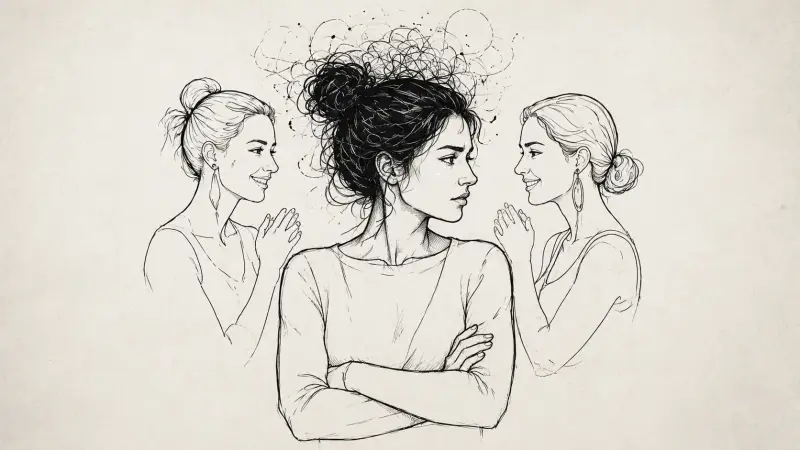
It is natural for a person to feel jealous sometimes, but the exhaustion begins when these feelings grow to the point that they affect your peace, steal your sense of reassurance, and push you toward reactions that do not feel like you. You may find yourself watching, interpreting, and comparing, then still not feeling at ease despite all of that. Here, jealousy becomes more than just a passing feeling; it becomes a state that drains you and unsettles your relationship with yourself and with the other person. That is why helping yourself does not begin with being hard on yourself, but with understanding this feeling calmly, and knowing what feeds it and what can ease it in a healthier and more compassionate way.
Is jealousy always a sign of a problem?
Jealousy is a natural feeling, and it may appear in a relationship, a friendship, or even at work. Its presence alone does not mean there is a major problem, nor does it mean that you are a difficult person. What matters is what happens after this feeling: does it settle once you understand what triggered it, or does it turn into suspicion, monitoring, and repeated tension?
Jealousy becomes a problem when it pushes you into behavior that exhausts you or exhausts the person with you. Such as repeating the same questions, constantly seeking reassurance, checking the phone, or interpreting every action as a threat. NHS explains1 that a calmer relationship is built on honesty and respect, not on control and repeated tests.
Where does jealousy usually come from?
In many cases, jealousy does not come from the situation alone. It may come from fear of loss, a lack of reassurance, a past experience that left its mark, or constant comparison with others. Sometimes the cause is a real and worrying situation, and sometimes a large part of the problem lies in the way the mind interprets what happened.
That is why it helps to ask yourself: what exactly triggered the jealousy? Was it a delayed reply? Was it a repeated situation? Was it something you saw and then built many possibilities around? This simple question helps you distinguish between the facts and the conclusions that were added on top of them.
It is also useful to remember that jealousy does not always mean love, just as it does not necessarily mean that the other person did something wrong. Sometimes jealousy is connected more to an inner sense of insecurity than to what is actually happening.
How do I help myself when I feel jealous?
The first helpful step is not to act while you are at the peak of emotion. Do not send angry messages, do not check, and do not try to test the other person to confirm something you are not even sure of in the first place. It is better to pause for a little while, then write down what happened in clear terms: what actually happened, what you understood from it, and what you are afraid it might mean.
These questions may help you:
What actually happened, without adding anything extra?
What idea did I build on this situation?
Do I have clear evidence, or am I completing the story by myself?
What do I need to say clearly instead of monitoring or accusing?
This kind of review does not erase jealousy immediately, but it prevents it from quickly turning into behavior that damages the relationship.
The second step is to stop the behaviors that increase jealousy instead of calming it. Such as constantly checking accounts, reviewing old conversations, asking for reassurance every hour, or trying to find proof in every tiny detail. These things may bring short relief, but they make the mind ask for more of them every time.
After you calm down a little, speak clearly. Instead of beginning with accusation or hints, say what upset you and what you need. For example: When the reply is delayed, I start building many possibilities, and I need clarity. This form is clearer and more useful than conflict, sarcasm, or indirect questions. Direct conversation does not solve everything, but it makes the problem discussable instead of leaving it as silent tension or a sudden outburst.
When is self-help not enough?
If jealousy starts taking up a large part of your day, or keeps repeating alongside problems and accusations, or affects your sleep and concentration, or pushes you toward behaviors involving monitoring or restricting the other person, then it is no longer enough to tell yourself that you will calm down on your own. At this stage, jealousy has gone beyond the limits of a natural feeling and has started needing deeper understanding.
It may help to connect with a trusted specialist through Tatmeen if you notice that the jealousy is tied to an old wound, low self-worth, or a fear that does not settle even after reassurance. Support through conversation may help you understand the pattern that keeps repeating for you, and build a calmer way of dealing with it instead of staying in the same cycle.
Asking for support here does not mean that the problem is extremely serious. It means that you want to deal with it before it affects your peace or your relationship any further. And this is often far better than letting it repeat and then trying to repair what it causes each time afterward.
Frequently Asked Questions
Is jealousy a sign of love?
Not necessarily. Jealousy may appear because the relationship matters to you, but that does not make every behavior that comes out of it acceptable. If it turns into control, checking, or restriction, it harms the relationship more than it protects it.
How do I tell the difference between a real feeling and exaggerated jealousy?
A feeling that is closer to reality is usually connected to clear and repeated behaviors. Exaggerated jealousy, on the other hand, grows out of assumptions and the constant search for reassurance. Writing down the facts as they happened helps you see the difference more calmly.
Should I work on myself first, or talk to the other person?
Begin by calming your reaction and understanding what triggered you, then speak clearly about your feeling and your request. And if the conversations keep bringing back the same problem every time, then speaking with a specialist may be a more suitable step than repeating the same conflict.
A writer and researcher specializing in psychiatry, she focuses on mental health and the human emotions we experience but cannot always find the words to name. She writes about us—about humanity and the human experience—and simplifies complex topics to offer content that helps us better understand ourselves and life, ultimately making us feel less alone.
Every Tatmeen article is reviewed by care providers licensed by the Saudi Commission for Health Specialties, so what you read is accurate and trustworthy.
This article builds understanding and does not replace a licensed care provider.
Need someone to talk to?
Tatmeen's licensed care providers are available around the clock, and the app's urgent consultation connects you with one within minutes.
Download Tatmeen to explore care providers and booking options.
Smart matchingFour quick questions suggest the right care provider
Urgent consultationTalk to an available care provider within minutes
Free psychological measuresMore than 20 tests to understand how you are doing
Scan to download
{"data":{"id":"a0f8bb2e-80fe-4787-9411-9bd5e0e226fa","slug":"jealousy-how-to-help-yourself","arTitle":"الغيرة عندما تتعبك: كيف تساعد نفسك؟","enTitle":"Jealousy When It Exhausts You: How Can You Help Yourself?","thumbnailAltText":"Jealous woman with crossed arms as two others whisper behind her, ink sketch style","estimatedReadingTime":5,"likesCount":207,"writer":{"id":"3ab72b74-f26f-4337-9b47-3114b0f90de5","arBio":"كاتبة وباحثة متخصصة في مجال الطب النفسي، تهتم بموضوعات الصحة النفسية وبالمشاعر الإنسانية التي نختبرها ولا نجد دائمًا الكلمات لتسميتها. تكتب عنّا؛ عن الإنسان وتجربته، وتبسّط الموضوعات المعقّدة لتقدّم محتوى يساعدنا على فهم ذواتنا والحياة أكثر، ويجعلنا نشعر بأننا بوحدة أقل.","enBio":"A writer and researcher specializing in psychiatry, she focuses on mental health and the human emotions we experience but cannot always find the words to name. She writes about us—about humanity and the human experience—and simplifies complex topics to offer content that helps us better understand ourselves and life, ultimately making us feel less alone.","user":{"slug":"ayat-alnajar","arFullName":"آيات النجار","enFullName":"Ayat Al-Najjar","publicProfileImageUrl":"https://cdn.tatmeen.sa/public/profile-images/02384455-68fa-40b6-ad05-609fde65cafa/21b9a610dde5dfc6d37af110c23e9c7ab3946be080c281beb000debf4f7d31a6.webp","publicProfileImage96Url":"https://cdn.tatmeen.sa/public/profile-images/02384455-68fa-40b6-ad05-609fde65cafa/21b9a610dde5dfc6d37af110c23e9c7ab3946be080c281beb000debf4f7d31a6-w96.webp","publicProfileImage192Url":"https://cdn.tatmeen.sa/public/profile-images/02384455-68fa-40b6-ad05-609fde65cafa/21b9a610dde5dfc6d37af110c23e9c7ab3946be080c281beb000debf4f7d31a6-w192.webp"}},"arContent":"","enContent":"","productionDocument":{"headings":[{"id":"article-section-is-jealousy-always-a-sign-of-a-problem","text":"Is jealousy always a sign of a problem?"},{"id":"article-section-where-does-jealousy-usually-come-from","text":"Where does jealousy usually come from?"},{"id":"article-section-how-do-i-help-myself-when-i-feel-jealous","text":"How do I help myself when I feel jealous?"},{"id":"article-section-when-is-self-help-not-enough","text":"When is self-help not enough?"}],"faqs":[{"question":"Is jealousy a sign of love?","answer":"<p><span style=\"color:#000000\">Not necessarily. Jealousy may appear because the relationship matters to you, but that does not make every behavior that comes out of it acceptable. If it turns into control, checking, or restriction, it harms the relationship more than it protects it.</span></p>"},{"question":"How do I tell the difference between a real feeling and exaggerated jealousy?","answer":"<p><span style=\"color:#000000\">A feeling that is closer to reality is usually connected to clear and repeated behaviors. Exaggerated jealousy, on the other hand, grows out of assumptions and the constant search for reassurance. Writing down the facts as they happened helps you see the difference more calmly.</span></p>"},{"question":"Should I work on myself first, or talk to the other person?","answer":"<p><span style=\"color:#000000\">Begin by calming your reaction and understanding what triggered you, then speak clearly about your feeling and your request. And if the conversations keep bringing back the same problem every time, then speaking with a specialist may be a more suitable step than repeating the same conflict.</span></p>"}],"beforeSourcesHtml":"","sources":[{"title":"NHS: Maintaining Healthy Relationships","href":"https://www.nhs.uk/every-mind-matters/lifes-challenges/maintaining-healthy-relationships-and-mental-wellbeing/","hostname":"nhs.uk"},{"title":"APA Dictionary: Jealousy","href":"https://dictionary.apa.org/jealousy","hostname":"dictionary.apa.org"},{"title":"NIMH: Caring for Your Mental Health","href":"https://www.nimh.nih.gov/health/topics/caring-for-your-mental-health","hostname":"nimh.nih.gov"}],"afterSourcesHtml":"","blocks":[{"type":"html","html":"<p><span style=\"color:#000000\">It is natural for a person to feel jealous sometimes, but the exhaustion begins when these feelings grow to the point that they affect your peace, steal your sense of reassurance, and push you toward reactions that do not feel like you. You may find yourself watching, interpreting, and comparing, then still not feeling at ease despite all of that. Here, jealousy becomes more than just a passing feeling; it becomes a state that drains you and unsettles your relationship with yourself and with the other person. That is why helping yourself does not begin with being hard on yourself, but with understanding this feeling calmly, and knowing what feeds it and what can ease it in a healthier and more compassionate way.</span></p><h2 id=\"article-section-is-jealousy-always-a-sign-of-a-problem\" data-toc-heading tabindex=\"-1\"><span id=\"is-jealousy-always-a-sign-of-a-problem-1\" aria-hidden=\"true\"></span><span style=\"color:#000000\"><strong>Is jealousy always a sign of a problem?</strong></span></h2><p><span style=\"color:#000000\">Jealousy is a natural feeling, and it may appear in a relationship, a friendship, or even at work. Its presence alone does not mean there is a major problem, nor does it mean that you are a difficult person. What matters is what happens after this feeling: does it settle once you understand what triggered it, or does it turn into suspicion, monitoring, and repeated tension?</span></p><p><span style=\"color:#000000\">Jealousy becomes a problem when it pushes you into behavior that exhausts you or exhausts the person with you. Such as repeating the same questions, constantly seeking reassurance, checking the phone, or interpreting every action as a threat. </span><a href=\"https://www.nhs.uk/every-mind-matters/lifes-challenges/maintaining-healthy-relationships-and-mental-wellbeing/\" target=\"_blank\" rel=\"nofollow noopener noreferrer\"><span style=\"color:#1155cc\"><u>NHS explains</u></span></a><span style=\"color:#000000\"> that a calmer relationship is built on honesty and respect, not on control and repeated tests.</span></p><h2 id=\"article-section-where-does-jealousy-usually-come-from\" data-toc-heading tabindex=\"-1\"><span id=\"where-does-jealousy-usually-come-from-2\" aria-hidden=\"true\"></span><span style=\"color:#000000\"><strong>Where does jealousy usually come from?</strong></span></h2><p><span style=\"color:#000000\">In many cases, jealousy does not come from the situation alone. It may come from fear of loss, a lack of reassurance, a past experience that left its mark, or constant comparison with others. Sometimes the cause is a real and worrying situation, and sometimes a large part of the problem lies in the way the mind interprets what happened.</span></p><p><span style=\"color:#000000\">That is why it helps to ask yourself: what exactly triggered the jealousy? Was it a delayed reply? Was it a repeated situation? Was it something you saw and then built many possibilities around? This simple question helps you distinguish between the facts and the conclusions that were added on top of them.</span></p><p><span style=\"color:#000000\">It is also useful to remember that jealousy does not always mean love, just as it does not necessarily mean that the other person did something wrong. Sometimes jealousy is connected more to an inner sense of insecurity than to what is actually happening.</span></p><h2 id=\"article-section-how-do-i-help-myself-when-i-feel-jealous\" data-toc-heading tabindex=\"-1\"><span id=\"how-do-i-help-myself-when-i-feel-jealous-3\" aria-hidden=\"true\"></span><span style=\"color:#000000\"><strong>How do I help myself when I feel jealous?</strong></span></h2><p><span style=\"color:#000000\">The first helpful step is not to act while you are at the peak of emotion. Do not send angry messages, do not check, and do not try to test the other person to confirm something you are not even sure of in the first place. It is better to pause for a little while, then write down what happened in clear terms: what actually happened, what you understood from it, and what you are afraid it might mean.</span></p><p><span style=\"color:#000000\">These questions may help you:</span></p><ul><li><p><span style=\"color:#000000\">What actually happened, without adding anything extra?</span></p></li><li><p><span style=\"color:#000000\">What idea did I build on this situation?</span></p></li><li><p><span style=\"color:#000000\">Do I have clear evidence, or am I completing the story by myself?</span></p></li><li><p><span style=\"color:#000000\">What do I need to say clearly instead of monitoring or accusing?</span></p></li></ul><p><span style=\"color:#000000\">This kind of review does not erase jealousy immediately, but it prevents it from quickly turning into behavior that damages the relationship.</span></p><p><span style=\"color:#000000\">The second step is to stop the behaviors that increase jealousy instead of calming it. Such as constantly checking accounts, reviewing old conversations, asking for reassurance every hour, or trying to find proof in every tiny detail. These things may bring short relief, but they make the mind ask for more of them every time.</span></p><p><span style=\"color:#000000\">After you calm down a little, speak clearly. Instead of beginning with accusation or hints, say what upset you and what you need. For example: When the reply is delayed, I start building many possibilities, and I need clarity. This form is clearer and more useful than conflict, sarcasm, or indirect questions. Direct conversation does not solve everything, but it makes the problem discussable instead of leaving it as silent tension or a sudden outburst.</span></p><h2 id=\"article-section-when-is-self-help-not-enough\" data-toc-heading tabindex=\"-1\"><span id=\"when-is-self-help-not-enough-4\" aria-hidden=\"true\"></span><span style=\"color:#000000\"><strong>When is self-help not enough?</strong></span></h2><p><span style=\"color:#000000\">If jealousy starts taking up a large part of your day, or keeps repeating alongside problems and accusations, or affects your sleep and concentration, or pushes you toward behaviors involving monitoring or restricting the other person, then it is no longer enough to tell yourself that you will calm down on your own. At this stage, jealousy has gone beyond the limits of a natural feeling and has started needing deeper understanding.</span></p><p><span style=\"color:#000000\">It may help to </span><a href=\"https://tatmeen.sa/download/\"><span style=\"color:#1155cc\"><u>connect with a trusted specialist through Tatmeen</u></span></a><span style=\"color:#000000\"> if you notice that the jealousy is tied to an old wound, low self-worth, or a fear that does not settle even after reassurance. Support through conversation may help you understand the pattern that keeps repeating for you, and build a calmer way of dealing with it instead of staying in the same cycle.</span></p><p><span style=\"color:#000000\">Asking for support here does not mean that the problem is extremely serious. It means that you want to deal with it before it affects your peace or your relationship any further. And this is often far better than letting it repeat and then trying to repair what it causes each time afterward.</span></p>"}],"inlineCtaSignatures":[],"_experienceAliases":{"v":1,"fields":["html","bodyHtml"],"faqs":[0,1,2]}},"createdAt":"2026-07-02T21:00:00.000Z","updatedAt":"2026-07-12T16:25:06.574Z","disorderGroups":[{"id":"1e82772d-a1a7-4d29-b475-be9d6b67ae02","slug":"common-mental-issues","arName":"اضطرابات نفسية شائعة","enName":"Common Mental Issues"},{"id":"d807ea69-44d4-4e81-bee4-0a059fd36645","slug":"self-development","arName":"تنمية الذات","enName":"Self-Development"}],"reviewer":{"arFullName":"فريق تطمين","enFullName":"Tatmeen team","slug":"tatmeen-team","kind":"organization"},"productionArticle":true,"promotionAllowed":true,"preparedCover":{"src":"https://cdn.tatmeen.sa/public/article-lcp/article-lcp-v2/sha256-504027dfa484fd9bf9ce9e6359b76e3142b6fe86104bb9aeedbb1657802bb763/800-92fc2142e7604a1dbb45216ac2131f627fe44aeaac3227d934a73803488b2177.avif","fallback":"https://cdn.tatmeen.sa/public/article-lcp/article-lcp-v2/sha256-504027dfa484fd9bf9ce9e6359b76e3142b6fe86104bb9aeedbb1657802bb763/800-c160f91e417833275188e792e2d0c767d8a12adb69a492c51c246eb461038374.webp","directUrl":"https://cdn.tatmeen.sa/blog-cover/Tatmeen-1783101374918.webp","isGolden":true,"avifSrcset":"https://cdn.tatmeen.sa/public/article-lcp/article-lcp-v2/sha256-504027dfa484fd9bf9ce9e6359b76e3142b6fe86104bb9aeedbb1657802bb763/400-05e8f0726129523706c883f54b11cb52a78e133fbd4118911e376342f5b626c7.avif 400w, https://cdn.tatmeen.sa/public/article-lcp/article-lcp-v2/sha256-504027dfa484fd9bf9ce9e6359b76e3142b6fe86104bb9aeedbb1657802bb763/640-dbfee0dd6838b813213149e0dc8f7ce57d727814f7cf7aa5d6260429b4a91897.avif 640w, https://cdn.tatmeen.sa/public/article-lcp/article-lcp-v2/sha256-504027dfa484fd9bf9ce9e6359b76e3142b6fe86104bb9aeedbb1657802bb763/800-92fc2142e7604a1dbb45216ac2131f627fe44aeaac3227d934a73803488b2177.avif 800w, https://cdn.tatmeen.sa/public/article-lcp/article-lcp-v2/sha256-504027dfa484fd9bf9ce9e6359b76e3142b6fe86104bb9aeedbb1657802bb763/1200-1f8029a9db479085e5d7cd943b2b20c335ca2187226f864ee8b93a0893a8942b.avif 1200w","webpSrcset":"https://cdn.tatmeen.sa/public/article-lcp/article-lcp-v2/sha256-504027dfa484fd9bf9ce9e6359b76e3142b6fe86104bb9aeedbb1657802bb763/400-d183098e3d941fcbb3e7f21cb6a12684b0750fe3d54e32f756aa974b1c178440.webp 400w, https://cdn.tatmeen.sa/public/article-lcp/article-lcp-v2/sha256-504027dfa484fd9bf9ce9e6359b76e3142b6fe86104bb9aeedbb1657802bb763/640-3e6c6d151ae09f08fdfb7b5862c797b69b61e2cb1400eb8b40ff8de79af2d559.webp 640w, https://cdn.tatmeen.sa/public/article-lcp/article-lcp-v2/sha256-504027dfa484fd9bf9ce9e6359b76e3142b6fe86104bb9aeedbb1657802bb763/800-c160f91e417833275188e792e2d0c767d8a12adb69a492c51c246eb461038374.webp 800w, https://cdn.tatmeen.sa/public/article-lcp/article-lcp-v2/sha256-504027dfa484fd9bf9ce9e6359b76e3142b6fe86104bb9aeedbb1657802bb763/1200-e302399f83f08a6437631da12d81128c174ab81c045ec104ff5369edb13d3e0c.webp 1200w","phoneAvifSrcset":"https://cdn.tatmeen.sa/public/article-lcp/article-lcp-v2/sha256-504027dfa484fd9bf9ce9e6359b76e3142b6fe86104bb9aeedbb1657802bb763/400-05e8f0726129523706c883f54b11cb52a78e133fbd4118911e376342f5b626c7.avif 400w, https://cdn.tatmeen.sa/public/article-lcp/article-lcp-v2/sha256-504027dfa484fd9bf9ce9e6359b76e3142b6fe86104bb9aeedbb1657802bb763/640-dbfee0dd6838b813213149e0dc8f7ce57d727814f7cf7aa5d6260429b4a91897.avif 640w, https://cdn.tatmeen.sa/public/article-lcp/article-lcp-v2/sha256-504027dfa484fd9bf9ce9e6359b76e3142b6fe86104bb9aeedbb1657802bb763/800-92fc2142e7604a1dbb45216ac2131f627fe44aeaac3227d934a73803488b2177.avif 800w","phoneWebpSrcset":"https://cdn.tatmeen.sa/public/article-lcp/article-lcp-v2/sha256-504027dfa484fd9bf9ce9e6359b76e3142b6fe86104bb9aeedbb1657802bb763/400-d183098e3d941fcbb3e7f21cb6a12684b0750fe3d54e32f756aa974b1c178440.webp 400w, https://cdn.tatmeen.sa/public/article-lcp/article-lcp-v2/sha256-504027dfa484fd9bf9ce9e6359b76e3142b6fe86104bb9aeedbb1657802bb763/640-3e6c6d151ae09f08fdfb7b5862c797b69b61e2cb1400eb8b40ff8de79af2d559.webp 640w, https://cdn.tatmeen.sa/public/article-lcp/article-lcp-v2/sha256-504027dfa484fd9bf9ce9e6359b76e3142b6fe86104bb9aeedbb1657802bb763/800-c160f91e417833275188e792e2d0c767d8a12adb69a492c51c246eb461038374.webp 800w","width":800,"height":450},"previewTaxonomy":{"groups":[{"id":"1e82772d-a1a7-4d29-b475-be9d6b67ae02","slug":"common-mental-issues","arName":"اضطرابات نفسية شائعة","enName":"Common Mental Issues"},{"id":"d807ea69-44d4-4e81-bee4-0a059fd36645","slug":"self-development","arName":"تنمية الذات","enName":"Self-Development"}],"topics":[{"id":"eb4252aa-fb67-4971-a563-954a8176f44c","slug":"communication-skills","arName":"مهارات التواصل","enName":"Communication Skills","groupSlug":"self-development","href":"/blog/category/self-development/communication-skills/"},{"id":"50c2f23c-d5ee-4f58-9a90-db2b071c9bfb","slug":"unhealthy-attachment","arName":"التعلّق المرضي","enName":"Unhealthy Attachment","groupSlug":"common-mental-issues","href":"/blog/category/common-mental-issues/unhealthy-attachment/"}],"tags":[]},"previewProviderRecommendations":[{"id":"278d5ac5-30ff-46ad-97be-c67cdd125836","slug":"dr-mohammed-alamari-8085","arFullName":"د. محمد العماري","enFullName":"Dr. Mohammed Alamari","publicProfileImageUrl":"https://cdn.tatmeen.sa/public/profile-images/278d5ac5-30ff-46ad-97be-c67cdd125836/69bdd11cb01784eed010eb9883403fd6ca4e4afcec739dcd6114fd8b85f133a8.webp","publicProfileImage96Url":"https://cdn.tatmeen.sa/public/profile-images/278d5ac5-30ff-46ad-97be-c67cdd125836/69bdd11cb01784eed010eb9883403fd6ca4e4afcec739dcd6114fd8b85f133a8-w96.webp","publicProfileImage192Url":"https://cdn.tatmeen.sa/public/profile-images/278d5ac5-30ff-46ad-97be-c67cdd125836/69bdd11cb01784eed010eb9883403fd6ca4e4afcec739dcd6114fd8b85f133a8-w192.webp","specialization":{"arName":"طبيب أسرة","enName":"Family Physician"},"profileImageUrl":"https://cdn.tatmeen.sa/public/profile-images/278d5ac5-30ff-46ad-97be-c67cdd125836/69bdd11cb01784eed010eb9883403fd6ca4e4afcec739dcd6114fd8b85f133a8-w192.webp","experienceYears":3,"consultantInfo":{"averageRating":{"average":4},"specialization":{"arGeneralName":"طبيب أسرة","enGeneralName":"Family Physician"}}},{"id":"6df31339-a6f5-4131-a603-3a7c7a34c143","slug":"joud-alodhayyani-9014","arFullName":"جود العتيبي","enFullName":"Joud Alotaibi","publicProfileImageUrl":"https://cdn.tatmeen.sa/public/profile-images/6df31339-a6f5-4131-a603-3a7c7a34c143/7bb005ef9d4315296aad2a7d142fb2af2cf89920a40b474fc5139b9530269282.webp","publicProfileImage96Url":"https://cdn.tatmeen.sa/public/profile-images/6df31339-a6f5-4131-a603-3a7c7a34c143/7bb005ef9d4315296aad2a7d142fb2af2cf89920a40b474fc5139b9530269282-w96.webp","publicProfileImage192Url":"https://cdn.tatmeen.sa/public/profile-images/6df31339-a6f5-4131-a603-3a7c7a34c143/7bb005ef9d4315296aad2a7d142fb2af2cf89920a40b474fc5139b9530269282-w192.webp","specialization":{"arName":"أخصائي نفسي","enName":"Psychologist"},"profileImageUrl":"https://cdn.tatmeen.sa/public/profile-images/6df31339-a6f5-4131-a603-3a7c7a34c143/7bb005ef9d4315296aad2a7d142fb2af2cf89920a40b474fc5139b9530269282-w192.webp","experienceYears":2,"consultantInfo":{"averageRating":{"average":3.5},"specialization":{"arGeneralName":"أخصائي نفسي","enGeneralName":"Psychologist"}}},{"id":"5520abac-2d83-4b20-a11d-f63055316699","slug":"maha-alawad-4831","arFullName":"مها العواد","enFullName":"Maha Alawad","publicProfileImageUrl":"","publicProfileImage96Url":"","publicProfileImage192Url":"","specialization":{"arName":"أخصائي نفسي","enName":"Psychologist"},"profileImageUrl":"","experienceYears":13,"consultantInfo":{"averageRating":{"average":4.846153846153846},"specialization":{"arGeneralName":"أخصائي نفسي","enGeneralName":"Psychologist"}}}],"previewCareProviders":[{"id":"09364052-c2a9-4c52-9717-7ce2093b8d0a","slug":"kholoud-alharbi-5221","arFullName":"خلود الحربي","enFullName":"Kholoud Alharbi","publicProfileImageUrl":"https://cdn.tatmeen.sa/public/profile-images/09364052-c2a9-4c52-9717-7ce2093b8d0a/4a0aeb81619e351b77f4323e3605a0a00acc7ca3c82ee7cc5ca2c9e8ef716049.webp","publicProfileImage96Url":"https://cdn.tatmeen.sa/public/profile-images/09364052-c2a9-4c52-9717-7ce2093b8d0a/4a0aeb81619e351b77f4323e3605a0a00acc7ca3c82ee7cc5ca2c9e8ef716049-w96.webp","publicProfileImage192Url":"https://cdn.tatmeen.sa/public/profile-images/09364052-c2a9-4c52-9717-7ce2093b8d0a/4a0aeb81619e351b77f4323e3605a0a00acc7ca3c82ee7cc5ca2c9e8ef716049-w192.webp","gender":"FEMALE","specialization":{"arName":"أخصائي نفسي","enName":"Psychologist"}},{"id":"6f037535-1dca-4b50-a8b2-5974b7323286","slug":"salah-althobaiti-9053","arFullName":"صلاح الثبيتي","enFullName":"Salah Althobaiti","publicProfileImageUrl":"https://cdn.tatmeen.sa/public/profile-images/6f037535-1dca-4b50-a8b2-5974b7323286/35b6bd7fad9b1e004c1835803eb9c1b56dcacd380685ec8bff141f0fb888005c.webp","publicProfileImage96Url":"https://cdn.tatmeen.sa/public/profile-images/6f037535-1dca-4b50-a8b2-5974b7323286/35b6bd7fad9b1e004c1835803eb9c1b56dcacd380685ec8bff141f0fb888005c-w96.webp","publicProfileImage192Url":"https://cdn.tatmeen.sa/public/profile-images/6f037535-1dca-4b50-a8b2-5974b7323286/35b6bd7fad9b1e004c1835803eb9c1b56dcacd380685ec8bff141f0fb888005c-w192.webp","gender":"MALE","specialization":{"arName":"أخصائي نفسي","enName":"Psychologist"}},{"id":"3cc806e8-616b-4884-9f21-a75b378580a2","slug":"aisha-al-hashim-8667","arFullName":"عائشة ال هاشم","enFullName":"Aisha Al Hashim","publicProfileImageUrl":"https://cdn.tatmeen.sa/public/profile-images/3cc806e8-616b-4884-9f21-a75b378580a2/27f523d03be4dcfa1f6a79f70c1773887434e698990d214cd990caec56a44798.webp","publicProfileImage96Url":"https://cdn.tatmeen.sa/public/profile-images/3cc806e8-616b-4884-9f21-a75b378580a2/27f523d03be4dcfa1f6a79f70c1773887434e698990d214cd990caec56a44798-w96.webp","publicProfileImage192Url":"https://cdn.tatmeen.sa/public/profile-images/3cc806e8-616b-4884-9f21-a75b378580a2/27f523d03be4dcfa1f6a79f70c1773887434e698990d214cd990caec56a44798-w192.webp","gender":"FEMALE","specialization":{"arName":"أخصائي نفسي","enName":"Psychologist"}},{"id":"db2ce1a0-9325-4471-b7ce-eb2e811c30a3","slug":"amer-qutub-2441","arFullName":"عامر قطب","enFullName":"Amer Qutub","publicProfileImageUrl":"https://cdn.tatmeen.sa/public/profile-images/db2ce1a0-9325-4471-b7ce-eb2e811c30a3/80580f99bfd7fe2b2a9cf8eed73ab532f5086d1efe053b0aa57358c1ce004261.webp","publicProfileImage96Url":"https://cdn.tatmeen.sa/public/profile-images/db2ce1a0-9325-4471-b7ce-eb2e811c30a3/80580f99bfd7fe2b2a9cf8eed73ab532f5086d1efe053b0aa57358c1ce004261-w96.webp","publicProfileImage192Url":"https://cdn.tatmeen.sa/public/profile-images/db2ce1a0-9325-4471-b7ce-eb2e811c30a3/80580f99bfd7fe2b2a9cf8eed73ab532f5086d1efe053b0aa57358c1ce004261-w192.webp","gender":"MALE","specialization":{"arName":"أخصائي نفسي","enName":"Psychologist"}},{"id":"94765496-dbdf-4631-a01b-7df5f788668d","slug":"abdullrahman-alhamoudi-3045","arFullName":"عبدالرحمن الحمودي","enFullName":"Abdulrahman Alhamoudi","publicProfileImageUrl":"https://cdn.tatmeen.sa/public/profile-images/94765496-dbdf-4631-a01b-7df5f788668d/2d49f6b6493c564afb6f50b6c3634231dff3a5cf8353acfab393d1b2a88037d1.webp","publicProfileImage96Url":"https://cdn.tatmeen.sa/public/profile-images/94765496-dbdf-4631-a01b-7df5f788668d/2d49f6b6493c564afb6f50b6c3634231dff3a5cf8353acfab393d1b2a88037d1-w96.webp","publicProfileImage192Url":"https://cdn.tatmeen.sa/public/profile-images/94765496-dbdf-4631-a01b-7df5f788668d/2d49f6b6493c564afb6f50b6c3634231dff3a5cf8353acfab393d1b2a88037d1-w192.webp","gender":"MALE","specialization":{"arName":"أخصائي نفسي","enName":"Psychologist"}},{"id":"618dba89-5b70-4b46-8304-741b7ac8ecd3","slug":"abdullah-mari-1311","arFullName":"عبدالله مرعي","enFullName":"Abdullah Mari","publicProfileImageUrl":"https://cdn.tatmeen.sa/public/profile-images/618dba89-5b70-4b46-8304-741b7ac8ecd3/6b4a3bfb59f8a304ca79083b32859b46baad2e1d692974a47c02c1f66bd11129.webp","publicProfileImage96Url":"https://cdn.tatmeen.sa/public/profile-images/618dba89-5b70-4b46-8304-741b7ac8ecd3/6b4a3bfb59f8a304ca79083b32859b46baad2e1d692974a47c02c1f66bd11129-w96.webp","publicProfileImage192Url":"https://cdn.tatmeen.sa/public/profile-images/618dba89-5b70-4b46-8304-741b7ac8ecd3/6b4a3bfb59f8a304ca79083b32859b46baad2e1d692974a47c02c1f66bd11129-w192.webp","gender":"MALE","specialization":{"arName":"أخصائي نفسي","enName":"Psychologist"}},{"id":"3b50a5d5-e795-407f-8676-fd7f0e1bb7a0","slug":"abdulaziz-bin-hudayan-4940","arFullName":"عبدالعزيز بن هديان","enFullName":"Abdulaziz Bin Hudayan","publicProfileImageUrl":"https://cdn.tatmeen.sa/public/profile-images/3b50a5d5-e795-407f-8676-fd7f0e1bb7a0/710ff0fe1fb00cdb5042092e27b7910b480a439b02251ecded62d7758eefce95.webp","publicProfileImage96Url":"https://cdn.tatmeen.sa/public/profile-images/3b50a5d5-e795-407f-8676-fd7f0e1bb7a0/710ff0fe1fb00cdb5042092e27b7910b480a439b02251ecded62d7758eefce95-w96.webp","publicProfileImage192Url":"https://cdn.tatmeen.sa/public/profile-images/3b50a5d5-e795-407f-8676-fd7f0e1bb7a0/710ff0fe1fb00cdb5042092e27b7910b480a439b02251ecded62d7758eefce95-w192.webp","gender":"MALE","specialization":{"arName":"أخصائي نفسي","enName":"Psychologist"}},{"id":"d4ffcb6b-90a7-45b6-b941-964866f4564b","slug":"dhaifallah-alhumaidi-1092","arFullName":"ضيف الله الحميدي","enFullName":"Dhaifallah Alhumaidi","publicProfileImageUrl":"https://cdn.tatmeen.sa/public/profile-images/d4ffcb6b-90a7-45b6-b941-964866f4564b/1817171c5828a9b57d6c30d12332cf154e335272548bc90a6e8456d74d356956.webp","publicProfileImage96Url":"https://cdn.tatmeen.sa/public/profile-images/d4ffcb6b-90a7-45b6-b941-964866f4564b/1817171c5828a9b57d6c30d12332cf154e335272548bc90a6e8456d74d356956-w96.webp","publicProfileImage192Url":"https://cdn.tatmeen.sa/public/profile-images/d4ffcb6b-90a7-45b6-b941-964866f4564b/1817171c5828a9b57d6c30d12332cf154e335272548bc90a6e8456d74d356956-w192.webp","gender":"MALE","specialization":{"arName":"أخصائي نفسي","enName":"Psychologist"}}],"previewDownload":{"href":"/download","title":{"ar":"خطوة واحدة لأجلك، ابدأ الآن","en":"One step for you, start now"},"description":{"ar":"حمّل تطبيق تطمين لاستكشاف مقدمي الرعاية وخيارات الحجز.","en":"Download Tatmeen to explore care providers and booking options."},"posterSrc":"/images/home/cta-ar-new-1.webp","videoSrc":"/images/home/cta-ar-new-1.mp4","videoPosterSrc":"/images/home/cta-ar-new-1.webp","videoPosterEnSrc":"/images/home/cta-en-new-1.webp","videoType":"video/mp4","appStoreHref":"https://apps.apple.com/us/app/tatmeen-%D8%AA%D8%B7%D9%85%D9%8A%D9%86/id6473836983","googlePlayHref":"https://play.google.com/store/apps/details?id=com.TatmeenApp.user&hl=en"},"previewRelatedArticles":[{"id":"9b3f1411-cbb5-430f-a430-6cc5ba9ec2a9","slug":"fearful-avoidant-attachment-roots-solutions","route":"/blog/fearful-avoidant-attachment-roots-solutions/","title":{"ar":"نمط التعلّق التجنّبي الخائف: فهم جذوره والبحث عن الحلول","en":"Fearful-Avoidant Attachment Style: Understanding Its Roots and Finding Solutions"},"image":"https://cdn.tatmeen.sa/public/article-lcp/article-lcp-v2/sha256-fed015c99dd20c16b82efcbc3ac4da5bf898f425b6ad5813709ae3be86ef1676/800-e1d316b3152f3b6c43544dbdba4d10af6fb963095e9dec57cef30004e52d1a9a.webp","directImageFallback":"https://cdn.tatmeen.sa/blog-cover/Tatmeen-1777737290741.webp","arThumbnailAltText":"Person reaching toward an outstretched hand but pulling back at the last second","thumbnailAltText":"Person reaching toward an outstretched hand but pulling back at the last second","topic":{"label":{"ar":"اضطرابات نفسية شائعة","en":"Common Mental Issues"}},"readingTimeMinutes":5},{"id":"632e0968-cb63-4ef1-a052-8c790e6e2bc5","slug":"mother-wound-men-enmeshment-absent-maternal-support","route":"/blog/mother-wound-men-enmeshment-absent-maternal-support/","title":{"ar":"جرح الأم لدى الذكور: تجاوز التعلّق المفرط وغياب الدعم الأمومي","en":"Mother Wound in Men: Overcoming Enmeshment and Absent Maternal Support"},"image":"https://cdn.tatmeen.sa/public/article-lcp/article-lcp-v2/sha256-68d0d7ef8edfc686b975f67b48c9d891a461201ff20d77cc7accd90e77e42a50/800-49d012167fe993d1e567e50d73721181f9e23e16554b071e2fdc767f40dd1b09.webp","directImageFallback":"https://cdn.tatmeen.sa/blog-cover/Tatmeen-1777382972280.webp","arThumbnailAltText":"a man looking forward and behind him is the shadow of his mother","thumbnailAltText":"a man looking forward and behind him is the shadow of his mother","topic":{"label":{"ar":"اضطرابات نفسية شائعة","en":"Common Mental Issues"}},"readingTimeMinutes":5},{"id":"a8e5648d-0d83-4bfb-b5db-a309f658d328","slug":"dismissive-avoidant-attachment-signs-change","route":"/blog/dismissive-avoidant-attachment-signs-change/","title":{"ar":"نمط التعلّق التجنّبي المُتحفِّظ: العلامات وطرق تغييره","en":"Dismissive-Avoidant Attachment Style: Signs and How to Change It"},"image":"https://cdn.tatmeen.sa/public/article-lcp/article-lcp-v2/sha256-69192dd217235c08fb0a9ed4fc034e38366095e2fa8609413c38a452ad895caa/800-c6a66c78051da58e39eddddcd9a31cd1c1b2f0dc63fb8a352eaf248e7a898c3c.webp","directImageFallback":"https://cdn.tatmeen.sa/blog-cover/Tatmeen-1777738043828.webp","arThumbnailAltText":"person sitting inside a transparent room while others are trying to reach out to him","thumbnailAltText":"person sitting inside a transparent room while others are trying to reach out to him","topic":{"label":{"ar":"اضطرابات نفسية شائعة","en":"Common Mental Issues"}},"readingTimeMinutes":5},{"id":"fbed0da6-bd28-49a8-bff1-cf0d893a6cfd","slug":"types-of-emotional-attachment","route":"/blog/types-of-emotional-attachment/","title":{"ar":"أنواع التعلق العاطفي وكيف تظهر في العلاقات","en":"Types of Emotional Attachment and How They Appear in Relationships"},"image":"https://cdn.tatmeen.sa/public/article-lcp/article-lcp-v1/sha256-05aadece4079ed4e8ea1042fc67b9d91af016b4228fd6868aa4c233140982824/800-fb702230fd6efbabc561cdb5fb3c708a76729c5fa604062df208d4227515b187.webp","directImageFallback":"https://cdn.tatmeen.sa/blog-cover/Tatmeen-1784222627029.webp","arThumbnailAltText":"Two people stand apart, tangled strings forming a split heart between them","thumbnailAltText":"Two people stand apart, tangled strings forming a split heart between them","topic":{"label":{"ar":"اضطرابات نفسية شائعة","en":"Common Mental Issues"}},"readingTimeMinutes":5}],"previewRelatedReadStates":{}},"locale":"en","device":"desktop","path":"/en/blog/jealousy-how-to-help-yourself/","readingControls":false,"config":{"public":{"BUCKET_URL":"https://cdn.tatmeen.sa/","APP_BASE_URL":"https://tatmeen.sa","intercomAppId":"ppcnu9e3"}}}