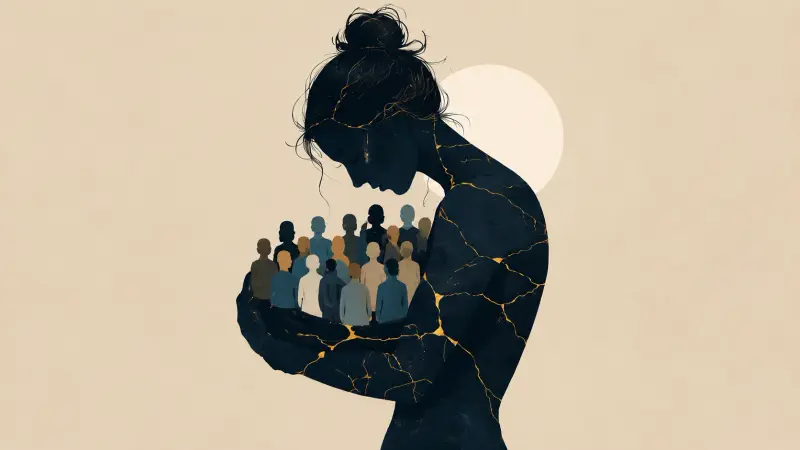
The rescuer syndrome may show people the most beautiful parts of you—while hiding the heaviest parts from you: you reply quickly to family messages, you step in to lighten a coworker’s load, and you spot the problem before anyone even asks. It can look like pure kindness, while inside there may be anxiety disguised as responsibility. At Tatmeen, we often meet people who succeeded in being everyone’s support—then discovered they don’t know how to ask for support for themselves. Understanding this role can bring you relief and clarity without dimming your humanity.
What Do We Mean by the “Rescuer” Role?
Not everyone who helps others lives with a syndrome. Natural support means you lend a hand when you can, then return to your life without guilt tearing you apart. The rescuer role begins when helping becomes a condition for feeling worthy, or a constant attempt to control what cannot be controlled in your life or in the lives of those you love.
You may notice you jump straight into solutions before listening, or you feel tense if the problem remains without your intervention. You might even be drawn to people who are always in crisis, because being near them gives you quick, clear meaning. Over time, the relationship turns into a fixed pattern: you rescue, the other waits, and you end up more exhausted than you admit.
Why Do We Cling to Rescuing? Understandable Motives, Not a Flaw
Sometimes this role forms at home long before it shows up at work. In childhood, there may have been someone who needed you to be the “reasonable one” who calms the atmosphere—or someone who only praised you when you were useful. So you learn a hidden message: They love me when I fix things, and I’m overlooked when I’m tired. Under the pressures of adult life, rescuing becomes your fastest way to avoid conflict or others’ disappointment.
Other times, rescuing is a way to soothe an inner anxiety. Solving someone else’s problem gives you an immediate sense of capability, as if you’re telling yourself: I can still control something. But that feeling is short-lived, because the roots of your own anxiety haven’t been touched—so the loop returns with the next request.
There may also be a deeper reason: being busy with other people’s problems temporarily keeps you from looking at what hurts you. Instead of asking What do I need? you ask Who needs me? The question sounds noble, but it can become an elegant escape from facing exhaustion, sadness, or the feeling that you’re alone.
The Hidden Cost: Constant Tension and Unbalanced Relationships
Constant rescuing doesn’t only consume your time—it consumes your nervous system. When you live in a perpetual state of readiness, relaxing becomes difficult. That can show up as insomnia, distraction, irritability, or scattered aches. The World Health Organization explains that stress can affect sleep, concentration, and the body, and that learning ways to cope with stress helps restore balance by understanding stress signals.
In relationships, the issue isn’t that you help—it’s that you help from a place that doesn’t allow you boundaries. You may give a lot, then quiet bitterness accumulates. Or you may feel others are taking advantage of you when you never clearly said what you can and cannot do. In some cases, excessive rescuing unintentionally weakens the other person, because the solution arrives ready-made and their ability to face things develops more slowly.
Researchers also use the concept of compassion fatigue to describe the depletion that can affect those who frequently carry others’ suffering—especially in supportive roles. And according to Tatmeen specialists, many “rescuers” don’t burn out because they don’t love people, but because they loved them without boundaries that protect them.
Steps That Let You Keep Your Kindness Without Being Drained
The idea isn’t to stop helping, but to shift from rescuing to supporting. Try these steps as small exercises, and choose what fits your day:
Before offering solutions, ask: Do you want me to listen, or help you think it through?
Watch your urge. When you hear inside you, I must intervene, take a slow breath and give yourself two minutes before replying.
Offer specific help instead of carrying the whole issue: one step, a short call, or pointing to information—then stop.
Learn a polite refusal without a long defense: I appreciate your request, but I can’t right now. I can get back to you tomorrow, or at a specific time.
Set a fixed time for your needs, and consider it part of your responsibility—not a luxury.
Expect guilt to show up at first, especially if people are used to your constant availability. That guilt doesn’t mean you’re selfish—it means you’re learning a new pattern. Let the discomfort pass without interpreting it as proof of bad intentions, and watch how it gradually softens when your boundaries are clear and steady.
Finally…
Your kindness doesn’t need to turn into constant rescuing to be real. When you care for yourself and set compassionate boundaries, your giving becomes purer and less bitter, and your relationships become more honest. This week, choose one small boundary you will commit to, and one sentence you will say calmly. And if you feel the role is tied to old anxiety or never-ending pressure, talking with a specialist may help you reach deeper understanding and practical steps through Tatmeen.
Frequently Asked Questions
How do I tell the difference between kindness and the rescuer role?
Kindness gives and can stop without collapsing or being consumed by guilt, leaving you room to rest and ask for support. The rescuer role makes helping a condition for worth. Ask yourself: Am I helping by choice, or out of fear?
What if others get angry when I set boundaries?
Anger may be a reaction to a change they’re not used to—not proof that you’re wrong. Be steady and kind: I appreciate your request, but I can’t right now. Repeat it without long explanations, and if you can, offer an alternative time or a smaller form of help.
Why do I feel empty when I stop rescuing others?
Because rescuing used to fill your time and give you quick meaning. When it stops, the emptiness you were avoiding appears. Use it to discover what you need: rest, a hobby, balanced connection, or support that helps you face what’s inside you calmly.
A writer and researcher specializing in psychiatry, she focuses on mental health and the human emotions we experience but cannot always find the words to name. She writes about us—about humanity and the human experience—and simplifies complex topics to offer content that helps us better understand ourselves and life, ultimately making us feel less alone.
Every Tatmeen article is reviewed by care providers licensed by the Saudi Commission for Health Specialties, so what you read is accurate and trustworthy.
This article builds understanding and does not replace a licensed care provider.
Need someone to talk to?
Tatmeen's licensed care providers are available around the clock, and the app's urgent consultation connects you with one within minutes.
Download Tatmeen to explore care providers and booking options.
Smart matchingFour quick questions suggest the right care provider
Urgent consultationTalk to an available care provider within minutes
Free psychological measuresMore than 20 tests to understand how you are doing
Scan to download
{"data":{"id":"8209b63f-0e72-4d8f-bdf3-c71b60b2e74d","slug":"helping-without-losing-yourself","arTitle":"متلازمة «المُنقِذ» حين تُنقذ الجميع وتُهمِل نفسك","enTitle":"The Rescuer Syndrome: When You Save Everyone and Neglect Yourself","thumbnailAltText":"Woman cradling a crowd while golden cracks spread through her silhouette, symbolizing self-sacrifice.","estimatedReadingTime":5,"likesCount":270,"writer":{"id":"3ab72b74-f26f-4337-9b47-3114b0f90de5","arBio":"كاتبة وباحثة متخصصة في مجال الطب النفسي، تهتم بموضوعات الصحة النفسية وبالمشاعر الإنسانية التي نختبرها ولا نجد دائمًا الكلمات لتسميتها. تكتب عنّا؛ عن الإنسان وتجربته، وتبسّط الموضوعات المعقّدة لتقدّم محتوى يساعدنا على فهم ذواتنا والحياة أكثر، ويجعلنا نشعر بأننا بوحدة أقل.","enBio":"A writer and researcher specializing in psychiatry, she focuses on mental health and the human emotions we experience but cannot always find the words to name. She writes about us—about humanity and the human experience—and simplifies complex topics to offer content that helps us better understand ourselves and life, ultimately making us feel less alone.","user":{"slug":"ayat-alnajar","arFullName":"آيات النجار","enFullName":"Ayat Al-Najjar","publicProfileImageUrl":"https://cdn.tatmeen.sa/public/profile-images/02384455-68fa-40b6-ad05-609fde65cafa/21b9a610dde5dfc6d37af110c23e9c7ab3946be080c281beb000debf4f7d31a6.webp","publicProfileImage96Url":"https://cdn.tatmeen.sa/public/profile-images/02384455-68fa-40b6-ad05-609fde65cafa/21b9a610dde5dfc6d37af110c23e9c7ab3946be080c281beb000debf4f7d31a6-w96.webp","publicProfileImage192Url":"https://cdn.tatmeen.sa/public/profile-images/02384455-68fa-40b6-ad05-609fde65cafa/21b9a610dde5dfc6d37af110c23e9c7ab3946be080c281beb000debf4f7d31a6-w192.webp"}},"arContent":"","enContent":"","productionDocument":{"headings":[{"id":"article-section-what-do-we-mean-by-the-rescuer-role","text":"What Do We Mean by the “Rescuer” Role?"},{"id":"article-section-why-do-we-cling-to-rescuing-understandable-motives-not-a-flaw","text":"Why Do We Cling to Rescuing? Understandable Motives, Not a Flaw"},{"id":"article-section-the-hidden-cost-constant-tension-and-unbalanced-relationships","text":"The Hidden Cost: Constant Tension and Unbalanced Relationships"},{"id":"article-section-steps-that-let-you-keep-your-kindness-without-being-drained","text":"Steps That Let You Keep Your Kindness Without Being Drained"},{"id":"article-section-finally","text":"Finally…"}],"faqs":[{"question":"How do I tell the difference between kindness and the rescuer role?","answer":"<p><span style=\"color:#000000\">Kindness gives and can stop without collapsing or being consumed by guilt, leaving you room to rest and ask for support. The rescuer role makes helping a condition for worth. Ask yourself: <em>Am I helping by choice, or out of fear?</em></span></p>"},{"question":"What if others get angry when I set boundaries?","answer":"<p><span style=\"color:#000000\">Anger may be a reaction to a change they’re not used to—not proof that you’re wrong. Be steady and kind: <em>I appreciate your request, but I can’t right now.</em> Repeat it without long explanations, and if you can, offer an alternative time or a smaller form of help.</span></p>"},{"question":"Why do I feel empty when I stop rescuing others?","answer":"<p><span style=\"color:#000000\">Because rescuing used to fill your time and give you quick meaning. When it stops, the emptiness you were avoiding appears. Use it to discover what <em>you</em> need: rest, a hobby, balanced connection, or support that helps you face what’s inside you calmly.</span></p>"}],"beforeSourcesHtml":"<p></p>","sources":[],"afterSourcesHtml":"","blocks":[{"type":"html","html":"<p><span style=\"color:#000000\">The rescuer syndrome may show people the most beautiful parts of you—while hiding the heaviest parts from you: you reply quickly to family messages, you step in to lighten a coworker’s load, and you spot the problem before anyone even asks. It can look like pure kindness, while inside there may be anxiety disguised as responsibility. At <strong>Tatmeen</strong>, we often meet people who succeeded in being everyone’s support—then discovered they don’t know how to ask for support for themselves. Understanding this role can bring you relief and clarity without dimming your humanity.</span></p><h2 id=\"article-section-what-do-we-mean-by-the-rescuer-role\" data-toc-heading tabindex=\"-1\"><span id=\"what-do-we-mean-by-the-rescuer-role-1\" aria-hidden=\"true\"></span><span style=\"color:#000000\"><strong>What Do We Mean by the “Rescuer” Role?</strong></span></h2><p><span style=\"color:#000000\">Not everyone who helps others lives with a syndrome. Natural support means you lend a hand when you can, then return to your life without guilt tearing you apart. The rescuer role begins when helping becomes a condition for feeling worthy, or a constant attempt to control what cannot be controlled in your life or in the lives of those you love.</span></p><p><span style=\"color:#000000\">You may notice you jump straight into solutions before listening, or you feel tense if the problem remains without your intervention. You might even be drawn to people who are always in crisis, because being near them gives you quick, clear meaning. Over time, the relationship turns into a fixed pattern: you rescue, the other waits, and you end up more exhausted than you admit.</span></p><h2 id=\"article-section-why-do-we-cling-to-rescuing-understandable-motives-not-a-flaw\" data-toc-heading tabindex=\"-1\"><span id=\"why-do-we-cling-to-rescuing-understandable-motives-not-a-flaw-2\" aria-hidden=\"true\"></span><span style=\"color:#000000\"><strong>Why Do We Cling to Rescuing? Understandable Motives, Not a Flaw</strong></span></h2><p><span style=\"color:#000000\">Sometimes this role forms at home long before it shows up at work. In childhood, there may have been someone who needed you to be the “reasonable one” who calms the atmosphere—or someone who only praised you when you were useful. So you learn a hidden message: <em>They love me when I fix things, and I’m overlooked when I’m tired.</em> Under the pressures of adult life, rescuing becomes your fastest way to avoid conflict or others’ disappointment.</span></p><p><span style=\"color:#000000\">Other times, rescuing is a way to soothe an inner anxiety. Solving someone else’s problem gives you an immediate sense of capability, as if you’re telling yourself: <em>I can still control something.</em> But that feeling is short-lived, because the roots of your own anxiety haven’t been touched—so the loop returns with the next request.</span></p><p><span style=\"color:#000000\">There may also be a deeper reason: being busy with other people’s problems temporarily keeps you from looking at what hurts <em>you</em>. Instead of asking <em>What do I need?</em> you ask <em>Who needs me?</em> The question sounds noble, but it can become an elegant escape from facing exhaustion, sadness, or the feeling that you’re alone.</span></p><h2 id=\"article-section-the-hidden-cost-constant-tension-and-unbalanced-relationships\" data-toc-heading tabindex=\"-1\"><span id=\"the-hidden-cost-constant-tension-and-unbalanced-relationships-3\" aria-hidden=\"true\"></span><span style=\"color:#000000\"><strong>The Hidden Cost: Constant Tension and Unbalanced Relationships</strong></span></h2><p><span style=\"color:#000000\">Constant rescuing doesn’t only consume your time—it consumes your nervous system. When you live in a perpetual state of readiness, relaxing becomes difficult. That can show up as insomnia, distraction, irritability, or scattered aches. </span><a href=\"https://www.who.int/news-room/questions-and-answers/item/stress?\" target=\"_blank\" rel=\"nofollow noopener noreferrer\"><span style=\"color:#1155cc\"><u>The World Health Organization</u></span></a><span style=\"color:#000000\"> explains that stress can affect sleep, concentration, and the body, and that learning ways to cope with stress helps restore balance by understanding stress signals.</span></p><p><span style=\"color:#000000\">In relationships, the issue isn’t that you help—it’s that you help from a place that doesn’t allow you boundaries. You may give a lot, then quiet bitterness accumulates. Or you may feel others are taking advantage of you when you never clearly said what you can and cannot do. In some cases, excessive rescuing unintentionally weakens the other person, because the solution arrives ready-made and their ability to face things develops more slowly.</span></p><p><span style=\"color:#000000\">Researchers also use the concept of <strong>compassion fatigue</strong> to describe the depletion that can affect those who frequently carry others’ suffering—especially in supportive roles. And according to Tatmeen specialists, many “rescuers” don’t burn out because they don’t love people, but because they loved them without boundaries that protect them.</span></p><h2 id=\"article-section-steps-that-let-you-keep-your-kindness-without-being-drained\" data-toc-heading tabindex=\"-1\"><span id=\"steps-that-let-you-keep-your-kindness-without-being-drained-4\" aria-hidden=\"true\"></span><span style=\"color:#000000\"><strong>Steps That Let You Keep Your Kindness Without Being Drained</strong></span></h2><p><span style=\"color:#000000\">The idea isn’t to stop helping, but to shift from rescuing to supporting. Try these steps as small exercises, and choose what fits your day:</span></p><ul><li><p><span style=\"color:#000000\">Before offering solutions, ask: <em>Do you want me to listen, or help you think it through?</em></span></p></li><li><p><span style=\"color:#000000\">Watch your urge. When you hear inside you, <em>I must intervene,</em> take a slow breath and give yourself two minutes before replying.</span></p></li><li><p><span style=\"color:#000000\">Offer specific help instead of carrying the whole issue: one step, a short call, or pointing to information—then stop.</span></p></li><li><p><span style=\"color:#000000\">Learn a polite refusal without a long defense: <em>I appreciate your request, but I can’t right now. I can get back to you tomorrow, or at a specific time.</em></span></p></li><li><p><span style=\"color:#000000\">Set a fixed time for <em>your</em> needs, and consider it part of your responsibility—not a luxury.</span></p></li></ul><p><span style=\"color:#000000\">Expect guilt to show up at first, especially if people are used to your constant availability. That guilt doesn’t mean you’re selfish—it means you’re learning a new pattern. Let the discomfort pass without interpreting it as proof of bad intentions, and watch how it gradually softens when your boundaries are clear and steady.</span></p><h2 id=\"article-section-finally\" data-toc-heading tabindex=\"-1\"><span id=\"finally-5\" aria-hidden=\"true\"></span><span style=\"color:#000000\"><strong>Finally…</strong></span></h2><p><span style=\"color:#000000\">Your kindness doesn’t need to turn into constant rescuing to be real. When you care for yourself and set compassionate boundaries, your giving becomes purer and less bitter, and your relationships become more honest. This week, choose one small boundary you will commit to, and one sentence you will say calmly. And if you feel the role is tied to old anxiety or never-ending pressure, talking with a specialist may help you reach deeper understanding and practical steps through <strong>Tatmeen</strong>.</span></p>"}],"inlineCtaSignatures":[],"_experienceAliases":{"v":1,"fields":["html","bodyHtml"],"faqs":[0,1,2]}},"createdAt":"2026-06-11T21:00:00.000Z","updatedAt":"2026-06-22T17:03:01.632Z","disorderGroups":[{"id":"4499a52a-06f8-4022-a64d-304e5eca51cc","slug":"life-challenges-and-stress","arName":"تحديات الحياة والضغوط","enName":"Life Challenges & Stress"},{"id":"d807ea69-44d4-4e81-bee4-0a059fd36645","slug":"self-development","arName":"تنمية الذات","enName":"Self-Development"}],"reviewer":{"arFullName":"فريق تطمين","enFullName":"Tatmeen team","slug":"tatmeen-team","kind":"organization"},"productionArticle":true,"promotionAllowed":true,"preparedCover":{"src":"https://cdn.tatmeen.sa/public/article-lcp/article-lcp-v2/sha256-e69cd82e86d78f468b6e4a33475b4b802727fda7a78c578ad103333c1032fc80/800-35d6ee555ec9df6d7cc337a328436fd5375ff84a65d6ef618e044a4b627d885d.avif","fallback":"https://cdn.tatmeen.sa/public/article-lcp/article-lcp-v2/sha256-e69cd82e86d78f468b6e4a33475b4b802727fda7a78c578ad103333c1032fc80/800-1c6ab8eb541b151fb2fda1f0a40e14303c3c8318d125a1e2638deddd9226043f.webp","directUrl":"https://cdn.tatmeen.sa/blog-cover/Tatmeen-1781280771856.webp","isGolden":true,"avifSrcset":"https://cdn.tatmeen.sa/public/article-lcp/article-lcp-v2/sha256-e69cd82e86d78f468b6e4a33475b4b802727fda7a78c578ad103333c1032fc80/400-fc306ac05224b811cb72435b52373f5a68b9c8bc5a77b51bd78b59f3f62d9f2c.avif 400w, https://cdn.tatmeen.sa/public/article-lcp/article-lcp-v2/sha256-e69cd82e86d78f468b6e4a33475b4b802727fda7a78c578ad103333c1032fc80/640-3cef31bb64069a3e55c3ba89d637e0454bd8ed54484eb2cbfb660cadf3ebfed3.avif 640w, https://cdn.tatmeen.sa/public/article-lcp/article-lcp-v2/sha256-e69cd82e86d78f468b6e4a33475b4b802727fda7a78c578ad103333c1032fc80/800-35d6ee555ec9df6d7cc337a328436fd5375ff84a65d6ef618e044a4b627d885d.avif 800w, https://cdn.tatmeen.sa/public/article-lcp/article-lcp-v2/sha256-e69cd82e86d78f468b6e4a33475b4b802727fda7a78c578ad103333c1032fc80/1200-40646227e064600744369b4e82f511c011a0b8a7ef48b6bbab06a1c5c574fb7a.avif 1200w","webpSrcset":"https://cdn.tatmeen.sa/public/article-lcp/article-lcp-v2/sha256-e69cd82e86d78f468b6e4a33475b4b802727fda7a78c578ad103333c1032fc80/400-8264337a32cba09864ee092477b078e5099bf11f224472ca5fb4fab305d0a5ef.webp 400w, https://cdn.tatmeen.sa/public/article-lcp/article-lcp-v2/sha256-e69cd82e86d78f468b6e4a33475b4b802727fda7a78c578ad103333c1032fc80/640-e1068555a9e6e204dca20a267bc4b6ae75c26e26e8ae49abf9236c9f3d25bba8.webp 640w, https://cdn.tatmeen.sa/public/article-lcp/article-lcp-v2/sha256-e69cd82e86d78f468b6e4a33475b4b802727fda7a78c578ad103333c1032fc80/800-1c6ab8eb541b151fb2fda1f0a40e14303c3c8318d125a1e2638deddd9226043f.webp 800w, https://cdn.tatmeen.sa/public/article-lcp/article-lcp-v2/sha256-e69cd82e86d78f468b6e4a33475b4b802727fda7a78c578ad103333c1032fc80/1200-84c314836bddfcdbdcfbe46df37a79046591a8fdeb5396d6698373db818c0e74.webp 1200w","phoneAvifSrcset":"https://cdn.tatmeen.sa/public/article-lcp/article-lcp-v2/sha256-e69cd82e86d78f468b6e4a33475b4b802727fda7a78c578ad103333c1032fc80/400-fc306ac05224b811cb72435b52373f5a68b9c8bc5a77b51bd78b59f3f62d9f2c.avif 400w, https://cdn.tatmeen.sa/public/article-lcp/article-lcp-v2/sha256-e69cd82e86d78f468b6e4a33475b4b802727fda7a78c578ad103333c1032fc80/640-3cef31bb64069a3e55c3ba89d637e0454bd8ed54484eb2cbfb660cadf3ebfed3.avif 640w, https://cdn.tatmeen.sa/public/article-lcp/article-lcp-v2/sha256-e69cd82e86d78f468b6e4a33475b4b802727fda7a78c578ad103333c1032fc80/800-35d6ee555ec9df6d7cc337a328436fd5375ff84a65d6ef618e044a4b627d885d.avif 800w","phoneWebpSrcset":"https://cdn.tatmeen.sa/public/article-lcp/article-lcp-v2/sha256-e69cd82e86d78f468b6e4a33475b4b802727fda7a78c578ad103333c1032fc80/400-8264337a32cba09864ee092477b078e5099bf11f224472ca5fb4fab305d0a5ef.webp 400w, https://cdn.tatmeen.sa/public/article-lcp/article-lcp-v2/sha256-e69cd82e86d78f468b6e4a33475b4b802727fda7a78c578ad103333c1032fc80/640-e1068555a9e6e204dca20a267bc4b6ae75c26e26e8ae49abf9236c9f3d25bba8.webp 640w, https://cdn.tatmeen.sa/public/article-lcp/article-lcp-v2/sha256-e69cd82e86d78f468b6e4a33475b4b802727fda7a78c578ad103333c1032fc80/800-1c6ab8eb541b151fb2fda1f0a40e14303c3c8318d125a1e2638deddd9226043f.webp 800w","width":800,"height":450},"previewTaxonomy":{"groups":[{"id":"4499a52a-06f8-4022-a64d-304e5eca51cc","slug":"life-challenges-and-stress","arName":"تحديات الحياة والضغوط","enName":"Life Challenges & Stress"},{"id":"d807ea69-44d4-4e81-bee4-0a059fd36645","slug":"self-development","arName":"تنمية الذات","enName":"Self-Development"}],"topics":[{"id":"eb4252aa-fb67-4971-a563-954a8176f44c","slug":"communication-skills","arName":"مهارات التواصل","enName":"Communication Skills","groupSlug":"self-development","href":"/blog/category/self-development/communication-skills/"},{"id":"785d9b22-1cd8-4f1a-a300-5170c1348b2f","slug":"setting-boundaries","arName":"وضع حدود شخصية","enName":"Setting Boundaries","groupSlug":"self-development","href":"/blog/category/self-development/setting-boundaries/"},{"id":"7795b6e4-e390-47a5-baf0-09243b44e066","slug":"self-compassion","arName":"تعاطف مع الذات","enName":"Self-Compassion","groupSlug":"self-development","href":"/blog/category/self-development/self-compassion/"}],"tags":[{"id":"4d06fe03-825d-48a2-a0fe-76d1d4351ad9","slug":"people-pleasing","arName":"إرضاء الآخرين","enName":"People-Pleasing"},{"id":"733b18c1-97b2-4275-b9ab-07660eb940ff","slug":"healthy-boundaries","arName":"الحدود الصحية","enName":"Healthy Boundaries"},{"id":"c2a6e8d3-de9c-435f-8c95-9727e7db14cc","slug":"explainer-awareness","arName":"دليل توعوي / شرح","enName":"Explainer / Awareness Guide"}]},"previewProviderRecommendations":[{"id":"7771d078-cbd9-4acd-aa51-29cc905753c4","slug":"hatim-jafaari-2902","arFullName":"حاتم جعفرى","enFullName":"Hatim Jafaari","publicProfileImageUrl":"https://cdn.tatmeen.sa/public/profile-images/7771d078-cbd9-4acd-aa51-29cc905753c4/874a489ca72b87dacbde76d8496eef84ca341ee8074b9ec54464cd0a56bbdbe6.webp","publicProfileImage96Url":"https://cdn.tatmeen.sa/public/profile-images/7771d078-cbd9-4acd-aa51-29cc905753c4/874a489ca72b87dacbde76d8496eef84ca341ee8074b9ec54464cd0a56bbdbe6-w96.webp","publicProfileImage192Url":"https://cdn.tatmeen.sa/public/profile-images/7771d078-cbd9-4acd-aa51-29cc905753c4/874a489ca72b87dacbde76d8496eef84ca341ee8074b9ec54464cd0a56bbdbe6-w192.webp","specialization":{"arName":"أخصائي نفسي","enName":"Psychologist"},"profileImageUrl":"https://cdn.tatmeen.sa/public/profile-images/7771d078-cbd9-4acd-aa51-29cc905753c4/874a489ca72b87dacbde76d8496eef84ca341ee8074b9ec54464cd0a56bbdbe6-w192.webp","experienceYears":2,"consultantInfo":{"averageRating":{"average":5},"specialization":{"arGeneralName":"أخصائي نفسي","enGeneralName":"Psychologist"}}},{"id":"5520abac-2d83-4b20-a11d-f63055316699","slug":"maha-alawad-4831","arFullName":"مها العواد","enFullName":"Maha Alawad","publicProfileImageUrl":"","publicProfileImage96Url":"","publicProfileImage192Url":"","specialization":{"arName":"أخصائي نفسي","enName":"Psychologist"},"profileImageUrl":"","experienceYears":13,"consultantInfo":{"averageRating":{"average":4.846153846153846},"specialization":{"arGeneralName":"أخصائي نفسي","enGeneralName":"Psychologist"}}},{"id":"a4a1f8a4-87a7-4447-8667-0bbf3fae006a","slug":"ghadah-alghamdi-2904","arFullName":"غاده الغامدي","enFullName":"Ghadah Alghamdi","publicProfileImageUrl":"","publicProfileImage96Url":"","publicProfileImage192Url":"","specialization":{"arName":"أخصائي نفسي","enName":"Psychologist"},"profileImageUrl":"","experienceYears":18,"consultantInfo":{"averageRating":{"average":0},"specialization":{"arGeneralName":"أخصائي نفسي","enGeneralName":"Psychologist"}}}],"previewCareProviders":[{"id":"09364052-c2a9-4c52-9717-7ce2093b8d0a","slug":"kholoud-alharbi-5221","arFullName":"خلود الحربي","enFullName":"Kholoud Alharbi","publicProfileImageUrl":"https://cdn.tatmeen.sa/public/profile-images/09364052-c2a9-4c52-9717-7ce2093b8d0a/4a0aeb81619e351b77f4323e3605a0a00acc7ca3c82ee7cc5ca2c9e8ef716049.webp","publicProfileImage96Url":"https://cdn.tatmeen.sa/public/profile-images/09364052-c2a9-4c52-9717-7ce2093b8d0a/4a0aeb81619e351b77f4323e3605a0a00acc7ca3c82ee7cc5ca2c9e8ef716049-w96.webp","publicProfileImage192Url":"https://cdn.tatmeen.sa/public/profile-images/09364052-c2a9-4c52-9717-7ce2093b8d0a/4a0aeb81619e351b77f4323e3605a0a00acc7ca3c82ee7cc5ca2c9e8ef716049-w192.webp","gender":"FEMALE","specialization":{"arName":"أخصائي نفسي","enName":"Psychologist"}},{"id":"6f037535-1dca-4b50-a8b2-5974b7323286","slug":"salah-althobaiti-9053","arFullName":"صلاح الثبيتي","enFullName":"Salah Althobaiti","publicProfileImageUrl":"https://cdn.tatmeen.sa/public/profile-images/6f037535-1dca-4b50-a8b2-5974b7323286/35b6bd7fad9b1e004c1835803eb9c1b56dcacd380685ec8bff141f0fb888005c.webp","publicProfileImage96Url":"https://cdn.tatmeen.sa/public/profile-images/6f037535-1dca-4b50-a8b2-5974b7323286/35b6bd7fad9b1e004c1835803eb9c1b56dcacd380685ec8bff141f0fb888005c-w96.webp","publicProfileImage192Url":"https://cdn.tatmeen.sa/public/profile-images/6f037535-1dca-4b50-a8b2-5974b7323286/35b6bd7fad9b1e004c1835803eb9c1b56dcacd380685ec8bff141f0fb888005c-w192.webp","gender":"MALE","specialization":{"arName":"أخصائي نفسي","enName":"Psychologist"}},{"id":"3cc806e8-616b-4884-9f21-a75b378580a2","slug":"aisha-al-hashim-8667","arFullName":"عائشة ال هاشم","enFullName":"Aisha Al Hashim","publicProfileImageUrl":"https://cdn.tatmeen.sa/public/profile-images/3cc806e8-616b-4884-9f21-a75b378580a2/27f523d03be4dcfa1f6a79f70c1773887434e698990d214cd990caec56a44798.webp","publicProfileImage96Url":"https://cdn.tatmeen.sa/public/profile-images/3cc806e8-616b-4884-9f21-a75b378580a2/27f523d03be4dcfa1f6a79f70c1773887434e698990d214cd990caec56a44798-w96.webp","publicProfileImage192Url":"https://cdn.tatmeen.sa/public/profile-images/3cc806e8-616b-4884-9f21-a75b378580a2/27f523d03be4dcfa1f6a79f70c1773887434e698990d214cd990caec56a44798-w192.webp","gender":"FEMALE","specialization":{"arName":"أخصائي نفسي","enName":"Psychologist"}},{"id":"db2ce1a0-9325-4471-b7ce-eb2e811c30a3","slug":"amer-qutub-2441","arFullName":"عامر قطب","enFullName":"Amer Qutub","publicProfileImageUrl":"https://cdn.tatmeen.sa/public/profile-images/db2ce1a0-9325-4471-b7ce-eb2e811c30a3/80580f99bfd7fe2b2a9cf8eed73ab532f5086d1efe053b0aa57358c1ce004261.webp","publicProfileImage96Url":"https://cdn.tatmeen.sa/public/profile-images/db2ce1a0-9325-4471-b7ce-eb2e811c30a3/80580f99bfd7fe2b2a9cf8eed73ab532f5086d1efe053b0aa57358c1ce004261-w96.webp","publicProfileImage192Url":"https://cdn.tatmeen.sa/public/profile-images/db2ce1a0-9325-4471-b7ce-eb2e811c30a3/80580f99bfd7fe2b2a9cf8eed73ab532f5086d1efe053b0aa57358c1ce004261-w192.webp","gender":"MALE","specialization":{"arName":"أخصائي نفسي","enName":"Psychologist"}},{"id":"94765496-dbdf-4631-a01b-7df5f788668d","slug":"abdullrahman-alhamoudi-3045","arFullName":"عبدالرحمن الحمودي","enFullName":"Abdulrahman Alhamoudi","publicProfileImageUrl":"https://cdn.tatmeen.sa/public/profile-images/94765496-dbdf-4631-a01b-7df5f788668d/2d49f6b6493c564afb6f50b6c3634231dff3a5cf8353acfab393d1b2a88037d1.webp","publicProfileImage96Url":"https://cdn.tatmeen.sa/public/profile-images/94765496-dbdf-4631-a01b-7df5f788668d/2d49f6b6493c564afb6f50b6c3634231dff3a5cf8353acfab393d1b2a88037d1-w96.webp","publicProfileImage192Url":"https://cdn.tatmeen.sa/public/profile-images/94765496-dbdf-4631-a01b-7df5f788668d/2d49f6b6493c564afb6f50b6c3634231dff3a5cf8353acfab393d1b2a88037d1-w192.webp","gender":"MALE","specialization":{"arName":"أخصائي نفسي","enName":"Psychologist"}},{"id":"618dba89-5b70-4b46-8304-741b7ac8ecd3","slug":"abdullah-mari-1311","arFullName":"عبدالله مرعي","enFullName":"Abdullah Mari","publicProfileImageUrl":"https://cdn.tatmeen.sa/public/profile-images/618dba89-5b70-4b46-8304-741b7ac8ecd3/6b4a3bfb59f8a304ca79083b32859b46baad2e1d692974a47c02c1f66bd11129.webp","publicProfileImage96Url":"https://cdn.tatmeen.sa/public/profile-images/618dba89-5b70-4b46-8304-741b7ac8ecd3/6b4a3bfb59f8a304ca79083b32859b46baad2e1d692974a47c02c1f66bd11129-w96.webp","publicProfileImage192Url":"https://cdn.tatmeen.sa/public/profile-images/618dba89-5b70-4b46-8304-741b7ac8ecd3/6b4a3bfb59f8a304ca79083b32859b46baad2e1d692974a47c02c1f66bd11129-w192.webp","gender":"MALE","specialization":{"arName":"أخصائي نفسي","enName":"Psychologist"}},{"id":"3b50a5d5-e795-407f-8676-fd7f0e1bb7a0","slug":"abdulaziz-bin-hudayan-4940","arFullName":"عبدالعزيز بن هديان","enFullName":"Abdulaziz Bin Hudayan","publicProfileImageUrl":"https://cdn.tatmeen.sa/public/profile-images/3b50a5d5-e795-407f-8676-fd7f0e1bb7a0/710ff0fe1fb00cdb5042092e27b7910b480a439b02251ecded62d7758eefce95.webp","publicProfileImage96Url":"https://cdn.tatmeen.sa/public/profile-images/3b50a5d5-e795-407f-8676-fd7f0e1bb7a0/710ff0fe1fb00cdb5042092e27b7910b480a439b02251ecded62d7758eefce95-w96.webp","publicProfileImage192Url":"https://cdn.tatmeen.sa/public/profile-images/3b50a5d5-e795-407f-8676-fd7f0e1bb7a0/710ff0fe1fb00cdb5042092e27b7910b480a439b02251ecded62d7758eefce95-w192.webp","gender":"MALE","specialization":{"arName":"أخصائي نفسي","enName":"Psychologist"}},{"id":"d4ffcb6b-90a7-45b6-b941-964866f4564b","slug":"dhaifallah-alhumaidi-1092","arFullName":"ضيف الله الحميدي","enFullName":"Dhaifallah Alhumaidi","publicProfileImageUrl":"https://cdn.tatmeen.sa/public/profile-images/d4ffcb6b-90a7-45b6-b941-964866f4564b/1817171c5828a9b57d6c30d12332cf154e335272548bc90a6e8456d74d356956.webp","publicProfileImage96Url":"https://cdn.tatmeen.sa/public/profile-images/d4ffcb6b-90a7-45b6-b941-964866f4564b/1817171c5828a9b57d6c30d12332cf154e335272548bc90a6e8456d74d356956-w96.webp","publicProfileImage192Url":"https://cdn.tatmeen.sa/public/profile-images/d4ffcb6b-90a7-45b6-b941-964866f4564b/1817171c5828a9b57d6c30d12332cf154e335272548bc90a6e8456d74d356956-w192.webp","gender":"MALE","specialization":{"arName":"أخصائي نفسي","enName":"Psychologist"}}],"previewDownload":{"href":"/download","title":{"ar":"خطوة واحدة لأجلك، ابدأ الآن","en":"One step for you, start now"},"description":{"ar":"حمّل تطبيق تطمين لاستكشاف مقدمي الرعاية وخيارات الحجز.","en":"Download Tatmeen to explore care providers and booking options."},"posterSrc":"/images/home/cta-ar-new-1.webp","videoSrc":"/images/home/cta-ar-new-1.mp4","videoPosterSrc":"/images/home/cta-ar-new-1.webp","videoPosterEnSrc":"/images/home/cta-en-new-1.webp","videoType":"video/mp4","appStoreHref":"https://apps.apple.com/us/app/tatmeen-%D8%AA%D8%B7%D9%85%D9%8A%D9%86/id6473836983","googlePlayHref":"https://play.google.com/store/apps/details?id=com.TatmeenApp.user&hl=en"},"previewRelatedArticles":[{"id":"e405107a-ccc4-459f-9fc3-c611e5c2a09e","slug":"porn-addiction-treatment-self-help-specialist","route":"/blog/porn-addiction-treatment-self-help-specialist/","title":{"ar":"علاج إدمان الإباحية: خطوات تساعدك ومتى تحتاج مختصًا؟","en":"Porn Addiction Treatment: Helpful Steps and When to See a Specialist"},"image":"https://cdn.tatmeen.sa/public/article-lcp/article-lcp-v2/sha256-16c581aef7167e6b1c4ad466c039cd2931a6835c287f7108e24fb86edb516c15/800-0fae8acd6469f00a009077aae85fb5e3cee8fa52e8d4854ed9466ba74b70fc03.webp","directImageFallback":"https://cdn.tatmeen.sa/blog-cover/Tatmeen-1780941367354.webp","arThumbnailAltText":"Helping hands reaching across abstract shapes, symbolizing support and addiction recovery.","thumbnailAltText":"Helping hands reaching across abstract shapes, symbolizing support and addiction recovery.","topic":{"label":{"ar":"الإدمان والسلوكيات القهرية","en":"Addictions & Compulsive Behaviors"}},"readingTimeMinutes":5},{"id":"c6675444-7b14-4782-8d7b-9844eeeb141e","slug":"healing-from-narcissistic-parenting-effects","route":"/blog/healing-from-narcissistic-parenting-effects/","title":{"ar":"التعافي من آثار تربية والدين بسمات نرجسية","en":"Healing from the Impact of Parenting with Narcissistic Traits"},"image":"https://cdn.tatmeen.sa/public/article-lcp/article-lcp-v2/sha256-ad05aaccbbe5bbcc6887e92ee58c55bd42469199f9ef42a127f055978075cb5d/800-2353651ca848a747e44636f83986603a28dcd8c5d817e18a91d5b3d43669ad00.webp","directImageFallback":"https://cdn.tatmeen.sa/blog-cover/Tatmeen-1780506202079.webp","arThumbnailAltText":"a person surrounded by flowers appears to be moving on from her past traumatic parenting experience","thumbnailAltText":"a person surrounded by flowers appears to be moving on from her past traumatic parenting experience","topic":{"label":{"ar":"اضطرابات نفسية شائعة","en":"Common Mental Issues"}},"readingTimeMinutes":5},{"id":"a2c11774-8f9b-47bb-a35c-e3108bc33d01","slug":"inner-child-emotional-wounds","route":"/blog/inner-child-emotional-wounds/","title":{"ar":"شفاء الطفل الداخلي وتجاوز جراح الطفولة العاطفية","en":"Healing the Inner Child and Moving Beyond Childhood Emotional Wounds"},"image":"https://cdn.tatmeen.sa/public/article-lcp/article-lcp-v2/sha256-72589568e0729f93fa7715ad2e6aa68b39312b6a0cdd71ee639b515eb84d8dfb/800-331167f057f7367dca2d910287593a6ca7ac420568e1d9a64bc2c977843eb0b1.webp","directImageFallback":"https://cdn.tatmeen.sa/blog-cover/Tatmeen-1780065935471.webp","arThumbnailAltText":"a child sitting alone meanwhile a hand made of light is extended to help","thumbnailAltText":"a child sitting alone meanwhile a hand made of light is extended to help","topic":{"label":{"ar":"اضطرابات نفسية شائعة","en":"Common Mental Issues"}},"readingTimeMinutes":5},{"id":"b65877cd-6592-4f61-8f5e-a81daffb2179","slug":"overcome-psychological-effects-marital-betrayal","route":"/blog/overcome-psychological-effects-marital-betrayal/","title":{"ar":"كيف أتجاوز الآثار النفسية للخيانة الزوجية؟","en":"How to Overcome the Psychological Effects of Marital Betrayal"},"image":"https://cdn.tatmeen.sa/public/article-lcp/article-lcp-v2/sha256-292e1ef6358a7546df4a4724d66de5fa12af179133a09c5e11caf589c68bfadd/800-66602998326742658f27dfdcc2b1b62aad81d352520c9b89fd237754928839ce.webp","directImageFallback":"https://cdn.tatmeen.sa/blog-cover/Tatmeen-1780759799266.webp","arThumbnailAltText":"Broken heart-shaped stone repaired with gold seams, sprouting a green shoot of new growth.","thumbnailAltText":"Broken heart-shaped stone repaired with gold seams, sprouting a green shoot of new growth.","topic":{"label":{"ar":"العلاقات الأسرية والزوجية","en":"Family & Marital Relations"}},"readingTimeMinutes":5}],"previewRelatedReadStates":{}},"locale":"en","device":"desktop","path":"/en/blog/helping-without-losing-yourself/","readingControls":false,"config":{"public":{"BUCKET_URL":"https://cdn.tatmeen.sa/","APP_BASE_URL":"https://tatmeen.sa","intercomAppId":"ppcnu9e3"}}}