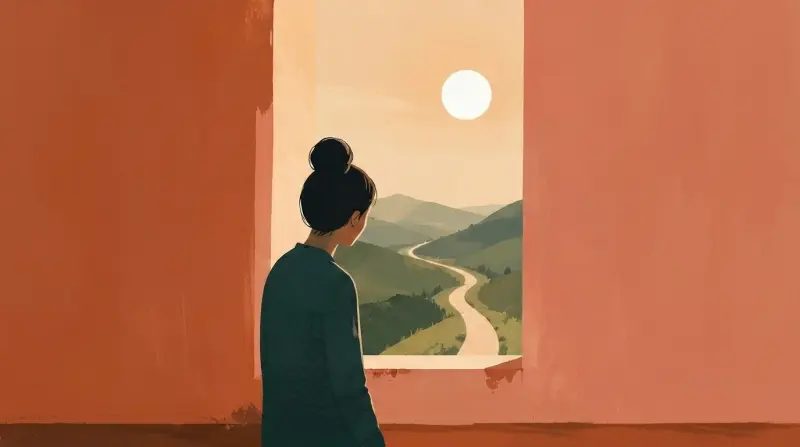
You might wake up one day and realize that something inside you has changed without announcement: the same face, but a spirit that feels less light and more cautious. Not because you can’t feel joy anymore, but because experience taught your heart to check a thousand times before it feels reassured once. Here begins the grief for the old version of you—the one who moved with ease and laughed without calculating consequences. You may look composed in front of people, while inside you’re saying goodbye to something precious and searching for yourself between what was and what has become. This article helps you understand this grief with gentleness: how to honor what you lost without getting stuck in it, and then return to life through small, realistic steps.
Why Do We Grieve Our Old Selves?
There is a kind of loss others don’t easily see: when you don’t lose a person, but lose a version of yourself. You may have lost spontaneous trust, the ability to enjoy without keeping score, or the sense of safety that used to make details feel simple. After a harsh experience or a major transition—like illness, job loss, divorce, or moving to a new city—it can feel as if your life split into a “before” and an “after.”
This grief makes sense because it’s tied to what once felt familiar. The UK National Health Service points out that grief can appear when you lose important things in life—such as the end of a relationship or the loss of a job or home—not only after death. That meaning opens a door for us to understand losing the “old self” as a kind of loss.
In our environment, this can also collide with social expectations that you should move on quickly, or not complain because others have it worse. Comparison doesn’t help the heart heal. Acknowledging what you lost doesn’t reduce your patience; it gives patience a realistic meaning instead of making it a heavy mask.
How Does Grief for Your Old Self Show Up?
It might show up as a sentence repeating in your head: I’m not who I used to be. Then comparisons begin: your old presence and your current presence, friendships that used to feel easy and now feel tiring, or gatherings you once enjoyed and now avoid because you don’t want to face the difference. Sometimes it comes as quick anger, a dullness toward what used to excite you, or a fatigue that medical tests can’t explain.
This grief can also mix with the effects of trauma itself or with low mood that deserves attention. Grief may come in waves and connect to a specific loss or change, while signs of depression may include persistent low mood or loss of pleasure along with disruption in sleep, appetite, work, or relationships. This is not a self-diagnosis, but it is a reason to seek a qualified assessment if the pain lasts or starts disrupting your life. The U.S. National Institute of Mental Health explains that reactions after traumatic events may include anxiety, sleep and concentration difficulties, repeatedly thinking about what happened, and that many people find these reactions ease over time.
What hurts is that the mind may interpret caution as weakness, while it’s often a protective attempt after learning the lesson the hard way. The issue isn’t caution itself, but when it turns into a total identity: I changed, therefore I’m less. Here you need a truer alternative sentence: I changed because I went through something big, and that doesn’t erase my worth.
A Gentle Goodbye: Small Steps to Farewell What’s Past
Goodbye doesn’t mean erasing the past or disowning it. Goodbye means acknowledging what you lost, then stopping the punishment of yourself for feeling pain. Start by naming the loss precisely, because a general word like “loss” can increase confusion. Ask yourself: What exactly do I miss about the old version of me? Safety? Simplicity? Energy? Relationships? Or a certain image of the future?
These short questions may help you name it:
What changed inside me since the event?
What was I leaning on that is no longer there?
What do I need today to feel some stability?
What has remained in me despite everything?
Then try one small farewell action: a message no one will read, in which you write to your old self with thanks, apology, and goodbye—or organizing old photos into an album instead of leaving them scattered on your phone to surprise you when you’re already drained. When farewell moves from a mental idea into a simple act, the feeling of being stuck in the past may lessen, because you gave your heart space for acknowledgment, not space for rumination.
Building a New Version That Carries the Old Without Living in It
Accepting the new version of you may feel like betrayal of the old one—especially if the old you was lighter or more confident. But transformation doesn’t erase your essence; it reorganizes your boundaries and priorities. You can love parts of your old self, grieve what you lost, and at the same time make room for what is growing now.
Instead of asking, How do I go back to who I was? try a gentler question: What do I want to carry with me from the past, and what do I want to leave behind? You might carry your kindness, care, and principles—and leave behind harsh expectations that you must always be strong or always available for everyone. This balance makes change less violent.
And because grief feeds on isolation, choose one safe person and tell them clearly: I miss my old self, and I’m trying to adapt. You don’t need to share details if you don’t want to. Sometimes simply hearing these words in your own voice turns them from a secret that weighs on your chest into a reality you can work with.
Grieving your old self is not a sign of failure; it can be a sign of loyalty to what once mattered in your life. Give that grief its right to be acknowledged, then give your day its right to small steps: a routine that calms you, a gentle limit on comparison, and a memory you place where it belongs instead of living inside it. If grief comes with thoughts of self-harm, wishing for death, a plan to harm yourself, intense hopelessness, a clear inability to manage basic daily needs, or fear of being alone, urgent help from the nearest emergency department or a qualified health provider comes first. In Saudi Arabia, emergency options include 999 for emergencies, 997 for ambulance, and 937 for health support. Tatmeen is not an emergency service; after safety is secured, if the weight of change feels bigger than you can carry alone, Tatmeen may help you explore licensed, suitable support.
Frequently Asked Questions
Does missing my old self mean I haven’t healed?
Not necessarily. Missing your old self can be a natural part of adapting, especially after a major change. Healing doesn’t erase memories; it reduces the intensity of pain and increases your ability to live your day. Watch its effect on your day with gentleness.
How do I stop comparing myself to who I used to be?
Start by reducing the triggers of comparison: photos, accounts, or conversations that forcibly pull you back into the past. Then add a simple alternative: a daily moment of gratitude for one small thing you’re doing now. Comparison traps you between two versions; gratitude brings you back to your present.
What if I feel guilty for being sad even though I survived?
This is common. Gratitude and grief can live in the same heart without contradiction. You’re grateful that you got through it, and sad because you paid a price. Allow the feelings to sit side by side, and don’t let guilt deprive you of your right to compassion.
A writer and researcher specializing in psychiatry, she focuses on mental health and the human emotions we experience but cannot always find the words to name. She writes about us—about humanity and the human experience—and simplifies complex topics to offer content that helps us better understand ourselves and life, ultimately making us feel less alone.
Every Tatmeen article is reviewed by care providers licensed by the Saudi Commission for Health Specialties, so what you read is accurate and trustworthy.
This article builds understanding and does not replace a licensed care provider.
Need someone to talk to?
Tatmeen's licensed care providers are available around the clock, and the app's urgent consultation connects you with one within minutes.
Download Tatmeen to explore care providers and booking options.
Smart matchingFour quick questions suggest the right care provider
Urgent consultationTalk to an available care provider within minutes
Free psychological measuresMore than 20 tests to understand how you are doing
Scan to download
{"data":{"id":"9e83401b-cd7b-46f2-ad2b-3e1ca44e2e9b","slug":"grieving-old-self-returning-to-life","arTitle":"الحزن على النسخة القديمة منك والعودة للحياة","enTitle":"Grieving the Old Version of Yourself and Returning to Life","thumbnailAltText":"a woman embracing her new self and returning to life","estimatedReadingTime":5,"likesCount":124,"writer":{"id":"3ab72b74-f26f-4337-9b47-3114b0f90de5","arBio":"كاتبة وباحثة متخصصة في مجال الطب النفسي، تهتم بموضوعات الصحة النفسية وبالمشاعر الإنسانية التي نختبرها ولا نجد دائمًا الكلمات لتسميتها. تكتب عنّا؛ عن الإنسان وتجربته، وتبسّط الموضوعات المعقّدة لتقدّم محتوى يساعدنا على فهم ذواتنا والحياة أكثر، ويجعلنا نشعر بأننا بوحدة أقل.","enBio":"A writer and researcher specializing in psychiatry, she focuses on mental health and the human emotions we experience but cannot always find the words to name. She writes about us—about humanity and the human experience—and simplifies complex topics to offer content that helps us better understand ourselves and life, ultimately making us feel less alone.","user":{"slug":"ayat-alnajar","arFullName":"آيات النجار","enFullName":"Ayat Al-Najjar","publicProfileImageUrl":"https://cdn.tatmeen.sa/public/profile-images/02384455-68fa-40b6-ad05-609fde65cafa/21b9a610dde5dfc6d37af110c23e9c7ab3946be080c281beb000debf4f7d31a6.webp","publicProfileImage96Url":"https://cdn.tatmeen.sa/public/profile-images/02384455-68fa-40b6-ad05-609fde65cafa/21b9a610dde5dfc6d37af110c23e9c7ab3946be080c281beb000debf4f7d31a6-w96.webp","publicProfileImage192Url":"https://cdn.tatmeen.sa/public/profile-images/02384455-68fa-40b6-ad05-609fde65cafa/21b9a610dde5dfc6d37af110c23e9c7ab3946be080c281beb000debf4f7d31a6-w192.webp"}},"arContent":"","enContent":"","productionDocument":{"headings":[{"id":"article-section-why-do-we-grieve-our-old-selves","text":"Why Do We Grieve Our Old Selves?"},{"id":"article-section-how-does-grief-for-your-old-self-show-up","text":"How Does Grief for Your Old Self Show Up?"},{"id":"article-section-a-gentle-goodbye-small-steps-to-farewell-what-s-past","text":"A Gentle Goodbye: Small Steps to Farewell What’s Past"},{"id":"article-section-building-a-new-version-that-carries-the-old-without-living-in-it","text":"Building a New Version That Carries the Old Without Living in It"}],"faqs":[{"question":"Does missing my old self mean I haven’t healed?","answer":"<p><span style=\"color:#000000\">Not necessarily. Missing your old self can be a natural part of adapting, especially after a major change. Healing doesn’t erase memories; it reduces the intensity of pain and increases your ability to live your day. Watch its effect on your day with gentleness.</span></p>"},{"question":"How do I stop comparing myself to who I used to be?","answer":"<p><span style=\"color:#000000\">Start by reducing the triggers of comparison: photos, accounts, or conversations that forcibly pull you back into the past. Then add a simple alternative: a daily moment of gratitude for one small thing you’re doing now. Comparison traps you between two versions; gratitude brings you back to your present.</span></p>"},{"question":"What if I feel guilty for being sad even though I survived?","answer":"<p><span style=\"color:#000000\">This is common. Gratitude and grief can live in the same heart without contradiction. You’re grateful that you got through it, and sad because you paid a price. Allow the feelings to sit side by side, and don’t let guilt deprive you of your right to compassion.</span></p>"}],"beforeSourcesHtml":"<p></p>","sources":[],"afterSourcesHtml":"","blocks":[{"type":"html","html":"<p><span style=\"color:#000000\">You might wake up one day and realize that something inside you has changed without announcement: the same face, but a spirit that feels less light and more cautious. Not because you can’t feel joy anymore, but because experience taught your heart to check a thousand times before it feels reassured once. Here begins the grief for the old version of you—the one who moved with ease and laughed without calculating consequences. You may look composed in front of people, while inside you’re saying goodbye to something precious and searching for yourself between what was and what has become. This article helps you understand this grief with gentleness: how to honor what you lost without getting stuck in it, and then return to life through small, realistic steps.</span></p><h2 id=\"article-section-why-do-we-grieve-our-old-selves\" data-toc-heading tabindex=\"-1\"><span id=\"why-do-we-grieve-our-old-selves-1\" aria-hidden=\"true\"></span><span style=\"color:#000000\"><strong>Why Do We Grieve Our Old Selves?</strong></span></h2><p><span style=\"color:#000000\">There is a kind of loss others don’t easily see: when you don’t lose a person, but lose a version of yourself. You may have lost spontaneous trust, the ability to enjoy without keeping score, or the sense of safety that used to make details feel simple. After a harsh experience or a major transition—like illness, job loss, divorce, or moving to a new city—it can feel as if your life split into a “before” and an “after.”</span></p><p><span style=\"color:#000000\">This grief makes sense because it’s tied to what once felt familiar. The UK National Health Service points out that grief can appear when you lose important things in life—such as the end of a relationship or the loss of a job or home—not only after death. That meaning opens a door for us to understand losing the “old self” as a kind of loss.</span></p><p><span style=\"color:#000000\">In our environment, this can also collide with social expectations that you should move on quickly, or not complain because others have it worse. Comparison doesn’t help the heart heal. Acknowledging what you lost doesn’t reduce your patience; it gives patience a realistic meaning instead of making it a heavy mask.</span></p><h2 id=\"article-section-how-does-grief-for-your-old-self-show-up\" data-toc-heading tabindex=\"-1\"><span id=\"how-does-grief-for-your-old-self-show-up-2\" aria-hidden=\"true\"></span><span style=\"color:#000000\"><strong>How Does Grief for Your Old Self Show Up?</strong></span></h2><p><span style=\"color:#000000\">It might show up as a sentence repeating in your head: <em>I’m not who I used to be.</em> Then comparisons begin: your old presence and your current presence, friendships that used to feel easy and now feel tiring, or gatherings you once enjoyed and now avoid because you don’t want to face the difference. Sometimes it comes as quick anger, a dullness toward what used to excite you, or a fatigue that medical tests can’t explain.</span></p><p><span style=\"color:#000000\">This grief can also mix with the effects of trauma itself or with low mood that deserves attention. Grief may come in waves and connect to a specific loss or change, while signs of depression may include persistent low mood or loss of pleasure along with disruption in sleep, appetite, work, or relationships. This is not a self-diagnosis, but it is a reason to seek a qualified assessment if the pain lasts or starts disrupting your life. The U.S. National Institute of Mental Health explains that reactions after traumatic events may include anxiety, sleep and concentration difficulties, repeatedly thinking about what happened, and that many people find these reactions ease over time.</span></p><p><span style=\"color:#000000\">What hurts is that the mind may interpret caution as weakness, while it’s often a protective attempt after learning the lesson the hard way. The issue isn’t caution itself, but when it turns into a total identity: <em>I changed, therefore I’m less.</em> Here you need a truer alternative sentence: <em>I changed because I went through something big, and that doesn’t erase my worth.</em></span></p><h2 id=\"article-section-a-gentle-goodbye-small-steps-to-farewell-what-s-past\" data-toc-heading tabindex=\"-1\"><span id=\"a-gentle-goodbye-small-steps-to-farewell-what-s-past-3\" aria-hidden=\"true\"></span><span style=\"color:#000000\"><strong>A Gentle Goodbye: Small Steps to Farewell What’s Past</strong></span></h2><p><span style=\"color:#000000\">Goodbye doesn’t mean erasing the past or disowning it. Goodbye means acknowledging what you lost, then stopping the punishment of yourself for feeling pain. Start by naming the loss precisely, because a general word like “loss” can increase confusion. Ask yourself: What exactly do I miss about the old version of me? Safety? Simplicity? Energy? Relationships? Or a certain image of the future?</span></p><p><span style=\"color:#000000\">These short questions may help you name it:</span></p><ul><li><p><span style=\"color:#000000\">What changed inside me since the event?</span></p></li><li><p><span style=\"color:#000000\">What was I leaning on that is no longer there?</span></p></li><li><p><span style=\"color:#000000\">What do I need today to feel some stability?</span></p></li><li><p><span style=\"color:#000000\">What has remained in me despite everything?</span></p></li></ul><p><span style=\"color:#000000\">Then try one small farewell action: a message no one will read, in which you write to your old self with thanks, apology, and goodbye—or organizing old photos into an album instead of leaving them scattered on your phone to surprise you when you’re already drained. When farewell moves from a mental idea into a simple act, the feeling of being stuck in the past may lessen, because you gave your heart space for acknowledgment, not space for rumination.</span></p><h2 id=\"article-section-building-a-new-version-that-carries-the-old-without-living-in-it\" data-toc-heading tabindex=\"-1\"><span id=\"building-a-new-version-that-carries-the-old-without-living-in-it-4\" aria-hidden=\"true\"></span><span style=\"color:#000000\"><strong>Building a New Version That Carries the Old Without Living in It</strong></span></h2><p><span style=\"color:#000000\">Accepting the new version of you may feel like betrayal of the old one—especially if the old you was lighter or more confident. But transformation doesn’t erase your essence; it reorganizes your boundaries and priorities. You can love parts of your old self, grieve what you lost, and at the same time make room for what is growing now.</span></p><p><span style=\"color:#000000\">Instead of asking, <em>How do I go back to who I was?</em> try a gentler question: <em>What do I want to carry with me from the past, and what do I want to leave behind?</em> You might carry your kindness, care, and principles—and leave behind harsh expectations that you must always be strong or always available for everyone. This balance makes change less violent.</span></p><p><span style=\"color:#000000\">And because grief feeds on isolation, choose one safe person and tell them clearly: <em>I miss my old self, and I’m trying to adapt.</em> You don’t need to share details if you don’t want to. Sometimes simply hearing these words in your own voice turns them from a secret that weighs on your chest into a reality you can work with.</span></p><p><span style=\"color:#000000\">Grieving your old self is not a sign of failure; it can be a sign of loyalty to what once mattered in your life. Give that grief its right to be acknowledged, then give your day its right to small steps: a routine that calms you, a gentle limit on comparison, and a memory you place where it belongs instead of living inside it. If grief comes with thoughts of self-harm, wishing for death, a plan to harm yourself, intense hopelessness, a clear inability to manage basic daily needs, or fear of being alone, urgent help from the nearest emergency department or a qualified health provider comes first. In Saudi Arabia, emergency options include 999 for emergencies, 997 for ambulance, and 937 for health support. Tatmeen is not an emergency service; after safety is secured, if the weight of change feels bigger than you can carry alone, Tatmeen may help you explore licensed, suitable support.</span></p>"}],"inlineCtaSignatures":[],"_experienceAliases":{"v":1,"fields":["html","bodyHtml"],"faqs":[0,1,2]}},"createdAt":"2026-06-02T21:00:00.000Z","updatedAt":"2026-06-10T23:43:52.258Z","disorderGroups":[{"id":"4499a52a-06f8-4022-a64d-304e5eca51cc","slug":"life-challenges-and-stress","arName":"تحديات الحياة والضغوط","enName":"Life Challenges & Stress"},{"id":"d807ea69-44d4-4e81-bee4-0a059fd36645","slug":"self-development","arName":"تنمية الذات","enName":"Self-Development"}],"reviewer":{"arFullName":"فريق تطمين","enFullName":"Tatmeen team","slug":"tatmeen-team","kind":"organization"},"productionArticle":true,"promotionAllowed":true,"preparedCover":{"src":"https://cdn.tatmeen.sa/public/article-lcp/article-lcp-v2/sha256-51216dcacc5e48e4674d7416ed2b4a9a5dc377230c867ccadb0fdef4ee959c7e/800-0cba0092b76fceded7aab004a164e72a7fce6b80692cf0ad3d180ef04dd7cd2e.avif","fallback":"https://cdn.tatmeen.sa/public/article-lcp/article-lcp-v2/sha256-51216dcacc5e48e4674d7416ed2b4a9a5dc377230c867ccadb0fdef4ee959c7e/800-141ddd05f0130ebaa4944df11f7d4381a750a1435efcd85bd9ab91add47e034a.webp","directUrl":"https://cdn.tatmeen.sa/blog-cover/Tatmeen-1780505207726.webp","isGolden":true,"avifSrcset":"https://cdn.tatmeen.sa/public/article-lcp/article-lcp-v2/sha256-51216dcacc5e48e4674d7416ed2b4a9a5dc377230c867ccadb0fdef4ee959c7e/400-9141b4884712144f8d0e4d93536f8e5f5cf5b7f4392630c759bf747773324abd.avif 400w, https://cdn.tatmeen.sa/public/article-lcp/article-lcp-v2/sha256-51216dcacc5e48e4674d7416ed2b4a9a5dc377230c867ccadb0fdef4ee959c7e/640-11e9cfa7209ec3bcbae0b1a9596c755e845e1df6cb89566ef88b908710e280ac.avif 640w, https://cdn.tatmeen.sa/public/article-lcp/article-lcp-v2/sha256-51216dcacc5e48e4674d7416ed2b4a9a5dc377230c867ccadb0fdef4ee959c7e/800-0cba0092b76fceded7aab004a164e72a7fce6b80692cf0ad3d180ef04dd7cd2e.avif 800w, https://cdn.tatmeen.sa/public/article-lcp/article-lcp-v2/sha256-51216dcacc5e48e4674d7416ed2b4a9a5dc377230c867ccadb0fdef4ee959c7e/1200-c442bc102d0dfaff9522fb9f6155b5eeb6b1e9ad168e9becdc409894f3f685ab.avif 1200w","webpSrcset":"https://cdn.tatmeen.sa/public/article-lcp/article-lcp-v2/sha256-51216dcacc5e48e4674d7416ed2b4a9a5dc377230c867ccadb0fdef4ee959c7e/400-d9af616eb19facd81af8e235729a79091295a381a67abfa4f88ab4fb9fcee5f8.webp 400w, https://cdn.tatmeen.sa/public/article-lcp/article-lcp-v2/sha256-51216dcacc5e48e4674d7416ed2b4a9a5dc377230c867ccadb0fdef4ee959c7e/640-07d6ad0572a5da13022362f567978921de05c89a7a91800f80c5c0e24309a540.webp 640w, https://cdn.tatmeen.sa/public/article-lcp/article-lcp-v2/sha256-51216dcacc5e48e4674d7416ed2b4a9a5dc377230c867ccadb0fdef4ee959c7e/800-141ddd05f0130ebaa4944df11f7d4381a750a1435efcd85bd9ab91add47e034a.webp 800w, https://cdn.tatmeen.sa/public/article-lcp/article-lcp-v2/sha256-51216dcacc5e48e4674d7416ed2b4a9a5dc377230c867ccadb0fdef4ee959c7e/1200-89f24ad22269641dde81f3ad1a7c41173468a7680a340283e41bb6c60a85aa32.webp 1200w","phoneAvifSrcset":"https://cdn.tatmeen.sa/public/article-lcp/article-lcp-v2/sha256-51216dcacc5e48e4674d7416ed2b4a9a5dc377230c867ccadb0fdef4ee959c7e/400-9141b4884712144f8d0e4d93536f8e5f5cf5b7f4392630c759bf747773324abd.avif 400w, https://cdn.tatmeen.sa/public/article-lcp/article-lcp-v2/sha256-51216dcacc5e48e4674d7416ed2b4a9a5dc377230c867ccadb0fdef4ee959c7e/640-11e9cfa7209ec3bcbae0b1a9596c755e845e1df6cb89566ef88b908710e280ac.avif 640w, https://cdn.tatmeen.sa/public/article-lcp/article-lcp-v2/sha256-51216dcacc5e48e4674d7416ed2b4a9a5dc377230c867ccadb0fdef4ee959c7e/800-0cba0092b76fceded7aab004a164e72a7fce6b80692cf0ad3d180ef04dd7cd2e.avif 800w","phoneWebpSrcset":"https://cdn.tatmeen.sa/public/article-lcp/article-lcp-v2/sha256-51216dcacc5e48e4674d7416ed2b4a9a5dc377230c867ccadb0fdef4ee959c7e/400-d9af616eb19facd81af8e235729a79091295a381a67abfa4f88ab4fb9fcee5f8.webp 400w, https://cdn.tatmeen.sa/public/article-lcp/article-lcp-v2/sha256-51216dcacc5e48e4674d7416ed2b4a9a5dc377230c867ccadb0fdef4ee959c7e/640-07d6ad0572a5da13022362f567978921de05c89a7a91800f80c5c0e24309a540.webp 640w, https://cdn.tatmeen.sa/public/article-lcp/article-lcp-v2/sha256-51216dcacc5e48e4674d7416ed2b4a9a5dc377230c867ccadb0fdef4ee959c7e/800-141ddd05f0130ebaa4944df11f7d4381a750a1435efcd85bd9ab91add47e034a.webp 800w","width":800,"height":447},"previewTaxonomy":{"groups":[{"id":"4499a52a-06f8-4022-a64d-304e5eca51cc","slug":"life-challenges-and-stress","arName":"تحديات الحياة والضغوط","enName":"Life Challenges & Stress"},{"id":"d807ea69-44d4-4e81-bee4-0a059fd36645","slug":"self-development","arName":"تنمية الذات","enName":"Self-Development"}],"topics":[{"id":"dbfa7d2b-f7dc-46d0-ac4b-3bb5b99a2b94","slug":"grief-and-loss","arName":"التعامل مع الحزن","enName":"Grief & Loss","groupSlug":"life-challenges-and-stress","href":"/blog/category/life-challenges-and-stress/grief-and-loss/"},{"id":"7795b6e4-e390-47a5-baf0-09243b44e066","slug":"self-compassion","arName":"تعاطف مع الذات","enName":"Self-Compassion","groupSlug":"self-development","href":"/blog/category/self-development/self-compassion/"}],"tags":[{"id":"67a4f7e8-5c58-4421-870b-17497c68d635","slug":"grief-loss","arName":"الحزن والفقد والحداد","enName":"Grief Loss & Sadness"},{"id":"d118e5be-1333-445f-8702-ac839855e25b","slug":"self-compassion","arName":"التعاطف مع الذات والرحمة بالنفس","enName":"Self-Compassion"},{"id":"d58e6187-021b-44a5-882c-245bccd77611","slug":"self-help-howto","arName":"مساعدة ذاتية / خطوات عملية","enName":"Self-Help / How-To"}]},"previewProviderRecommendations":[{"id":"7771d078-cbd9-4acd-aa51-29cc905753c4","slug":"hatim-jafaari-2902","arFullName":"حاتم جعفرى","enFullName":"Hatim Jafaari","publicProfileImageUrl":"https://cdn.tatmeen.sa/public/profile-images/7771d078-cbd9-4acd-aa51-29cc905753c4/874a489ca72b87dacbde76d8496eef84ca341ee8074b9ec54464cd0a56bbdbe6.webp","publicProfileImage96Url":"https://cdn.tatmeen.sa/public/profile-images/7771d078-cbd9-4acd-aa51-29cc905753c4/874a489ca72b87dacbde76d8496eef84ca341ee8074b9ec54464cd0a56bbdbe6-w96.webp","publicProfileImage192Url":"https://cdn.tatmeen.sa/public/profile-images/7771d078-cbd9-4acd-aa51-29cc905753c4/874a489ca72b87dacbde76d8496eef84ca341ee8074b9ec54464cd0a56bbdbe6-w192.webp","specialization":{"arName":"أخصائي نفسي","enName":"Psychologist"},"profileImageUrl":"https://cdn.tatmeen.sa/public/profile-images/7771d078-cbd9-4acd-aa51-29cc905753c4/874a489ca72b87dacbde76d8496eef84ca341ee8074b9ec54464cd0a56bbdbe6-w192.webp","experienceYears":2,"consultantInfo":{"averageRating":{"average":5},"specialization":{"arGeneralName":"أخصائي نفسي","enGeneralName":"Psychologist"}}},{"id":"5520abac-2d83-4b20-a11d-f63055316699","slug":"maha-alawad-4831","arFullName":"مها العواد","enFullName":"Maha Alawad","publicProfileImageUrl":"","publicProfileImage96Url":"","publicProfileImage192Url":"","specialization":{"arName":"أخصائي نفسي","enName":"Psychologist"},"profileImageUrl":"","experienceYears":13,"consultantInfo":{"averageRating":{"average":4.846153846153846},"specialization":{"arGeneralName":"أخصائي نفسي","enGeneralName":"Psychologist"}}},{"id":"d754a189-f8c9-4aad-b4aa-a5dbd26c0bd7","slug":"talal-alshowaier-8694","arFullName":"طلال الشويعر","enFullName":"Talal Alshowaier","publicProfileImageUrl":"https://cdn.tatmeen.sa/public/profile-images/d754a189-f8c9-4aad-b4aa-a5dbd26c0bd7/74feb27848a47cf43189f6b5951e06a9b87b08269021d5bab765092fc65fce42.webp","publicProfileImage96Url":"https://cdn.tatmeen.sa/public/profile-images/d754a189-f8c9-4aad-b4aa-a5dbd26c0bd7/74feb27848a47cf43189f6b5951e06a9b87b08269021d5bab765092fc65fce42-w96.webp","publicProfileImage192Url":"https://cdn.tatmeen.sa/public/profile-images/d754a189-f8c9-4aad-b4aa-a5dbd26c0bd7/74feb27848a47cf43189f6b5951e06a9b87b08269021d5bab765092fc65fce42-w192.webp","specialization":{"arName":"أخصائي نفسي","enName":"Psychologist"},"profileImageUrl":"https://cdn.tatmeen.sa/public/profile-images/d754a189-f8c9-4aad-b4aa-a5dbd26c0bd7/74feb27848a47cf43189f6b5951e06a9b87b08269021d5bab765092fc65fce42-w192.webp","experienceYears":3,"consultantInfo":{"averageRating":{"average":5},"specialization":{"arGeneralName":"أخصائي نفسي","enGeneralName":"Psychologist"}}}],"previewCareProviders":[{"id":"09364052-c2a9-4c52-9717-7ce2093b8d0a","slug":"kholoud-alharbi-5221","arFullName":"خلود الحربي","enFullName":"Kholoud Alharbi","publicProfileImageUrl":"https://cdn.tatmeen.sa/public/profile-images/09364052-c2a9-4c52-9717-7ce2093b8d0a/4a0aeb81619e351b77f4323e3605a0a00acc7ca3c82ee7cc5ca2c9e8ef716049.webp","publicProfileImage96Url":"https://cdn.tatmeen.sa/public/profile-images/09364052-c2a9-4c52-9717-7ce2093b8d0a/4a0aeb81619e351b77f4323e3605a0a00acc7ca3c82ee7cc5ca2c9e8ef716049-w96.webp","publicProfileImage192Url":"https://cdn.tatmeen.sa/public/profile-images/09364052-c2a9-4c52-9717-7ce2093b8d0a/4a0aeb81619e351b77f4323e3605a0a00acc7ca3c82ee7cc5ca2c9e8ef716049-w192.webp","gender":"FEMALE","specialization":{"arName":"أخصائي نفسي","enName":"Psychologist"}},{"id":"6f037535-1dca-4b50-a8b2-5974b7323286","slug":"salah-althobaiti-9053","arFullName":"صلاح الثبيتي","enFullName":"Salah Althobaiti","publicProfileImageUrl":"https://cdn.tatmeen.sa/public/profile-images/6f037535-1dca-4b50-a8b2-5974b7323286/35b6bd7fad9b1e004c1835803eb9c1b56dcacd380685ec8bff141f0fb888005c.webp","publicProfileImage96Url":"https://cdn.tatmeen.sa/public/profile-images/6f037535-1dca-4b50-a8b2-5974b7323286/35b6bd7fad9b1e004c1835803eb9c1b56dcacd380685ec8bff141f0fb888005c-w96.webp","publicProfileImage192Url":"https://cdn.tatmeen.sa/public/profile-images/6f037535-1dca-4b50-a8b2-5974b7323286/35b6bd7fad9b1e004c1835803eb9c1b56dcacd380685ec8bff141f0fb888005c-w192.webp","gender":"MALE","specialization":{"arName":"أخصائي نفسي","enName":"Psychologist"}},{"id":"3cc806e8-616b-4884-9f21-a75b378580a2","slug":"aisha-al-hashim-8667","arFullName":"عائشة ال هاشم","enFullName":"Aisha Al Hashim","publicProfileImageUrl":"https://cdn.tatmeen.sa/public/profile-images/3cc806e8-616b-4884-9f21-a75b378580a2/27f523d03be4dcfa1f6a79f70c1773887434e698990d214cd990caec56a44798.webp","publicProfileImage96Url":"https://cdn.tatmeen.sa/public/profile-images/3cc806e8-616b-4884-9f21-a75b378580a2/27f523d03be4dcfa1f6a79f70c1773887434e698990d214cd990caec56a44798-w96.webp","publicProfileImage192Url":"https://cdn.tatmeen.sa/public/profile-images/3cc806e8-616b-4884-9f21-a75b378580a2/27f523d03be4dcfa1f6a79f70c1773887434e698990d214cd990caec56a44798-w192.webp","gender":"FEMALE","specialization":{"arName":"أخصائي نفسي","enName":"Psychologist"}},{"id":"94765496-dbdf-4631-a01b-7df5f788668d","slug":"abdullrahman-alhamoudi-3045","arFullName":"عبدالرحمن الحمودي","enFullName":"Abdulrahman Alhamoudi","publicProfileImageUrl":"https://cdn.tatmeen.sa/public/profile-images/94765496-dbdf-4631-a01b-7df5f788668d/2d49f6b6493c564afb6f50b6c3634231dff3a5cf8353acfab393d1b2a88037d1.webp","publicProfileImage96Url":"https://cdn.tatmeen.sa/public/profile-images/94765496-dbdf-4631-a01b-7df5f788668d/2d49f6b6493c564afb6f50b6c3634231dff3a5cf8353acfab393d1b2a88037d1-w96.webp","publicProfileImage192Url":"https://cdn.tatmeen.sa/public/profile-images/94765496-dbdf-4631-a01b-7df5f788668d/2d49f6b6493c564afb6f50b6c3634231dff3a5cf8353acfab393d1b2a88037d1-w192.webp","gender":"MALE","specialization":{"arName":"أخصائي نفسي","enName":"Psychologist"}},{"id":"618dba89-5b70-4b46-8304-741b7ac8ecd3","slug":"abdullah-mari-1311","arFullName":"عبدالله مرعي","enFullName":"Abdullah Mari","publicProfileImageUrl":"https://cdn.tatmeen.sa/public/profile-images/618dba89-5b70-4b46-8304-741b7ac8ecd3/6b4a3bfb59f8a304ca79083b32859b46baad2e1d692974a47c02c1f66bd11129.webp","publicProfileImage96Url":"https://cdn.tatmeen.sa/public/profile-images/618dba89-5b70-4b46-8304-741b7ac8ecd3/6b4a3bfb59f8a304ca79083b32859b46baad2e1d692974a47c02c1f66bd11129-w96.webp","publicProfileImage192Url":"https://cdn.tatmeen.sa/public/profile-images/618dba89-5b70-4b46-8304-741b7ac8ecd3/6b4a3bfb59f8a304ca79083b32859b46baad2e1d692974a47c02c1f66bd11129-w192.webp","gender":"MALE","specialization":{"arName":"أخصائي نفسي","enName":"Psychologist"}},{"id":"d4ffcb6b-90a7-45b6-b941-964866f4564b","slug":"dhaifallah-alhumaidi-1092","arFullName":"ضيف الله الحميدي","enFullName":"Dhaifallah Alhumaidi","publicProfileImageUrl":"https://cdn.tatmeen.sa/public/profile-images/d4ffcb6b-90a7-45b6-b941-964866f4564b/1817171c5828a9b57d6c30d12332cf154e335272548bc90a6e8456d74d356956.webp","publicProfileImage96Url":"https://cdn.tatmeen.sa/public/profile-images/d4ffcb6b-90a7-45b6-b941-964866f4564b/1817171c5828a9b57d6c30d12332cf154e335272548bc90a6e8456d74d356956-w96.webp","publicProfileImage192Url":"https://cdn.tatmeen.sa/public/profile-images/d4ffcb6b-90a7-45b6-b941-964866f4564b/1817171c5828a9b57d6c30d12332cf154e335272548bc90a6e8456d74d356956-w192.webp","gender":"MALE","specialization":{"arName":"أخصائي نفسي","enName":"Psychologist"}},{"id":"d8fb937b-ad65-4b6f-a65b-276ad8258fed","slug":"azza-alharbi-7286","arFullName":"عزه الحربي","enFullName":"Azza Alharbi","publicProfileImageUrl":"https://cdn.tatmeen.sa/public/profile-images/d8fb937b-ad65-4b6f-a65b-276ad8258fed/378a8ab30f4087833263c41fb2c3102028cbe6bb9655172d7b3439ee1d6b0800.webp","publicProfileImage96Url":"https://cdn.tatmeen.sa/public/profile-images/d8fb937b-ad65-4b6f-a65b-276ad8258fed/378a8ab30f4087833263c41fb2c3102028cbe6bb9655172d7b3439ee1d6b0800-w96.webp","publicProfileImage192Url":"https://cdn.tatmeen.sa/public/profile-images/d8fb937b-ad65-4b6f-a65b-276ad8258fed/378a8ab30f4087833263c41fb2c3102028cbe6bb9655172d7b3439ee1d6b0800-w192.webp","gender":"FEMALE","specialization":{"arName":"أخصائي نفسي","enName":"Psychologist"}},{"id":"025d770d-f6d4-405b-be1c-d45dde63fbf7","slug":"akila-alomran-7545","arFullName":"عقيله العمران","enFullName":"Akila Alomran","publicProfileImageUrl":"https://cdn.tatmeen.sa/public/profile-images/025d770d-f6d4-405b-be1c-d45dde63fbf7/44a990b9294f02c9810c69a68b8913a6afac0eb30d1b7494155f31b6dde9378b.webp","publicProfileImage96Url":"https://cdn.tatmeen.sa/public/profile-images/025d770d-f6d4-405b-be1c-d45dde63fbf7/44a990b9294f02c9810c69a68b8913a6afac0eb30d1b7494155f31b6dde9378b-w96.webp","publicProfileImage192Url":"https://cdn.tatmeen.sa/public/profile-images/025d770d-f6d4-405b-be1c-d45dde63fbf7/44a990b9294f02c9810c69a68b8913a6afac0eb30d1b7494155f31b6dde9378b-w192.webp","gender":"FEMALE","specialization":{"arName":"أخصائي نفسي","enName":"Psychologist"}}],"previewDownload":{"href":"/download","title":{"ar":"خطوة واحدة لأجلك، ابدأ الآن","en":"One step for you, start now"},"description":{"ar":"حمّل تطبيق تطمين لاستكشاف مقدمي الرعاية وخيارات الحجز.","en":"Download Tatmeen to explore care providers and booking options."},"posterSrc":"/images/home/cta-ar-new-1.webp","videoSrc":"/images/home/cta-ar-new-1.mp4","videoPosterSrc":"/images/home/cta-ar-new-1.webp","videoPosterEnSrc":"/images/home/cta-en-new-1.webp","videoType":"video/mp4","appStoreHref":"https://apps.apple.com/us/app/tatmeen-%D8%AA%D8%B7%D9%85%D9%8A%D9%86/id6473836983","googlePlayHref":"https://play.google.com/store/apps/details?id=com.TatmeenApp.user&hl=en"},"previewRelatedArticles":[{"id":"d4941994-e199-4eae-ba3e-9bfb75f0172c","slug":"sadness-without-reason-loneliness","route":"/blog/sadness-without-reason-loneliness/","title":{"ar":"الحزن: أنواعه وعلاج الشعور بالحزن دون سبب وعلاقته بالوحدة","en":"Sadness: Types, Coping with Sadness Without a Clear Reason, and Its Link to Lone"},"image":"https://cdn.tatmeen.sa/public/article-lcp/article-lcp-v2/sha256-9b669713f9c2b1c516e18526ab484b47dda93df60ea65f8a97346a0043e77a50/800-065351059cb1b35df54ceb09118ef5816c49601276f104c1f91b6f3e6026a937.webp","directImageFallback":"https://cdn.tatmeen.sa/blog-cover/Tatmeen-1779977766390.webp","arThumbnailAltText":"a person sitting down feeling sad surrounded by drawing that represent different causes of sadness","thumbnailAltText":"a person sitting down feeling sad surrounded by drawing that represent different causes of sadness","topic":{"label":{"ar":"اضطرابات نفسية شائعة","en":"Common Mental Issues"}},"readingTimeMinutes":5},{"id":"4b5c42e9-cdf4-45c6-80b3-021834d52201","slug":"after-loss-grief-without-self-blame","route":"/blog/after-loss-grief-without-self-blame/","title":{"ar":"ما بعد الفقد: كيف نداوي الألم دون إنكار أو جلد للذات؟","en":"After Loss: How to Heal Without Denial or Self-Blame"},"image":"https://cdn.tatmeen.sa/public/article-lcp/article-lcp-v2/sha256-d35892184202d9f62244327b4071cc461a9e42325aed837e4d5562fa3c8435e4/800-8dd4b47ecf8e82de0467d5c974f4b3d8f8bb3f5f7e5e978ce1e5f6b3236af86e.webp","directImageFallback":"https://cdn.tatmeen.sa/blog-cover/Tatmeen-1781453444999.webp","arThumbnailAltText":"Silhouette gazing through window at sunlit hills and winding path, symbolizing hope ahead","thumbnailAltText":"Silhouette gazing through window at sunlit hills and winding path, symbolizing hope ahead","topic":{"label":{"ar":"تحديات الحياة والضغوط","en":"Life Challenges & Stress"}},"readingTimeMinutes":5},{"id":"876ffcde-57de-4760-9a82-cef8b5b4ffcf","slug":"comfort-in-sadness-addiction-psychology","route":"/blog/comfort-in-sadness-addiction-psychology/","title":{"ar":"لماذا قد نجد في الحزن شعوراً بالراحة؟ وهل يمكن أن يصبح إدماناً؟","en":"Why Do We Find Comfort in Sadness? And Can It Become an Addiction?"},"image":"https://cdn.tatmeen.sa/public/article-lcp/article-lcp-v2/sha256-4e77aa23bb09deff22861e8fee56b95b8083d809ebe81f09a34052b8587e291c/800-63964c4bd21dddd255d08ef44b96caf3be05994948f40d6f063677445fd1f23b.webp","directImageFallback":"https://cdn.tatmeen.sa/blog-cover/Tatmeen-1777642777693.webp","arThumbnailAltText":"Person wrapped in a blanket by a rainy window looking peaceful in a moment of quiet sadness","thumbnailAltText":"Person wrapped in a blanket by a rainy window looking peaceful in a moment of quiet sadness","topic":{"label":{"ar":"تحديات الحياة والضغوط","en":"Life Challenges & Stress"}},"readingTimeMinutes":5},{"id":"b4f62a54-5f31-4ae2-b91f-4e4b77bafac3","slug":"prolonged-grief-disorder-vs-normal-grief","route":"/blog/prolonged-grief-disorder-vs-normal-grief/","title":{"ar":" اضطراب الحداد المطوّل والفرق عن الحزن الطبيعي","en":" Prolonged Grief Disorder and How It Differs From Normal Grief"},"image":"https://cdn.tatmeen.sa/public/article-lcp/article-lcp-v2/sha256-0bafede2c393f45fe47f82790fe4f6618c529df75743a253c703fa6a153261fb/800-fc1dc3c02cb38609a1201847fa5a6682c8a87cd64fac3613f7a29c032328c41c.webp","directImageFallback":"https://cdn.tatmeen.sa/blog-cover/Tatmeen-1780667885025.webp","arThumbnailAltText":"Watercolor portrait contrasting prolonged grief and healing through light and shadow.","thumbnailAltText":"Watercolor portrait contrasting prolonged grief and healing through light and shadow.","topic":{"label":{"ar":"تحديات الحياة والضغوط","en":"Life Challenges & Stress"}},"readingTimeMinutes":5}],"previewRelatedReadStates":{}},"locale":"en","device":"desktop","path":"/en/blog/grieving-old-self-returning-to-life/","readingControls":false,"config":{"public":{"BUCKET_URL":"https://cdn.tatmeen.sa/","APP_BASE_URL":"https://tatmeen.sa","intercomAppId":"ppcnu9e3"}}}