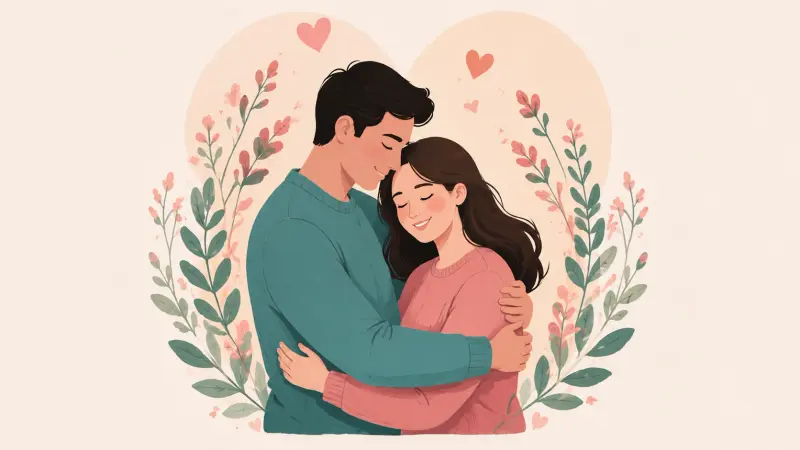
In the rush of days and responsibilities, gratitude between spouses may fade without intention. Small efforts become familiar, and beautiful gestures are taken as ordinary, while attention grows toward what was lacking or delayed. Over time, this does not mean that love has disappeared, but the sense of appreciation may lessen, and the relationship may lose some of its lightness and warmth. That is why understanding the meaning of gratitude between spouses is not a minor matter, but an important step in protecting affection and paying attention to what the relationship needs before neglect leaves its mark on closeness and reassurance.
What does gratitude between spouses mean?
Gratitude between spouses is not a courtesy or kind words said when needed. It is seeing what the other person does, and acknowledging its value and its impact on you. It may be something small: taking responsibility off your shoulders, noticing your exhaustion, or getting something done that would have taken your time and effort.
NIH1 explains that the effect of gratitude is not tied to the word thank you alone, but to appreciation being clear and specific. When you tell the other person exactly what you appreciated, the meaning reaches them better than a general phrase that passes quickly.
In marriage specifically, this matters because so much daily effort disappears under familiarity. Housework, follow-up, organizing, and paying attention to the details of the home and family may, over time, turn into things taken for granted. And when this effort is not seen, one or both partners begin to feel that what they offer goes unnoticed.
Why does gratitude reduce tension between spouses?
Married life carries endless pressures: work, responsibilities, family obligations, and ordinary daily fatigue. Gratitude does not remove these pressures, but it reduces their impact on the relationship. When one spouse feels that their effort is seen and appreciated, disagreement becomes less likely to be understood as complete disregard or a diminishing of their worth.
PMC2 explains the link between a person’s feeling of being appreciated by their partner and greater relationship satisfaction and a better ability to tolerate some of the daily pressures. This does not mean that gratitude solves every problem, but it helps prevent every problem from turning into a judgment on the whole relationship.
That is why gratitude is especially helpful in periods when friction is frequent. Not because it beautifies reality, but because it reminds both partners that there is effort and affection between them, not merely a list of mistakes and shortcomings.
How does gratitude show up in daily life?
Sincere gratitude between spouses often appears in ordinary details. It is naming a specific action rather than using general words, acknowledging the effort before asking for more, and noticing what the other person keeps doing before it becomes invisible. Instead of saying thank you only, you might say: I felt relieved because you took care of this for me today, or I appreciated that you noticed how tired I was.
This kind of language is simple, but clearer than general praise. The other person does not always need grand words, but a clear feeling that what they do is understood and appreciated. And the closer the expression is to the situation itself, the more genuine and less forced it feels.
It also helps not to keep gratitude confined to major moments or to after conflicts. Its presence in ordinary days makes the relationship calmer. Recent research3 also indicates that gratitude is linked to the way spouses support one another during times of stress, and this explains why its absence is noticeable even if no one speaks about it directly.
Another form of gratitude is stopping yourself from treating your partner’s effort as though it were a duty that does not deserve attention. The goal is not to magnify every detail, but it is helpful for there to remain an acknowledgment of what is being given within the relationship, especially in the things that happen every day and are easy to overlook.
What weakens the feeling of gratitude?
What weakens gratitude most is familiarity. When the same roles are repeated every day, each partner begins to see the other’s effort as something expected that does not need appreciation. And under pressure, attention becomes quicker to notice what is missing than to notice what is present, so remarks increase and acknowledgment of effort decreases.
Gratitude is also weakened when thanks turn into an automatic style. If the same words are said without real attention or in a tone of obligation, they will most likely leave little effect. The same is true if the other person feels that the thanks are merely an introduction to a new request, or an attempt to reduce tension without addressing the real cause.
And in some relationships, the problem is not only a lack of gratitude. There may be repeated neglect, harshness in speech, or a constant feeling that the effort is unbalanced. Here, words of appreciation alone are not enough, because the relationship needs a clearer discussion, and perhaps professional help if this pattern continues and becomes draining.
How can gratitude be strengthened without feeling forced?
The best beginning is not a big promise, but a small, clear habit. Choose one thing to notice and mention honestly: what did the other person do? And what effect did it have on you? The sentence does not need a special formulation. The more direct it is, the more natural and closer to reality it feels.
It also helps for gratitude to be expressed in a calm moment, not only after disappointment or conflict. This makes appreciation part of the relationship itself, not a tool used when needed. And reducing quick criticism opens space for the other person to actually hear the appreciation, because gratitude is hard to receive in an atmosphere of constant defensiveness.
And if the spouses notice that the dryness has gone on for too long, or that each of them has begun to feel unseen within the relationship, then talking with a licensed family or mental health specialist through Tatmeen may be a helpful step. Sometimes what is needed is not major solutions, but someone who helps reveal what has become disrupted in the way of speaking, appreciating, and dealing with daily life.
Gratitude between spouses is not an extra detail. It is a simple way of preserving respect in the middle of ordinary days, and of seeing effort before it disappears beneath familiarity. And the clearer it is and the closer it stays to small moments, the more genuine and lasting it becomes. And if it has been absent for a long time, then the relationship most likely needs direct attention, not more assumptions.
Frequently Asked Questions
Does gratitude between spouses mean excessive praise?
No. Gratitude does not require exaggeration or grand phrases. What matters is noticing what the other person does, and expressing clear and sincere appreciation for it. A short, specific sentence may be more genuine than a great deal of praise that does not touch reality.
What should I do if I appreciate the other person but do not express it?
Start with a simple sentence connected to a specific moment. Do not wait for a special occasion or a perfect wording. The closer the expression is to its moment, the easier and less forced it will be, and its effect on the other person will often be clearer.
Is gratitude enough to solve marital problems?
Not always. Gratitude strengthens the relationship and reduces dryness and misunderstanding, but it does not replace addressing repeated conflicts, neglect, or harshness. If the problem is deeper than that, seeking professional help is a useful step.
A writer and researcher specializing in psychiatry, she focuses on mental health and the human emotions we experience but cannot always find the words to name. She writes about us—about humanity and the human experience—and simplifies complex topics to offer content that helps us better understand ourselves and life, ultimately making us feel less alone.
Every Tatmeen article is reviewed by care providers licensed by the Saudi Commission for Health Specialties, so what you read is accurate and trustworthy.
This article builds understanding and does not replace a licensed care provider.
Need someone to talk to?
Tatmeen's licensed care providers are available around the clock, and the app's urgent consultation connects you with one within minutes.
Download Tatmeen to explore care providers and booking options.
Smart matchingFour quick questions suggest the right care provider
Urgent consultationTalk to an available care provider within minutes
Free psychological measuresMore than 20 tests to understand how you are doing
Scan to download
{"data":{"id":"0f36e26c-54ff-4c97-a5e5-4b74385b7df8","slug":"gratitude-between-spouses","arTitle":"الشعور بالامتنان بين الزوجين وأثره في العلاقة","enTitle":"Gratitude Between Spouses and Its Impact on the Relationship","thumbnailAltText":"Couple embracing softly with floral heart backdrop in warm pastel tones","estimatedReadingTime":3,"likesCount":241,"writer":{"id":"3ab72b74-f26f-4337-9b47-3114b0f90de5","arBio":"كاتبة وباحثة متخصصة في مجال الطب النفسي، تهتم بموضوعات الصحة النفسية وبالمشاعر الإنسانية التي نختبرها ولا نجد دائمًا الكلمات لتسميتها. تكتب عنّا؛ عن الإنسان وتجربته، وتبسّط الموضوعات المعقّدة لتقدّم محتوى يساعدنا على فهم ذواتنا والحياة أكثر، ويجعلنا نشعر بأننا بوحدة أقل.","enBio":"A writer and researcher specializing in psychiatry, she focuses on mental health and the human emotions we experience but cannot always find the words to name. She writes about us—about humanity and the human experience—and simplifies complex topics to offer content that helps us better understand ourselves and life, ultimately making us feel less alone.","user":{"slug":"ayat-alnajar","arFullName":"آيات النجار","enFullName":"Ayat Al-Najjar","publicProfileImageUrl":"https://cdn.tatmeen.sa/public/profile-images/02384455-68fa-40b6-ad05-609fde65cafa/21b9a610dde5dfc6d37af110c23e9c7ab3946be080c281beb000debf4f7d31a6.webp","publicProfileImage96Url":"https://cdn.tatmeen.sa/public/profile-images/02384455-68fa-40b6-ad05-609fde65cafa/21b9a610dde5dfc6d37af110c23e9c7ab3946be080c281beb000debf4f7d31a6-w96.webp","publicProfileImage192Url":"https://cdn.tatmeen.sa/public/profile-images/02384455-68fa-40b6-ad05-609fde65cafa/21b9a610dde5dfc6d37af110c23e9c7ab3946be080c281beb000debf4f7d31a6-w192.webp"}},"arContent":"","enContent":"","productionDocument":{"headings":[{"id":"article-section-what-does-gratitude-between-spouses-mean","text":"What does gratitude between spouses mean?"},{"id":"article-section-why-does-gratitude-reduce-tension-between-spouses","text":"Why does gratitude reduce tension between spouses?"},{"id":"article-section-how-does-gratitude-show-up-in-daily-life","text":"How does gratitude show up in daily life?"},{"id":"article-section-what-weakens-the-feeling-of-gratitude","text":"What weakens the feeling of gratitude?"},{"id":"article-section-how-can-gratitude-be-strengthened-without-feeling-forced","text":"How can gratitude be strengthened without feeling forced?"}],"faqs":[{"question":"Does gratitude between spouses mean excessive praise?","answer":"<p><span style=\"color:#000000\">No. Gratitude does not require exaggeration or grand phrases. What matters is noticing what the other person does, and expressing clear and sincere appreciation for it. A short, specific sentence may be more genuine than a great deal of praise that does not touch reality.</span></p>"},{"question":"What should I do if I appreciate the other person but do not express it?","answer":"<p><span style=\"color:#000000\">Start with a simple sentence connected to a specific moment. Do not wait for a special occasion or a perfect wording. The closer the expression is to its moment, the easier and less forced it will be, and its effect on the other person will often be clearer.</span></p>"},{"question":"Is gratitude enough to solve marital problems?","answer":"<p><span style=\"color:#000000\">Not always. Gratitude strengthens the relationship and reduces dryness and misunderstanding, but it does not replace addressing repeated conflicts, neglect, or harshness. If the problem is deeper than that, seeking professional help is a useful step.</span></p>"}],"beforeSourcesHtml":"","sources":[{"title":"NIH News in Health: Practicing Gratitude","href":"https://newsinhealth.nih.gov/2019/03/practicing-gratitude","hostname":"newsinhealth.nih.gov"},{"title":"PMC: Gratitude in Close Relationships","href":"https://pmc.ncbi.nlm.nih.gov/articles/PMC9637232/","hostname":"pmc.ncbi.nlm.nih.gov"},{"title":"PMC: Daily Gratitude Within Couples","href":"https://pmc.ncbi.nlm.nih.gov/articles/PMC8053415/","hostname":"pmc.ncbi.nlm.nih.gov"}],"afterSourcesHtml":"","blocks":[{"type":"html","html":"<p><span style=\"color:#000000\">In the rush of days and responsibilities, gratitude between spouses may fade without intention. Small efforts become familiar, and beautiful gestures are taken as ordinary, while attention grows toward what was lacking or delayed. Over time, this does not mean that love has disappeared, but the sense of appreciation may lessen, and the relationship may lose some of its lightness and warmth. That is why understanding the meaning of gratitude between spouses is not a minor matter, but an important step in protecting affection and paying attention to what the relationship needs before neglect leaves its mark on closeness and reassurance.</span></p><h2 id=\"article-section-what-does-gratitude-between-spouses-mean\" data-toc-heading tabindex=\"-1\"><span id=\"what-does-gratitude-between-spouses-mean-1\" aria-hidden=\"true\"></span><span style=\"color:#000000\"><strong>What does gratitude between spouses mean?</strong></span></h2><p><span style=\"color:#000000\">Gratitude between spouses is not a courtesy or kind words said when needed. It is seeing what the other person does, and acknowledging its value and its impact on you. It may be something small: taking responsibility off your shoulders, noticing your exhaustion, or getting something done that would have taken your time and effort.</span></p><p><a href=\"https://newsinhealth.nih.gov/2019/03/practicing-gratitude\" target=\"_blank\" rel=\"nofollow noopener noreferrer\"><span style=\"color:#1155cc\"><u>NIH</u></span></a><span style=\"color:#000000\"> explains that the effect of gratitude is not tied to the word thank you alone, but to appreciation being clear and specific. When you tell the other person exactly what you appreciated, the meaning reaches them better than a general phrase that passes quickly.</span></p><p><span style=\"color:#000000\">In marriage specifically, this matters because so much daily effort disappears under familiarity. Housework, follow-up, organizing, and paying attention to the details of the home and family may, over time, turn into things taken for granted. And when this effort is not seen, one or both partners begin to feel that what they offer goes unnoticed.</span></p><h2 id=\"article-section-why-does-gratitude-reduce-tension-between-spouses\" data-toc-heading tabindex=\"-1\"><span id=\"why-does-gratitude-reduce-tension-between-spouses-2\" aria-hidden=\"true\"></span><span style=\"color:#000000\"><strong>Why does gratitude reduce tension between spouses?</strong></span></h2><p><span style=\"color:#000000\">Married life carries endless pressures: work, responsibilities, family obligations, and ordinary daily fatigue. Gratitude does not remove these pressures, but it reduces their impact on the relationship. When one spouse feels that their effort is seen and appreciated, disagreement becomes less likely to be understood as complete disregard or a diminishing of their worth.</span></p><p><a href=\"https://pmc.ncbi.nlm.nih.gov/articles/PMC9637232/\" target=\"_blank\" rel=\"nofollow noopener noreferrer\"><span style=\"color:#1155cc\"><u>PMC</u></span></a><span style=\"color:#000000\"> explains the link between a person’s feeling of being appreciated by their partner and greater relationship satisfaction and a better ability to tolerate some of the daily pressures. This does not mean that gratitude solves every problem, but it helps prevent every problem from turning into a judgment on the whole relationship.</span></p><p><span style=\"color:#000000\">That is why gratitude is especially helpful in periods when friction is frequent. Not because it beautifies reality, but because it reminds both partners that there is effort and affection between them, not merely a list of mistakes and shortcomings.</span></p><h2 id=\"article-section-how-does-gratitude-show-up-in-daily-life\" data-toc-heading tabindex=\"-1\"><span id=\"how-does-gratitude-show-up-in-daily-life-3\" aria-hidden=\"true\"></span><span style=\"color:#000000\"><strong>How does gratitude show up in daily life?</strong></span></h2><p><span style=\"color:#000000\">Sincere gratitude between spouses often appears in ordinary details. It is naming a specific action rather than using general words, acknowledging the effort before asking for more, and noticing what the other person keeps doing before it becomes invisible. Instead of saying thank you only, you might say: I felt relieved because you took care of this for me today, or I appreciated that you noticed how tired I was.</span></p><p><span style=\"color:#000000\">This kind of language is simple, but clearer than general praise. The other person does not always need grand words, but a clear feeling that what they do is understood and appreciated. And the closer the expression is to the situation itself, the more genuine and less forced it feels.</span></p><p><span style=\"color:#000000\">It also helps not to keep gratitude confined to major moments or to after conflicts. Its presence in ordinary days makes the relationship calmer.</span><a href=\"https://pmc.ncbi.nlm.nih.gov/articles/PMC8053415/\" target=\"_blank\" rel=\"nofollow noopener noreferrer\"><span style=\"color:#1155cc\"><u> Recent research</u></span></a><span style=\"color:#000000\"> also indicates that gratitude is linked to the way spouses support one another during times of stress, and this explains why its absence is noticeable even if no one speaks about it directly.</span></p><p><span style=\"color:#000000\">Another form of gratitude is stopping yourself from treating your partner’s effort as though it were a duty that does not deserve attention. The goal is not to magnify every detail, but it is helpful for there to remain an acknowledgment of what is being given within the relationship, especially in the things that happen every day and are easy to overlook.</span></p><h2 id=\"article-section-what-weakens-the-feeling-of-gratitude\" data-toc-heading tabindex=\"-1\"><span id=\"what-weakens-the-feeling-of-gratitude-4\" aria-hidden=\"true\"></span><span style=\"color:#000000\"><strong>What weakens the feeling of gratitude?</strong></span></h2><p><span style=\"color:#000000\">What weakens gratitude most is familiarity. When the same roles are repeated every day, each partner begins to see the other’s effort as something expected that does not need appreciation. And under pressure, attention becomes quicker to notice what is missing than to notice what is present, so remarks increase and acknowledgment of effort decreases.</span></p><p><span style=\"color:#000000\">Gratitude is also weakened when thanks turn into an automatic style. If the same words are said without real attention or in a tone of obligation, they will most likely leave little effect. The same is true if the other person feels that the thanks are merely an introduction to a new request, or an attempt to reduce tension without addressing the real cause.</span></p><p><span style=\"color:#000000\">And in some relationships, the problem is not only a lack of gratitude. There may be repeated neglect, harshness in speech, or a constant feeling that the effort is unbalanced. Here, words of appreciation alone are not enough, because the relationship needs a clearer discussion, and perhaps professional help if this pattern continues and becomes draining.</span></p><h2 id=\"article-section-how-can-gratitude-be-strengthened-without-feeling-forced\" data-toc-heading tabindex=\"-1\"><span id=\"how-can-gratitude-be-strengthened-without-feeling-forced-5\" aria-hidden=\"true\"></span><span style=\"color:#000000\"><strong>How can gratitude be strengthened without feeling forced?</strong></span></h2><p><span style=\"color:#000000\">The best beginning is not a big promise, but a small, clear habit. Choose one thing to notice and mention honestly: what did the other person do? And what effect did it have on you? The sentence does not need a special formulation. The more direct it is, the more natural and closer to reality it feels.</span></p><p><span style=\"color:#000000\">It also helps for gratitude to be expressed in a calm moment, not only after disappointment or conflict. This makes appreciation part of the relationship itself, not a tool used when needed. And reducing quick criticism opens space for the other person to actually hear the appreciation, because gratitude is hard to receive in an atmosphere of constant defensiveness.</span></p><p><span style=\"color:#000000\">And if the spouses notice that the dryness has gone on for too long, or that each of them has begun to feel unseen within the relationship, then <u>talking with a licensed</u> family or mental health specialist </span><a href=\"https://tatmeen.sa/download/\"><span style=\"color:#1155cc\"><u>through Tatmeen</u></span></a><span style=\"color:#000000\"> may be a helpful step. Sometimes what is needed is not major solutions, but someone who helps reveal what has become disrupted in the way of speaking, appreciating, and dealing with daily life.</span></p><p><span style=\"color:#000000\">Gratitude between spouses is not an extra detail. It is a simple way of preserving respect in the middle of ordinary days, and of seeing effort before it disappears beneath familiarity. And the clearer it is and the closer it stays to small moments, the more genuine and lasting it becomes. And if it has been absent for a long time, then the relationship most likely needs direct attention, not more assumptions.</span></p>"}],"inlineCtaSignatures":[],"_experienceAliases":{"v":1,"fields":["html","bodyHtml"],"faqs":[0,1,2]}},"createdAt":"2026-07-03T21:00:00.000Z","updatedAt":"2026-07-12T16:25:11.091Z","disorderGroups":[{"id":"01b1a587-3584-435b-971a-c40ffce29802","slug":"family-and-marital-relations","arName":"العلاقات الأسرية والزوجية","enName":"Family & Marital Relations"},{"id":"d807ea69-44d4-4e81-bee4-0a059fd36645","slug":"self-development","arName":"تنمية الذات","enName":"Self-Development"}],"reviewer":{"arFullName":"فريق تطمين","enFullName":"Tatmeen team","slug":"tatmeen-team","kind":"organization"},"productionArticle":true,"promotionAllowed":true,"preparedCover":{"src":"https://cdn.tatmeen.sa/public/article-lcp/article-lcp-v2/sha256-e86cd6edf524b1ade043463a4114f3e004e0356c3c07fd2f022b2fd49faa7490/800-d33bf84dec75d70f3d7e241e5f056c27e14de6034652e44f30037080cf7025ec.avif","fallback":"https://cdn.tatmeen.sa/public/article-lcp/article-lcp-v2/sha256-e86cd6edf524b1ade043463a4114f3e004e0356c3c07fd2f022b2fd49faa7490/800-8394f7a275750431af51039e32bcb38edde3100722e558a9cf3e39625e576d7e.webp","directUrl":"https://cdn.tatmeen.sa/blog-cover/Tatmeen-1783194058903.webp","isGolden":true,"avifSrcset":"https://cdn.tatmeen.sa/public/article-lcp/article-lcp-v2/sha256-e86cd6edf524b1ade043463a4114f3e004e0356c3c07fd2f022b2fd49faa7490/400-3eccdf565cf119588be5642fb2051fc281eabd3ddd4c91fdd513187b989f8878.avif 400w, https://cdn.tatmeen.sa/public/article-lcp/article-lcp-v2/sha256-e86cd6edf524b1ade043463a4114f3e004e0356c3c07fd2f022b2fd49faa7490/640-22830df44c5322f424397078b1a7d790226485159f7e47dd0b322a2da2218f75.avif 640w, https://cdn.tatmeen.sa/public/article-lcp/article-lcp-v2/sha256-e86cd6edf524b1ade043463a4114f3e004e0356c3c07fd2f022b2fd49faa7490/800-d33bf84dec75d70f3d7e241e5f056c27e14de6034652e44f30037080cf7025ec.avif 800w, https://cdn.tatmeen.sa/public/article-lcp/article-lcp-v2/sha256-e86cd6edf524b1ade043463a4114f3e004e0356c3c07fd2f022b2fd49faa7490/1200-8d2c64781b66daf8210ac2d7e24bbfb0e6ef6cfe465d9f75698e4e200b4f4d23.avif 1200w","webpSrcset":"https://cdn.tatmeen.sa/public/article-lcp/article-lcp-v2/sha256-e86cd6edf524b1ade043463a4114f3e004e0356c3c07fd2f022b2fd49faa7490/400-8b8050a9705bde400ee498cf0bc78c233ddc56a5641032592ecc085f0a7774aa.webp 400w, https://cdn.tatmeen.sa/public/article-lcp/article-lcp-v2/sha256-e86cd6edf524b1ade043463a4114f3e004e0356c3c07fd2f022b2fd49faa7490/640-c3f77e13573edd39a7a5407d3f504c0a2efe9f2a690365089bd00ac8ad7261dc.webp 640w, https://cdn.tatmeen.sa/public/article-lcp/article-lcp-v2/sha256-e86cd6edf524b1ade043463a4114f3e004e0356c3c07fd2f022b2fd49faa7490/800-8394f7a275750431af51039e32bcb38edde3100722e558a9cf3e39625e576d7e.webp 800w, https://cdn.tatmeen.sa/public/article-lcp/article-lcp-v2/sha256-e86cd6edf524b1ade043463a4114f3e004e0356c3c07fd2f022b2fd49faa7490/1200-86fb4dd4742fdedcc3d79bb3dc8df0013a8b67cec0754519982efd068b40c655.webp 1200w","phoneAvifSrcset":"https://cdn.tatmeen.sa/public/article-lcp/article-lcp-v2/sha256-e86cd6edf524b1ade043463a4114f3e004e0356c3c07fd2f022b2fd49faa7490/400-3eccdf565cf119588be5642fb2051fc281eabd3ddd4c91fdd513187b989f8878.avif 400w, https://cdn.tatmeen.sa/public/article-lcp/article-lcp-v2/sha256-e86cd6edf524b1ade043463a4114f3e004e0356c3c07fd2f022b2fd49faa7490/640-22830df44c5322f424397078b1a7d790226485159f7e47dd0b322a2da2218f75.avif 640w, https://cdn.tatmeen.sa/public/article-lcp/article-lcp-v2/sha256-e86cd6edf524b1ade043463a4114f3e004e0356c3c07fd2f022b2fd49faa7490/800-d33bf84dec75d70f3d7e241e5f056c27e14de6034652e44f30037080cf7025ec.avif 800w","phoneWebpSrcset":"https://cdn.tatmeen.sa/public/article-lcp/article-lcp-v2/sha256-e86cd6edf524b1ade043463a4114f3e004e0356c3c07fd2f022b2fd49faa7490/400-8b8050a9705bde400ee498cf0bc78c233ddc56a5641032592ecc085f0a7774aa.webp 400w, https://cdn.tatmeen.sa/public/article-lcp/article-lcp-v2/sha256-e86cd6edf524b1ade043463a4114f3e004e0356c3c07fd2f022b2fd49faa7490/640-c3f77e13573edd39a7a5407d3f504c0a2efe9f2a690365089bd00ac8ad7261dc.webp 640w, https://cdn.tatmeen.sa/public/article-lcp/article-lcp-v2/sha256-e86cd6edf524b1ade043463a4114f3e004e0356c3c07fd2f022b2fd49faa7490/800-8394f7a275750431af51039e32bcb38edde3100722e558a9cf3e39625e576d7e.webp 800w","width":800,"height":450},"previewTaxonomy":{"groups":[{"id":"01b1a587-3584-435b-971a-c40ffce29802","slug":"family-and-marital-relations","arName":"العلاقات الأسرية والزوجية","enName":"Family & Marital Relations"},{"id":"d807ea69-44d4-4e81-bee4-0a059fd36645","slug":"self-development","arName":"تنمية الذات","enName":"Self-Development"}],"topics":[{"id":"f7424e7c-5097-4ff5-a1ad-b378d36bcbb6","slug":"couple-communication","arName":"التواصل بين الشريكين","enName":"Couple Communication","groupSlug":"family-and-marital-relations","href":"/blog/category/family-and-marital-relations/couple-communication/"},{"id":"df422fae-2631-4acb-8a97-69baec4bbc8f","slug":"positive-habits","arName":"بناء عادات إيجابية","enName":"Positive Habits","groupSlug":"self-development","href":"/blog/category/self-development/positive-habits/"},{"id":"26f6a16d-155f-4fec-bded-c8ce2c8f9305","slug":"relationship-rut","arName":"فتور العلاقة","enName":"Relationship Rut","groupSlug":"family-and-marital-relations","href":"/blog/category/family-and-marital-relations/relationship-rut/"}],"tags":[]},"previewProviderRecommendations":[{"id":"6df31339-a6f5-4131-a603-3a7c7a34c143","slug":"joud-alodhayyani-9014","arFullName":"جود العتيبي","enFullName":"Joud Alotaibi","publicProfileImageUrl":"https://cdn.tatmeen.sa/public/profile-images/6df31339-a6f5-4131-a603-3a7c7a34c143/7bb005ef9d4315296aad2a7d142fb2af2cf89920a40b474fc5139b9530269282.webp","publicProfileImage96Url":"https://cdn.tatmeen.sa/public/profile-images/6df31339-a6f5-4131-a603-3a7c7a34c143/7bb005ef9d4315296aad2a7d142fb2af2cf89920a40b474fc5139b9530269282-w96.webp","publicProfileImage192Url":"https://cdn.tatmeen.sa/public/profile-images/6df31339-a6f5-4131-a603-3a7c7a34c143/7bb005ef9d4315296aad2a7d142fb2af2cf89920a40b474fc5139b9530269282-w192.webp","specialization":{"arName":"أخصائي نفسي","enName":"Psychologist"},"profileImageUrl":"https://cdn.tatmeen.sa/public/profile-images/6df31339-a6f5-4131-a603-3a7c7a34c143/7bb005ef9d4315296aad2a7d142fb2af2cf89920a40b474fc5139b9530269282-w192.webp","experienceYears":2,"consultantInfo":{"averageRating":{"average":3.5},"specialization":{"arGeneralName":"أخصائي نفسي","enGeneralName":"Psychologist"}}},{"id":"5520abac-2d83-4b20-a11d-f63055316699","slug":"maha-alawad-4831","arFullName":"مها العواد","enFullName":"Maha Alawad","publicProfileImageUrl":"","publicProfileImage96Url":"","publicProfileImage192Url":"","specialization":{"arName":"أخصائي نفسي","enName":"Psychologist"},"profileImageUrl":"","experienceYears":13,"consultantInfo":{"averageRating":{"average":4.846153846153846},"specialization":{"arGeneralName":"أخصائي نفسي","enGeneralName":"Psychologist"}}},{"id":"d754a189-f8c9-4aad-b4aa-a5dbd26c0bd7","slug":"talal-alshowaier-8694","arFullName":"طلال الشويعر","enFullName":"Talal Alshowaier","publicProfileImageUrl":"https://cdn.tatmeen.sa/public/profile-images/d754a189-f8c9-4aad-b4aa-a5dbd26c0bd7/74feb27848a47cf43189f6b5951e06a9b87b08269021d5bab765092fc65fce42.webp","publicProfileImage96Url":"https://cdn.tatmeen.sa/public/profile-images/d754a189-f8c9-4aad-b4aa-a5dbd26c0bd7/74feb27848a47cf43189f6b5951e06a9b87b08269021d5bab765092fc65fce42-w96.webp","publicProfileImage192Url":"https://cdn.tatmeen.sa/public/profile-images/d754a189-f8c9-4aad-b4aa-a5dbd26c0bd7/74feb27848a47cf43189f6b5951e06a9b87b08269021d5bab765092fc65fce42-w192.webp","specialization":{"arName":"أخصائي نفسي","enName":"Psychologist"},"profileImageUrl":"https://cdn.tatmeen.sa/public/profile-images/d754a189-f8c9-4aad-b4aa-a5dbd26c0bd7/74feb27848a47cf43189f6b5951e06a9b87b08269021d5bab765092fc65fce42-w192.webp","experienceYears":3,"consultantInfo":{"averageRating":{"average":5},"specialization":{"arGeneralName":"أخصائي نفسي","enGeneralName":"Psychologist"}}}],"previewCareProviders":[{"id":"09364052-c2a9-4c52-9717-7ce2093b8d0a","slug":"kholoud-alharbi-5221","arFullName":"خلود الحربي","enFullName":"Kholoud Alharbi","publicProfileImageUrl":"https://cdn.tatmeen.sa/public/profile-images/09364052-c2a9-4c52-9717-7ce2093b8d0a/4a0aeb81619e351b77f4323e3605a0a00acc7ca3c82ee7cc5ca2c9e8ef716049.webp","publicProfileImage96Url":"https://cdn.tatmeen.sa/public/profile-images/09364052-c2a9-4c52-9717-7ce2093b8d0a/4a0aeb81619e351b77f4323e3605a0a00acc7ca3c82ee7cc5ca2c9e8ef716049-w96.webp","publicProfileImage192Url":"https://cdn.tatmeen.sa/public/profile-images/09364052-c2a9-4c52-9717-7ce2093b8d0a/4a0aeb81619e351b77f4323e3605a0a00acc7ca3c82ee7cc5ca2c9e8ef716049-w192.webp","gender":"FEMALE","specialization":{"arName":"أخصائي نفسي","enName":"Psychologist"}},{"id":"6f037535-1dca-4b50-a8b2-5974b7323286","slug":"salah-althobaiti-9053","arFullName":"صلاح الثبيتي","enFullName":"Salah Althobaiti","publicProfileImageUrl":"https://cdn.tatmeen.sa/public/profile-images/6f037535-1dca-4b50-a8b2-5974b7323286/35b6bd7fad9b1e004c1835803eb9c1b56dcacd380685ec8bff141f0fb888005c.webp","publicProfileImage96Url":"https://cdn.tatmeen.sa/public/profile-images/6f037535-1dca-4b50-a8b2-5974b7323286/35b6bd7fad9b1e004c1835803eb9c1b56dcacd380685ec8bff141f0fb888005c-w96.webp","publicProfileImage192Url":"https://cdn.tatmeen.sa/public/profile-images/6f037535-1dca-4b50-a8b2-5974b7323286/35b6bd7fad9b1e004c1835803eb9c1b56dcacd380685ec8bff141f0fb888005c-w192.webp","gender":"MALE","specialization":{"arName":"أخصائي نفسي","enName":"Psychologist"}},{"id":"3cc806e8-616b-4884-9f21-a75b378580a2","slug":"aisha-al-hashim-8667","arFullName":"عائشة ال هاشم","enFullName":"Aisha Al Hashim","publicProfileImageUrl":"https://cdn.tatmeen.sa/public/profile-images/3cc806e8-616b-4884-9f21-a75b378580a2/27f523d03be4dcfa1f6a79f70c1773887434e698990d214cd990caec56a44798.webp","publicProfileImage96Url":"https://cdn.tatmeen.sa/public/profile-images/3cc806e8-616b-4884-9f21-a75b378580a2/27f523d03be4dcfa1f6a79f70c1773887434e698990d214cd990caec56a44798-w96.webp","publicProfileImage192Url":"https://cdn.tatmeen.sa/public/profile-images/3cc806e8-616b-4884-9f21-a75b378580a2/27f523d03be4dcfa1f6a79f70c1773887434e698990d214cd990caec56a44798-w192.webp","gender":"FEMALE","specialization":{"arName":"أخصائي نفسي","enName":"Psychologist"}},{"id":"db2ce1a0-9325-4471-b7ce-eb2e811c30a3","slug":"amer-qutub-2441","arFullName":"عامر قطب","enFullName":"Amer Qutub","publicProfileImageUrl":"https://cdn.tatmeen.sa/public/profile-images/db2ce1a0-9325-4471-b7ce-eb2e811c30a3/80580f99bfd7fe2b2a9cf8eed73ab532f5086d1efe053b0aa57358c1ce004261.webp","publicProfileImage96Url":"https://cdn.tatmeen.sa/public/profile-images/db2ce1a0-9325-4471-b7ce-eb2e811c30a3/80580f99bfd7fe2b2a9cf8eed73ab532f5086d1efe053b0aa57358c1ce004261-w96.webp","publicProfileImage192Url":"https://cdn.tatmeen.sa/public/profile-images/db2ce1a0-9325-4471-b7ce-eb2e811c30a3/80580f99bfd7fe2b2a9cf8eed73ab532f5086d1efe053b0aa57358c1ce004261-w192.webp","gender":"MALE","specialization":{"arName":"أخصائي نفسي","enName":"Psychologist"}},{"id":"94765496-dbdf-4631-a01b-7df5f788668d","slug":"abdullrahman-alhamoudi-3045","arFullName":"عبدالرحمن الحمودي","enFullName":"Abdulrahman Alhamoudi","publicProfileImageUrl":"https://cdn.tatmeen.sa/public/profile-images/94765496-dbdf-4631-a01b-7df5f788668d/2d49f6b6493c564afb6f50b6c3634231dff3a5cf8353acfab393d1b2a88037d1.webp","publicProfileImage96Url":"https://cdn.tatmeen.sa/public/profile-images/94765496-dbdf-4631-a01b-7df5f788668d/2d49f6b6493c564afb6f50b6c3634231dff3a5cf8353acfab393d1b2a88037d1-w96.webp","publicProfileImage192Url":"https://cdn.tatmeen.sa/public/profile-images/94765496-dbdf-4631-a01b-7df5f788668d/2d49f6b6493c564afb6f50b6c3634231dff3a5cf8353acfab393d1b2a88037d1-w192.webp","gender":"MALE","specialization":{"arName":"أخصائي نفسي","enName":"Psychologist"}},{"id":"618dba89-5b70-4b46-8304-741b7ac8ecd3","slug":"abdullah-mari-1311","arFullName":"عبدالله مرعي","enFullName":"Abdullah Mari","publicProfileImageUrl":"https://cdn.tatmeen.sa/public/profile-images/618dba89-5b70-4b46-8304-741b7ac8ecd3/6b4a3bfb59f8a304ca79083b32859b46baad2e1d692974a47c02c1f66bd11129.webp","publicProfileImage96Url":"https://cdn.tatmeen.sa/public/profile-images/618dba89-5b70-4b46-8304-741b7ac8ecd3/6b4a3bfb59f8a304ca79083b32859b46baad2e1d692974a47c02c1f66bd11129-w96.webp","publicProfileImage192Url":"https://cdn.tatmeen.sa/public/profile-images/618dba89-5b70-4b46-8304-741b7ac8ecd3/6b4a3bfb59f8a304ca79083b32859b46baad2e1d692974a47c02c1f66bd11129-w192.webp","gender":"MALE","specialization":{"arName":"أخصائي نفسي","enName":"Psychologist"}},{"id":"3b50a5d5-e795-407f-8676-fd7f0e1bb7a0","slug":"abdulaziz-bin-hudayan-4940","arFullName":"عبدالعزيز بن هديان","enFullName":"Abdulaziz Bin Hudayan","publicProfileImageUrl":"https://cdn.tatmeen.sa/public/profile-images/3b50a5d5-e795-407f-8676-fd7f0e1bb7a0/710ff0fe1fb00cdb5042092e27b7910b480a439b02251ecded62d7758eefce95.webp","publicProfileImage96Url":"https://cdn.tatmeen.sa/public/profile-images/3b50a5d5-e795-407f-8676-fd7f0e1bb7a0/710ff0fe1fb00cdb5042092e27b7910b480a439b02251ecded62d7758eefce95-w96.webp","publicProfileImage192Url":"https://cdn.tatmeen.sa/public/profile-images/3b50a5d5-e795-407f-8676-fd7f0e1bb7a0/710ff0fe1fb00cdb5042092e27b7910b480a439b02251ecded62d7758eefce95-w192.webp","gender":"MALE","specialization":{"arName":"أخصائي نفسي","enName":"Psychologist"}},{"id":"d4ffcb6b-90a7-45b6-b941-964866f4564b","slug":"dhaifallah-alhumaidi-1092","arFullName":"ضيف الله الحميدي","enFullName":"Dhaifallah Alhumaidi","publicProfileImageUrl":"https://cdn.tatmeen.sa/public/profile-images/d4ffcb6b-90a7-45b6-b941-964866f4564b/1817171c5828a9b57d6c30d12332cf154e335272548bc90a6e8456d74d356956.webp","publicProfileImage96Url":"https://cdn.tatmeen.sa/public/profile-images/d4ffcb6b-90a7-45b6-b941-964866f4564b/1817171c5828a9b57d6c30d12332cf154e335272548bc90a6e8456d74d356956-w96.webp","publicProfileImage192Url":"https://cdn.tatmeen.sa/public/profile-images/d4ffcb6b-90a7-45b6-b941-964866f4564b/1817171c5828a9b57d6c30d12332cf154e335272548bc90a6e8456d74d356956-w192.webp","gender":"MALE","specialization":{"arName":"أخصائي نفسي","enName":"Psychologist"}}],"previewDownload":{"href":"/download","title":{"ar":"خطوة واحدة لأجلك، ابدأ الآن","en":"One step for you, start now"},"description":{"ar":"حمّل تطبيق تطمين لاستكشاف مقدمي الرعاية وخيارات الحجز.","en":"Download Tatmeen to explore care providers and booking options."},"posterSrc":"/images/home/cta-ar-new-1.webp","videoSrc":"/images/home/cta-ar-new-1.mp4","videoPosterSrc":"/images/home/cta-ar-new-1.webp","videoPosterEnSrc":"/images/home/cta-en-new-1.webp","videoType":"video/mp4","appStoreHref":"https://apps.apple.com/us/app/tatmeen-%D8%AA%D8%B7%D9%85%D9%8A%D9%86/id6473836983","googlePlayHref":"https://play.google.com/store/apps/details?id=com.TatmeenApp.user&hl=en"},"previewRelatedArticles":[{"id":"dbd56fb2-c697-419a-81ba-04ec531d6538","slug":"weakness-of-strength-theory-relationships","route":"/blog/weakness-of-strength-theory-relationships/","title":{"ar":"نظرية ضعف القوة: ما يزعجنا في مَن نحب غالبًا هو الجانب الآخر من صفاتهم المميزة","en":"The Weakness of Strength Theory: What Annoys Us in Loved Ones"},"image":"https://cdn.tatmeen.sa/public/article-lcp/article-lcp-v2/sha256-f17bbe7af6da371f50f5be10d1bb4beffb3dcf6ade0867c7d55508c89382fea3/800-3f37a6d29f78cdd44f3bdaaddee732715615c0cbd052b4154e97a9f66af352e7.webp","directImageFallback":"https://cdn.tatmeen.sa/blog-cover/Tatmeen-1778776374235.webp","arThumbnailAltText":"Two people sitting together one animated and the other lovingly exasperated in warm lamplight","thumbnailAltText":"Two people sitting together one animated and the other lovingly exasperated in warm lamplight","topic":{"label":{"ar":"العلاقات الأسرية والزوجية","en":"Family & Marital Relations"}},"readingTimeMinutes":5},{"id":"393f2aba-2e0b-41fe-9a72-d24154fda1e0","slug":"Intimacy-in-relationships","route":"/blog/Intimacy-in-relationships/","title":{"ar":"كيف تعرف أن الحميمية موجودة في زواجك؟","en":"How Do You Know Intimacy Is Present in Your Marriage?"},"image":"https://cdn.tatmeen.sa/public/article-lcp/article-lcp-v2/sha256-6dc5bcee6d4aea8a38573811153e414c2df3fc1cb0a335b34bad21562c4c50b1/800-4b0f9706b3f1c7e91a1c05dbefbdd95690604db3b97df537e4402fc550b121c8.webp","directImageFallback":"https://cdn.tatmeen.sa/blog-cover/Tatmeen-1784395700523.webp","arThumbnailAltText":"Two people gently holding hands across a wooden table in soft natural light.","thumbnailAltText":"Two people gently holding hands across a wooden table in soft natural light.","topic":{"label":{"ar":"العلاقات الأسرية والزوجية","en":"Family & Marital Relations"}},"readingTimeMinutes":5},{"id":"e405107a-ccc4-459f-9fc3-c611e5c2a09e","slug":"porn-addiction-treatment-self-help-specialist","route":"/blog/porn-addiction-treatment-self-help-specialist/","title":{"ar":"علاج إدمان الإباحية: خطوات تساعدك ومتى تحتاج مختصًا؟","en":"Porn Addiction Treatment: Helpful Steps and When to See a Specialist"},"image":"https://cdn.tatmeen.sa/public/article-lcp/article-lcp-v2/sha256-16c581aef7167e6b1c4ad466c039cd2931a6835c287f7108e24fb86edb516c15/800-0fae8acd6469f00a009077aae85fb5e3cee8fa52e8d4854ed9466ba74b70fc03.webp","directImageFallback":"https://cdn.tatmeen.sa/blog-cover/Tatmeen-1780941367354.webp","arThumbnailAltText":"Helping hands reaching across abstract shapes, symbolizing support and addiction recovery.","thumbnailAltText":"Helping hands reaching across abstract shapes, symbolizing support and addiction recovery.","topic":{"label":{"ar":"الإدمان والسلوكيات القهرية","en":"Addictions & Compulsive Behaviors"}},"readingTimeMinutes":5},{"id":"09c99eb7-5c99-416d-96d1-986eef5da6f4","slug":"emotional-divorce-under-one-roof","route":"/blog/emotional-divorce-under-one-roof/","title":{"ar":"التعافي من الطلاق العاطفي تحت سقف واحد","en":"Recovering from Emotional Divorce Under One Roof"},"image":"https://cdn.tatmeen.sa/public/article-lcp/article-lcp-v2/sha256-41acd7e3c58c53aff552a50514850ed7ebfe94435caf1eeaea3e4fef6a1962e5/800-bc41c60611eafc84a0687dcc400751b5396fcc64cc38e55d290bf4e40e39c817.webp","directImageFallback":"https://cdn.tatmeen.sa/blog-cover/Tatmeen-1780760991063.webp","arThumbnailAltText":"Watercolor illustration of a house divided by distance, with a couple sitting apart inside.","thumbnailAltText":"Watercolor illustration of a house divided by distance, with a couple sitting apart inside.","topic":{"label":{"ar":"العلاقات الأسرية والزوجية","en":"Family & Marital Relations"}},"readingTimeMinutes":5}],"previewRelatedReadStates":{}},"locale":"en","device":"desktop","path":"/en/blog/gratitude-between-spouses/","readingControls":false,"config":{"public":{"BUCKET_URL":"https://cdn.tatmeen.sa/","APP_BASE_URL":"https://tatmeen.sa","intercomAppId":"ppcnu9e3"}}}