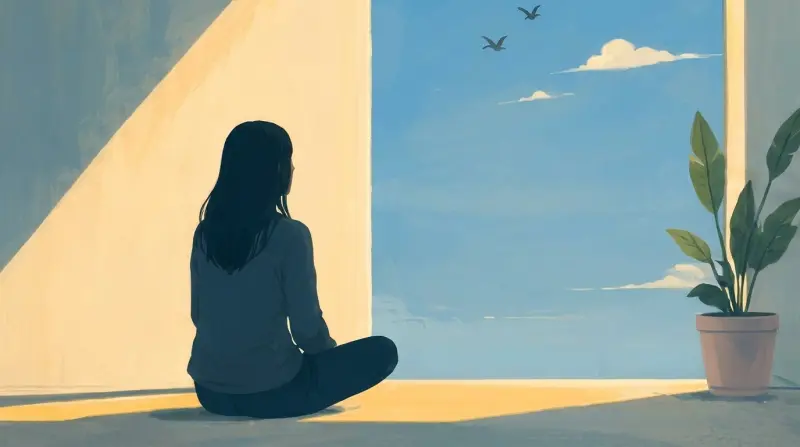
You may not be afraid of love, friendship, or human feelings in general… but of the moment someone sees you as you are, without your usual composure. You hear a simple question: “How are you—are you okay?” and you automatically reply: “Alhamdulillah,” then move on as if nothing happened. But minutes later, you return to the sentence you swallowed: I’m exhausted… I’m just afraid of looking needy or like a burden. You write a long message, then delete it and pull back—because vulnerability feels dangerous. If this feels familiar, there is a calmer path: vulnerability in a way that protects you and brings you closer, not one that strips you bare—and teaches you how to take the mask off step by step.
Fear of emotional exposure is not a diagnosis by itself, and it does not mean you are broken or unfit for relationships. It is a pattern that may appear when closeness becomes connected to fear of judgment, rejection, or having your words used against you.
The Mask We Wear Without Noticing
A mask doesn’t mean you’re faking your feelings; it’s often a way to protect yourself from disappointment or embarrassment. The difference between privacy and a mask is that privacy is a calm choice, while a mask comes as an automatic response: you smile while you’re hurting, joke instead of admitting, or turn into the practical person who fixes the problem before touching the pain.
Sometimes the mask looks like “extra competence”: you’re the one who organizes, absorbs, apologizes, and lightens the mood. From the outside you look steady; inside you feel like you’re tiptoeing—even in your own home. Over time, the exhaustion becomes layered: tired from the feeling itself, and tired from hiding it.
The paradox is that the mask succeeds in its short-term goal: it saves you from a moment of exposure. But it slowly takes away from closeness. When people don’t know what’s happening to you, they won’t know how to stand with you. And you may interpret their silence as lack of care, while the truth is they were never given a chance to understand.
Where Does the Fear Come From—Rejection, Embarrassment, and Self-Image
This fear may be connected to experiences of criticism, disappointment, or unsafe relationships, and it may also appear with stress or simply not being used to emotional expression. It does not require a major trauma behind it. Over time, an unwritten rule may form inside you: If I show my weakness, I may be judged or rejected. So hiding feelings becomes a kind of protection.
In the Arab context in particular, upbringing sometimes teaches us that distress should be managed in silence, and that expression may embarrass others or break the image. That doesn’t mean closeness is impossible—it means you need a way that preserves your dignity and improves your communication at the same time. And remember: a healthy relationship isn’t built on total disclosure, but on a measure of honesty and boundaries.
Most importantly: vulnerability is not telling everything to everyone. Safe vulnerability is choosing someone who deserves that knowledge, and offering it in a mutually respectful space. Sharing fragility wisely tends to bear more fruit when it is invited and balanced—not an impulse that leaves you exposed without support.
Safe Vulnerability: Small Steps That Open the Door to Closeness
Start with choosing before speaking. Not every close person is right for every topic, and that doesn’t take away from your love for them. Look for someone who listens more than they judge and can hold your feelings without turning them into a lecture or comparison. Vulnerability does not mean saying everything to every person. Start small, with someone who respects your boundaries, and do not share sensitive details with someone who mocks, threatens, pressures, or uses your weakness against you.
If someone pressures you to reveal secrets, checks your phone, threatens you, blackmails you, or uses your admissions to control you, the priority is not becoming more open; the priority is safety and seeking trusted support or an appropriate protection service.
After choosing, make vulnerability gradual. Choose one safe person and share just one sentence about what you feel, without a long explanation. Notice: was your speech received with respect? Did you need a boundary or some space? The response isn’t a judgment on you; it is an indicator of how safe the space is.
Many people succeed when they set a small goal for the conversation: not that everything changes, but that they are understood a little. Try asking clearly for what you need: “I need you to just listen,” or “I need your opinion on one point.” Clarity reduces your anxiety and relieves the other person from unspoken expectations.
And because words can fail you in the moment, keep simple sentences that help you begin:
I’ve been under pressure lately, and I need someone to listen for a bit.
I appreciate your care, but I’m not looking for a solution right now—just space.
It’s hard for me to talk, so forgive me if I pause or my tone changes.
Do you have a short time tonight? Ten minutes is enough for me.
If you feel the conversation opens a wound deeper than you can carry, that isn’t failure. Sometimes the fear of vulnerability is tied to old experiences of rejection or accumulated inner harshness—and it needs calm professional companionship that rebuilds safety step by step.
Finally…
In the end, the mask was an attempt to protect you, not a flaw in your character. Try one step this week: share one feeling with one safe person, then notice whether your words were received with respect and whether you needed a boundary or more space. And if fear of emotional exposure is making you withdraw from relationships or keep your feelings inside for a long time, Tatmeen can help you explore licensed, suitable support with gradual steps that respect your limits. If this fear comes with intense hopelessness, thoughts of self-harm, feeling unable to stay safe, or immediate risk to you or someone else, seek urgent help from emergency services or the nearest emergency department first. Do not rely on a normal session booking as a substitute for emergency care.
Frequently Asked Questions
Does emotional vulnerability mean I have to tell everything?
No. Healthy vulnerability is choosing what fits the relationship and the time, in a way that preserves your dignity and boundaries. You can start with one headline or one feeling, then see how it’s received. Privacy is a right—it isn’t an obstacle to closeness.
What do I do if someone mocks my feelings?
Mockery hurts because it touches your core fear. Take a breath and calmly say this topic is sensitive for you—then change the person you share with. Choose someone who shows respect, or write what you feel to yourself until you find a safer space.
How do I practice expressing myself if I’m not good at talking about me?
Start by writing two lines daily: what I feel, and where I feel it in my body. Then turn one line into words with someone you trust. Small, repeated practice builds an inner language—and with it, expression becomes less frightening and more clear.
A writer and researcher specializing in psychiatry, she focuses on mental health and the human emotions we experience but cannot always find the words to name. She writes about us—about humanity and the human experience—and simplifies complex topics to offer content that helps us better understand ourselves and life, ultimately making us feel less alone.
Every Tatmeen article is reviewed by care providers licensed by the Saudi Commission for Health Specialties, so what you read is accurate and trustworthy.
This article builds understanding and does not replace a licensed care provider.
Need someone to talk to?
Tatmeen's licensed care providers are available around the clock, and the app's urgent consultation connects you with one within minutes.
Download Tatmeen to explore care providers and booking options.
Smart matchingFour quick questions suggest the right care provider
Urgent consultationTalk to an available care provider within minutes
Free psychological measuresMore than 20 tests to understand how you are doing
Scan to download
{"data":{"id":"22a86f1b-5551-49db-984d-c0bfe8ba2eb5","slug":"fear-of-emotional-exposure-being-seen","arTitle":"لماذا نخاف أن نُرى من الداخل؟ فهم الخوف من الانكشاف العاطفي","enTitle":"Why Are We Afraid to Be Seen From Within? Understanding the Fear of Emotional Ex","thumbnailAltText":"Silhouette of a person seated inside their own mind, illuminated by a window of self-discovery.","estimatedReadingTime":5,"likesCount":183,"writer":{"id":"3ab72b74-f26f-4337-9b47-3114b0f90de5","arBio":"كاتبة وباحثة متخصصة في مجال الطب النفسي، تهتم بموضوعات الصحة النفسية وبالمشاعر الإنسانية التي نختبرها ولا نجد دائمًا الكلمات لتسميتها. تكتب عنّا؛ عن الإنسان وتجربته، وتبسّط الموضوعات المعقّدة لتقدّم محتوى يساعدنا على فهم ذواتنا والحياة أكثر، ويجعلنا نشعر بأننا بوحدة أقل.","enBio":"A writer and researcher specializing in psychiatry, she focuses on mental health and the human emotions we experience but cannot always find the words to name. She writes about us—about humanity and the human experience—and simplifies complex topics to offer content that helps us better understand ourselves and life, ultimately making us feel less alone.","user":{"slug":"ayat-alnajar","arFullName":"آيات النجار","enFullName":"Ayat Al-Najjar","publicProfileImageUrl":"https://cdn.tatmeen.sa/public/profile-images/02384455-68fa-40b6-ad05-609fde65cafa/21b9a610dde5dfc6d37af110c23e9c7ab3946be080c281beb000debf4f7d31a6.webp","publicProfileImage96Url":"https://cdn.tatmeen.sa/public/profile-images/02384455-68fa-40b6-ad05-609fde65cafa/21b9a610dde5dfc6d37af110c23e9c7ab3946be080c281beb000debf4f7d31a6-w96.webp","publicProfileImage192Url":"https://cdn.tatmeen.sa/public/profile-images/02384455-68fa-40b6-ad05-609fde65cafa/21b9a610dde5dfc6d37af110c23e9c7ab3946be080c281beb000debf4f7d31a6-w192.webp"}},"arContent":"","enContent":"","productionDocument":{"headings":[{"id":"article-section-the-mask-we-wear-without-noticing","text":"The Mask We Wear Without Noticing"},{"id":"article-section-where-does-the-fear-come-from-rejection-embarrassment-and-self-image","text":"Where Does the Fear Come From—Rejection, Embarrassment, and Self-Image"},{"id":"article-section-safe-vulnerability-small-steps-that-open-the-door-to-closeness","text":"Safe Vulnerability: Small Steps That Open the Door to Closeness"},{"id":"article-section-finally","text":"Finally…"}],"faqs":[{"question":"Does emotional vulnerability mean I have to tell everything?","answer":"<p><span style=\"color:#000000\">No. Healthy vulnerability is choosing what fits the relationship and the time, in a way that preserves your dignity and boundaries. You can start with one headline or one feeling, then see how it’s received. Privacy is a right—it isn’t an obstacle to closeness.</span></p>"},{"question":"What do I do if someone mocks my feelings?","answer":"<p><span style=\"color:#000000\">Mockery hurts because it touches your core fear. Take a breath and calmly say this topic is sensitive for you—then change the person you share with. Choose someone who shows respect, or write what you feel to yourself until you find a safer space.</span></p>"},{"question":"How do I practice expressing myself if I’m not good at talking about me?","answer":"<p><span style=\"color:#000000\">Start by writing two lines daily: what I feel, and where I feel it in my body. Then turn one line into words with someone you trust. Small, repeated practice builds an inner language—and with it, expression becomes less frightening and more clear.</span></p>"}],"beforeSourcesHtml":"<p></p>","sources":[],"afterSourcesHtml":"","blocks":[{"type":"html","html":"<p><span style=\"color:#000000\">You may not be afraid of love, friendship, or human feelings in general… but of the moment someone sees you as you are, without your usual composure. You hear a simple question: “How are you—are you okay?” and you automatically reply: “Alhamdulillah,” then move on as if nothing happened. But minutes later, you return to the sentence you swallowed: <em>I’m exhausted… I’m just afraid of looking needy or like a burden.</em> You write a long message, then delete it and pull back—because vulnerability feels dangerous. If this feels familiar, there is a calmer path: vulnerability in a way that protects you and brings you closer, not one that strips you bare—and teaches you how to take the mask off step by step.</span></p><p><span style=\"color:#000000\">Fear of emotional exposure is not a diagnosis by itself, and it does not mean you are broken or unfit for relationships. It is a pattern that may appear when closeness becomes connected to fear of judgment, rejection, or having your words used against you.</span></p><p><br /></p><h2 id=\"article-section-the-mask-we-wear-without-noticing\" data-toc-heading tabindex=\"-1\"><span id=\"the-mask-we-wear-without-noticing-1\" aria-hidden=\"true\"></span><span style=\"color:#000000\"><strong>The Mask We Wear Without Noticing</strong></span></h2><p><span style=\"color:#000000\">A mask doesn’t mean you’re faking your feelings; it’s often a way to protect yourself from disappointment or embarrassment. The difference between privacy and a mask is that privacy is a calm choice, while a mask comes as an automatic response: you smile while you’re hurting, joke instead of admitting, or turn into the practical person who fixes the problem before touching the pain.</span></p><p><span style=\"color:#000000\">Sometimes the mask looks like “extra competence”: you’re the one who organizes, absorbs, apologizes, and lightens the mood. From the outside you look steady; inside you feel like you’re tiptoeing—even in your own home. Over time, the exhaustion becomes layered: tired from the feeling itself, and tired from hiding it.</span></p><p><span style=\"color:#000000\">The paradox is that the mask succeeds in its short-term goal: it saves you from a moment of exposure. But it slowly takes away from closeness. When people don’t know what’s happening to you, they won’t know how to stand with you. And you may interpret their silence as lack of care, while the truth is they were never given a chance to understand.</span></p><h2 id=\"article-section-where-does-the-fear-come-from-rejection-embarrassment-and-self-image\" data-toc-heading tabindex=\"-1\"><span id=\"where-does-the-fear-come-from-rejection-embarrassment-and-self-image-2\" aria-hidden=\"true\"></span><span style=\"color:#000000\"><strong>Where Does the Fear Come From—Rejection, Embarrassment, and Self-Image</strong></span></h2><p><span style=\"color:#000000\">This fear may be connected to experiences of criticism, disappointment, or unsafe relationships, and it may also appear with stress or simply not being used to emotional expression. It does not require a major trauma behind it. Over time, an unwritten rule may form inside you: If I show my weakness, I may be judged or rejected. So hiding feelings becomes a kind of protection.</span></p><p><br /></p><p><span style=\"color:#000000\">In the Arab context in particular, upbringing sometimes teaches us that distress should be managed in silence, and that expression may embarrass others or break the image. That doesn’t mean closeness is impossible—it means you need a way that preserves your dignity and improves your communication at the same time. And remember: a healthy relationship isn’t built on total disclosure, but on a measure of honesty and boundaries.</span></p><p><span style=\"color:#000000\">Most importantly: vulnerability is not telling everything to everyone. </span><a href=\"https://pmc.ncbi.nlm.nih.gov/articles/PMC5330328/\" target=\"_blank\" rel=\"nofollow noopener noreferrer\"><span style=\"color:#1155cc\"><strong><u>Safe vulnerability</u></strong></span></a><span style=\"color:#000000\"> is choosing someone who <em>deserves</em> that knowledge, and offering it in a mutually respectful space. Sharing fragility wisely tends to bear more fruit when it is invited and balanced—not an impulse that leaves you exposed without support.</span></p><h2 id=\"article-section-safe-vulnerability-small-steps-that-open-the-door-to-closeness\" data-toc-heading tabindex=\"-1\"><span id=\"safe-vulnerability-small-steps-that-open-the-door-to-closeness-3\" aria-hidden=\"true\"></span><span style=\"color:#000000\"><strong>Safe Vulnerability: Small Steps That Open the Door to Closeness</strong></span></h2><p><span style=\"color:#000000\">Start with choosing before speaking. Not every close person is right for every topic, and that doesn’t take away from your love for them. Look for someone who listens more than they judge and can hold your feelings without turning them into a lecture or comparison. Vulnerability does not mean saying everything to every person. Start small, with someone who respects your boundaries, and do not share sensitive details with someone who mocks, threatens, pressures, or uses your weakness against you.</span></p><p><span style=\"color:#000000\">If someone pressures you to reveal secrets, checks your phone, threatens you, blackmails you, or uses your admissions to control you, the priority is not becoming more open; the priority is safety and seeking trusted support or an appropriate protection service.</span></p><p><span style=\"color:#000000\">After choosing, make vulnerability gradual. Choose one safe person and share just one sentence about what you feel, without a long explanation. Notice: was your speech received with respect? Did you need a boundary or some space? The response isn’t a judgment on you; it is an indicator of how safe the space is.</span></p><p><br /></p><p><span style=\"color:#000000\">Many people succeed when they set a small goal for the conversation: not that everything changes, but that they are understood a little. Try asking clearly for what you need: “I need you to just listen,” or “I need your opinion on one point.” Clarity reduces your anxiety and relieves the other person from unspoken expectations.</span></p><p><span style=\"color:#000000\">And because words can fail you in the moment, keep simple sentences that help you begin:</span></p><ul><li><p><span style=\"color:#000000\">I’ve been under pressure lately, and I need someone to listen for a bit.</span></p></li><li><p><span style=\"color:#000000\">I appreciate your care, but I’m not looking for a solution right now—just space.</span></p></li><li><p><span style=\"color:#000000\">It’s hard for me to talk, so forgive me if I pause or my tone changes.</span></p></li><li><p><span style=\"color:#000000\">Do you have a short time tonight? Ten minutes is enough for me.</span></p></li></ul><p><span style=\"color:#000000\">If you feel the conversation opens a wound deeper than you can carry, that isn’t failure. Sometimes the fear of vulnerability is tied to old experiences of rejection or accumulated inner harshness—and it needs calm professional companionship that rebuilds safety step by step.</span></p><h2 id=\"article-section-finally\" data-toc-heading tabindex=\"-1\"><span id=\"finally-4\" aria-hidden=\"true\"></span><span style=\"color:#000000\"><strong>Finally…</strong></span></h2><p><span style=\"color:#000000\">In the end, the mask was an attempt to protect you, not a flaw in your character. Try one step this week: share one feeling with one safe person, then notice whether your words were received with respect and whether you needed a boundary or more space. And if fear of emotional exposure is making you withdraw from relationships or keep your feelings inside for a long time, Tatmeen can help you explore licensed, suitable support with gradual steps that respect your limits. If this fear comes with intense hopelessness, thoughts of self-harm, feeling unable to stay safe, or immediate risk to you or someone else, seek urgent help from emergency services or the nearest emergency department first. Do not rely on a normal session booking as a substitute for emergency care.</span></p>"}],"inlineCtaSignatures":[],"_experienceAliases":{"v":1,"fields":["html","bodyHtml"],"faqs":[0,1,2]}},"createdAt":"2026-06-14T21:00:00.000Z","updatedAt":"2026-06-22T17:02:43.043Z","disorderGroups":[{"id":"d807ea69-44d4-4e81-bee4-0a059fd36645","slug":"self-development","arName":"تنمية الذات","enName":"Self-Development"}],"reviewer":{"arFullName":"فريق تطمين","enFullName":"Tatmeen team","slug":"tatmeen-team","kind":"organization"},"productionArticle":true,"promotionAllowed":true,"preparedCover":{"src":"https://cdn.tatmeen.sa/public/article-lcp/article-lcp-v2/sha256-cddd897fda77d791772776ebd9e31da5e69b767b01d419fadb9a496c63e86635/800-56ef2d2896f6dbedb84ca75b842e3770938ac82969e7935f91dfeaab9ce810f0.avif","fallback":"https://cdn.tatmeen.sa/public/article-lcp/article-lcp-v2/sha256-cddd897fda77d791772776ebd9e31da5e69b767b01d419fadb9a496c63e86635/800-a9f0e89c6a99f8d9992ac3a11d9042c79c09bdb334424e04dcb8055ed75fb828.webp","directUrl":"https://cdn.tatmeen.sa/blog-cover/Tatmeen-1781545473222.webp","isGolden":true,"avifSrcset":"https://cdn.tatmeen.sa/public/article-lcp/article-lcp-v2/sha256-cddd897fda77d791772776ebd9e31da5e69b767b01d419fadb9a496c63e86635/400-b00b5c042830cf0b78f5a8e5533b5ab9ce08f6b9877c3b47b91186afc98df440.avif 400w, https://cdn.tatmeen.sa/public/article-lcp/article-lcp-v2/sha256-cddd897fda77d791772776ebd9e31da5e69b767b01d419fadb9a496c63e86635/640-348eecedaf203b02d634f3166d0446717c4322b82fa66dbb3482e9147dd6ca2a.avif 640w, https://cdn.tatmeen.sa/public/article-lcp/article-lcp-v2/sha256-cddd897fda77d791772776ebd9e31da5e69b767b01d419fadb9a496c63e86635/800-56ef2d2896f6dbedb84ca75b842e3770938ac82969e7935f91dfeaab9ce810f0.avif 800w, https://cdn.tatmeen.sa/public/article-lcp/article-lcp-v2/sha256-cddd897fda77d791772776ebd9e31da5e69b767b01d419fadb9a496c63e86635/1200-179a210f5ea673b70ad381e8b0ae2b2596c7ada640c580a593c1b887814af25d.avif 1200w","webpSrcset":"https://cdn.tatmeen.sa/public/article-lcp/article-lcp-v2/sha256-cddd897fda77d791772776ebd9e31da5e69b767b01d419fadb9a496c63e86635/400-e1a575f467e0391f17c9c03914606b5d493a8e6d3b54b24ad6f7e6bddf9d81f9.webp 400w, https://cdn.tatmeen.sa/public/article-lcp/article-lcp-v2/sha256-cddd897fda77d791772776ebd9e31da5e69b767b01d419fadb9a496c63e86635/640-f12469be414cb871fd952bc60646887361b036b732a2763b98ed1cd5bc6ef4bb.webp 640w, https://cdn.tatmeen.sa/public/article-lcp/article-lcp-v2/sha256-cddd897fda77d791772776ebd9e31da5e69b767b01d419fadb9a496c63e86635/800-a9f0e89c6a99f8d9992ac3a11d9042c79c09bdb334424e04dcb8055ed75fb828.webp 800w, https://cdn.tatmeen.sa/public/article-lcp/article-lcp-v2/sha256-cddd897fda77d791772776ebd9e31da5e69b767b01d419fadb9a496c63e86635/1200-c7bed231d63b8495eb35b96f5b8dab474a7decca47608d01c8f68376f3fcd731.webp 1200w","phoneAvifSrcset":"https://cdn.tatmeen.sa/public/article-lcp/article-lcp-v2/sha256-cddd897fda77d791772776ebd9e31da5e69b767b01d419fadb9a496c63e86635/400-b00b5c042830cf0b78f5a8e5533b5ab9ce08f6b9877c3b47b91186afc98df440.avif 400w, https://cdn.tatmeen.sa/public/article-lcp/article-lcp-v2/sha256-cddd897fda77d791772776ebd9e31da5e69b767b01d419fadb9a496c63e86635/640-348eecedaf203b02d634f3166d0446717c4322b82fa66dbb3482e9147dd6ca2a.avif 640w, https://cdn.tatmeen.sa/public/article-lcp/article-lcp-v2/sha256-cddd897fda77d791772776ebd9e31da5e69b767b01d419fadb9a496c63e86635/800-56ef2d2896f6dbedb84ca75b842e3770938ac82969e7935f91dfeaab9ce810f0.avif 800w","phoneWebpSrcset":"https://cdn.tatmeen.sa/public/article-lcp/article-lcp-v2/sha256-cddd897fda77d791772776ebd9e31da5e69b767b01d419fadb9a496c63e86635/400-e1a575f467e0391f17c9c03914606b5d493a8e6d3b54b24ad6f7e6bddf9d81f9.webp 400w, https://cdn.tatmeen.sa/public/article-lcp/article-lcp-v2/sha256-cddd897fda77d791772776ebd9e31da5e69b767b01d419fadb9a496c63e86635/640-f12469be414cb871fd952bc60646887361b036b732a2763b98ed1cd5bc6ef4bb.webp 640w, https://cdn.tatmeen.sa/public/article-lcp/article-lcp-v2/sha256-cddd897fda77d791772776ebd9e31da5e69b767b01d419fadb9a496c63e86635/800-a9f0e89c6a99f8d9992ac3a11d9042c79c09bdb334424e04dcb8055ed75fb828.webp 800w","width":800,"height":447},"previewTaxonomy":{"groups":[{"id":"d807ea69-44d4-4e81-bee4-0a059fd36645","slug":"self-development","arName":"تنمية الذات","enName":"Self-Development"}],"topics":[{"id":"eb4252aa-fb67-4971-a563-954a8176f44c","slug":"communication-skills","arName":"مهارات التواصل","enName":"Communication Skills","groupSlug":"self-development","href":"/blog/category/self-development/communication-skills/"},{"id":"785d9b22-1cd8-4f1a-a300-5170c1348b2f","slug":"setting-boundaries","arName":"وضع حدود شخصية","enName":"Setting Boundaries","groupSlug":"self-development","href":"/blog/category/self-development/setting-boundaries/"}],"tags":[{"id":"dbd6cf9d-e555-43d4-9205-05dcf3b84eb3","slug":"emotional-regulation","arName":"تنظيم المشاعر والذكاء العاطفي","enName":"Emotional Regulation"},{"id":"510c3a96-f7ec-45f9-8077-9c7b673f089b","slug":"attachment-styles","arName":"أنماط التعلّق","enName":"Attachment Styles"},{"id":"c2a6e8d3-de9c-435f-8c95-9727e7db14cc","slug":"explainer-awareness","arName":"دليل توعوي / شرح","enName":"Explainer / Awareness Guide"}]},"previewProviderRecommendations":[{"id":"7771d078-cbd9-4acd-aa51-29cc905753c4","slug":"hatim-jafaari-2902","arFullName":"حاتم جعفرى","enFullName":"Hatim Jafaari","publicProfileImageUrl":"https://cdn.tatmeen.sa/public/profile-images/7771d078-cbd9-4acd-aa51-29cc905753c4/874a489ca72b87dacbde76d8496eef84ca341ee8074b9ec54464cd0a56bbdbe6.webp","publicProfileImage96Url":"https://cdn.tatmeen.sa/public/profile-images/7771d078-cbd9-4acd-aa51-29cc905753c4/874a489ca72b87dacbde76d8496eef84ca341ee8074b9ec54464cd0a56bbdbe6-w96.webp","publicProfileImage192Url":"https://cdn.tatmeen.sa/public/profile-images/7771d078-cbd9-4acd-aa51-29cc905753c4/874a489ca72b87dacbde76d8496eef84ca341ee8074b9ec54464cd0a56bbdbe6-w192.webp","specialization":{"arName":"أخصائي نفسي","enName":"Psychologist"},"profileImageUrl":"https://cdn.tatmeen.sa/public/profile-images/7771d078-cbd9-4acd-aa51-29cc905753c4/874a489ca72b87dacbde76d8496eef84ca341ee8074b9ec54464cd0a56bbdbe6-w192.webp","experienceYears":2,"consultantInfo":{"averageRating":{"average":5},"specialization":{"arGeneralName":"أخصائي نفسي","enGeneralName":"Psychologist"}}},{"id":"5520abac-2d83-4b20-a11d-f63055316699","slug":"maha-alawad-4831","arFullName":"مها العواد","enFullName":"Maha Alawad","publicProfileImageUrl":"","publicProfileImage96Url":"","publicProfileImage192Url":"","specialization":{"arName":"أخصائي نفسي","enName":"Psychologist"},"profileImageUrl":"","experienceYears":13,"consultantInfo":{"averageRating":{"average":4.846153846153846},"specialization":{"arGeneralName":"أخصائي نفسي","enGeneralName":"Psychologist"}}},{"id":"a4a1f8a4-87a7-4447-8667-0bbf3fae006a","slug":"ghadah-alghamdi-2904","arFullName":"غاده الغامدي","enFullName":"Ghadah Alghamdi","publicProfileImageUrl":"","publicProfileImage96Url":"","publicProfileImage192Url":"","specialization":{"arName":"أخصائي نفسي","enName":"Psychologist"},"profileImageUrl":"","experienceYears":18,"consultantInfo":{"averageRating":{"average":0},"specialization":{"arGeneralName":"أخصائي نفسي","enGeneralName":"Psychologist"}}}],"previewCareProviders":[{"id":"09364052-c2a9-4c52-9717-7ce2093b8d0a","slug":"kholoud-alharbi-5221","arFullName":"خلود الحربي","enFullName":"Kholoud Alharbi","publicProfileImageUrl":"https://cdn.tatmeen.sa/public/profile-images/09364052-c2a9-4c52-9717-7ce2093b8d0a/4a0aeb81619e351b77f4323e3605a0a00acc7ca3c82ee7cc5ca2c9e8ef716049.webp","publicProfileImage96Url":"https://cdn.tatmeen.sa/public/profile-images/09364052-c2a9-4c52-9717-7ce2093b8d0a/4a0aeb81619e351b77f4323e3605a0a00acc7ca3c82ee7cc5ca2c9e8ef716049-w96.webp","publicProfileImage192Url":"https://cdn.tatmeen.sa/public/profile-images/09364052-c2a9-4c52-9717-7ce2093b8d0a/4a0aeb81619e351b77f4323e3605a0a00acc7ca3c82ee7cc5ca2c9e8ef716049-w192.webp","gender":"FEMALE","specialization":{"arName":"أخصائي نفسي","enName":"Psychologist"}},{"id":"6f037535-1dca-4b50-a8b2-5974b7323286","slug":"salah-althobaiti-9053","arFullName":"صلاح الثبيتي","enFullName":"Salah Althobaiti","publicProfileImageUrl":"https://cdn.tatmeen.sa/public/profile-images/6f037535-1dca-4b50-a8b2-5974b7323286/35b6bd7fad9b1e004c1835803eb9c1b56dcacd380685ec8bff141f0fb888005c.webp","publicProfileImage96Url":"https://cdn.tatmeen.sa/public/profile-images/6f037535-1dca-4b50-a8b2-5974b7323286/35b6bd7fad9b1e004c1835803eb9c1b56dcacd380685ec8bff141f0fb888005c-w96.webp","publicProfileImage192Url":"https://cdn.tatmeen.sa/public/profile-images/6f037535-1dca-4b50-a8b2-5974b7323286/35b6bd7fad9b1e004c1835803eb9c1b56dcacd380685ec8bff141f0fb888005c-w192.webp","gender":"MALE","specialization":{"arName":"أخصائي نفسي","enName":"Psychologist"}},{"id":"3cc806e8-616b-4884-9f21-a75b378580a2","slug":"aisha-al-hashim-8667","arFullName":"عائشة ال هاشم","enFullName":"Aisha Al Hashim","publicProfileImageUrl":"https://cdn.tatmeen.sa/public/profile-images/3cc806e8-616b-4884-9f21-a75b378580a2/27f523d03be4dcfa1f6a79f70c1773887434e698990d214cd990caec56a44798.webp","publicProfileImage96Url":"https://cdn.tatmeen.sa/public/profile-images/3cc806e8-616b-4884-9f21-a75b378580a2/27f523d03be4dcfa1f6a79f70c1773887434e698990d214cd990caec56a44798-w96.webp","publicProfileImage192Url":"https://cdn.tatmeen.sa/public/profile-images/3cc806e8-616b-4884-9f21-a75b378580a2/27f523d03be4dcfa1f6a79f70c1773887434e698990d214cd990caec56a44798-w192.webp","gender":"FEMALE","specialization":{"arName":"أخصائي نفسي","enName":"Psychologist"}},{"id":"db2ce1a0-9325-4471-b7ce-eb2e811c30a3","slug":"amer-qutub-2441","arFullName":"عامر قطب","enFullName":"Amer Qutub","publicProfileImageUrl":"https://cdn.tatmeen.sa/public/profile-images/db2ce1a0-9325-4471-b7ce-eb2e811c30a3/80580f99bfd7fe2b2a9cf8eed73ab532f5086d1efe053b0aa57358c1ce004261.webp","publicProfileImage96Url":"https://cdn.tatmeen.sa/public/profile-images/db2ce1a0-9325-4471-b7ce-eb2e811c30a3/80580f99bfd7fe2b2a9cf8eed73ab532f5086d1efe053b0aa57358c1ce004261-w96.webp","publicProfileImage192Url":"https://cdn.tatmeen.sa/public/profile-images/db2ce1a0-9325-4471-b7ce-eb2e811c30a3/80580f99bfd7fe2b2a9cf8eed73ab532f5086d1efe053b0aa57358c1ce004261-w192.webp","gender":"MALE","specialization":{"arName":"أخصائي نفسي","enName":"Psychologist"}},{"id":"94765496-dbdf-4631-a01b-7df5f788668d","slug":"abdullrahman-alhamoudi-3045","arFullName":"عبدالرحمن الحمودي","enFullName":"Abdulrahman Alhamoudi","publicProfileImageUrl":"https://cdn.tatmeen.sa/public/profile-images/94765496-dbdf-4631-a01b-7df5f788668d/2d49f6b6493c564afb6f50b6c3634231dff3a5cf8353acfab393d1b2a88037d1.webp","publicProfileImage96Url":"https://cdn.tatmeen.sa/public/profile-images/94765496-dbdf-4631-a01b-7df5f788668d/2d49f6b6493c564afb6f50b6c3634231dff3a5cf8353acfab393d1b2a88037d1-w96.webp","publicProfileImage192Url":"https://cdn.tatmeen.sa/public/profile-images/94765496-dbdf-4631-a01b-7df5f788668d/2d49f6b6493c564afb6f50b6c3634231dff3a5cf8353acfab393d1b2a88037d1-w192.webp","gender":"MALE","specialization":{"arName":"أخصائي نفسي","enName":"Psychologist"}},{"id":"618dba89-5b70-4b46-8304-741b7ac8ecd3","slug":"abdullah-mari-1311","arFullName":"عبدالله مرعي","enFullName":"Abdullah Mari","publicProfileImageUrl":"https://cdn.tatmeen.sa/public/profile-images/618dba89-5b70-4b46-8304-741b7ac8ecd3/6b4a3bfb59f8a304ca79083b32859b46baad2e1d692974a47c02c1f66bd11129.webp","publicProfileImage96Url":"https://cdn.tatmeen.sa/public/profile-images/618dba89-5b70-4b46-8304-741b7ac8ecd3/6b4a3bfb59f8a304ca79083b32859b46baad2e1d692974a47c02c1f66bd11129-w96.webp","publicProfileImage192Url":"https://cdn.tatmeen.sa/public/profile-images/618dba89-5b70-4b46-8304-741b7ac8ecd3/6b4a3bfb59f8a304ca79083b32859b46baad2e1d692974a47c02c1f66bd11129-w192.webp","gender":"MALE","specialization":{"arName":"أخصائي نفسي","enName":"Psychologist"}},{"id":"3b50a5d5-e795-407f-8676-fd7f0e1bb7a0","slug":"abdulaziz-bin-hudayan-4940","arFullName":"عبدالعزيز بن هديان","enFullName":"Abdulaziz Bin Hudayan","publicProfileImageUrl":"https://cdn.tatmeen.sa/public/profile-images/3b50a5d5-e795-407f-8676-fd7f0e1bb7a0/710ff0fe1fb00cdb5042092e27b7910b480a439b02251ecded62d7758eefce95.webp","publicProfileImage96Url":"https://cdn.tatmeen.sa/public/profile-images/3b50a5d5-e795-407f-8676-fd7f0e1bb7a0/710ff0fe1fb00cdb5042092e27b7910b480a439b02251ecded62d7758eefce95-w96.webp","publicProfileImage192Url":"https://cdn.tatmeen.sa/public/profile-images/3b50a5d5-e795-407f-8676-fd7f0e1bb7a0/710ff0fe1fb00cdb5042092e27b7910b480a439b02251ecded62d7758eefce95-w192.webp","gender":"MALE","specialization":{"arName":"أخصائي نفسي","enName":"Psychologist"}},{"id":"d4ffcb6b-90a7-45b6-b941-964866f4564b","slug":"dhaifallah-alhumaidi-1092","arFullName":"ضيف الله الحميدي","enFullName":"Dhaifallah Alhumaidi","publicProfileImageUrl":"https://cdn.tatmeen.sa/public/profile-images/d4ffcb6b-90a7-45b6-b941-964866f4564b/1817171c5828a9b57d6c30d12332cf154e335272548bc90a6e8456d74d356956.webp","publicProfileImage96Url":"https://cdn.tatmeen.sa/public/profile-images/d4ffcb6b-90a7-45b6-b941-964866f4564b/1817171c5828a9b57d6c30d12332cf154e335272548bc90a6e8456d74d356956-w96.webp","publicProfileImage192Url":"https://cdn.tatmeen.sa/public/profile-images/d4ffcb6b-90a7-45b6-b941-964866f4564b/1817171c5828a9b57d6c30d12332cf154e335272548bc90a6e8456d74d356956-w192.webp","gender":"MALE","specialization":{"arName":"أخصائي نفسي","enName":"Psychologist"}}],"previewDownload":{"href":"/download","title":{"ar":"خطوة واحدة لأجلك، ابدأ الآن","en":"One step for you, start now"},"description":{"ar":"حمّل تطبيق تطمين لاستكشاف مقدمي الرعاية وخيارات الحجز.","en":"Download Tatmeen to explore care providers and booking options."},"posterSrc":"/images/home/cta-ar-new-1.webp","videoSrc":"/images/home/cta-ar-new-1.mp4","videoPosterSrc":"/images/home/cta-ar-new-1.webp","videoPosterEnSrc":"/images/home/cta-en-new-1.webp","videoType":"video/mp4","appStoreHref":"https://apps.apple.com/us/app/tatmeen-%D8%AA%D8%B7%D9%85%D9%8A%D9%86/id6473836983","googlePlayHref":"https://play.google.com/store/apps/details?id=com.TatmeenApp.user&hl=en"},"previewRelatedArticles":[{"id":"0797b633-19b0-4fd4-872e-1d7469226979","slug":"secure-attachment-style-healthy-relationships","route":"/blog/secure-attachment-style-healthy-relationships/","title":{"ar":"نمط التعلّق الآمن: الأساس لبناء علاقات صحية","en":"Secure Attachment Style: The Foundation for Healthy Relationships"},"image":"https://cdn.tatmeen.sa/public/article-lcp/article-lcp-v2/sha256-ae6a5aad70ee9934a9aa5353bde02127e1408eac2be93ffcdc3328a49031c31f/800-df759066a0eeab658f72b1a9105a95ce0d268fc5569c403334f8a3bc4f7daa40.webp","directImageFallback":"https://cdn.tatmeen.sa/blog-cover/Tatmeen-1777735539107.webp","arThumbnailAltText":"two people holding two pieces of puzzle completing themselves resembling a healthy relationship","thumbnailAltText":"two people holding two pieces of puzzle completing themselves resembling a healthy relationship","topic":{"label":{"ar":"العلاقات الأسرية والزوجية","en":"Family & Marital Relations"}},"readingTimeMinutes":5},{"id":"0db19109-462b-4a98-88ba-79bb38b81840","slug":"healing-from-narcissistic-mother-self-worth-boundaries","route":"/blog/healing-from-narcissistic-mother-self-worth-boundaries/","title":{"ar":"التعافي من أم نرجسية: إعادة بناء تقدير الذات وحدود آمنة لعلاقات أكثر صحة","en":"Recovery from a Narcissistic Mother: Rebuilding Self-Esteem and Safe Boundaries."},"image":"https://cdn.tatmeen.sa/public/article-lcp/article-lcp-v2/sha256-8234034d78c939916cf48de6cd3f733c1129b86f65169ce34c13052c0bd292b7/800-a6c7a0bad4b79bceca55d87d60b71cab720fc4b99f141d92ecdae103e80b02b6.webp","directImageFallback":"https://cdn.tatmeen.sa/blog-cover/Tatmeen-1776106677637.webp","arThumbnailAltText":"A silhouette of a woman standing in warm sunrise light, symbolizing healing and freedom from a narcissistic mother.","thumbnailAltText":"A silhouette of a woman standing in warm sunrise light, symbolizing healing and freedom from a narcissistic mother.","topic":{"label":{"ar":"اضطرابات نفسية شائعة","en":"Common Mental Issues"}},"readingTimeMinutes":5},{"id":"3a46a872-9763-4540-8f2f-ed7624ebc9df","slug":"dependent-personality-disorder-recovery-loneliness","route":"/blog/dependent-personality-disorder-recovery-loneliness/","title":{"ar":" التعافي من اضطراب الشخصية الاعتمادية ومواجهة الوحدة","en":"Recovering from Dependent Personality Disorder and Facing Loneliness"},"image":"https://cdn.tatmeen.sa/public/article-lcp/article-lcp-v2/sha256-fafa8a3852bddde04001d7e46ad14c632dc4a3ee1ad850264a890fac555938c8/800-e817ac0a6324e2908a8941406dc73677852f400aa79a405ef8a4098bf7a7a1ab.webp","directImageFallback":"https://cdn.tatmeen.sa/blog-cover/Tatmeen-1781625533859.webp","arThumbnailAltText":"Person sitting on floor facing bright open doorway in a minimal, calm room with soft light.","thumbnailAltText":"Person sitting on floor facing bright open doorway in a minimal, calm room with soft light.","topic":{"label":{"ar":"اضطرابات نفسية شائعة","en":"Common Mental Issues"}},"readingTimeMinutes":5},{"id":"09c99eb7-5c99-416d-96d1-986eef5da6f4","slug":"emotional-divorce-under-one-roof","route":"/blog/emotional-divorce-under-one-roof/","title":{"ar":"التعافي من الطلاق العاطفي تحت سقف واحد","en":"Recovering from Emotional Divorce Under One Roof"},"image":"https://cdn.tatmeen.sa/public/article-lcp/article-lcp-v2/sha256-41acd7e3c58c53aff552a50514850ed7ebfe94435caf1eeaea3e4fef6a1962e5/800-bc41c60611eafc84a0687dcc400751b5396fcc64cc38e55d290bf4e40e39c817.webp","directImageFallback":"https://cdn.tatmeen.sa/blog-cover/Tatmeen-1780760991063.webp","arThumbnailAltText":"Watercolor illustration of a house divided by distance, with a couple sitting apart inside.","thumbnailAltText":"Watercolor illustration of a house divided by distance, with a couple sitting apart inside.","topic":{"label":{"ar":"العلاقات الأسرية والزوجية","en":"Family & Marital Relations"}},"readingTimeMinutes":5}],"previewRelatedReadStates":{}},"locale":"en","device":"desktop","path":"/en/blog/fear-of-emotional-exposure-being-seen/","readingControls":false,"config":{"public":{"BUCKET_URL":"https://cdn.tatmeen.sa/","APP_BASE_URL":"https://tatmeen.sa","intercomAppId":"ppcnu9e3"}}}