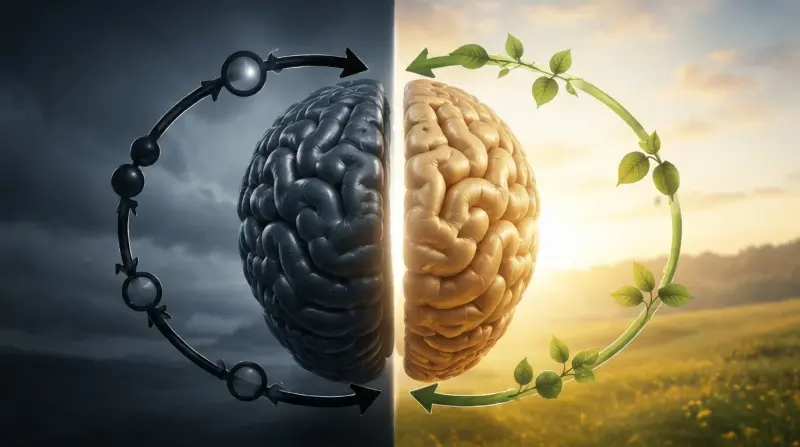
The “dopamine loop” may describe that moment when pornography pulls your attention even though you know it doesn’t align with your values or the life you want. That feeling doesn’t mean you’re a weak person—it means your brain is responding to powerful cues designed to capture attention and repeat behavior. Having a safe space like Tatmeen can ease isolation and remind you that seeking psychological support is a mature step that doesn’t diminish your self-respect. You’ll come away with a calmer understanding of what’s happening inside you, and practical steps that help you regain choice.
Why Does Pornography Feel So Compelling to the Brain?
The brain gravitates toward what it expects will deliver a quick reward—and this is less a moral issue than a learning mechanism. Dopamine is a neurotransmitter linked to motivation, learning, and reinforcing behaviors the brain believes are important, not merely a “pleasure chemical” as is commonly said. When arousal combines with novelty, variety, and ease of access, the reward system enters a state of repeated alertness.
Scientific reviews of the dopaminergic reward system indicate that unpredictable rewards and the cues associated with them strengthen learning and increase the tendency to repeat the behavior. This is what makes the brain sensitive to pathways that lead to viewing—such as isolation, staying up late, or stress.
What Does the Dopamine Loop Actually Mean?
When the brain gets used to a high-intensity stimulus, it may ask for more of it when you’re tired, bored, or anxious—because the pathway has become familiar and fast. Here appears what some call the “dopamine loop”: a sense that the urge leads you before you can catch up, and that everyday things feel less appealing. You may also notice reduced focus, a dulling of enthusiasm, or mood swings after viewing because of the inner conflict.
It’s important to distinguish between occasional use and a pattern that causes distress and declines in functioning. The issue may be a repeated habit, a way to escape heavy emotions, or a behavior that overlaps with anxiety, depression, or relationship difficulties. Seeing it through this lens reduces self-blame and makes solutions feel more reachable.
When Does Viewing Turn Into a Compulsive Pattern That Needs Attention?
The clearest sign isn’t how many times—it’s losing the ability to choose. If viewing starts taking priority over your responsibilities, your worship, your relationship with your husband or wife, or begins affecting your sleep or work, or you keep returning to it despite promises to yourself, these are signals worth pausing for calmly. Likewise, if you notice you use it to numb anxiety, sadness, or loneliness and then feel doubled shame afterward, that suggests the behavior has become tied to emotion regulation.
In the International Classification of Diseases (11th edition), there is a description of compulsive sexual behavior disorder as a pattern marked by difficulty controlling behavior that affects areas of life—with an important note: distress that results only from moral self-judgment is not sufficient on its own to label a disorder. This distinction is helpful in our environment because it gives you room to tell the difference between natural pangs of conscience and psychological suffering that needs treatment.
And according to specialists at Tatmeen, many people discover that what keeps the habit in place isn’t desire alone, but the shame cycle: a slip, then self-punishment, then a harsh promise—so inner pressure returns and pushes you to escape again. When your tone with yourself shifts from prosecution to understanding, changing the behavior becomes possible step by step.
How Do You Rewire Your Brain Without Harshness?
Rewiring isn’t erasing memory—it’s gradual training of the brain toward alternative pathways that align more with your values. The core idea is to reduce cues that ignite the urge, increase the pause before acting, and build healthy rewards that protect you when pressure rises.
Track the moment of temptation: what came right before it—stress, boredom, staying up late, conflict, aimless scrolling.
Set gentle environmental boundaries: keep the phone out of the bedroom, reduce late-night browsing, and use content-blocking tools as much as possible.
Replace the action; don’t fight the feeling: when the urge comes, choose a brief activity that shifts your physical state, such as wudu, light walking, or slow breathing.
Improve daily life quality: sufficient sleep, movement, social connection, and hobbies that give the brain a calm, repeatable kind of enjoyment.
Record your progress in compassionate language: what worked? what did you need and not get?
These steps may look simple, but they work because they treat the behavior as a learned habit—not a character flaw. And if automatic thoughts like “I’m a failure” or “I’ll never change” show up before or after viewing, psychological therapy may help you unpack these thoughts and build alternative skills.
Guilt and Secrecy: How Not to Let Them Become Fuel for the Habit?
This topic can carry extra sensitivity, where shame meets fear of losing respect or privacy. The problem is that when guilt turns into constant self-punishment, it becomes an additional reason to escape—so you enter a loop: stress, viewing, regret, greater stress. What helps here is separating the act from your worth: you are not a mistake; you are a human being trying to cope with pressure in a way that is no longer helpful.
Try a kinder inner language: notice relapse as a signal that needs understanding, not as a final verdict on you. And give yourself a chance to strengthen stress-management and relationship skills, because emotional emptiness and repeated pressure may run deeper than the behavior itself. And when you feel it’s bigger than what you can carry alone, speaking with a licensed specialist in a safe, confidential space can save you a long time of suffering.
Finally…
The dopamine loop feels frightening when you live it alone, but it becomes clearer when you understand how the brain learns and how it gradually regains balance. Give yourself the right to try again, and focus on building a full life—not on a daily battle with desire. And if you want calm professional support, booking a session with a licensed specialist who can accompany you with a plan that fits your circumstances through Tatmeen may help.
Frequently Asked Questions
Does watching pornography mean I have a mental disorder?
Not necessarily. Some people watch and then stop without a significant impact. Concern begins when the behavior repeats despite not wanting it, or when it affects sleep, work, and relationships, or becomes a fixed way of escaping emotions.
How long does the brain need to return to normal after stopping?
The duration differs from one person to another depending on the intensity of the habit, daily pressures, sleep quality, and support. Improvement often appears gradually, and as you build healthy alternatives the power of triggering cues decreases and self-control becomes easier over time.
How do I deal with a relapse without falling apart?
Treat it as information: what was the trigger? what need wasn’t met? Return to one small step today instead of harsh vows. If relapses repeat or distress increases, a specialist’s support can help you build a realistic plan.
A writer and researcher specializing in psychiatry, she focuses on mental health and the human emotions we experience but cannot always find the words to name. She writes about us—about humanity and the human experience—and simplifies complex topics to offer content that helps us better understand ourselves and life, ultimately making us feel less alone.
Every Tatmeen article is reviewed by care providers licensed by the Saudi Commission for Health Specialties, so what you read is accurate and trustworthy.
This article builds understanding and does not replace a licensed care provider.
Need someone to talk to?
Tatmeen's licensed care providers are available around the clock, and the app's urgent consultation connects you with one within minutes.
Download Tatmeen to explore care providers and booking options.
Smart matchingFour quick questions suggest the right care provider
Urgent consultationTalk to an available care provider within minutes
Free psychological measuresMore than 20 tests to understand how you are doing
Scan to download
{"data":{"id":"e120850c-dc15-45b6-ac71-1349a9593490","slug":"dopamine-loop-pornography-regain-balance","arTitle":"حلقة الدوبامين عند مشاهدة الإباحية وكيف تستعيد التوازن","enTitle":"The Dopamine Loop of Pornography and How to Regain Balance","thumbnailAltText":"Stylized brain with glowing circular pathways beginning to break with warm light at the break point","estimatedReadingTime":5,"likesCount":355,"writer":{"id":"3ab72b74-f26f-4337-9b47-3114b0f90de5","arBio":"كاتبة وباحثة متخصصة في مجال الطب النفسي، تهتم بموضوعات الصحة النفسية وبالمشاعر الإنسانية التي نختبرها ولا نجد دائمًا الكلمات لتسميتها. تكتب عنّا؛ عن الإنسان وتجربته، وتبسّط الموضوعات المعقّدة لتقدّم محتوى يساعدنا على فهم ذواتنا والحياة أكثر، ويجعلنا نشعر بأننا بوحدة أقل.","enBio":"A writer and researcher specializing in psychiatry, she focuses on mental health and the human emotions we experience but cannot always find the words to name. She writes about us—about humanity and the human experience—and simplifies complex topics to offer content that helps us better understand ourselves and life, ultimately making us feel less alone.","user":{"slug":"ayat-alnajar","arFullName":"آيات النجار","enFullName":"Ayat Al-Najjar","publicProfileImageUrl":"https://cdn.tatmeen.sa/public/profile-images/02384455-68fa-40b6-ad05-609fde65cafa/21b9a610dde5dfc6d37af110c23e9c7ab3946be080c281beb000debf4f7d31a6.webp","publicProfileImage96Url":"https://cdn.tatmeen.sa/public/profile-images/02384455-68fa-40b6-ad05-609fde65cafa/21b9a610dde5dfc6d37af110c23e9c7ab3946be080c281beb000debf4f7d31a6-w96.webp","publicProfileImage192Url":"https://cdn.tatmeen.sa/public/profile-images/02384455-68fa-40b6-ad05-609fde65cafa/21b9a610dde5dfc6d37af110c23e9c7ab3946be080c281beb000debf4f7d31a6-w192.webp"}},"arContent":"","enContent":"","productionDocument":{"headings":[{"id":"article-section-why-does-pornography-feel-so-compelling-to-the-brain","text":"Why Does Pornography Feel So Compelling to the Brain?"},{"id":"article-section-what-does-the-dopamine-loop-actually-mean","text":"What Does the Dopamine Loop Actually Mean?"},{"id":"article-section-when-does-viewing-turn-into-a-compulsive-pattern-that-needs-attention","text":"When Does Viewing Turn Into a Compulsive Pattern That Needs Attention?"},{"id":"article-section-how-do-you-rewire-your-brain-without-harshness","text":"How Do You Rewire Your Brain Without Harshness?"},{"id":"article-section-guilt-and-secrecy-how-not-to-let-them-become-fuel-for-the-habit","text":"Guilt and Secrecy: How Not to Let Them Become Fuel for the Habit?"},{"id":"article-section-finally","text":"Finally…"}],"faqs":[{"question":"Does watching pornography mean I have a mental disorder?","answer":"<p><span style=\"color:#000000\">Not necessarily. Some people watch and then stop without a significant impact. Concern begins when the behavior repeats despite not wanting it, or when it affects sleep, work, and relationships, or becomes a fixed way of escaping emotions.</span></p>"},{"question":"How long does the brain need to return to normal after stopping?","answer":"<p><span style=\"color:#000000\">The duration differs from one person to another depending on the intensity of the habit, daily pressures, sleep quality, and support. Improvement often appears gradually, and as you build healthy alternatives the power of triggering cues decreases and self-control becomes easier over time.</span></p>"},{"question":"How do I deal with a relapse without falling apart?","answer":"<p><span style=\"color:#000000\">Treat it as information: what was the trigger? what need wasn’t met? Return to one small step today instead of harsh vows. If relapses repeat or distress increases, a specialist’s support can help you build a realistic plan.</span></p>"}],"beforeSourcesHtml":"<p></p>","sources":[],"afterSourcesHtml":"","blocks":[{"type":"html","html":"<p><span style=\"color:#000000\">The “dopamine loop” may describe that moment when pornography pulls your attention even though you know it doesn’t align with your values or the life you want. That feeling doesn’t mean you’re a weak person—it means your brain is responding to powerful cues designed to capture attention and repeat behavior. Having a safe space like <strong>Tatmeen</strong> can ease isolation and remind you that seeking psychological support is a mature step that doesn’t diminish your self-respect. You’ll come away with a calmer understanding of what’s happening inside you, and practical steps that help you regain choice.</span></p><h2 id=\"article-section-why-does-pornography-feel-so-compelling-to-the-brain\" data-toc-heading tabindex=\"-1\"><span id=\"why-does-pornography-feel-so-compelling-to-the-brain-1\" aria-hidden=\"true\"></span><span style=\"color:#000000\"><strong>Why Does Pornography Feel So Compelling to the Brain?</strong></span></h2><p><span style=\"color:#000000\">The brain gravitates toward what it expects will deliver a quick reward—and this is less a moral issue than a learning mechanism. Dopamine is a neurotransmitter linked to motivation, learning, and reinforcing behaviors the brain believes are important, not merely a “pleasure chemical” as is commonly said. When arousal combines with novelty, variety, and ease of access, the reward system enters a state of repeated alertness.</span></p><p><span style=\"color:#000000\">Scientific reviews of the dopaminergic reward system indicate that unpredictable rewards and the cues associated with them strengthen learning and increase the tendency to repeat the behavior. This is what makes the brain sensitive to pathways that lead to viewing—such as isolation, staying up late, or stress.</span></p><h2 id=\"article-section-what-does-the-dopamine-loop-actually-mean\" data-toc-heading tabindex=\"-1\"><span id=\"what-does-the-dopamine-loop-actually-mean-2\" aria-hidden=\"true\"></span><span style=\"color:#000000\"><strong>What Does the Dopamine Loop Actually Mean?</strong></span></h2><p><span style=\"color:#000000\">When the brain gets used to a high-intensity stimulus, it may ask for more of it when you’re tired, bored, or anxious—because the pathway has become familiar and fast. Here appears what some call the “dopamine loop”: a sense that the urge leads you before you can catch up, and that everyday things feel less appealing. You may also notice reduced focus, a dulling of enthusiasm, or mood swings after viewing because of the inner conflict.</span></p><p><span style=\"color:#000000\">It’s important to distinguish between occasional use and a pattern that causes distress and declines in functioning. The issue may be a repeated habit, a way to escape heavy emotions, or a behavior that overlaps with anxiety, depression, or relationship difficulties. Seeing it through this lens reduces self-blame and makes solutions feel more reachable.</span></p><h2 id=\"article-section-when-does-viewing-turn-into-a-compulsive-pattern-that-needs-attention\" data-toc-heading tabindex=\"-1\"><span id=\"when-does-viewing-turn-into-a-compulsive-pattern-that-needs-attention-3\" aria-hidden=\"true\"></span><span style=\"color:#000000\"><strong>When Does Viewing Turn Into a Compulsive Pattern That Needs Attention?</strong></span></h2><p><span style=\"color:#000000\">The clearest sign isn’t how many times—it’s losing the ability to choose. If viewing starts taking priority over your responsibilities, your worship, your relationship with your husband or wife, or begins affecting your sleep or work, or you keep returning to it despite promises to yourself, these are signals worth pausing for calmly. Likewise, if you notice you use it to numb anxiety, sadness, or loneliness and then feel doubled shame afterward, that suggests the behavior has become tied to emotion regulation.</span></p><p><span style=\"color:#000000\">In the International Classification of Diseases (11th edition), there is a description of <strong>compulsive sexual behavior disorder</strong> as a pattern marked by difficulty controlling behavior that affects areas of life—with an important note: distress that results only from moral self-judgment is not sufficient on its own to label a disorder. This distinction is helpful in our environment because it gives you room to tell the difference between natural pangs of conscience and psychological suffering that needs treatment.</span></p><p><span style=\"color:#000000\">And according to specialists at <strong>Tatmeen</strong>, many people discover that what keeps the habit in place isn’t desire alone, but the shame cycle: a slip, then self-punishment, then a harsh promise—so inner pressure returns and pushes you to escape again. When your tone with yourself shifts from prosecution to understanding, changing the behavior becomes possible step by step.</span></p><h2 id=\"article-section-how-do-you-rewire-your-brain-without-harshness\" data-toc-heading tabindex=\"-1\"><span id=\"how-do-you-rewire-your-brain-without-harshness-4\" aria-hidden=\"true\"></span><span style=\"color:#000000\"><strong>How Do You Rewire Your Brain Without Harshness?</strong></span></h2><p><span style=\"color:#000000\">Rewiring isn’t erasing memory—it’s gradual training of the brain toward alternative pathways that align more with your values. The core idea is to reduce cues that ignite the urge, increase the pause before acting, and build healthy rewards that protect you when pressure rises.</span></p><ul><li><p><span style=\"color:#000000\">Track the moment of temptation: what came right before it—stress, boredom, staying up late, conflict, aimless scrolling.</span></p></li><li><p><span style=\"color:#000000\">Set gentle environmental boundaries: keep the phone out of the bedroom, reduce late-night browsing, and use content-blocking tools as much as possible.</span></p></li><li><p><span style=\"color:#000000\">Replace the action; don’t fight the feeling: when the urge comes, choose a brief activity that shifts your physical state, such as wudu, light walking, or slow breathing.</span></p></li><li><p><span style=\"color:#000000\">Improve daily life quality: sufficient sleep, movement, social connection, and hobbies that give the brain a calm, repeatable kind of enjoyment.</span></p></li><li><p><span style=\"color:#000000\">Record your progress in compassionate language: what worked? what did you need and not get?</span></p></li></ul><p><span style=\"color:#000000\">These steps may look simple, but they work because they treat the behavior as a learned habit—not a character flaw. And if automatic thoughts like “I’m a failure” or “I’ll never change” show up before or after viewing, psychological therapy may help you unpack these thoughts and build alternative skills.</span></p><h2 id=\"article-section-guilt-and-secrecy-how-not-to-let-them-become-fuel-for-the-habit\" data-toc-heading tabindex=\"-1\"><span id=\"guilt-and-secrecy-how-not-to-let-them-become-fuel-for-the-habit-5\" aria-hidden=\"true\"></span><span style=\"color:#000000\"><strong>Guilt and Secrecy: How Not to Let Them Become Fuel for the Habit?</strong></span></h2><p><span style=\"color:#000000\">This topic can carry extra sensitivity, where shame meets fear of losing respect or privacy. The problem is that when guilt turns into constant self-punishment, it becomes an additional reason to escape—so you enter a loop: stress, viewing, regret, greater stress. What helps here is separating the act from your worth: you are not a mistake; you are a human being trying to cope with pressure in a way that is no longer helpful.</span></p><p><span style=\"color:#000000\">Try a kinder inner language: notice relapse as a signal that needs understanding, not as a final verdict on you. And give yourself a chance to strengthen stress-management and relationship skills, because emotional emptiness and repeated pressure may run deeper than the behavior itself. And when you feel it’s bigger than what you can carry alone, speaking with a licensed specialist in a safe, confidential space can save you a long time of suffering.</span></p><h2 id=\"article-section-finally\" data-toc-heading tabindex=\"-1\"><span id=\"finally-6\" aria-hidden=\"true\"></span><span style=\"color:#000000\"><strong>Finally…</strong></span></h2><p><span style=\"color:#000000\">The dopamine loop feels frightening when you live it alone, but it becomes clearer when you understand how the brain learns and how it gradually regains balance. Give yourself the right to try again, and focus on building a full life—not on a daily battle with desire. And if you want calm professional support, <u>booking a session</u> with a licensed specialist who can accompany you with a plan that fits your circumstances through <strong>Tatmeen</strong> may help.</span></p>"}],"inlineCtaSignatures":[],"_experienceAliases":{"v":1,"fields":["html","bodyHtml"],"faqs":[0,1,2]}},"createdAt":"2026-05-17T21:00:00.000Z","updatedAt":"2026-06-24T23:50:02.093Z","disorderGroups":[{"id":"04bd234d-c176-4ba1-afb3-9e9c05d0e648","slug":"addictions-and-compulsive-behaviors","arName":"الإدمان والسلوكيات القهرية","enName":"Addictions & Compulsive Behaviors"},{"id":"1e82772d-a1a7-4d29-b475-be9d6b67ae02","slug":"common-mental-issues","arName":"اضطرابات نفسية شائعة","enName":"Common Mental Issues"}],"reviewer":{"arFullName":"فريق تطمين","enFullName":"Tatmeen team","slug":"tatmeen-team","kind":"organization"},"productionArticle":true,"promotionAllowed":true,"preparedCover":{"src":"https://cdn.tatmeen.sa/public/article-lcp/article-lcp-v2/sha256-281f2e86f612bf7a0513ce532c680a4790104372d73239faa3a22ceaed02abde/800-dff7230989fb1ac39a4603d573073b9d31d600981a1d9a3935a794bb60e0a6aa.avif","fallback":"https://cdn.tatmeen.sa/public/article-lcp/article-lcp-v2/sha256-281f2e86f612bf7a0513ce532c680a4790104372d73239faa3a22ceaed02abde/800-fec44b051a35c332878a2349a39808a504bf7a96509f7367fe7fd68e7cf5be02.webp","directUrl":"https://cdn.tatmeen.sa/blog-cover/Tatmeen-1779129559330.webp","isGolden":true,"avifSrcset":"https://cdn.tatmeen.sa/public/article-lcp/article-lcp-v2/sha256-281f2e86f612bf7a0513ce532c680a4790104372d73239faa3a22ceaed02abde/400-658b3e1d71a47ecca2d85b59d1e7dae7d57e78218f062860eb74e1fa165041e4.avif 400w, https://cdn.tatmeen.sa/public/article-lcp/article-lcp-v2/sha256-281f2e86f612bf7a0513ce532c680a4790104372d73239faa3a22ceaed02abde/640-71d17c140dfbaf2e5305133bf1076dfd8e989c3a0f43c11f16ea6d3ee7da9dd5.avif 640w, https://cdn.tatmeen.sa/public/article-lcp/article-lcp-v2/sha256-281f2e86f612bf7a0513ce532c680a4790104372d73239faa3a22ceaed02abde/800-dff7230989fb1ac39a4603d573073b9d31d600981a1d9a3935a794bb60e0a6aa.avif 800w, https://cdn.tatmeen.sa/public/article-lcp/article-lcp-v2/sha256-281f2e86f612bf7a0513ce532c680a4790104372d73239faa3a22ceaed02abde/1200-6e9bdbc10c110613c6afbf294160046cd72ae8db4b6115e9746586e0583914ea.avif 1200w","webpSrcset":"https://cdn.tatmeen.sa/public/article-lcp/article-lcp-v2/sha256-281f2e86f612bf7a0513ce532c680a4790104372d73239faa3a22ceaed02abde/400-af92da481090bdb6f049148a9319d99dd6e16a9e7768407f3cb7940bc92dcc61.webp 400w, https://cdn.tatmeen.sa/public/article-lcp/article-lcp-v2/sha256-281f2e86f612bf7a0513ce532c680a4790104372d73239faa3a22ceaed02abde/640-274450591d71398288b6cf3fcc275a4b650f56a3f28c39c5f991f23c9072ab7f.webp 640w, https://cdn.tatmeen.sa/public/article-lcp/article-lcp-v2/sha256-281f2e86f612bf7a0513ce532c680a4790104372d73239faa3a22ceaed02abde/800-fec44b051a35c332878a2349a39808a504bf7a96509f7367fe7fd68e7cf5be02.webp 800w, https://cdn.tatmeen.sa/public/article-lcp/article-lcp-v2/sha256-281f2e86f612bf7a0513ce532c680a4790104372d73239faa3a22ceaed02abde/1200-04b1e1981fbffb933c4aeb8c9d6b4f876305e796983a37d948902a1fcae5a16b.webp 1200w","phoneAvifSrcset":"https://cdn.tatmeen.sa/public/article-lcp/article-lcp-v2/sha256-281f2e86f612bf7a0513ce532c680a4790104372d73239faa3a22ceaed02abde/400-658b3e1d71a47ecca2d85b59d1e7dae7d57e78218f062860eb74e1fa165041e4.avif 400w, https://cdn.tatmeen.sa/public/article-lcp/article-lcp-v2/sha256-281f2e86f612bf7a0513ce532c680a4790104372d73239faa3a22ceaed02abde/640-71d17c140dfbaf2e5305133bf1076dfd8e989c3a0f43c11f16ea6d3ee7da9dd5.avif 640w, https://cdn.tatmeen.sa/public/article-lcp/article-lcp-v2/sha256-281f2e86f612bf7a0513ce532c680a4790104372d73239faa3a22ceaed02abde/800-dff7230989fb1ac39a4603d573073b9d31d600981a1d9a3935a794bb60e0a6aa.avif 800w","phoneWebpSrcset":"https://cdn.tatmeen.sa/public/article-lcp/article-lcp-v2/sha256-281f2e86f612bf7a0513ce532c680a4790104372d73239faa3a22ceaed02abde/400-af92da481090bdb6f049148a9319d99dd6e16a9e7768407f3cb7940bc92dcc61.webp 400w, https://cdn.tatmeen.sa/public/article-lcp/article-lcp-v2/sha256-281f2e86f612bf7a0513ce532c680a4790104372d73239faa3a22ceaed02abde/640-274450591d71398288b6cf3fcc275a4b650f56a3f28c39c5f991f23c9072ab7f.webp 640w, https://cdn.tatmeen.sa/public/article-lcp/article-lcp-v2/sha256-281f2e86f612bf7a0513ce532c680a4790104372d73239faa3a22ceaed02abde/800-fec44b051a35c332878a2349a39808a504bf7a96509f7367fe7fd68e7cf5be02.webp 800w","width":800,"height":447},"previewTaxonomy":{"groups":[{"id":"04bd234d-c176-4ba1-afb3-9e9c05d0e648","slug":"addictions-and-compulsive-behaviors","arName":"الإدمان والسلوكيات القهرية","enName":"Addictions & Compulsive Behaviors"},{"id":"1e82772d-a1a7-4d29-b475-be9d6b67ae02","slug":"common-mental-issues","arName":"اضطرابات نفسية شائعة","enName":"Common Mental Issues"}],"topics":[{"id":"15ff72d6-a734-4802-9430-5938aa292115","slug":"porn-addiction","arName":"إدمان الإباحية","enName":"Porn Addiction","groupSlug":"addictions-and-compulsive-behaviors","href":"/blog/category/addictions-and-compulsive-behaviors/porn-addiction/"}],"tags":[{"id":"4ed98471-68bf-4682-b622-f092e88833bb","slug":"porn-compulsive-sexual","arName":"إدمان الإباحية والسلوك الجنسي القهري","enName":"Pornography & Compulsive Sexual"},{"id":"a1d36353-cbcb-4907-b913-3069289a3514","slug":"addiction-recovery","arName":"الإدمان والتعافي","enName":"Addiction & Recovery"},{"id":"c2a6e8d3-de9c-435f-8c95-9727e7db14cc","slug":"explainer-awareness","arName":"دليل توعوي / شرح","enName":"Explainer / Awareness Guide"}]},"previewProviderRecommendations":[{"id":"278d5ac5-30ff-46ad-97be-c67cdd125836","slug":"dr-mohammed-alamari-8085","arFullName":"د. محمد العماري","enFullName":"Dr. Mohammed Alamari","publicProfileImageUrl":"https://cdn.tatmeen.sa/public/profile-images/278d5ac5-30ff-46ad-97be-c67cdd125836/69bdd11cb01784eed010eb9883403fd6ca4e4afcec739dcd6114fd8b85f133a8.webp","publicProfileImage96Url":"https://cdn.tatmeen.sa/public/profile-images/278d5ac5-30ff-46ad-97be-c67cdd125836/69bdd11cb01784eed010eb9883403fd6ca4e4afcec739dcd6114fd8b85f133a8-w96.webp","publicProfileImage192Url":"https://cdn.tatmeen.sa/public/profile-images/278d5ac5-30ff-46ad-97be-c67cdd125836/69bdd11cb01784eed010eb9883403fd6ca4e4afcec739dcd6114fd8b85f133a8-w192.webp","specialization":{"arName":"طبيب أسرة","enName":"Family Physician"},"profileImageUrl":"https://cdn.tatmeen.sa/public/profile-images/278d5ac5-30ff-46ad-97be-c67cdd125836/69bdd11cb01784eed010eb9883403fd6ca4e4afcec739dcd6114fd8b85f133a8-w192.webp","experienceYears":3,"consultantInfo":{"averageRating":{"average":4},"specialization":{"arGeneralName":"طبيب أسرة","enGeneralName":"Family Physician"}}},{"id":"61ffd054-193f-4e8e-abc7-356e905dec92","slug":"nada-2471","arFullName":"د. ندى ال ادريس","enFullName":"Dr. Nada Al Idrees","publicProfileImageUrl":"","publicProfileImage96Url":"","publicProfileImage192Url":"","specialization":{"arName":"طبيب نفسي","enName":"Psychiatrist"},"profileImageUrl":"","experienceYears":5,"consultantInfo":{"averageRating":{"average":0},"specialization":{"arGeneralName":"طبيب نفسي","enGeneralName":"Psychiatrist"}}},{"id":"d754a189-f8c9-4aad-b4aa-a5dbd26c0bd7","slug":"talal-alshowaier-8694","arFullName":"طلال الشويعر","enFullName":"Talal Alshowaier","publicProfileImageUrl":"https://cdn.tatmeen.sa/public/profile-images/d754a189-f8c9-4aad-b4aa-a5dbd26c0bd7/74feb27848a47cf43189f6b5951e06a9b87b08269021d5bab765092fc65fce42.webp","publicProfileImage96Url":"https://cdn.tatmeen.sa/public/profile-images/d754a189-f8c9-4aad-b4aa-a5dbd26c0bd7/74feb27848a47cf43189f6b5951e06a9b87b08269021d5bab765092fc65fce42-w96.webp","publicProfileImage192Url":"https://cdn.tatmeen.sa/public/profile-images/d754a189-f8c9-4aad-b4aa-a5dbd26c0bd7/74feb27848a47cf43189f6b5951e06a9b87b08269021d5bab765092fc65fce42-w192.webp","specialization":{"arName":"أخصائي نفسي","enName":"Psychologist"},"profileImageUrl":"https://cdn.tatmeen.sa/public/profile-images/d754a189-f8c9-4aad-b4aa-a5dbd26c0bd7/74feb27848a47cf43189f6b5951e06a9b87b08269021d5bab765092fc65fce42-w192.webp","experienceYears":3,"consultantInfo":{"averageRating":{"average":5},"specialization":{"arGeneralName":"أخصائي نفسي","enGeneralName":"Psychologist"}}}],"previewCareProviders":[{"id":"09364052-c2a9-4c52-9717-7ce2093b8d0a","slug":"kholoud-alharbi-5221","arFullName":"خلود الحربي","enFullName":"Kholoud Alharbi","publicProfileImageUrl":"https://cdn.tatmeen.sa/public/profile-images/09364052-c2a9-4c52-9717-7ce2093b8d0a/4a0aeb81619e351b77f4323e3605a0a00acc7ca3c82ee7cc5ca2c9e8ef716049.webp","publicProfileImage96Url":"https://cdn.tatmeen.sa/public/profile-images/09364052-c2a9-4c52-9717-7ce2093b8d0a/4a0aeb81619e351b77f4323e3605a0a00acc7ca3c82ee7cc5ca2c9e8ef716049-w96.webp","publicProfileImage192Url":"https://cdn.tatmeen.sa/public/profile-images/09364052-c2a9-4c52-9717-7ce2093b8d0a/4a0aeb81619e351b77f4323e3605a0a00acc7ca3c82ee7cc5ca2c9e8ef716049-w192.webp","gender":"FEMALE","specialization":{"arName":"أخصائي نفسي","enName":"Psychologist"}},{"id":"6f037535-1dca-4b50-a8b2-5974b7323286","slug":"salah-althobaiti-9053","arFullName":"صلاح الثبيتي","enFullName":"Salah Althobaiti","publicProfileImageUrl":"https://cdn.tatmeen.sa/public/profile-images/6f037535-1dca-4b50-a8b2-5974b7323286/35b6bd7fad9b1e004c1835803eb9c1b56dcacd380685ec8bff141f0fb888005c.webp","publicProfileImage96Url":"https://cdn.tatmeen.sa/public/profile-images/6f037535-1dca-4b50-a8b2-5974b7323286/35b6bd7fad9b1e004c1835803eb9c1b56dcacd380685ec8bff141f0fb888005c-w96.webp","publicProfileImage192Url":"https://cdn.tatmeen.sa/public/profile-images/6f037535-1dca-4b50-a8b2-5974b7323286/35b6bd7fad9b1e004c1835803eb9c1b56dcacd380685ec8bff141f0fb888005c-w192.webp","gender":"MALE","specialization":{"arName":"أخصائي نفسي","enName":"Psychologist"}},{"id":"3cc806e8-616b-4884-9f21-a75b378580a2","slug":"aisha-al-hashim-8667","arFullName":"عائشة ال هاشم","enFullName":"Aisha Al Hashim","publicProfileImageUrl":"https://cdn.tatmeen.sa/public/profile-images/3cc806e8-616b-4884-9f21-a75b378580a2/27f523d03be4dcfa1f6a79f70c1773887434e698990d214cd990caec56a44798.webp","publicProfileImage96Url":"https://cdn.tatmeen.sa/public/profile-images/3cc806e8-616b-4884-9f21-a75b378580a2/27f523d03be4dcfa1f6a79f70c1773887434e698990d214cd990caec56a44798-w96.webp","publicProfileImage192Url":"https://cdn.tatmeen.sa/public/profile-images/3cc806e8-616b-4884-9f21-a75b378580a2/27f523d03be4dcfa1f6a79f70c1773887434e698990d214cd990caec56a44798-w192.webp","gender":"FEMALE","specialization":{"arName":"أخصائي نفسي","enName":"Psychologist"}},{"id":"94765496-dbdf-4631-a01b-7df5f788668d","slug":"abdullrahman-alhamoudi-3045","arFullName":"عبدالرحمن الحمودي","enFullName":"Abdulrahman Alhamoudi","publicProfileImageUrl":"https://cdn.tatmeen.sa/public/profile-images/94765496-dbdf-4631-a01b-7df5f788668d/2d49f6b6493c564afb6f50b6c3634231dff3a5cf8353acfab393d1b2a88037d1.webp","publicProfileImage96Url":"https://cdn.tatmeen.sa/public/profile-images/94765496-dbdf-4631-a01b-7df5f788668d/2d49f6b6493c564afb6f50b6c3634231dff3a5cf8353acfab393d1b2a88037d1-w96.webp","publicProfileImage192Url":"https://cdn.tatmeen.sa/public/profile-images/94765496-dbdf-4631-a01b-7df5f788668d/2d49f6b6493c564afb6f50b6c3634231dff3a5cf8353acfab393d1b2a88037d1-w192.webp","gender":"MALE","specialization":{"arName":"أخصائي نفسي","enName":"Psychologist"}},{"id":"618dba89-5b70-4b46-8304-741b7ac8ecd3","slug":"abdullah-mari-1311","arFullName":"عبدالله مرعي","enFullName":"Abdullah Mari","publicProfileImageUrl":"https://cdn.tatmeen.sa/public/profile-images/618dba89-5b70-4b46-8304-741b7ac8ecd3/6b4a3bfb59f8a304ca79083b32859b46baad2e1d692974a47c02c1f66bd11129.webp","publicProfileImage96Url":"https://cdn.tatmeen.sa/public/profile-images/618dba89-5b70-4b46-8304-741b7ac8ecd3/6b4a3bfb59f8a304ca79083b32859b46baad2e1d692974a47c02c1f66bd11129-w96.webp","publicProfileImage192Url":"https://cdn.tatmeen.sa/public/profile-images/618dba89-5b70-4b46-8304-741b7ac8ecd3/6b4a3bfb59f8a304ca79083b32859b46baad2e1d692974a47c02c1f66bd11129-w192.webp","gender":"MALE","specialization":{"arName":"أخصائي نفسي","enName":"Psychologist"}},{"id":"d4ffcb6b-90a7-45b6-b941-964866f4564b","slug":"dhaifallah-alhumaidi-1092","arFullName":"ضيف الله الحميدي","enFullName":"Dhaifallah Alhumaidi","publicProfileImageUrl":"https://cdn.tatmeen.sa/public/profile-images/d4ffcb6b-90a7-45b6-b941-964866f4564b/1817171c5828a9b57d6c30d12332cf154e335272548bc90a6e8456d74d356956.webp","publicProfileImage96Url":"https://cdn.tatmeen.sa/public/profile-images/d4ffcb6b-90a7-45b6-b941-964866f4564b/1817171c5828a9b57d6c30d12332cf154e335272548bc90a6e8456d74d356956-w96.webp","publicProfileImage192Url":"https://cdn.tatmeen.sa/public/profile-images/d4ffcb6b-90a7-45b6-b941-964866f4564b/1817171c5828a9b57d6c30d12332cf154e335272548bc90a6e8456d74d356956-w192.webp","gender":"MALE","specialization":{"arName":"أخصائي نفسي","enName":"Psychologist"}},{"id":"d8fb937b-ad65-4b6f-a65b-276ad8258fed","slug":"azza-alharbi-7286","arFullName":"عزه الحربي","enFullName":"Azza Alharbi","publicProfileImageUrl":"https://cdn.tatmeen.sa/public/profile-images/d8fb937b-ad65-4b6f-a65b-276ad8258fed/378a8ab30f4087833263c41fb2c3102028cbe6bb9655172d7b3439ee1d6b0800.webp","publicProfileImage96Url":"https://cdn.tatmeen.sa/public/profile-images/d8fb937b-ad65-4b6f-a65b-276ad8258fed/378a8ab30f4087833263c41fb2c3102028cbe6bb9655172d7b3439ee1d6b0800-w96.webp","publicProfileImage192Url":"https://cdn.tatmeen.sa/public/profile-images/d8fb937b-ad65-4b6f-a65b-276ad8258fed/378a8ab30f4087833263c41fb2c3102028cbe6bb9655172d7b3439ee1d6b0800-w192.webp","gender":"FEMALE","specialization":{"arName":"أخصائي نفسي","enName":"Psychologist"}},{"id":"025d770d-f6d4-405b-be1c-d45dde63fbf7","slug":"akila-alomran-7545","arFullName":"عقيله العمران","enFullName":"Akila Alomran","publicProfileImageUrl":"https://cdn.tatmeen.sa/public/profile-images/025d770d-f6d4-405b-be1c-d45dde63fbf7/44a990b9294f02c9810c69a68b8913a6afac0eb30d1b7494155f31b6dde9378b.webp","publicProfileImage96Url":"https://cdn.tatmeen.sa/public/profile-images/025d770d-f6d4-405b-be1c-d45dde63fbf7/44a990b9294f02c9810c69a68b8913a6afac0eb30d1b7494155f31b6dde9378b-w96.webp","publicProfileImage192Url":"https://cdn.tatmeen.sa/public/profile-images/025d770d-f6d4-405b-be1c-d45dde63fbf7/44a990b9294f02c9810c69a68b8913a6afac0eb30d1b7494155f31b6dde9378b-w192.webp","gender":"FEMALE","specialization":{"arName":"أخصائي نفسي","enName":"Psychologist"}}],"previewDownload":{"href":"/download","title":{"ar":"خطوة واحدة لأجلك، ابدأ الآن","en":"One step for you, start now"},"description":{"ar":"حمّل تطبيق تطمين لاستكشاف مقدمي الرعاية وخيارات الحجز.","en":"Download Tatmeen to explore care providers and booking options."},"posterSrc":"/images/home/cta-ar-new-1.webp","videoSrc":"/images/home/cta-ar-new-1.mp4","videoPosterSrc":"/images/home/cta-ar-new-1.webp","videoPosterEnSrc":"/images/home/cta-en-new-1.webp","videoType":"video/mp4","appStoreHref":"https://apps.apple.com/us/app/tatmeen-%D8%AA%D8%B7%D9%85%D9%8A%D9%86/id6473836983","googlePlayHref":"https://play.google.com/store/apps/details?id=com.TatmeenApp.user&hl=en"},"previewRelatedArticles":[{"id":"219a5f20-e554-45f7-b572-c8cb72ff300c","slug":"manage-sudden-porn-urges-in-minutes","route":"/blog/manage-sudden-porn-urges-in-minutes/","title":{"ar":"التعامل مع الرغبة المفاجئة لمشاهدة الإباحية خلال دقائق","en":"Managing Sudden Urges to Watch Pornography Within Minutes"},"image":"https://cdn.tatmeen.sa/public/article-lcp/article-lcp-v2/sha256-f0314b16a8d5f6e75ee1e25bd52f628948b940f7abae5b73592eaa750ebb6838/800-58077223878f36e215f6d5abc85d28b59ef1b070718e6f9fea3a5783d56d54a2.webp","directImageFallback":"https://cdn.tatmeen.sa/blog-cover/Tatmeen-1780942805949.webp","arThumbnailAltText":"Finger hovering over a glowing red button in a dark, minimal scene, capturing tension.","thumbnailAltText":"Finger hovering over a glowing red button in a dark, minimal scene, capturing tension.","topic":{"label":{"ar":"الإدمان والسلوكيات القهرية","en":"Addictions & Compulsive Behaviors"}},"readingTimeMinutes":5},{"id":"fb99d6a3-59f2-4787-8874-ffa01b5ec580","slug":"porn-addiction-signs-start-change","route":"/blog/porn-addiction-signs-start-change/","title":{"ar":" إدمان الإباحية: علامات أنك عالق وكيف تبدأ التغيير","en":"Porn Addiction: Signs You May Be Stuck and How to Start Changing"},"image":"https://cdn.tatmeen.sa/public/article-lcp/article-lcp-v2/sha256-79daa099858bf004b6f5394cef6a9ae1b46b3abac2fba268c4a4dc30b86171d3/800-996c00b9be38bc5e0fc2a9d0c263231bb21e12c6c43c633812db7992a6cf2767.webp","directImageFallback":"https://cdn.tatmeen.sa/blog-cover/Tatmeen-1781116081732.webp","arThumbnailAltText":"Man sitting in dark room, facing glowing screen filled with many thumbnails, feeling isolated","thumbnailAltText":"Man sitting in dark room, facing glowing screen filled with many thumbnails, feeling isolated","topic":{"label":{"ar":"الإدمان والسلوكيات القهرية","en":"Addictions & Compulsive Behaviors"}},"readingTimeMinutes":5},{"id":"347c2811-bc22-475f-bd27-f79863232909","slug":"-effects-of-pornography-on-brain-mood-relationships","route":"/blog/-effects-of-pornography-on-brain-mood-relationships/","title":{"ar":" اختطاف الدوبامين مع الإباحية وكيف تستعيد التوازن","en":" Dopamine Hijacking With Pornography and How to Restore Balance"},"image":"https://cdn.tatmeen.sa/public/article-lcp/article-lcp-v2/sha256-eb5c485471e1880f339c79d43427fef858f66c275dd20cd1bfdf4247cbe11e47/800-96cc3bcc6b007d2ef11fe1d82341a5d9cd58362b3807e25c9e508a7e50a53f8b.webp","directImageFallback":"https://cdn.tatmeen.sa/blog-cover/Tatmeen-1781115344993.webp","arThumbnailAltText":"\"Person chained before a glowing screen, symbolizing compulsive digital reward seeking.\"","thumbnailAltText":"\"Person chained before a glowing screen, symbolizing compulsive digital reward seeking.\"","topic":{"label":{"ar":"الإدمان والسلوكيات القهرية","en":"Addictions & Compulsive Behaviors"}},"readingTimeMinutes":5},{"id":"1865687e-765e-4545-b603-c1b1800ed1f8","slug":"porn-addiction-withdrawal-symptoms-coping","route":"/blog/porn-addiction-withdrawal-symptoms-coping/","title":{"ar":"أعراض الانسحاب من إدمان الإباحية وكيف تتعامل معها بمرونة","en":"Pornography Addiction Withdrawal Symptoms and How to Cope Flexibly"},"image":"https://cdn.tatmeen.sa/public/article-lcp/article-lcp-v2/sha256-6087bc2248ab857436c6bbd826657a475a29035fd117e7fccb71df153a44533e/800-62155c66d16747f1b9b5ee2abc09663abda3efe5ef59e9ce3efa853d06220fa7.webp","directImageFallback":"https://cdn.tatmeen.sa/blog-cover/Tatmeen-1779130957177.webp","arThumbnailAltText":"Person sitting on the bed against a wall suffering from pornography addiction withdrawal","thumbnailAltText":"Person sitting on the bed against a wall suffering from pornography addiction withdrawal","topic":{"label":{"ar":"الإدمان والسلوكيات القهرية","en":"Addictions & Compulsive Behaviors"}},"readingTimeMinutes":5}],"previewRelatedReadStates":{}},"locale":"en","device":"desktop","path":"/en/blog/dopamine-loop-pornography-regain-balance/","readingControls":false,"config":{"public":{"BUCKET_URL":"https://cdn.tatmeen.sa/","APP_BASE_URL":"https://tatmeen.sa","intercomAppId":"ppcnu9e3"}}}