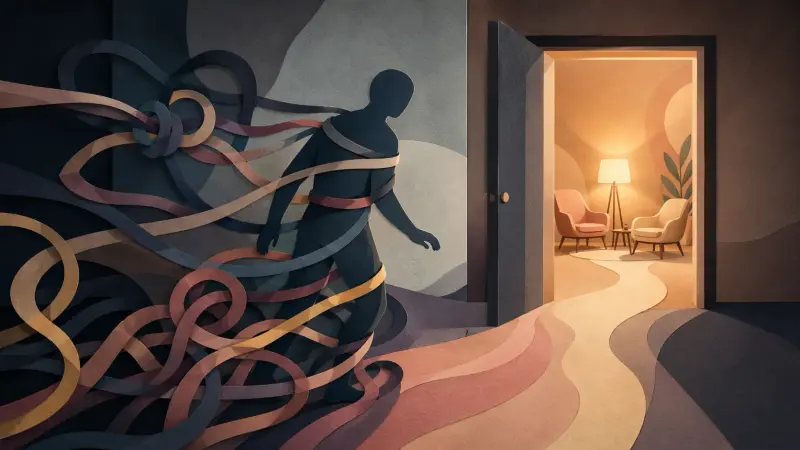
Feeling disconnected can visit you suddenly: as if you’re watching yourself from far away, or as if the world has lost its usual color and sound. This experience is confusing and may stir fear of losing control, but in many cases it’s a temporary way the mind uses when stress rises beyond what it can carry. If you’re going through this feeling right now, having a safe space to talk can help calm what’s inside and reconnect you to the present—something some people are able to access through Tatmeen without judgment or rushing.
What Do Depersonalization and Derealization Mean?
Depersonalization is the feeling that you’re not quite yourself: your thoughts and emotions seem distant or numb, as if you’re observing your body from the outside. Derealization is the feeling that what’s around you isn’t real or is foggy, as if you’re in a dream or behind glass. What matters is that this experience often comes with an inner awareness that it’s a sensation, not reality—that is, you know the place exists and you are you, but the sense of closeness and “realness” fades.
As for dissociative disorders, the key idea is that depersonalization and derealization can happen together, and they may last for minutes or recur over longer periods. The American Psychiatric Association explains dissociation as a disconnection between thoughts, emotions, memory, and the sense of self—sometimes as a response to stress or traumatic experiences.
This article explains possible experiences and calming steps; it is not a diagnosis. Seek urgent help from the nearest emergency service, or Saudi 999, 997, or 937, if the feeling comes with immediate danger, thoughts of harming yourself or others, inability to stay safe, a clear loss of contact with reality, hearing or seeing things others do not notice, severe confusion, fainting, seizures, head injury, severe headache, sudden neurological symptoms, or starts after a stimulant, substance, or medication change. Tatmeen is not a substitute for emergency care.
Why Might This Feeling Appear in the First Place?
When someone is exposed to intense strain or high anxiety, the brain may look for a way to reduce the intensity of the emotion. Sometimes disconnection is like a volume-lowering button: the sense of emotional pain decreases, but the cost is a feeling of unfamiliarity with yourself or your surroundings. It can also show up with panic attacks, lack of sleep, accumulated exhaustion, or long periods of pressure without release.
You don’t have to have gone through a traumatic event to experience this. Sometimes a mix of simple factors is enough: work stress, family responsibilities, health worries, or even too much caffeine with broken sleep. What matters most is noticing the context: When does it get worse? And when does it ease? Understanding the pattern gives you a sense of control instead of feeling scattered.
What Can Feeling Disconnected Look Like in Your Day?
The experience may be quiet on the outside but loud on the inside. Some people describe it as numbness, others as panic, others as emptiness. Here are common examples that can help you name what’s happening without catastrophizing:
Feeling like sounds or colors are far away, or that time is unusually slow or fast.
A sense that your body is moving on autopilot, with difficulty feeling emotion, warmth, or touch.
Increased checking and reassurance-seeking: repeatedly asking yourself, “Am I normal?” “Am I going to lose my mind?”
Difficulty concentrating, or feeling disconnected while driving, working, or during worship.
Naming the experience isn’t a diagnosis. But it’s a step that reduces fear—because fear often feeds on the unknown.
What Usually Makes It Worse—and What Helps?
Derealization/depersonalization tends to intensify when we fight the sensation and monitor it constantly. Persistent preoccupation with “how real things feel,” or excessive internet searching, can increase anxiety and give the experience more weight. It can also worsen with hunger, dehydration, lack of sleep, too much coffee, or prolonged isolation.
On the other hand, many people notice it calms down when the body returns to a more natural rhythm: better sleep, regular meals, simple movement, and safe human connection. Focusing on small bodily cues in the present can be a practical path back to feeling connected—instead of getting pulled into a mental debate about whether everything is real or not.
Safe Steps That Can Help in the Moment
There’s no magic switch, but there are gentle tools that bring you back to “here and now.” Try what suits you, and leave what doesn’t—without self-blame:
Start with slow breathing: take a calm inhale, then a slightly longer exhale. The goal isn’t to stop symptoms immediately, but to send your nervous system a message that danger isn’t present.
Use your five senses: look around and name five things you see, then four things you can touch, then three sounds you can hear. This moves you from internal monitoring into tangible reality.
Move your body in a simple way: wash your face with lukewarm water, walk for a minute in the room, or tense your muscles then release them. The body is a fast doorway to the present.
Reduce mental checking: instead of “Is this real?” try a gentler sentence: “This is an uncomfortable feeling, and it can ease.” Anchoring the meaning reduces panic.
Building Safety Over the Longer Term Without Being Hard on Yourself
If disconnection keeps repeating, think of it as a gentle alarm bell—not a verdict on your character. Ask yourself: What am I postponing? Where am I living beyond my capacity? Sometimes the solution is gradual: reducing load, setting boundaries, or reshaping priorities.
Help yourself with realistic steps: as steady a sleep schedule as possible, enough water, balanced meals, and reducing stimulants in the evening. Try writing two lines daily about the strongest moment you felt disconnected and what came before it; the goal is to discover triggers, not put them on trial.
And don’t forget meaning: some people find reassurance in prayer, remembrance, and calm breathing—so long as it’s done gently, not as a test of concentration. When disconnection becomes frequent or disrupts studying and relationships, talking with a licensed mental health professional can help you understand the roots of stress and learn emotion-regulation skills in a way that fits your life.
Finally…
Feeling disconnected may seem like it’s pulling you away from yourself, but it’s often a message from your nervous system that it’s exhausted and needs gentler care. Take the experience seriously—without panic—and give your body its basics: sleep, nourishment, connection, and stress regulation. And if you feel symptoms are recurring or weighing down your day, safe professional support may open a clearer path; you can book an appointment through Tatmeen when you’re ready, at a pace that suits you.
Frequently Asked Questions
Does derealization mean I’m losing my mind?
Usually not. Many people experience derealization with anxiety or stress and still have awareness that what’s happening is an uncomfortable sensation—not reality. If it persists or disrupts your life, consulting a specialist can help you understand it and calm it.
What’s the difference between dissociation and a panic attack?
They can overlap. A panic attack involves a sudden surge of physical symptoms and intense fear, and it may be accompanied by a sense of disconnection. Dissociation can also appear on its own with chronic stress or exhaustion. Focusing on breathing and the senses helps in both cases.
What should I do if disconnection hits me during work or worship?
Choose a small, subtle intervention: plant your feet on the ground, notice three things around you, and take two longer exhales. Remind yourself the feeling is temporary, then return to the task with one simple step instead of trying to restore full focus all at once.
A writer and researcher specializing in psychiatry, she focuses on mental health and the human emotions we experience but cannot always find the words to name. She writes about us—about humanity and the human experience—and simplifies complex topics to offer content that helps us better understand ourselves and life, ultimately making us feel less alone.
Every Tatmeen article is reviewed by care providers licensed by the Saudi Commission for Health Specialties, so what you read is accurate and trustworthy.
This article builds understanding and does not replace a licensed care provider.
Need someone to talk to?
Tatmeen's licensed care providers are available around the clock, and the app's urgent consultation connects you with one within minutes.
Download Tatmeen to explore care providers and booking options.
Smart matchingFour quick questions suggest the right care provider
Urgent consultationTalk to an available care provider within minutes
Free psychological measuresMore than 20 tests to understand how you are doing
Scan to download
{"data":{"id":"d242644b-cf94-4a22-9f55-a76b1e530a25","slug":"depersonalization-derealization","arTitle":"الشعور بالانفصال: فهم تبدد الشخصية وتبدد الواقع","enTitle":"Feeling Disconnected: Understanding Depersonalization and Derealization","thumbnailAltText":"A lone figure stands before a floating sky window in a vast, surreal empty space.","estimatedReadingTime":5,"likesCount":226,"writer":{"id":"3ab72b74-f26f-4337-9b47-3114b0f90de5","arBio":"كاتبة وباحثة متخصصة في مجال الطب النفسي، تهتم بموضوعات الصحة النفسية وبالمشاعر الإنسانية التي نختبرها ولا نجد دائمًا الكلمات لتسميتها. تكتب عنّا؛ عن الإنسان وتجربته، وتبسّط الموضوعات المعقّدة لتقدّم محتوى يساعدنا على فهم ذواتنا والحياة أكثر، ويجعلنا نشعر بأننا بوحدة أقل.","enBio":"A writer and researcher specializing in psychiatry, she focuses on mental health and the human emotions we experience but cannot always find the words to name. She writes about us—about humanity and the human experience—and simplifies complex topics to offer content that helps us better understand ourselves and life, ultimately making us feel less alone.","user":{"slug":"ayat-alnajar","arFullName":"آيات النجار","enFullName":"Ayat Al-Najjar","publicProfileImageUrl":"https://cdn.tatmeen.sa/public/profile-images/02384455-68fa-40b6-ad05-609fde65cafa/21b9a610dde5dfc6d37af110c23e9c7ab3946be080c281beb000debf4f7d31a6.webp","publicProfileImage96Url":"https://cdn.tatmeen.sa/public/profile-images/02384455-68fa-40b6-ad05-609fde65cafa/21b9a610dde5dfc6d37af110c23e9c7ab3946be080c281beb000debf4f7d31a6-w96.webp","publicProfileImage192Url":"https://cdn.tatmeen.sa/public/profile-images/02384455-68fa-40b6-ad05-609fde65cafa/21b9a610dde5dfc6d37af110c23e9c7ab3946be080c281beb000debf4f7d31a6-w192.webp"}},"arContent":"","enContent":"","productionDocument":{"headings":[{"id":"article-section-what-do-depersonalization-and-derealization-mean","text":"What Do Depersonalization and Derealization Mean?"},{"id":"article-section-why-might-this-feeling-appear-in-the-first-place","text":"Why Might This Feeling Appear in the First Place?"},{"id":"article-section-what-can-feeling-disconnected-look-like-in-your-day","text":"What Can Feeling Disconnected Look Like in Your Day?"},{"id":"article-section-what-usually-makes-it-worse-and-what-helps","text":"What Usually Makes It Worse—and What Helps?"},{"id":"article-section-safe-steps-that-can-help-in-the-moment","text":"Safe Steps That Can Help in the Moment"},{"id":"article-section-building-safety-over-the-longer-term-without-being-hard-on-yourself","text":"Building Safety Over the Longer Term Without Being Hard on Yourself"},{"id":"article-section-finally","text":"Finally…"}],"faqs":[{"question":"Does derealization mean I’m losing my mind?","answer":"<p><span style=\"color:#000000\">Usually not. Many people experience derealization with anxiety or stress and still have awareness that what’s happening is an uncomfortable sensation—not reality. If it persists or disrupts your life, consulting a specialist can help you understand it and calm it.</span></p>"},{"question":"What’s the difference between dissociation and a panic attack?","answer":"<p><span style=\"color:#000000\">They can overlap. A panic attack involves a sudden surge of physical symptoms and intense fear, and it may be accompanied by a sense of disconnection. Dissociation can also appear on its own with chronic stress or exhaustion. Focusing on breathing and the senses helps in both cases.</span></p>"},{"question":"What should I do if disconnection hits me during work or worship?","answer":"<p><span style=\"color:#000000\">Choose a small, subtle intervention: plant your feet on the ground, notice three things around you, and take two longer exhales. Remind yourself the feeling is temporary, then return to the task with one simple step instead of trying to restore full focus all at once.</span></p>"}],"beforeSourcesHtml":"<p></p>","sources":[],"afterSourcesHtml":"","blocks":[{"type":"html","html":"<p><span style=\"color:#000000\">Feeling disconnected can visit you suddenly: as if you’re watching yourself from far away, or as if the world has lost its usual color and sound. This experience is confusing and may stir fear of losing control, but in many cases it’s a temporary way the mind uses when stress rises beyond what it can carry. If you’re going through this feeling right now, having a safe space to talk can help calm what’s inside and reconnect you to the present—something some people are able to access through Tatmeen without judgment or rushing.</span></p><h2 id=\"article-section-what-do-depersonalization-and-derealization-mean\" data-toc-heading tabindex=\"-1\"><span id=\"what-do-depersonalization-and-derealization-mean-1\" aria-hidden=\"true\"></span><span style=\"color:#000000\"><strong>What Do Depersonalization and Derealization Mean?</strong></span></h2><p><span style=\"color:#000000\"><strong>Depersonalization</strong> is the feeling that you’re not quite yourself: your thoughts and emotions seem distant or numb, as if you’re observing your body from the outside. <strong>Derealization</strong> is the feeling that what’s around you isn’t real or is foggy, as if you’re in a dream or behind glass. What matters is that this experience often comes with an inner awareness that it’s a sensation, not reality—that is, you know the place exists and you are you, but the sense of closeness and “realness” fades.</span></p><p><span style=\"color:#000000\">As for dissociative disorders, the key idea is that depersonalization and derealization can happen together, and they may last for minutes or recur over longer periods. The American Psychiatric Association explains dissociation as a disconnection between thoughts, emotions, memory, and the sense of self—sometimes as a response to stress or traumatic experiences.</span></p><p><span style=\"color:#000000\">This article explains possible experiences and calming steps; it is not a diagnosis. Seek urgent help from the nearest emergency service, or Saudi 999, 997, or 937, if the feeling comes with immediate danger, thoughts of harming yourself or others, inability to stay safe, a clear loss of contact with reality, hearing or seeing things others do not notice, severe confusion, fainting, seizures, head injury, severe headache, sudden neurological symptoms, or starts after a stimulant, substance, or medication change. Tatmeen is not a substitute for emergency care.</span></p><h2 id=\"article-section-why-might-this-feeling-appear-in-the-first-place\" data-toc-heading tabindex=\"-1\"><span id=\"why-might-this-feeling-appear-in-the-first-place-2\" aria-hidden=\"true\"></span><span style=\"color:#000000\"><strong>Why Might This Feeling Appear in the First Place?</strong></span></h2><p><span style=\"color:#000000\">When someone is exposed to intense strain or high anxiety, the brain may look for a way to reduce the intensity of the emotion. Sometimes disconnection is like a volume-lowering button: the sense of emotional pain decreases, but the cost is a feeling of unfamiliarity with yourself or your surroundings. It can also show up with panic attacks, lack of sleep, accumulated exhaustion, or long periods of pressure without release.</span></p><p><span style=\"color:#000000\">You don’t have to have gone through a traumatic event to experience this. Sometimes a mix of simple factors is enough: work stress, family responsibilities, health worries, or even too much caffeine with broken sleep. What matters most is noticing the context: When does it get worse? And when does it ease? Understanding the pattern gives you a sense of control instead of feeling scattered.</span></p><h2 id=\"article-section-what-can-feeling-disconnected-look-like-in-your-day\" data-toc-heading tabindex=\"-1\"><span id=\"what-can-feeling-disconnected-look-like-in-your-day-3\" aria-hidden=\"true\"></span><span style=\"color:#000000\"><strong>What Can Feeling Disconnected Look Like in Your Day?</strong></span></h2><p><span style=\"color:#000000\">The experience may be quiet on the outside but loud on the inside. Some people describe it as numbness, others as panic, others as emptiness. Here are common examples that can help you name what’s happening without catastrophizing:</span></p><ul><li><p><span style=\"color:#000000\">Feeling like sounds or colors are far away, or that time is unusually slow or fast.</span></p></li><li><p><span style=\"color:#000000\">A sense that your body is moving on autopilot, with difficulty feeling emotion, warmth, or touch.</span></p></li><li><p><span style=\"color:#000000\">Increased checking and reassurance-seeking: repeatedly asking yourself, “Am I normal?” “Am I going to lose my mind?”</span></p></li><li><p><span style=\"color:#000000\">Difficulty concentrating, or feeling disconnected while driving, working, or during worship.</span></p></li></ul><p><span style=\"color:#000000\">Naming the experience isn’t a diagnosis. But it’s a step that reduces fear—because fear often feeds on the unknown.</span></p><h2 id=\"article-section-what-usually-makes-it-worse-and-what-helps\" data-toc-heading tabindex=\"-1\"><span id=\"what-usually-makes-it-worse-and-what-helps-4\" aria-hidden=\"true\"></span><span style=\"color:#000000\"><strong>What Usually Makes It Worse—and What Helps?</strong></span></h2><p><span style=\"color:#000000\">Derealization/depersonalization tends to intensify when we fight the sensation and monitor it constantly. Persistent preoccupation with “how real things feel,” or excessive internet searching, can increase anxiety and give the experience more weight. It can also worsen with hunger, dehydration, lack of sleep, too much coffee, or prolonged isolation.</span></p><p><span style=\"color:#000000\">On the other hand, many people notice it calms down when the body returns to a more natural rhythm: better sleep, regular meals, simple movement, and safe human connection. Focusing on small bodily cues in the present can be a practical path back to feeling connected—instead of getting pulled into a mental debate about whether everything is real or not.</span></p><h2 id=\"article-section-safe-steps-that-can-help-in-the-moment\" data-toc-heading tabindex=\"-1\"><span id=\"safe-steps-that-can-help-in-the-moment-5\" aria-hidden=\"true\"></span><span style=\"color:#000000\"><strong>Safe Steps That Can Help in the Moment</strong></span></h2><p><span style=\"color:#000000\">There’s no magic switch, but there are gentle tools that bring you back to “here and now.” Try what suits you, and leave what doesn’t—without self-blame:</span></p><ul><li><p><span style=\"color:#000000\"><strong>Start with slow breathing:</strong> take a calm inhale, then a slightly longer exhale. The goal isn’t to stop symptoms immediately, but to send your nervous system a message that danger isn’t present.</span></p></li><li><p><span style=\"color:#000000\"><strong>Use your five senses:</strong> look around and name five things you see, then four things you can touch, then three sounds you can hear. This moves you from internal monitoring into tangible reality.</span></p></li><li><p><span style=\"color:#000000\"><strong>Move your body in a simple way:</strong> wash your face with lukewarm water, walk for a minute in the room, or tense your muscles then release them. The body is a fast doorway to the present.</span></p></li><li><p><span style=\"color:#000000\"><strong>Reduce mental checking:</strong> instead of “Is this real?” try a gentler sentence: “This is an uncomfortable feeling, and it can ease.” Anchoring the meaning reduces panic.</span></p></li></ul><h2 id=\"article-section-building-safety-over-the-longer-term-without-being-hard-on-yourself\" data-toc-heading tabindex=\"-1\"><span id=\"building-safety-over-the-longer-term-without-being-hard-on-yourself-6\" aria-hidden=\"true\"></span><span style=\"color:#000000\"><strong>Building Safety Over the Longer Term Without Being Hard on Yourself</strong></span></h2><p><span style=\"color:#000000\">If disconnection keeps repeating, think of it as a gentle alarm bell—not a verdict on your character. Ask yourself: What am I postponing? Where am I living beyond my capacity? Sometimes the solution is gradual: reducing load, setting boundaries, or reshaping priorities.</span></p><p><span style=\"color:#000000\">Help yourself with realistic steps: as steady a sleep schedule as possible, enough water, balanced meals, and reducing stimulants in the evening. Try writing two lines daily about the strongest moment you felt disconnected and what came before it; the goal is to discover triggers, not put them on trial.</span></p><p><span style=\"color:#000000\">And don’t forget meaning: some people find reassurance in prayer, remembrance, and calm breathing—so long as it’s done gently, not as a test of concentration. When disconnection becomes frequent or disrupts studying and relationships, talking with a licensed mental health professional can help you understand the roots of stress and learn emotion-regulation skills in a way that fits your life.</span></p><h2 id=\"article-section-finally\" data-toc-heading tabindex=\"-1\"><span id=\"finally-7\" aria-hidden=\"true\"></span><span style=\"color:#000000\"><strong>Finally…</strong></span></h2><p><span style=\"color:#000000\">Feeling disconnected may seem like it’s pulling you away from yourself, but it’s often a message from your nervous system that it’s exhausted and needs gentler care. Take the experience seriously—without panic—and give your body its basics: sleep, nourishment, connection, and stress regulation. And if you feel symptoms are recurring or weighing down your day, safe professional support may open a clearer path; you can <u>book an appointment through Tatmeen</u> when you’re ready, at a pace that suits you.</span></p>"}],"inlineCtaSignatures":[],"_experienceAliases":{"v":1,"fields":["html","bodyHtml"],"faqs":[0,1,2]}},"createdAt":"2026-06-01T21:00:00.000Z","updatedAt":"2026-06-24T23:49:44.820Z","disorderGroups":[{"id":"1e82772d-a1a7-4d29-b475-be9d6b67ae02","slug":"common-mental-issues","arName":"اضطرابات نفسية شائعة","enName":"Common Mental Issues"}],"reviewer":{"arFullName":"فريق تطمين","enFullName":"Tatmeen team","slug":"tatmeen-team","kind":"organization"},"productionArticle":true,"promotionAllowed":true,"preparedCover":{"src":"https://cdn.tatmeen.sa/public/article-lcp/article-lcp-v2/sha256-54fa2d9059f8788afe80025c4df9b301bbac45b4e26674bb76d3cab432d94eca/800-4790a6b9a6d102b62fcc07f5b7177f3074a5a29b43de14c14ef3b702daebd3e3.avif","fallback":"https://cdn.tatmeen.sa/public/article-lcp/article-lcp-v2/sha256-54fa2d9059f8788afe80025c4df9b301bbac45b4e26674bb76d3cab432d94eca/800-06b083970ae9594c9a10480d6516808220c17ec69d4ba679fa232d0f8b56bf09.webp","directUrl":"https://cdn.tatmeen.sa/blog-cover/Tatmeen-1780419291423.webp","isGolden":true,"avifSrcset":"https://cdn.tatmeen.sa/public/article-lcp/article-lcp-v2/sha256-54fa2d9059f8788afe80025c4df9b301bbac45b4e26674bb76d3cab432d94eca/400-cb62a729abb0017f0b5915b27832b814c02921f0d4c8048a06d83d03db6b37d5.avif 400w, https://cdn.tatmeen.sa/public/article-lcp/article-lcp-v2/sha256-54fa2d9059f8788afe80025c4df9b301bbac45b4e26674bb76d3cab432d94eca/640-e4835bb93d3d3c5dc58f582138d849417aed8a2664362fe02d382858d57998c4.avif 640w, https://cdn.tatmeen.sa/public/article-lcp/article-lcp-v2/sha256-54fa2d9059f8788afe80025c4df9b301bbac45b4e26674bb76d3cab432d94eca/800-4790a6b9a6d102b62fcc07f5b7177f3074a5a29b43de14c14ef3b702daebd3e3.avif 800w, https://cdn.tatmeen.sa/public/article-lcp/article-lcp-v2/sha256-54fa2d9059f8788afe80025c4df9b301bbac45b4e26674bb76d3cab432d94eca/1200-960ce4dab20607833bd29f49d781074ddb276dbe10d72a5d5ef7fde4ff439288.avif 1200w","webpSrcset":"https://cdn.tatmeen.sa/public/article-lcp/article-lcp-v2/sha256-54fa2d9059f8788afe80025c4df9b301bbac45b4e26674bb76d3cab432d94eca/400-a0fd258a109ea7d7bf8de2bf0adfbcb0b064c34d0880f09f4e55c1472daf5fa8.webp 400w, https://cdn.tatmeen.sa/public/article-lcp/article-lcp-v2/sha256-54fa2d9059f8788afe80025c4df9b301bbac45b4e26674bb76d3cab432d94eca/640-aa895893af14890be415e1304bd7d35ee30a3e686a717be4997ff3e432006b72.webp 640w, https://cdn.tatmeen.sa/public/article-lcp/article-lcp-v2/sha256-54fa2d9059f8788afe80025c4df9b301bbac45b4e26674bb76d3cab432d94eca/800-06b083970ae9594c9a10480d6516808220c17ec69d4ba679fa232d0f8b56bf09.webp 800w, https://cdn.tatmeen.sa/public/article-lcp/article-lcp-v2/sha256-54fa2d9059f8788afe80025c4df9b301bbac45b4e26674bb76d3cab432d94eca/1200-7068828200f32c994dec3524d2096ae596a8d1d1a2f62ff1674f58ebd3c14995.webp 1200w","phoneAvifSrcset":"https://cdn.tatmeen.sa/public/article-lcp/article-lcp-v2/sha256-54fa2d9059f8788afe80025c4df9b301bbac45b4e26674bb76d3cab432d94eca/400-cb62a729abb0017f0b5915b27832b814c02921f0d4c8048a06d83d03db6b37d5.avif 400w, https://cdn.tatmeen.sa/public/article-lcp/article-lcp-v2/sha256-54fa2d9059f8788afe80025c4df9b301bbac45b4e26674bb76d3cab432d94eca/640-e4835bb93d3d3c5dc58f582138d849417aed8a2664362fe02d382858d57998c4.avif 640w, https://cdn.tatmeen.sa/public/article-lcp/article-lcp-v2/sha256-54fa2d9059f8788afe80025c4df9b301bbac45b4e26674bb76d3cab432d94eca/800-4790a6b9a6d102b62fcc07f5b7177f3074a5a29b43de14c14ef3b702daebd3e3.avif 800w","phoneWebpSrcset":"https://cdn.tatmeen.sa/public/article-lcp/article-lcp-v2/sha256-54fa2d9059f8788afe80025c4df9b301bbac45b4e26674bb76d3cab432d94eca/400-a0fd258a109ea7d7bf8de2bf0adfbcb0b064c34d0880f09f4e55c1472daf5fa8.webp 400w, https://cdn.tatmeen.sa/public/article-lcp/article-lcp-v2/sha256-54fa2d9059f8788afe80025c4df9b301bbac45b4e26674bb76d3cab432d94eca/640-aa895893af14890be415e1304bd7d35ee30a3e686a717be4997ff3e432006b72.webp 640w, https://cdn.tatmeen.sa/public/article-lcp/article-lcp-v2/sha256-54fa2d9059f8788afe80025c4df9b301bbac45b4e26674bb76d3cab432d94eca/800-06b083970ae9594c9a10480d6516808220c17ec69d4ba679fa232d0f8b56bf09.webp 800w","width":800,"height":447},"previewTaxonomy":{"groups":[{"id":"1e82772d-a1a7-4d29-b475-be9d6b67ae02","slug":"common-mental-issues","arName":"اضطرابات نفسية شائعة","enName":"Common Mental Issues"}],"topics":[{"id":"d7bfad62-65b5-4343-9647-fcfd9a6a977a","slug":"panic-attacks","arName":"نوبات الهلع","enName":"Panic Attacks","groupSlug":"common-mental-issues","href":"/blog/category/common-mental-issues/panic-attacks/"},{"id":"4b322099-fefa-4ba7-a3d1-4130f206046a","slug":"anxiety","arName":"قلق","enName":"Anxiety","groupSlug":"common-mental-issues","href":"/blog/category/common-mental-issues/anxiety/"}],"tags":[{"id":"82ea9460-3054-4964-a9ad-48c94868cd41","slug":"trauma-ptsd","arName":"الصدمة واضطراب ما بعد الصدمة","enName":"Trauma & PTSD"},{"id":"b17ecf79-93e3-43d7-8e38-1861533199ba","slug":"anxiety-panic-phobia","arName":"القلق والرهاب والهلع","enName":"Anxiety Phobias & Panic"},{"id":"c2a6e8d3-de9c-435f-8c95-9727e7db14cc","slug":"explainer-awareness","arName":"دليل توعوي / شرح","enName":"Explainer / Awareness Guide"}]},"previewProviderRecommendations":[{"id":"278d5ac5-30ff-46ad-97be-c67cdd125836","slug":"dr-mohammed-alamari-8085","arFullName":"د. محمد العماري","enFullName":"Dr. Mohammed Alamari","publicProfileImageUrl":"https://cdn.tatmeen.sa/public/profile-images/278d5ac5-30ff-46ad-97be-c67cdd125836/69bdd11cb01784eed010eb9883403fd6ca4e4afcec739dcd6114fd8b85f133a8.webp","publicProfileImage96Url":"https://cdn.tatmeen.sa/public/profile-images/278d5ac5-30ff-46ad-97be-c67cdd125836/69bdd11cb01784eed010eb9883403fd6ca4e4afcec739dcd6114fd8b85f133a8-w96.webp","publicProfileImage192Url":"https://cdn.tatmeen.sa/public/profile-images/278d5ac5-30ff-46ad-97be-c67cdd125836/69bdd11cb01784eed010eb9883403fd6ca4e4afcec739dcd6114fd8b85f133a8-w192.webp","specialization":{"arName":"طبيب أسرة","enName":"Family Physician"},"profileImageUrl":"https://cdn.tatmeen.sa/public/profile-images/278d5ac5-30ff-46ad-97be-c67cdd125836/69bdd11cb01784eed010eb9883403fd6ca4e4afcec739dcd6114fd8b85f133a8-w192.webp","experienceYears":3,"consultantInfo":{"averageRating":{"average":4},"specialization":{"arGeneralName":"طبيب أسرة","enGeneralName":"Family Physician"}}},{"id":"dc4f4096-c96e-46ad-8e85-55c7104fbbf9","slug":"alya-alasiri-9292","arFullName":"علياء العسيري","enFullName":"Alya Alasiri","publicProfileImageUrl":"","publicProfileImage96Url":"","publicProfileImage192Url":"","specialization":{"arName":"أخصائي نفسي","enName":"Psychologist"},"profileImageUrl":"","experienceYears":4,"consultantInfo":{"averageRating":{"average":0},"specialization":{"arGeneralName":"أخصائي نفسي","enGeneralName":"Psychologist"}}},{"id":"6df31339-a6f5-4131-a603-3a7c7a34c143","slug":"joud-alodhayyani-9014","arFullName":"جود العتيبي","enFullName":"Joud Alotaibi","publicProfileImageUrl":"https://cdn.tatmeen.sa/public/profile-images/6df31339-a6f5-4131-a603-3a7c7a34c143/7bb005ef9d4315296aad2a7d142fb2af2cf89920a40b474fc5139b9530269282.webp","publicProfileImage96Url":"https://cdn.tatmeen.sa/public/profile-images/6df31339-a6f5-4131-a603-3a7c7a34c143/7bb005ef9d4315296aad2a7d142fb2af2cf89920a40b474fc5139b9530269282-w96.webp","publicProfileImage192Url":"https://cdn.tatmeen.sa/public/profile-images/6df31339-a6f5-4131-a603-3a7c7a34c143/7bb005ef9d4315296aad2a7d142fb2af2cf89920a40b474fc5139b9530269282-w192.webp","specialization":{"arName":"أخصائي نفسي","enName":"Psychologist"},"profileImageUrl":"https://cdn.tatmeen.sa/public/profile-images/6df31339-a6f5-4131-a603-3a7c7a34c143/7bb005ef9d4315296aad2a7d142fb2af2cf89920a40b474fc5139b9530269282-w192.webp","experienceYears":2,"consultantInfo":{"averageRating":{"average":3.5},"specialization":{"arGeneralName":"أخصائي نفسي","enGeneralName":"Psychologist"}}}],"previewCareProviders":[{"id":"09364052-c2a9-4c52-9717-7ce2093b8d0a","slug":"kholoud-alharbi-5221","arFullName":"خلود الحربي","enFullName":"Kholoud Alharbi","publicProfileImageUrl":"https://cdn.tatmeen.sa/public/profile-images/09364052-c2a9-4c52-9717-7ce2093b8d0a/4a0aeb81619e351b77f4323e3605a0a00acc7ca3c82ee7cc5ca2c9e8ef716049.webp","publicProfileImage96Url":"https://cdn.tatmeen.sa/public/profile-images/09364052-c2a9-4c52-9717-7ce2093b8d0a/4a0aeb81619e351b77f4323e3605a0a00acc7ca3c82ee7cc5ca2c9e8ef716049-w96.webp","publicProfileImage192Url":"https://cdn.tatmeen.sa/public/profile-images/09364052-c2a9-4c52-9717-7ce2093b8d0a/4a0aeb81619e351b77f4323e3605a0a00acc7ca3c82ee7cc5ca2c9e8ef716049-w192.webp","gender":"FEMALE","specialization":{"arName":"أخصائي نفسي","enName":"Psychologist"}},{"id":"6f037535-1dca-4b50-a8b2-5974b7323286","slug":"salah-althobaiti-9053","arFullName":"صلاح الثبيتي","enFullName":"Salah Althobaiti","publicProfileImageUrl":"https://cdn.tatmeen.sa/public/profile-images/6f037535-1dca-4b50-a8b2-5974b7323286/35b6bd7fad9b1e004c1835803eb9c1b56dcacd380685ec8bff141f0fb888005c.webp","publicProfileImage96Url":"https://cdn.tatmeen.sa/public/profile-images/6f037535-1dca-4b50-a8b2-5974b7323286/35b6bd7fad9b1e004c1835803eb9c1b56dcacd380685ec8bff141f0fb888005c-w96.webp","publicProfileImage192Url":"https://cdn.tatmeen.sa/public/profile-images/6f037535-1dca-4b50-a8b2-5974b7323286/35b6bd7fad9b1e004c1835803eb9c1b56dcacd380685ec8bff141f0fb888005c-w192.webp","gender":"MALE","specialization":{"arName":"أخصائي نفسي","enName":"Psychologist"}},{"id":"3cc806e8-616b-4884-9f21-a75b378580a2","slug":"aisha-al-hashim-8667","arFullName":"عائشة ال هاشم","enFullName":"Aisha Al Hashim","publicProfileImageUrl":"https://cdn.tatmeen.sa/public/profile-images/3cc806e8-616b-4884-9f21-a75b378580a2/27f523d03be4dcfa1f6a79f70c1773887434e698990d214cd990caec56a44798.webp","publicProfileImage96Url":"https://cdn.tatmeen.sa/public/profile-images/3cc806e8-616b-4884-9f21-a75b378580a2/27f523d03be4dcfa1f6a79f70c1773887434e698990d214cd990caec56a44798-w96.webp","publicProfileImage192Url":"https://cdn.tatmeen.sa/public/profile-images/3cc806e8-616b-4884-9f21-a75b378580a2/27f523d03be4dcfa1f6a79f70c1773887434e698990d214cd990caec56a44798-w192.webp","gender":"FEMALE","specialization":{"arName":"أخصائي نفسي","enName":"Psychologist"}},{"id":"db2ce1a0-9325-4471-b7ce-eb2e811c30a3","slug":"amer-qutub-2441","arFullName":"عامر قطب","enFullName":"Amer Qutub","publicProfileImageUrl":"https://cdn.tatmeen.sa/public/profile-images/db2ce1a0-9325-4471-b7ce-eb2e811c30a3/80580f99bfd7fe2b2a9cf8eed73ab532f5086d1efe053b0aa57358c1ce004261.webp","publicProfileImage96Url":"https://cdn.tatmeen.sa/public/profile-images/db2ce1a0-9325-4471-b7ce-eb2e811c30a3/80580f99bfd7fe2b2a9cf8eed73ab532f5086d1efe053b0aa57358c1ce004261-w96.webp","publicProfileImage192Url":"https://cdn.tatmeen.sa/public/profile-images/db2ce1a0-9325-4471-b7ce-eb2e811c30a3/80580f99bfd7fe2b2a9cf8eed73ab532f5086d1efe053b0aa57358c1ce004261-w192.webp","gender":"MALE","specialization":{"arName":"أخصائي نفسي","enName":"Psychologist"}},{"id":"94765496-dbdf-4631-a01b-7df5f788668d","slug":"abdullrahman-alhamoudi-3045","arFullName":"عبدالرحمن الحمودي","enFullName":"Abdulrahman Alhamoudi","publicProfileImageUrl":"https://cdn.tatmeen.sa/public/profile-images/94765496-dbdf-4631-a01b-7df5f788668d/2d49f6b6493c564afb6f50b6c3634231dff3a5cf8353acfab393d1b2a88037d1.webp","publicProfileImage96Url":"https://cdn.tatmeen.sa/public/profile-images/94765496-dbdf-4631-a01b-7df5f788668d/2d49f6b6493c564afb6f50b6c3634231dff3a5cf8353acfab393d1b2a88037d1-w96.webp","publicProfileImage192Url":"https://cdn.tatmeen.sa/public/profile-images/94765496-dbdf-4631-a01b-7df5f788668d/2d49f6b6493c564afb6f50b6c3634231dff3a5cf8353acfab393d1b2a88037d1-w192.webp","gender":"MALE","specialization":{"arName":"أخصائي نفسي","enName":"Psychologist"}},{"id":"618dba89-5b70-4b46-8304-741b7ac8ecd3","slug":"abdullah-mari-1311","arFullName":"عبدالله مرعي","enFullName":"Abdullah Mari","publicProfileImageUrl":"https://cdn.tatmeen.sa/public/profile-images/618dba89-5b70-4b46-8304-741b7ac8ecd3/6b4a3bfb59f8a304ca79083b32859b46baad2e1d692974a47c02c1f66bd11129.webp","publicProfileImage96Url":"https://cdn.tatmeen.sa/public/profile-images/618dba89-5b70-4b46-8304-741b7ac8ecd3/6b4a3bfb59f8a304ca79083b32859b46baad2e1d692974a47c02c1f66bd11129-w96.webp","publicProfileImage192Url":"https://cdn.tatmeen.sa/public/profile-images/618dba89-5b70-4b46-8304-741b7ac8ecd3/6b4a3bfb59f8a304ca79083b32859b46baad2e1d692974a47c02c1f66bd11129-w192.webp","gender":"MALE","specialization":{"arName":"أخصائي نفسي","enName":"Psychologist"}},{"id":"3b50a5d5-e795-407f-8676-fd7f0e1bb7a0","slug":"abdulaziz-bin-hudayan-4940","arFullName":"عبدالعزيز بن هديان","enFullName":"Abdulaziz Bin Hudayan","publicProfileImageUrl":"https://cdn.tatmeen.sa/public/profile-images/3b50a5d5-e795-407f-8676-fd7f0e1bb7a0/710ff0fe1fb00cdb5042092e27b7910b480a439b02251ecded62d7758eefce95.webp","publicProfileImage96Url":"https://cdn.tatmeen.sa/public/profile-images/3b50a5d5-e795-407f-8676-fd7f0e1bb7a0/710ff0fe1fb00cdb5042092e27b7910b480a439b02251ecded62d7758eefce95-w96.webp","publicProfileImage192Url":"https://cdn.tatmeen.sa/public/profile-images/3b50a5d5-e795-407f-8676-fd7f0e1bb7a0/710ff0fe1fb00cdb5042092e27b7910b480a439b02251ecded62d7758eefce95-w192.webp","gender":"MALE","specialization":{"arName":"أخصائي نفسي","enName":"Psychologist"}},{"id":"d4ffcb6b-90a7-45b6-b941-964866f4564b","slug":"dhaifallah-alhumaidi-1092","arFullName":"ضيف الله الحميدي","enFullName":"Dhaifallah Alhumaidi","publicProfileImageUrl":"https://cdn.tatmeen.sa/public/profile-images/d4ffcb6b-90a7-45b6-b941-964866f4564b/1817171c5828a9b57d6c30d12332cf154e335272548bc90a6e8456d74d356956.webp","publicProfileImage96Url":"https://cdn.tatmeen.sa/public/profile-images/d4ffcb6b-90a7-45b6-b941-964866f4564b/1817171c5828a9b57d6c30d12332cf154e335272548bc90a6e8456d74d356956-w96.webp","publicProfileImage192Url":"https://cdn.tatmeen.sa/public/profile-images/d4ffcb6b-90a7-45b6-b941-964866f4564b/1817171c5828a9b57d6c30d12332cf154e335272548bc90a6e8456d74d356956-w192.webp","gender":"MALE","specialization":{"arName":"أخصائي نفسي","enName":"Psychologist"}}],"previewDownload":{"href":"/download","title":{"ar":"خطوة واحدة لأجلك، ابدأ الآن","en":"One step for you, start now"},"description":{"ar":"حمّل تطبيق تطمين لاستكشاف مقدمي الرعاية وخيارات الحجز.","en":"Download Tatmeen to explore care providers and booking options."},"posterSrc":"/images/home/cta-ar-new-1.webp","videoSrc":"/images/home/cta-ar-new-1.mp4","videoPosterSrc":"/images/home/cta-ar-new-1.webp","videoPosterEnSrc":"/images/home/cta-en-new-1.webp","videoType":"video/mp4","appStoreHref":"https://apps.apple.com/us/app/tatmeen-%D8%AA%D8%B7%D9%85%D9%8A%D9%86/id6473836983","googlePlayHref":"https://play.google.com/store/apps/details?id=com.TatmeenApp.user&hl=en"},"previewRelatedArticles":[{"id":"af904b56-631b-40d5-8a89-c6abf387235a","slug":"How-to-treat-anxiety-and-fear","route":"/blog/How-to-treat-anxiety-and-fear/","title":{"ar":"كيفية علاج القلق والخوف؟","en":"How to Treat Anxiety and Fear"},"image":"https://cdn.tatmeen.sa/public/article-lcp/article-lcp-v2/sha256-931de9b7b43c4633adaec24c0c8cf9efb725ada1d97ffc76d1aef5e51d9e139f/630-ac596fd9d80670a5122493befe493613483a9038c4cf168208d84bab6de3440b.webp","directImageFallback":"https://cdn.tatmeen.sa/blog-cover/1704726770215-Tatmeen-img-812","arThumbnailAltText":"Person grips their hair with both hands and looks ahead with wide eyes","thumbnailAltText":"Person grips their hair with both hands and looks ahead with wide eyes","topic":{"label":{"ar":"اضطرابات نفسية شائعة","en":"Common Mental Issues"}},"readingTimeMinutes":5},{"id":"dbdcbe3d-731d-48e7-bb17-fe1705dc2ec7","slug":"why-cancel-therapy-last-minute","route":"/blog/why-cancel-therapy-last-minute/","title":{"ar":"لماذا نشعر بالرغبة في إلغاء جلسة العلاج في اللحظة الأخيرة؟","en":"Why Do We Feel Like Canceling Therapy at the Last Minute?"},"image":"https://cdn.tatmeen.sa/public/article-lcp/article-lcp-v2/sha256-f2547fbf8473d769f2be468e53b712b5f33e8faa8545f8e39410fe713b64e47c/800-c810d1e4661aeb1cbd979626ebe53927ef61f1b907f3c9a8fdac8626b7bea9b5.webp","directImageFallback":"https://cdn.tatmeen.sa/blog-cover/Tatmeen-1776967264668.webp","arThumbnailAltText":"a person approaching the therapy session being held back by negative thoughts","thumbnailAltText":"a person approaching the therapy session being held back by negative thoughts","topic":{"label":{"ar":"اضطرابات نفسية شائعة","en":"Common Mental Issues"}},"readingTimeMinutes":5},{"id":"0568d64f-6c91-4ff6-833e-21f8ac60810c","slug":"understanding-anxiety-symptoms-causes-treatment","route":"/blog/understanding-anxiety-symptoms-causes-treatment/","title":{"ar":"فهم القلق: الأعراض والأسباب وطرق العلاج","en":"Understanding Anxiety: Symptoms, Causes, and Treatment Methods"},"image":"https://cdn.tatmeen.sa/public/article-lcp/article-lcp-v2/sha256-4eed4f1d126cd3aba4f09886799d5f88594e70340069ee2c1f785bcb1440eadd/800-f85f9a2cc1afd3203d39b71739cdb7aa2e894f1fe18b44a6e670ee1875e93dca.webp","directImageFallback":"https://cdn.tatmeen.sa/blog-cover/Tatmeen-1777481890080.webp","arThumbnailAltText":"فهم القلق وأعراضه وأسبابه وطرق العلاج النفسي الفعّال","thumbnailAltText":"فهم القلق وأعراضه وأسبابه وطرق العلاج النفسي الفعّال","topic":{"label":{"ar":"اضطرابات نفسية شائعة","en":"Common Mental Issues"}},"readingTimeMinutes":5},{"id":"5c14a767-bfe6-4834-b1f3-86b73c681ad7","slug":"anxiety-in-children-how-parents-can-help","route":"/blog/anxiety-in-children-how-parents-can-help/","title":{"ar":"القلق عند الأطفال: كيف يمكن للوالدين المساعدة؟","en":"Anxiety in Children: How Can Parents Help?"},"image":"https://cdn.tatmeen.sa/public/article-lcp/article-lcp-v2/sha256-8234034d78c939916cf48de6cd3f733c1129b86f65169ce34c13052c0bd292b7/800-a6c7a0bad4b79bceca55d87d60b71cab720fc4b99f141d92ecdae103e80b02b6.webp","directImageFallback":"https://cdn.tatmeen.sa/blog-cover/Tatmeen-1775621389512.webp","arThumbnailAltText":"A large gentle adult hand cradling a tiny ","thumbnailAltText":"A large gentle adult hand cradling a tiny ","topic":{"label":{"ar":"الأطفال والمراهقين","en":"Children & Adolescents"}},"readingTimeMinutes":5}],"previewRelatedReadStates":{}},"locale":"en","device":"desktop","path":"/en/blog/depersonalization-derealization/","readingControls":false,"config":{"public":{"BUCKET_URL":"https://cdn.tatmeen.sa/","APP_BASE_URL":"https://tatmeen.sa","intercomAppId":"ppcnu9e3"}}}