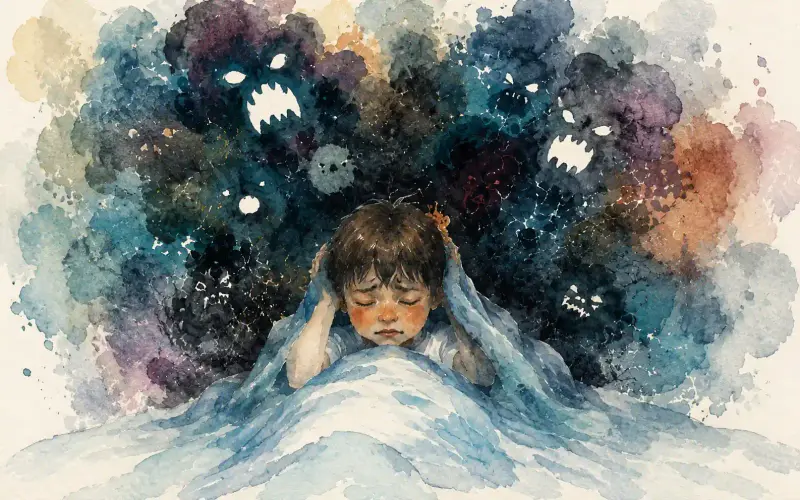
Your child’s nightmares may wake you up in the middle of the night to a sudden scream, their small body trembling as they reach out for you in the dark. In that moment, a question may crowd your mind: is what’s happening just a passing dream, or a sign of something deeper that needs attention? In sessions where parents connect with specialists through Tatmeen , this scene repeats often—but the real question is usually: How do I reassure my child… and reassure myself too?
In this article, we gently approach the world of children’s nightmares: When are they a normal part of development? And when do they call for consulting a specialist? Alongside a set of practical, gentle steps you can apply at home to help your child sleep more safely and comfortably.
What Do Children’s Nightmares Mean, and When Do They Usually Start?
Nightmares are distressing dreams that carry feelings of fear or threat. They wake the child from sleep—often in the second half of the night—so the child wakes up crying or anxious, but is usually able to remember what they saw and express their fear. Mayo Clinic explains that nightmares are common among children, and often appear between the ages of 3–6, then begin to gradually decline after age ten.
The Sleep Foundation notes regarding children’s nightmares that most nightmares are not a sign of a psychological disorder; rather, they reflect the development of a child’s imagination and the brain’s way of processing and storing daily experiences during sleep. However, nightmares can become a problem that needs greater attention when they occur very frequently, or affect the child’s sleep quality, daily life, and daytime behavior.
Causes of Children’s Nightmares
1. Psychological and Emotional Factors
In many cases, nightmares are a reflection of feelings the child cannot express during the day, so they appear at night in the form of frightening images, chases, or loss.
Common causes include: Anxiety about change: moving to a new school, the birth of a brother/sister, a parent traveling.
Exposure to a frightening situation: a violent argument, an accident, or upsetting news the child heard without understanding it well.
General tension at home, even if nothing is said directly to the child.
2. Physical and Environmental Causes
Not every nightmare is tied to a deep psychological state; sometimes the reason is simpler than we imagine, such as: High temperature or illness.
Insufficient sleep or interrupted sleep.
A very heavy meal before bedtime.
Watching frightening or violent content, even if it seems “normal” to adults.
3. The Difference Between Nightmares and Night Terrors
It is important to distinguish between children’s nightmares and night terrors: In nightmares: the child wakes up, recognizes you, and can often describe what they saw; they need a hug and reassurance.
In night terrors: the child may look awake and scream or thrash, but is actually in a deep stage of sleep, does not respond easily, and often remembers nothing in the morning.
How to Respond to Children’s Nightmares in the Moment
Your child’s fear during a nightmare is completely real to them, even if it seems illogical or exaggerated to you. In that moment, they do not need a long explanation or advice—they need a strong sense of safety and comfort. You can respond as follows: Go to them quickly and stay close, speak in a calm, low voice, with gentle touch and a hug if they accept it.
Reassure them simply: say, for example, “You were dreaming just now. You’re awake and safe now, and I’m here with you.”
Avoid bright lights or lots of movement in the room, so the child doesn’t become overly alert and struggle to fall back asleep. A dim light is enough when needed.
Allow a few safety comforts: like leaving the door slightly open, or turning on a soft night light if they ask.
Do not dismiss their feelings or mock their fear. Avoid phrases like “It’s just dreams… don’t overreact,” and don’t press them immediately to recount every detail of the dream; you can postpone talking until morning when they are calmer.
From the specialists’ experience on Tatmeen during online sessions with parents, it becomes clear that the parents’ response in the first few minutes after a nightmare leaves a deep impact on the child. A child who finds a hug and reassurance learns that their feelings are heard and respected—this reduces their fear of sleep later and strengthens their sense of safety at home.
Preventive Plan: How Can We Reduce the Frequency of Children’s Nightmares?
1. Build a Gentle, Consistent Sleep Routine
A calm evening routine helps the child’s brain transition gradually from a crowded wakefulness to more stable sleep. It can include: A consistent bedtime and wake time as much as possible.
Stopping screens at least an hour before sleep.
A calm story, or reciting Qur’an, or a brief conversation about their day.
2. Talk About Nightmares During the Day
It can be helpful to set aside a short time in the morning or during the day to gently ask the child about the dream, without pressure or interrogation. You can: Ask them to draw the dream, then help them change the ending to a safe or funny one.
Reassure them that dreams do not become reality, and that they can imagine a different ending.
Tatmeen specialists suggest using an “upside-down story,” meaning you retell the nightmare with your child but with an ending where a brave hero appears, or magical help, or a guardian angel—this reduces the dream’s connection to fear.
3. Pay Attention to Your Child’s Daily Experience
Write simple notes: When do nightmares increase? After certain scenes? After a family disagreement? After a change in routine?
In family guidance sessions through Tatmeen , some parents discover that their children’s nightmares are linked to specific tensions (such as starting school, or problems between the parents), and that addressing the root—by improving the home atmosphere or reassuring the child—reduces nightmares noticeably. This connection between night and day is very important in understanding what your child is going through as a whole, not just as isolated dreams.
And Finally…
Children’s nightmares are distressing for the little heart—and for parents’ hearts too—but they are often a natural part of the development of a child’s imagination and understanding of the world. When we meet their fear with tenderness, provide a safe bedtime routine, and pay attention to what they are experiencing during the day, these scary moments can become an opportunity for closeness and reassurance. And if you feel your child’s nightmares are recurring intensely, or are linked to anxiety or trauma, seeking help from a specialist is a loving step—not an overreaction. and booking a session with Tatmeen can be a real beginning toward a more restful sleep for both you and your child.
Frequently Asked Questions
Are children’s nightmares normal?
Yes. It is normal for most children to go through periods of nightmares, especially between the ages of 3 and 10. They are often temporary and do not mean there is a serious problem, as long as the child returns to their normal daytime life and is able to sleep afterward without ongoing, intense fear.
Should I wake my child up from a nightmare?
If the child is awake and crying, go to them and calm them. But if they seem to be moving or crying while in a deep sleep and do not recognize you (it may be a night terror), it is usually better not to wake them abruptly; instead, keep them physically safe until they settle, then consult a specialist if the episodes recur frequently.
Are nightmares a sign of a psychological disorder in children?
Not necessarily. Nightmares may reflect anxiety, stress, or a frightening event the child has experienced, but they do not automatically mean there is a psychological disorder. The key is to monitor how often they occur and how they affect the child’s sleep and behavior, and to seek a specialist’s evaluation if it persists or is accompanied by clear signs of anxiety or sadness during the day.
A writer and researcher specializing in psychiatry, she focuses on mental health and the human emotions we experience but cannot always find the words to name. She writes about us—about humanity and the human experience—and simplifies complex topics to offer content that helps us better understand ourselves and life, ultimately making us feel less alone.
Every Tatmeen article is reviewed by care providers licensed by the Saudi Commission for Health Specialties, so what you read is accurate and trustworthy.
This article builds understanding and does not replace a licensed care provider.
Need someone to talk to?
Tatmeen's licensed care providers are available around the clock, and the app's urgent consultation connects you with one within minutes.
Download Tatmeen to explore care providers and booking options.
Smart matchingFour quick questions suggest the right care provider
Urgent consultationTalk to an available care provider within minutes
Free psychological measuresMore than 20 tests to understand how you are doing
Scan to download
{"data":{"id":"8e4a5e1e-b524-4eb8-bf7d-5d5227b7d51e","slug":"childrens-nightmares-causes-help","arTitle":"كوابيس الأطفال: الأسباب وكيفية التعامل معها","enTitle":"Children's Nightmares: Causes and How to Deal With Them","thumbnailAltText":"a child suffering from nightmares at night","estimatedReadingTime":5,"likesCount":143,"writer":{"id":"3ab72b74-f26f-4337-9b47-3114b0f90de5","arBio":"كاتبة وباحثة متخصصة في مجال الطب النفسي، تهتم بموضوعات الصحة النفسية وبالمشاعر الإنسانية التي نختبرها ولا نجد دائمًا الكلمات لتسميتها. تكتب عنّا؛ عن الإنسان وتجربته، وتبسّط الموضوعات المعقّدة لتقدّم محتوى يساعدنا على فهم ذواتنا والحياة أكثر، ويجعلنا نشعر بأننا بوحدة أقل.","enBio":"A writer and researcher specializing in psychiatry, she focuses on mental health and the human emotions we experience but cannot always find the words to name. She writes about us—about humanity and the human experience—and simplifies complex topics to offer content that helps us better understand ourselves and life, ultimately making us feel less alone.","user":{"slug":"ayat-alnajar","arFullName":"آيات النجار","enFullName":"Ayat Al-Najjar","publicProfileImageUrl":"https://cdn.tatmeen.sa/public/profile-images/02384455-68fa-40b6-ad05-609fde65cafa/21b9a610dde5dfc6d37af110c23e9c7ab3946be080c281beb000debf4f7d31a6.webp","publicProfileImage96Url":"https://cdn.tatmeen.sa/public/profile-images/02384455-68fa-40b6-ad05-609fde65cafa/21b9a610dde5dfc6d37af110c23e9c7ab3946be080c281beb000debf4f7d31a6-w96.webp","publicProfileImage192Url":"https://cdn.tatmeen.sa/public/profile-images/02384455-68fa-40b6-ad05-609fde65cafa/21b9a610dde5dfc6d37af110c23e9c7ab3946be080c281beb000debf4f7d31a6-w192.webp"}},"arContent":"","enContent":"","productionDocument":{"headings":[{"id":"article-section-what-do-children-s-nightmares-mean-and-when-do-they-usually-start","text":"What Do Children’s Nightmares Mean, and When Do They Usually Start?"},{"id":"article-section-causes-of-children-s-nightmares","text":"Causes of Children’s Nightmares"},{"id":"article-section-how-to-respond-to-children-s-nightmares-in-the-moment","text":"How to Respond to Children’s Nightmares in the Moment"},{"id":"article-section-preventive-plan-how-can-we-reduce-the-frequency-of-children-s-nightmares","text":"Preventive Plan: How Can We Reduce the Frequency of Children’s Nightmares?"},{"id":"article-section-and-finally","text":"And Finally…"}],"faqs":[{"question":"Are children’s nightmares normal?","answer":"<p><span style=\"color:#000000\">Yes. It is normal for most children to go through periods of nightmares, especially between the ages of 3 and 10. They are often temporary and do not mean there is a serious problem, as long as the child returns to their normal daytime life and is able to sleep afterward without ongoing, intense fear.</span></p>"},{"question":"Should I wake my child up from a nightmare?","answer":"<p><span style=\"color:#000000\">If the child is awake and crying, go to them and calm them. But if they seem to be moving or crying while in a deep sleep and do not recognize you (it may be a night terror), it is usually better not to wake them abruptly; instead, keep them physically safe until they settle, then consult a specialist if the episodes recur frequently.</span></p>"},{"question":"Are nightmares a sign of a psychological disorder in children?","answer":"<p><span style=\"color:#000000\">Not necessarily. Nightmares may reflect anxiety, stress, or a frightening event the child has experienced, but they do not automatically mean there is a psychological disorder. The key is to monitor how often they occur and how they affect the child’s sleep and behavior, and to seek a specialist’s evaluation if it persists or is accompanied by clear signs of anxiety or sadness during the day.</span></p>"}],"beforeSourcesHtml":"<p></p>","sources":[],"afterSourcesHtml":"","blocks":[{"type":"html","html":"<p><span style=\"color:#000000\">Your child’s nightmares may wake you up in the middle of the night to a sudden scream, their small body trembling as they reach out for you in the dark. In that moment, a question may crowd your mind: is what’s happening just a passing dream, or a sign of something deeper that needs attention? In sessions where parents connect with specialists through Tatmeen , this scene repeats often—but the real question is usually: How do I reassure my child… and reassure myself too?</span></p><p><span style=\"color:#000000\">In this article, we gently approach the world of children’s nightmares: When are they a normal part of development? And when do they call for consulting a specialist? Alongside a set of practical, gentle steps you can apply at home to help your child sleep more safely and comfortably.</span></p><h2 id=\"article-section-what-do-children-s-nightmares-mean-and-when-do-they-usually-start\" data-toc-heading tabindex=\"-1\"><span id=\"what-do-children-s-nightmares-mean-and-when-do-they-usually-start-1\" aria-hidden=\"true\"></span><span style=\"color:#000000\"><strong>What Do Children’s Nightmares Mean, and When Do They Usually Start?</strong></span></h2><p><span style=\"color:#000000\">Nightmares are distressing dreams that carry feelings of fear or threat. They wake the child from sleep—often in the second half of the night—so the child wakes up crying or anxious, but is usually able to remember what they saw and express their fear. </span><a href=\"https://www.mayoclinic.org/diseases-conditions/nightmare-disorder/symptoms-causes/syc-20353515\" target=\"_blank\" rel=\"nofollow noopener noreferrer\"><span style=\"color:#1155cc\"><u>Mayo Clinic</u></span></a><span style=\"color:#000000\"> explains that nightmares are common among children, and often appear between the ages of 3–6, then begin to gradually decline after age ten.</span></p><p><a href=\"https://www.sleepfoundation.org/nightmares/nightmares-in-children?\" target=\"_blank\" rel=\"nofollow noopener noreferrer\"><span style=\"color:#1155cc\"><u>The Sleep Foundation</u></span></a><span style=\"color:#000000\"> notes regarding children’s nightmares that most nightmares are not a sign of a psychological disorder; rather, they reflect the development of a child’s imagination and the brain’s way of processing and storing daily experiences during sleep. However, nightmares can become a problem that needs greater attention when they occur very frequently, or affect the child’s sleep quality, daily life, and daytime behavior.</span></p><h2 id=\"article-section-causes-of-children-s-nightmares\" data-toc-heading tabindex=\"-1\"><span id=\"causes-of-children-s-nightmares-2\" aria-hidden=\"true\"></span><span style=\"color:#000000\"><strong>Causes of Children’s Nightmares</strong></span></h2><h3><span style=\"color:#000000\"><strong>1. Psychological and Emotional Factors</strong></span></h3><p><span style=\"color:#000000\">In many cases, nightmares are a reflection of feelings the child cannot express during the day, so they appear at night in the form of frightening images, chases, or loss.</span></p><p><span style=\"color:#000000\">Common causes include:<br /> Anxiety about change: moving to a new school, the birth of a brother/sister, a parent traveling.</span></p><p><span style=\"color:#000000\">Exposure to a frightening situation: a violent argument, an accident, or upsetting news the child heard without understanding it well.</span></p><p><span style=\"color:#000000\">General tension at home, even if nothing is said directly to the child.</span></p><h3><span style=\"color:#000000\"><strong>2. Physical and Environmental Causes</strong></span></h3><p><span style=\"color:#000000\">Not every nightmare is tied to a deep psychological state; sometimes the reason is simpler than we imagine, such as:<br /> High temperature or illness.</span></p><p><span style=\"color:#000000\">Insufficient sleep or interrupted sleep.</span></p><p><span style=\"color:#000000\">A very heavy meal before bedtime.</span></p><p><span style=\"color:#000000\">Watching frightening or violent content, even if it seems “normal” to adults.</span></p><h3><span style=\"color:#000000\"><strong>3. The Difference Between Nightmares and Night Terrors</strong></span></h3><p><span style=\"color:#000000\">It is important to distinguish between children’s nightmares and night terrors:<br /> In nightmares: the child wakes up, recognizes you, and can often describe what they saw; they need a hug and reassurance.</span></p><p><span style=\"color:#000000\">In night terrors: the child may look awake and scream or thrash, but is actually in a deep stage of sleep, does not respond easily, and often remembers nothing in the morning.</span></p><h2 id=\"article-section-how-to-respond-to-children-s-nightmares-in-the-moment\" data-toc-heading tabindex=\"-1\"><span id=\"how-to-respond-to-children-s-nightmares-in-the-moment-3\" aria-hidden=\"true\"></span><span style=\"color:#000000\"><strong>How to Respond to Children’s Nightmares in the Moment</strong></span></h2><p><span style=\"color:#000000\">Your child’s fear during a nightmare is completely real to them, even if it seems illogical or exaggerated to you. In that moment, they do not need a long explanation or advice—they need a strong sense of safety and comfort. You can respond as follows:<br /> Go to them quickly and stay close, speak in a calm, low voice, with gentle touch and a hug if they accept it.</span></p><p><span style=\"color:#000000\">Reassure them simply: say, for example, “You were dreaming just now. You’re awake and safe now, and I’m here with you.”</span></p><p><span style=\"color:#000000\">Avoid bright lights or lots of movement in the room, so the child doesn’t become overly alert and struggle to fall back asleep. A dim light is enough when needed.</span></p><p><span style=\"color:#000000\">Allow a few safety comforts: like leaving the door slightly open, or turning on a soft night light if they ask.</span></p><p><span style=\"color:#000000\">Do not dismiss their feelings or mock their fear. Avoid phrases like “It’s just dreams… don’t overreact,” and don’t press them immediately to recount every detail of the dream; you can postpone talking until morning when they are calmer.</span></p><p><span style=\"color:#000000\">From the specialists’ experience on Tatmeen during online sessions with parents, it becomes clear that the parents’ response in the first few minutes after a nightmare leaves a deep impact on the child. A child who finds a hug and reassurance learns that their feelings are heard and respected—this reduces their fear of sleep later and strengthens their sense of safety at home.</span></p><h2 id=\"article-section-preventive-plan-how-can-we-reduce-the-frequency-of-children-s-nightmares\" data-toc-heading tabindex=\"-1\"><span id=\"preventive-plan-how-can-we-reduce-the-frequency-of-children-s-nightmares-4\" aria-hidden=\"true\"></span><span style=\"color:#000000\"><strong>Preventive Plan: How Can We Reduce the Frequency of Children’s Nightmares?</strong></span></h2><h3><span style=\"color:#000000\"><strong>1. Build a Gentle, Consistent Sleep Routine</strong></span></h3><p><span style=\"color:#000000\">A calm evening routine helps the child’s brain transition gradually from a crowded wakefulness to more stable sleep. It can include:<br /> A consistent bedtime and wake time as much as possible.</span></p><p><span style=\"color:#000000\">Stopping screens at least an hour before sleep.</span></p><p><span style=\"color:#000000\">A calm story, or reciting Qur’an, or a brief conversation about their day.</span></p><h3><span style=\"color:#000000\"><strong>2. Talk About Nightmares During the Day</strong></span></h3><p><span style=\"color:#000000\">It can be helpful to set aside a short time in the morning or during the day to gently ask the child about the dream, without pressure or interrogation. You can:<br /> Ask them to draw the dream, then help them change the ending to a safe or funny one.</span></p><p><span style=\"color:#000000\">Reassure them that dreams do not become reality, and that they can imagine a different ending.</span></p><p><span style=\"color:#000000\">Tatmeen specialists suggest using an “upside-down story,” meaning you retell the nightmare with your child but with an ending where a brave hero appears, or magical help, or a guardian angel—this reduces the dream’s connection to fear.</span></p><h3><span style=\"color:#000000\"><strong>3. Pay Attention to Your Child’s Daily Experience</strong></span></h3><p><span style=\"color:#000000\">Write simple notes: When do nightmares increase? After certain scenes? After a family disagreement? After a change in routine?</span></p><p><span style=\"color:#000000\">In family guidance sessions through Tatmeen , some parents discover that their children’s nightmares are linked to specific tensions (such as starting school, or problems between the parents), and that addressing the root—by improving the home atmosphere or reassuring the child—reduces nightmares noticeably. This connection between night and day is very important in understanding what your child is going through as a whole, not just as isolated dreams.</span></p><h2 id=\"article-section-and-finally\" data-toc-heading tabindex=\"-1\"><span id=\"and-finally-5\" aria-hidden=\"true\"></span><span style=\"color:#000000\"><strong>And Finally…</strong></span></h2><p><span style=\"color:#000000\">Children’s nightmares are distressing for the little heart—and for parents’ hearts too—but they are often a natural part of the development of a child’s imagination and understanding of the world. When we meet their fear with tenderness, provide a safe bedtime routine, and pay attention to what they are experiencing during the day, these scary moments can become an opportunity for closeness and reassurance. And if you feel your child’s nightmares are recurring intensely, or are linked to anxiety or trauma, seeking help from a specialist is a loving step—not an overreaction. <u>and booking a session with Tatmeen</u> can be a real beginning toward a more restful sleep for both you and your child.</span></p>"}],"inlineCtaSignatures":[],"_experienceAliases":{"v":1,"fields":["html","bodyHtml"],"faqs":[0,1,2]}},"createdAt":"2026-05-27T21:00:00.000Z","updatedAt":"2026-09-08T21:05:00.030Z","disorderGroups":[{"id":"9fbda432-3713-400a-987b-3d56754a113e","slug":"children-and-adolescents","arName":"الأطفال والمراهقين","enName":"Children & Adolescents"},{"id":"1e82772d-a1a7-4d29-b475-be9d6b67ae02","slug":"common-mental-issues","arName":"اضطرابات نفسية شائعة","enName":"Common Mental Issues"},{"id":"01b1a587-3584-435b-971a-c40ffce29802","slug":"family-and-marital-relations","arName":"العلاقات الأسرية والزوجية","enName":"Family & Marital Relations"}],"reviewer":{"arFullName":"فريق تطمين","enFullName":"Tatmeen team","slug":"tatmeen-team","kind":"organization"},"productionArticle":true,"promotionAllowed":true,"preparedCover":{"src":"https://cdn.tatmeen.sa/public/article-lcp/article-lcp-v2/sha256-262bb9853146e66d0560ccf217d925d333ebe858733e86b9a3edda68a6518af3/800-bde597957352103bf3ffa7d8a467ec8e387d5423f93dc3bb2149e7d74f6ad5c2.avif","fallback":"https://cdn.tatmeen.sa/public/article-lcp/article-lcp-v2/sha256-262bb9853146e66d0560ccf217d925d333ebe858733e86b9a3edda68a6518af3/800-b7d88206d9743e010ef529223fd90f9c486bfabab40c8d97fe05b8a9e4821840.webp","directUrl":"https://cdn.tatmeen.sa/blog-cover/Tatmeen-1779978966804.webp","isGolden":true,"avifSrcset":"https://cdn.tatmeen.sa/public/article-lcp/article-lcp-v2/sha256-262bb9853146e66d0560ccf217d925d333ebe858733e86b9a3edda68a6518af3/400-c52129b10c05c2aac505b314c644aa6ab8ee800ff9d2953f7ab5ac25dccb774d.avif 400w, https://cdn.tatmeen.sa/public/article-lcp/article-lcp-v2/sha256-262bb9853146e66d0560ccf217d925d333ebe858733e86b9a3edda68a6518af3/640-241df79c21bb63e089c878b767e5d3d89c96c0b56e75026e43b5bc9e5ee5469b.avif 640w, https://cdn.tatmeen.sa/public/article-lcp/article-lcp-v2/sha256-262bb9853146e66d0560ccf217d925d333ebe858733e86b9a3edda68a6518af3/800-bde597957352103bf3ffa7d8a467ec8e387d5423f93dc3bb2149e7d74f6ad5c2.avif 800w, https://cdn.tatmeen.sa/public/article-lcp/article-lcp-v2/sha256-262bb9853146e66d0560ccf217d925d333ebe858733e86b9a3edda68a6518af3/1200-577bbeb7aa2d236ef90f12ffb07f564770b09fab4d11ff89d8d36c4ad7c029a3.avif 1200w","webpSrcset":"https://cdn.tatmeen.sa/public/article-lcp/article-lcp-v2/sha256-262bb9853146e66d0560ccf217d925d333ebe858733e86b9a3edda68a6518af3/400-fc5e8699f800c3c32693c9304b2f21de4f21443e074bbc2e6a7b656b5e222c2c.webp 400w, https://cdn.tatmeen.sa/public/article-lcp/article-lcp-v2/sha256-262bb9853146e66d0560ccf217d925d333ebe858733e86b9a3edda68a6518af3/640-e05de791bac9fc89010b8b1057fe9e7762c3661efdc59499550cbb1fbdafba44.webp 640w, https://cdn.tatmeen.sa/public/article-lcp/article-lcp-v2/sha256-262bb9853146e66d0560ccf217d925d333ebe858733e86b9a3edda68a6518af3/800-b7d88206d9743e010ef529223fd90f9c486bfabab40c8d97fe05b8a9e4821840.webp 800w, https://cdn.tatmeen.sa/public/article-lcp/article-lcp-v2/sha256-262bb9853146e66d0560ccf217d925d333ebe858733e86b9a3edda68a6518af3/1200-a0187488c5ec850e3d2199dd2d8786c1dc49754a2c2b41a010be4d8273079632.webp 1200w","phoneAvifSrcset":"https://cdn.tatmeen.sa/public/article-lcp/article-lcp-v2/sha256-262bb9853146e66d0560ccf217d925d333ebe858733e86b9a3edda68a6518af3/400-c52129b10c05c2aac505b314c644aa6ab8ee800ff9d2953f7ab5ac25dccb774d.avif 400w, https://cdn.tatmeen.sa/public/article-lcp/article-lcp-v2/sha256-262bb9853146e66d0560ccf217d925d333ebe858733e86b9a3edda68a6518af3/640-241df79c21bb63e089c878b767e5d3d89c96c0b56e75026e43b5bc9e5ee5469b.avif 640w, https://cdn.tatmeen.sa/public/article-lcp/article-lcp-v2/sha256-262bb9853146e66d0560ccf217d925d333ebe858733e86b9a3edda68a6518af3/800-bde597957352103bf3ffa7d8a467ec8e387d5423f93dc3bb2149e7d74f6ad5c2.avif 800w","phoneWebpSrcset":"https://cdn.tatmeen.sa/public/article-lcp/article-lcp-v2/sha256-262bb9853146e66d0560ccf217d925d333ebe858733e86b9a3edda68a6518af3/400-fc5e8699f800c3c32693c9304b2f21de4f21443e074bbc2e6a7b656b5e222c2c.webp 400w, https://cdn.tatmeen.sa/public/article-lcp/article-lcp-v2/sha256-262bb9853146e66d0560ccf217d925d333ebe858733e86b9a3edda68a6518af3/640-e05de791bac9fc89010b8b1057fe9e7762c3661efdc59499550cbb1fbdafba44.webp 640w, https://cdn.tatmeen.sa/public/article-lcp/article-lcp-v2/sha256-262bb9853146e66d0560ccf217d925d333ebe858733e86b9a3edda68a6518af3/800-b7d88206d9743e010ef529223fd90f9c486bfabab40c8d97fe05b8a9e4821840.webp 800w","width":800,"height":500},"previewTaxonomy":{"groups":[{"id":"9fbda432-3713-400a-987b-3d56754a113e","slug":"children-and-adolescents","arName":"الأطفال والمراهقين","enName":"Children & Adolescents"},{"id":"1e82772d-a1a7-4d29-b475-be9d6b67ae02","slug":"common-mental-issues","arName":"اضطرابات نفسية شائعة","enName":"Common Mental Issues"},{"id":"01b1a587-3584-435b-971a-c40ffce29802","slug":"family-and-marital-relations","arName":"العلاقات الأسرية والزوجية","enName":"Family & Marital Relations"}],"topics":[{"id":"aa57ccb9-d146-4629-8aa1-8b6d36c4c9ee","slug":"parenting-skills","arName":"تربية الأطفال","enName":"Parenting Skills","groupSlug":"children-and-adolescents","href":"/blog/category/children-and-adolescents/parenting-skills/"},{"id":"4c10d5ae-1b63-4868-901f-df8e1ce7f0d7","slug":"sleep-disorders","arName":"اضطرابات النوم","enName":"Sleep Disorders","groupSlug":"common-mental-issues","href":"/blog/category/common-mental-issues/sleep-disorders/"}],"tags":[{"id":"df684f2f-95c6-4603-afba-9a1061c94a62","slug":"sleep-disorders","arName":"اضطرابات النوم","enName":"Sleep Disorders"},{"id":"52aa8812-914e-495a-9ed5-13bec6c39a93","slug":"parents-children","arName":"الآباء والأطفال","enName":"Parents & Children"},{"id":"a7a7391b-bc2c-41de-91b1-7d701f1675b7","slug":"supporting-others","arName":"دعم شخص آخر","enName":"Supporting Someone Else"}]},"previewProviderRecommendations":[{"id":"278d5ac5-30ff-46ad-97be-c67cdd125836","slug":"dr-mohammed-alamari-8085","arFullName":"د. محمد العماري","enFullName":"Dr. Mohammed Alamari","publicProfileImageUrl":"https://cdn.tatmeen.sa/public/profile-images/278d5ac5-30ff-46ad-97be-c67cdd125836/69bdd11cb01784eed010eb9883403fd6ca4e4afcec739dcd6114fd8b85f133a8.webp","publicProfileImage96Url":"https://cdn.tatmeen.sa/public/profile-images/278d5ac5-30ff-46ad-97be-c67cdd125836/69bdd11cb01784eed010eb9883403fd6ca4e4afcec739dcd6114fd8b85f133a8-w96.webp","publicProfileImage192Url":"https://cdn.tatmeen.sa/public/profile-images/278d5ac5-30ff-46ad-97be-c67cdd125836/69bdd11cb01784eed010eb9883403fd6ca4e4afcec739dcd6114fd8b85f133a8-w192.webp","specialization":{"arName":"طبيب أسرة","enName":"Family Physician"},"profileImageUrl":"https://cdn.tatmeen.sa/public/profile-images/278d5ac5-30ff-46ad-97be-c67cdd125836/69bdd11cb01784eed010eb9883403fd6ca4e4afcec739dcd6114fd8b85f133a8-w192.webp","experienceYears":3,"consultantInfo":{"averageRating":{"average":4},"specialization":{"arGeneralName":"طبيب أسرة","enGeneralName":"Family Physician"}}},{"id":"6df31339-a6f5-4131-a603-3a7c7a34c143","slug":"joud-alodhayyani-9014","arFullName":"جود العتيبي","enFullName":"Joud Alotaibi","publicProfileImageUrl":"https://cdn.tatmeen.sa/public/profile-images/6df31339-a6f5-4131-a603-3a7c7a34c143/7bb005ef9d4315296aad2a7d142fb2af2cf89920a40b474fc5139b9530269282.webp","publicProfileImage96Url":"https://cdn.tatmeen.sa/public/profile-images/6df31339-a6f5-4131-a603-3a7c7a34c143/7bb005ef9d4315296aad2a7d142fb2af2cf89920a40b474fc5139b9530269282-w96.webp","publicProfileImage192Url":"https://cdn.tatmeen.sa/public/profile-images/6df31339-a6f5-4131-a603-3a7c7a34c143/7bb005ef9d4315296aad2a7d142fb2af2cf89920a40b474fc5139b9530269282-w192.webp","specialization":{"arName":"أخصائي نفسي","enName":"Psychologist"},"profileImageUrl":"https://cdn.tatmeen.sa/public/profile-images/6df31339-a6f5-4131-a603-3a7c7a34c143/7bb005ef9d4315296aad2a7d142fb2af2cf89920a40b474fc5139b9530269282-w192.webp","experienceYears":2,"consultantInfo":{"averageRating":{"average":3.5},"specialization":{"arGeneralName":"أخصائي نفسي","enGeneralName":"Psychologist"}}},{"id":"c83a1e29-92e4-42a8-8ae3-c99fcc835065","slug":"maha-aseri-3121","arFullName":"مها عسيري","enFullName":"Maha Aseri","publicProfileImageUrl":"","publicProfileImage96Url":"","publicProfileImage192Url":"","specialization":{"arName":"أخصائي نفسي","enName":"Psychologist"},"profileImageUrl":"","experienceYears":4,"consultantInfo":{"averageRating":{"average":0},"specialization":{"arGeneralName":"أخصائي نفسي","enGeneralName":"Psychologist"}}}],"previewCareProviders":[{"id":"09364052-c2a9-4c52-9717-7ce2093b8d0a","slug":"kholoud-alharbi-5221","arFullName":"خلود الحربي","enFullName":"Kholoud Alharbi","publicProfileImageUrl":"https://cdn.tatmeen.sa/public/profile-images/09364052-c2a9-4c52-9717-7ce2093b8d0a/4a0aeb81619e351b77f4323e3605a0a00acc7ca3c82ee7cc5ca2c9e8ef716049.webp","publicProfileImage96Url":"https://cdn.tatmeen.sa/public/profile-images/09364052-c2a9-4c52-9717-7ce2093b8d0a/4a0aeb81619e351b77f4323e3605a0a00acc7ca3c82ee7cc5ca2c9e8ef716049-w96.webp","publicProfileImage192Url":"https://cdn.tatmeen.sa/public/profile-images/09364052-c2a9-4c52-9717-7ce2093b8d0a/4a0aeb81619e351b77f4323e3605a0a00acc7ca3c82ee7cc5ca2c9e8ef716049-w192.webp","gender":"FEMALE","specialization":{"arName":"أخصائي نفسي","enName":"Psychologist"}},{"id":"6f037535-1dca-4b50-a8b2-5974b7323286","slug":"salah-althobaiti-9053","arFullName":"صلاح الثبيتي","enFullName":"Salah Althobaiti","publicProfileImageUrl":"https://cdn.tatmeen.sa/public/profile-images/6f037535-1dca-4b50-a8b2-5974b7323286/35b6bd7fad9b1e004c1835803eb9c1b56dcacd380685ec8bff141f0fb888005c.webp","publicProfileImage96Url":"https://cdn.tatmeen.sa/public/profile-images/6f037535-1dca-4b50-a8b2-5974b7323286/35b6bd7fad9b1e004c1835803eb9c1b56dcacd380685ec8bff141f0fb888005c-w96.webp","publicProfileImage192Url":"https://cdn.tatmeen.sa/public/profile-images/6f037535-1dca-4b50-a8b2-5974b7323286/35b6bd7fad9b1e004c1835803eb9c1b56dcacd380685ec8bff141f0fb888005c-w192.webp","gender":"MALE","specialization":{"arName":"أخصائي نفسي","enName":"Psychologist"}},{"id":"3cc806e8-616b-4884-9f21-a75b378580a2","slug":"aisha-al-hashim-8667","arFullName":"عائشة ال هاشم","enFullName":"Aisha Al Hashim","publicProfileImageUrl":"https://cdn.tatmeen.sa/public/profile-images/3cc806e8-616b-4884-9f21-a75b378580a2/27f523d03be4dcfa1f6a79f70c1773887434e698990d214cd990caec56a44798.webp","publicProfileImage96Url":"https://cdn.tatmeen.sa/public/profile-images/3cc806e8-616b-4884-9f21-a75b378580a2/27f523d03be4dcfa1f6a79f70c1773887434e698990d214cd990caec56a44798-w96.webp","publicProfileImage192Url":"https://cdn.tatmeen.sa/public/profile-images/3cc806e8-616b-4884-9f21-a75b378580a2/27f523d03be4dcfa1f6a79f70c1773887434e698990d214cd990caec56a44798-w192.webp","gender":"FEMALE","specialization":{"arName":"أخصائي نفسي","enName":"Psychologist"}},{"id":"db2ce1a0-9325-4471-b7ce-eb2e811c30a3","slug":"amer-qutub-2441","arFullName":"عامر قطب","enFullName":"Amer Qutub","publicProfileImageUrl":"https://cdn.tatmeen.sa/public/profile-images/db2ce1a0-9325-4471-b7ce-eb2e811c30a3/80580f99bfd7fe2b2a9cf8eed73ab532f5086d1efe053b0aa57358c1ce004261.webp","publicProfileImage96Url":"https://cdn.tatmeen.sa/public/profile-images/db2ce1a0-9325-4471-b7ce-eb2e811c30a3/80580f99bfd7fe2b2a9cf8eed73ab532f5086d1efe053b0aa57358c1ce004261-w96.webp","publicProfileImage192Url":"https://cdn.tatmeen.sa/public/profile-images/db2ce1a0-9325-4471-b7ce-eb2e811c30a3/80580f99bfd7fe2b2a9cf8eed73ab532f5086d1efe053b0aa57358c1ce004261-w192.webp","gender":"MALE","specialization":{"arName":"أخصائي نفسي","enName":"Psychologist"}},{"id":"94765496-dbdf-4631-a01b-7df5f788668d","slug":"abdullrahman-alhamoudi-3045","arFullName":"عبدالرحمن الحمودي","enFullName":"Abdulrahman Alhamoudi","publicProfileImageUrl":"https://cdn.tatmeen.sa/public/profile-images/94765496-dbdf-4631-a01b-7df5f788668d/2d49f6b6493c564afb6f50b6c3634231dff3a5cf8353acfab393d1b2a88037d1.webp","publicProfileImage96Url":"https://cdn.tatmeen.sa/public/profile-images/94765496-dbdf-4631-a01b-7df5f788668d/2d49f6b6493c564afb6f50b6c3634231dff3a5cf8353acfab393d1b2a88037d1-w96.webp","publicProfileImage192Url":"https://cdn.tatmeen.sa/public/profile-images/94765496-dbdf-4631-a01b-7df5f788668d/2d49f6b6493c564afb6f50b6c3634231dff3a5cf8353acfab393d1b2a88037d1-w192.webp","gender":"MALE","specialization":{"arName":"أخصائي نفسي","enName":"Psychologist"}},{"id":"618dba89-5b70-4b46-8304-741b7ac8ecd3","slug":"abdullah-mari-1311","arFullName":"عبدالله مرعي","enFullName":"Abdullah Mari","publicProfileImageUrl":"https://cdn.tatmeen.sa/public/profile-images/618dba89-5b70-4b46-8304-741b7ac8ecd3/6b4a3bfb59f8a304ca79083b32859b46baad2e1d692974a47c02c1f66bd11129.webp","publicProfileImage96Url":"https://cdn.tatmeen.sa/public/profile-images/618dba89-5b70-4b46-8304-741b7ac8ecd3/6b4a3bfb59f8a304ca79083b32859b46baad2e1d692974a47c02c1f66bd11129-w96.webp","publicProfileImage192Url":"https://cdn.tatmeen.sa/public/profile-images/618dba89-5b70-4b46-8304-741b7ac8ecd3/6b4a3bfb59f8a304ca79083b32859b46baad2e1d692974a47c02c1f66bd11129-w192.webp","gender":"MALE","specialization":{"arName":"أخصائي نفسي","enName":"Psychologist"}},{"id":"3b50a5d5-e795-407f-8676-fd7f0e1bb7a0","slug":"abdulaziz-bin-hudayan-4940","arFullName":"عبدالعزيز بن هديان","enFullName":"Abdulaziz Bin Hudayan","publicProfileImageUrl":"https://cdn.tatmeen.sa/public/profile-images/3b50a5d5-e795-407f-8676-fd7f0e1bb7a0/710ff0fe1fb00cdb5042092e27b7910b480a439b02251ecded62d7758eefce95.webp","publicProfileImage96Url":"https://cdn.tatmeen.sa/public/profile-images/3b50a5d5-e795-407f-8676-fd7f0e1bb7a0/710ff0fe1fb00cdb5042092e27b7910b480a439b02251ecded62d7758eefce95-w96.webp","publicProfileImage192Url":"https://cdn.tatmeen.sa/public/profile-images/3b50a5d5-e795-407f-8676-fd7f0e1bb7a0/710ff0fe1fb00cdb5042092e27b7910b480a439b02251ecded62d7758eefce95-w192.webp","gender":"MALE","specialization":{"arName":"أخصائي نفسي","enName":"Psychologist"}},{"id":"d4ffcb6b-90a7-45b6-b941-964866f4564b","slug":"dhaifallah-alhumaidi-1092","arFullName":"ضيف الله الحميدي","enFullName":"Dhaifallah Alhumaidi","publicProfileImageUrl":"https://cdn.tatmeen.sa/public/profile-images/d4ffcb6b-90a7-45b6-b941-964866f4564b/1817171c5828a9b57d6c30d12332cf154e335272548bc90a6e8456d74d356956.webp","publicProfileImage96Url":"https://cdn.tatmeen.sa/public/profile-images/d4ffcb6b-90a7-45b6-b941-964866f4564b/1817171c5828a9b57d6c30d12332cf154e335272548bc90a6e8456d74d356956-w96.webp","publicProfileImage192Url":"https://cdn.tatmeen.sa/public/profile-images/d4ffcb6b-90a7-45b6-b941-964866f4564b/1817171c5828a9b57d6c30d12332cf154e335272548bc90a6e8456d74d356956-w192.webp","gender":"MALE","specialization":{"arName":"أخصائي نفسي","enName":"Psychologist"}}],"previewDownload":{"href":"/download","title":{"ar":"خطوة واحدة لأجلك، ابدأ الآن","en":"One step for you, start now"},"description":{"ar":"حمّل تطبيق تطمين لاستكشاف مقدمي الرعاية وخيارات الحجز.","en":"Download Tatmeen to explore care providers and booking options."},"posterSrc":"/images/home/cta-ar-new-1.webp","videoSrc":"/images/home/cta-ar-new-1.mp4","videoPosterSrc":"/images/home/cta-ar-new-1.webp","videoPosterEnSrc":"/images/home/cta-en-new-1.webp","videoType":"video/mp4","appStoreHref":"https://apps.apple.com/us/app/tatmeen-%D8%AA%D8%B7%D9%85%D9%8A%D9%86/id6473836983","googlePlayHref":"https://play.google.com/store/apps/details?id=com.TatmeenApp.user&hl=en"},"previewRelatedArticles":[{"id":"43ca67b8-3404-4a88-b3df-8e041a8d51f3","slug":"how-sleep-disorders-affect-mental-physical-health","route":"/blog/how-sleep-disorders-affect-mental-physical-health/","title":{"ar":"كيف تؤثر اضطرابات النوم على صحتك النفسية والجسدية؟","en":"How Do Sleep Disorders Affect Your Mental and Physical Health?"},"image":"https://cdn.tatmeen.sa/public/article-lcp/article-lcp-v2/sha256-5bfc6df6d74c8c43b13c2b96eae01b0fa656501c43bbcaea6702908917c41be5/800-a993176d5efb48d95cca6548e901cd03715c9d45d79acb5a2ab5e83b64e27748.webp","directImageFallback":"https://cdn.tatmeen.sa/blog-cover/Tatmeen-1775749970066.webp","arThumbnailAltText":"كيف تؤثر اضطرابات النوم على الصحة النفسية والجسدية","thumbnailAltText":"كيف تؤثر اضطرابات النوم على الصحة النفسية والجسدية","topic":{"label":{"ar":"اضطرابات نفسية شائعة","en":"Common Mental Issues"}},"readingTimeMinutes":5},{"id":"b37fc06e-4901-4a15-a941-6066b6540a7b","slug":"Is-sleep-paralysis-a-mental-disorder","route":"/blog/Is-sleep-paralysis-a-mental-disorder/","title":{"ar":"هل شلل النوم مرض نفسي؟","en":"Is Sleep Paralysis a Mental Disorder?"},"image":"https://cdn.tatmeen.sa/public/article-lcp/article-lcp-v2/sha256-765495c4ec65678b00f19b55ed8b669efb3347b2e88a3d48439c0e4c03f8add2/600-cb748175e5cf2c38e7186fc7f1ea0c6006b2e144e26d0a093692cf9172746c53.webp","directImageFallback":"https://cdn.tatmeen.sa/blog-cover/1704733815220-Tatmeen-img-550","arThumbnailAltText":"Stylized person curled on their side with their head on a pillow","thumbnailAltText":"Stylized person curled on their side with their head on a pillow","topic":{"label":{"ar":"اضطرابات نفسية شائعة","en":"Common Mental Issues"}},"readingTimeMinutes":5},{"id":"f1e2a888-ef81-49ad-a75f-d7d99c79e14a","slug":"Insomnia-and-its-relationship-to-sleep-deprivation","route":"/blog/Insomnia-and-its-relationship-to-sleep-deprivation/","title":{"ar":"الأرق – أسباب وأعراض وعلاج والعلاقة بينه وبين قلة النوم","en":"Insomnia: Causes, Symptoms, Treatment, and Sleep Deprivation"},"image":"https://cdn.tatmeen.sa/public/article-lcp/article-lcp-v2/sha256-043b35866b43d3928fa6e43100f41cde2c868718137f5408d324e584458dc8ed/600-d5d8bc7e4763c0198cc38bd8f4743d6982d753155328b0a65dcbf399f86050e7.webp","directImageFallback":"https://cdn.tatmeen.sa/blog-cover/1704816568714-Tatmeen-img-333","arThumbnailAltText":"Person lies in bed beside a digital clock displaying 02:32","thumbnailAltText":"Person lies in bed beside a digital clock displaying 02:32","topic":{"label":{"ar":"اضطرابات نفسية شائعة","en":"Common Mental Issues"}},"readingTimeMinutes":5},{"id":"2b4e16b1-c32f-4195-bb85-4101e7a9ffd6","slug":"why-cant-i-sleep-when-tired-not-insomnia","route":"/blog/why-cant-i-sleep-when-tired-not-insomnia/","title":{"ar":"لماذا لا أنام رغم أني متعب؟ (قد لا يكون أرقًا دائمًا)","en":"Why Can't I Sleep Even Though I'm Tired? (It May Not Always Be Insomnia)"},"image":"https://cdn.tatmeen.sa/public/article-lcp/article-lcp-v2/sha256-34274f8790b5c3273aab7476d7ff096d2c96eb7ce0563ccbd976abaa2b492fb5/800-8b58a977854117caf6248a2b55bea85da5046f768b91daa465eb01823d6ce54d.webp","directImageFallback":"https://cdn.tatmeen.sa/blog-cover/Tatmeen-1780418056339.webp","arThumbnailAltText":"a person who can't sleep at night from overthinking","thumbnailAltText":"a person who can't sleep at night from overthinking","topic":{"label":{"ar":"اضطرابات نفسية شائعة","en":"Common Mental Issues"}},"readingTimeMinutes":5}],"previewRelatedReadStates":{}},"locale":"en","device":"desktop","path":"/en/blog/childrens-nightmares-causes-help/","readingControls":false,"config":{"public":{"BUCKET_URL":"https://cdn.tatmeen.sa/","APP_BASE_URL":"https://tatmeen.sa","intercomAppId":"ppcnu9e3"}}}