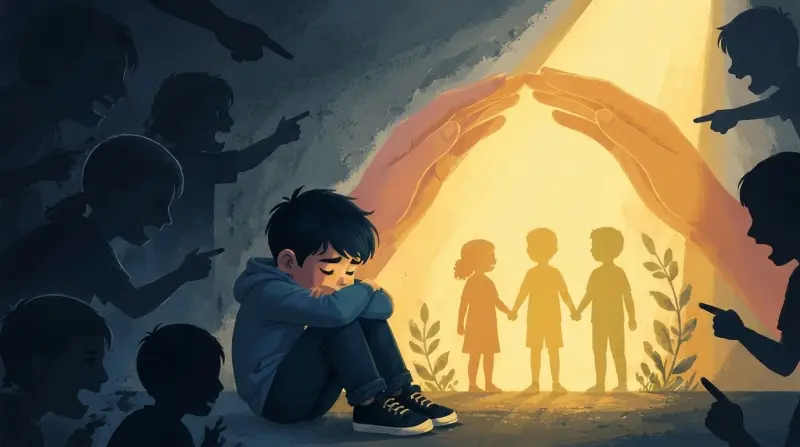
Bullying among children may start with a passing remark in the schoolyard, then come home as a long silence or a stomachache before bedtime. Your child may seem fine in front of the family, yet inside they may be trying to avoid tomorrow in every possible way. In this article, we explain what bullying truly means, how it leaves a psychological impact, which signs can help you detect it, practical protection steps for parents and schools, and when seeking help from a specialist becomes a supportive option.
What is bullying, and what distinguishes it from teasing?
Not every disagreement between children is bullying. Bullying is often unwanted aggressive behavior that is repeated—or likely to be repeated—and involves an imbalance of power: physical, social, or through the ability to embarrass and exclude. The World Health Organization explains that it goes beyond “rough teasing” into a recurring pattern of aggression that can cause psychological or social harm.
Bullying can take many forms: verbal, such as hurtful nicknames; physical, such as pushing or damaging belongings; social, such as exclusion and spreading rumors; or cyberbullying through messages and platforms. It can happen face-to-face or through technology, and its repetition along with a power imbalance is what makes it harmful.
The psychological impact of bullying: Why doesn’t it fade with time?
When a child is bullied, the way they interpret the world may change: “School is not a safe place,” and “I’m less than others.” With repeated experiences, anxiety and stress may appear, or social withdrawal, or a decline in self-confidence. The ability to focus and learn may also be affected. The World Health Organization notes an association between exposure to bullying and mental health problems such as anxiety, depression, and thoughts of self-harm among some adolescents—depending on the severity of the experience and the protective factors surrounding the child.
The family, in turn, may live with worry, anger, and a sense of helplessness. A child may express psychological pressure through physical symptoms such as headaches, stomach pain, or sleep disturbances. What matters is to take these signals seriously without catastrophizing, and to look for the cause rather than merely silencing the symptom.
Early signs that may indicate your child is being bullied
Sometimes a child does not talk about what is happening out of fear or shame, so calm observation helps. Signs mentioned in medical awareness materials include:
A sudden change in mood, increased irritability, or prolonged silence
Refusing to go to school or activities, or a sudden loss of enthusiasm
Repeated physical complaints such as headaches or stomach pain
Sleep or appetite disturbances, or clear tension before leaving home
Missing belongings or torn clothes, or asking for extra money without explanation
What should the family do when bullying is discovered?
The first step is to protect your child’s sense of safety. Sit with them at a calm time, and begin with supportive phrases such as: “I’m with you,” and “You’re not at fault for telling me.” Avoid blaming the child for not responding, listen more than you speak, then calmly write down the essential details.
According to specialists on Tatmeen , what helps a great deal is for the child to feel there is a “clear plan,” not just general promises—because clarity reduces fear and increases the ability to cope. The following steps can help:
Agree with your child on a trusted adult at school to go to immediately
Contact the school in a collaborative spirit, and request written follow-up on the actions taken
Coach them on short, firm responses without violence, and on leaving the place
Strengthen the safety net: a close friend, an activity that boosts confidence, and a steady sleep routine
In cyberbullying: save evidence, block the abusers, and review privacy settings
The role of the school and the environment: From an individual incident to a culture of safety
The situation improves when the response shifts from “solving an incident” to “building an environment.” Clear rules against exclusion and mockery, monitoring student gathering areas, and encouraging safe reporting all reduce the chances of repetition. It also helps to educate students about the role of the supportive bystander: breaking the victim’s isolation, accompanying them, and informing a responsible adult.
Follow up with the school on the impact of the intervention: Have incidents decreased? Has the child returned to activities? Calm, consistent follow-up sends a steady message to the child: “Your safety is a priority.”
If your child is the one bullying: Intervention without stigma
Addressing it early protects your child and others. Some children bully in search of control, to imitate behavior, or because they struggle with anger regulation. What’s needed is a balance between firmness and containment: harm is unacceptable, while teaching clear alternatives. Help your child understand the impact of their actions, ask them to repair the harm as much as possible in a respectful way, and cooperate with the school so the message is consistent.
When do we need help from a specialist?
If the child’s fear or withdrawal continues, or frequent crying episodes appear, or there is a clear decline in sleep and school performance, or they begin to avoid school intensely, psychological support may be an appropriate step. A professional assessment helps the child regain a sense of safety and learn skills to face bullying without carrying blame, and it helps the family respond in a steady, balanced way.
And if the child expresses thoughts of self-harm or a loss of desire to live, this is a serious sign that requires immediate help from the nearest local health services—while a parent stays close, supportive, and non-reproachful.
Finally…
Bullying is not just a passing phase when it affects a child’s sleep, confidence, and relationship with school. Calm listening, cooperation with the school, and teaching social skills are steps that make a real difference. And if you feel the psychological impact is bigger than the family can carry, seeking professional support is a brave step. You can book a session with Tatmeen to speak with a licensed specialist in sessions that protect privacy and consider the needs of the child and family.
Frequently Asked Questions
How do I tell the difference between teasing and bullying among children?
Teasing is usually mutual and stops when one party is bothered. Bullying, however, is repeated or feared to be repeated, relies on a power imbalance, and leaves an effect of fear, shame, or withdrawal. Pay attention to whether the situation continues and to your child’s reaction.
Is informing the school enough, or do I need a mental health specialist?
Informing the school is an essential step, but the need for a specialist appears if symptoms such as severe anxiety, sleep disturbance, or school refusal continue, or if the child seems to have lost their sense of safety. An assessment helps create a clear support plan for the family and child.
How can I protect my child from cyberbullying?
Agree with your child that they can tell you without fear of having their device taken away or being punished. Help them save evidence, block the abusers, adjust privacy settings, and reduce engagement with upsetting accounts. Most importantly, they should feel that there is an adult who supports them and can intervene.
A writer and researcher specializing in psychiatry, she focuses on mental health and the human emotions we experience but cannot always find the words to name. She writes about us—about humanity and the human experience—and simplifies complex topics to offer content that helps us better understand ourselves and life, ultimately making us feel less alone.
Every Tatmeen article is reviewed by care providers licensed by the Saudi Commission for Health Specialties, so what you read is accurate and trustworthy.
This article builds understanding and does not replace a licensed care provider.
Need someone to talk to?
Tatmeen's licensed care providers are available around the clock, and the app's urgent consultation connects you with one within minutes.
Download Tatmeen to explore care providers and booking options.
Smart matchingFour quick questions suggest the right care provider
Urgent consultationTalk to an available care provider within minutes
Free psychological measuresMore than 20 tests to understand how you are doing
Scan to download
{"data":{"id":"3eb02a92-e88c-49cb-9c99-8646a950f3de","slug":"childhood-bullying-psychological-impact-protection","arTitle":"التنمّر بين الأطفال: أثره النفسي وسبل الحماية","enTitle":"Bullying Among Children: Psychological Impact and Protection Strategies","thumbnailAltText":"Child sitting surrounded by shadows of children bullying him","estimatedReadingTime":5,"likesCount":86,"writer":{"id":"3ab72b74-f26f-4337-9b47-3114b0f90de5","arBio":"كاتبة وباحثة متخصصة في مجال الطب النفسي، تهتم بموضوعات الصحة النفسية وبالمشاعر الإنسانية التي نختبرها ولا نجد دائمًا الكلمات لتسميتها. تكتب عنّا؛ عن الإنسان وتجربته، وتبسّط الموضوعات المعقّدة لتقدّم محتوى يساعدنا على فهم ذواتنا والحياة أكثر، ويجعلنا نشعر بأننا بوحدة أقل.","enBio":"A writer and researcher specializing in psychiatry, she focuses on mental health and the human emotions we experience but cannot always find the words to name. She writes about us—about humanity and the human experience—and simplifies complex topics to offer content that helps us better understand ourselves and life, ultimately making us feel less alone.","user":{"slug":"ayat-alnajar","arFullName":"آيات النجار","enFullName":"Ayat Al-Najjar","publicProfileImageUrl":"https://cdn.tatmeen.sa/public/profile-images/02384455-68fa-40b6-ad05-609fde65cafa/21b9a610dde5dfc6d37af110c23e9c7ab3946be080c281beb000debf4f7d31a6.webp","publicProfileImage96Url":"https://cdn.tatmeen.sa/public/profile-images/02384455-68fa-40b6-ad05-609fde65cafa/21b9a610dde5dfc6d37af110c23e9c7ab3946be080c281beb000debf4f7d31a6-w96.webp","publicProfileImage192Url":"https://cdn.tatmeen.sa/public/profile-images/02384455-68fa-40b6-ad05-609fde65cafa/21b9a610dde5dfc6d37af110c23e9c7ab3946be080c281beb000debf4f7d31a6-w192.webp"}},"arContent":"","enContent":"","productionDocument":{"headings":[{"id":"article-section-what-is-bullying-and-what-distinguishes-it-from-teasing","text":"What is bullying, and what distinguishes it from teasing?"},{"id":"article-section-the-psychological-impact-of-bullying-why-doesn-t-it-fade-with-time","text":"The psychological impact of bullying: Why doesn’t it fade with time?"},{"id":"article-section-early-signs-that-may-indicate-your-child-is-being-bullied","text":"Early signs that may indicate your child is being bullied"},{"id":"article-section-what-should-the-family-do-when-bullying-is-discovered","text":"What should the family do when bullying is discovered?"},{"id":"article-section-the-role-of-the-school-and-the-environment-from-an-individual-incident-to-a-culture-of-safety","text":"The role of the school and the environment: From an individual incident to a culture of safety"},{"id":"article-section-if-your-child-is-the-one-bullying-intervention-without-stigma","text":"If your child is the one bullying: Intervention without stigma"},{"id":"article-section-when-do-we-need-help-from-a-specialist","text":"When do we need help from a specialist?"},{"id":"article-section-finally","text":"Finally…"}],"faqs":[{"question":"How do I tell the difference between teasing and bullying among children?","answer":"<p><span style=\"color:#000000\">Teasing is usually mutual and stops when one party is bothered. Bullying, however, is repeated or feared to be repeated, relies on a power imbalance, and leaves an effect of fear, shame, or withdrawal. Pay attention to whether the situation continues and to your child’s reaction.</span></p>"},{"question":"Is informing the school enough, or do I need a mental health specialist?","answer":"<p><span style=\"color:#000000\">Informing the school is an essential step, but the need for a specialist appears if symptoms such as severe anxiety, sleep disturbance, or school refusal continue, or if the child seems to have lost their sense of safety. An assessment helps create a clear support plan for the family and child.</span></p>"},{"question":"How can I protect my child from cyberbullying?","answer":"<p><span style=\"color:#000000\">Agree with your child that they can tell you without fear of having their device taken away or being punished. Help them save evidence, block the abusers, adjust privacy settings, and reduce engagement with upsetting accounts. Most importantly, they should feel that there is an adult who supports them and can intervene.</span></p>"}],"beforeSourcesHtml":"<p></p>","sources":[],"afterSourcesHtml":"","blocks":[{"type":"html","html":"<p><span style=\"color:#000000\">Bullying among children may start with a passing remark in the schoolyard, then come home as a long silence or a stomachache before bedtime. Your child may seem fine in front of the family, yet inside they may be trying to avoid tomorrow in every possible way. In this article, we explain what bullying truly means, how it leaves a psychological impact, which signs can help you detect it, practical protection steps for parents and schools, and when seeking help from a specialist becomes a supportive option.</span></p><h2 id=\"article-section-what-is-bullying-and-what-distinguishes-it-from-teasing\" data-toc-heading tabindex=\"-1\"><span id=\"what-is-bullying-and-what-distinguishes-it-from-teasing-1\" aria-hidden=\"true\"></span><span style=\"color:#000000\"><strong>What is bullying, and what distinguishes it from teasing?</strong></span></h2><p><span style=\"color:#000000\">Not every disagreement between children is bullying. Bullying is often unwanted aggressive behavior that is repeated—or likely to be repeated—and involves an imbalance of power: physical, social, or through the ability to embarrass and exclude. </span><a href=\"https://www.who.int/data/gho/indicator-metadata-registry/imr-details/proportion-of-adolescents-who-experienced-bullying-during-the-past-12-months\" target=\"_blank\" rel=\"nofollow noopener noreferrer\"><span style=\"color:#1155cc\"><u>The World Health Organization </u></span></a><span style=\"color:#000000\">explains that it goes beyond “rough teasing” into a recurring pattern of aggression that can cause psychological or social harm.</span></p><p><span style=\"color:#000000\">Bullying can take many forms: verbal, such as hurtful nicknames; physical, such as pushing or damaging belongings; social, such as exclusion and spreading rumors; or cyberbullying through messages and platforms. It can happen face-to-face or through technology, and its repetition along with a power imbalance is what makes it harmful.</span></p><h2 id=\"article-section-the-psychological-impact-of-bullying-why-doesn-t-it-fade-with-time\" data-toc-heading tabindex=\"-1\"><span id=\"the-psychological-impact-of-bullying-why-doesn-t-it-fade-with-time-2\" aria-hidden=\"true\"></span><span style=\"color:#000000\"><strong>The psychological impact of bullying: Why doesn’t it fade with time?</strong></span></h2><p><span style=\"color:#000000\">When a child is bullied, the way they interpret the world may change: “School is not a safe place,” and “I’m less than others.” With repeated experiences, anxiety and stress may appear, or social withdrawal, or a decline in self-confidence. The ability to focus and learn may also be affected. The World Health Organization notes an association between exposure to bullying and mental health problems such as anxiety, depression, and thoughts of self-harm among some adolescents—depending on the severity of the experience and the protective factors surrounding the child.</span></p><p><span style=\"color:#000000\">The family, in turn, may live with worry, anger, and a sense of helplessness. A child may express psychological pressure through physical symptoms such as headaches, stomach pain, or sleep disturbances. What matters is to take these signals seriously without catastrophizing, and to look for the cause rather than merely silencing the symptom.</span></p><h2 id=\"article-section-early-signs-that-may-indicate-your-child-is-being-bullied\" data-toc-heading tabindex=\"-1\"><span id=\"early-signs-that-may-indicate-your-child-is-being-bullied-3\" aria-hidden=\"true\"></span><span style=\"color:#000000\"><strong>Early signs that may indicate your child is being bullied</strong></span></h2><p><span style=\"color:#000000\">Sometimes a child does not talk about what is happening out of fear or shame, so calm observation helps. Signs mentioned in medical awareness materials include:</span></p><ul><li><p><span style=\"color:#000000\">A sudden change in mood, increased irritability, or prolonged silence</span></p></li><li><p><span style=\"color:#000000\">Refusing to go to school or activities, or a sudden loss of enthusiasm</span></p></li><li><p><span style=\"color:#000000\">Repeated physical complaints such as headaches or stomach pain</span></p></li><li><p><span style=\"color:#000000\">Sleep or appetite disturbances, or clear tension before leaving home</span></p></li><li><p><span style=\"color:#000000\">Missing belongings or torn clothes, or asking for extra money without explanation</span></p></li></ul><h2 id=\"article-section-what-should-the-family-do-when-bullying-is-discovered\" data-toc-heading tabindex=\"-1\"><span id=\"what-should-the-family-do-when-bullying-is-discovered-4\" aria-hidden=\"true\"></span><span style=\"color:#000000\"><strong>What should the family do when bullying is discovered?</strong></span></h2><p><span style=\"color:#000000\">The first step is to protect your child’s sense of safety. Sit with them at a calm time, and begin with supportive phrases such as: “I’m with you,” and “You’re not at fault for telling me.” Avoid blaming the child for not responding, listen more than you speak, then calmly write down the essential details.</span></p><p><span style=\"color:#000000\">According to specialists on Tatmeen , what helps a great deal is for the child to feel there is a “clear plan,” not just general promises—because clarity reduces fear and increases the ability to cope. The following steps can help:</span></p><ul><li><p><span style=\"color:#000000\">Agree with your child on a trusted adult at school to go to immediately</span></p></li><li><p><span style=\"color:#000000\">Contact the school in a collaborative spirit, and request written follow-up on the actions taken</span></p></li><li><p><span style=\"color:#000000\">Coach them on short, firm responses without violence, and on leaving the place</span></p></li><li><p><span style=\"color:#000000\">Strengthen the safety net: a close friend, an activity that boosts confidence, and a steady sleep routine</span></p></li><li><p><span style=\"color:#000000\">In cyberbullying: save evidence, block the abusers, and review privacy settings</span></p></li></ul><h2 id=\"article-section-the-role-of-the-school-and-the-environment-from-an-individual-incident-to-a-culture-of-safety\" data-toc-heading tabindex=\"-1\"><span id=\"the-role-of-the-school-and-the-environment-from-an-individual-incident-to-a-culture-of-safety-5\" aria-hidden=\"true\"></span><span style=\"color:#000000\"><strong>The role of the school and the environment: From an individual incident to a culture of safety</strong></span></h2><p><span style=\"color:#000000\">The situation improves when the response shifts from “solving an incident” to “building an environment.” Clear rules against exclusion and mockery, monitoring student gathering areas, and encouraging safe reporting all reduce the chances of repetition. It also helps to educate students about the role of the supportive bystander: breaking the victim’s isolation, accompanying them, and informing a responsible adult.</span></p><p><span style=\"color:#000000\">Follow up with the school on the impact of the intervention: Have incidents decreased? Has the child returned to activities? Calm, consistent follow-up sends a steady message to the child: “Your safety is a priority.”</span></p><h2 id=\"article-section-if-your-child-is-the-one-bullying-intervention-without-stigma\" data-toc-heading tabindex=\"-1\"><span id=\"if-your-child-is-the-one-bullying-intervention-without-stigma-6\" aria-hidden=\"true\"></span><span style=\"color:#000000\"><strong>If your child is the one bullying: Intervention without stigma</strong></span></h2><p><span style=\"color:#000000\">Addressing it early protects your child and others. Some children bully in search of control, to imitate behavior, or because they struggle with anger regulation. What’s needed is a balance between firmness and containment: harm is unacceptable, while teaching clear alternatives. Help your child understand the impact of their actions, ask them to repair the harm as much as possible in a respectful way, and cooperate with the school so the message is consistent.</span></p><h2 id=\"article-section-when-do-we-need-help-from-a-specialist\" data-toc-heading tabindex=\"-1\"><span id=\"when-do-we-need-help-from-a-specialist-7\" aria-hidden=\"true\"></span><span style=\"color:#000000\"><strong>When do we need help from a specialist?</strong></span></h2><p><span style=\"color:#000000\">If the child’s fear or withdrawal continues, or frequent crying episodes appear, or there is a clear decline in sleep and school performance, or they begin to avoid school intensely, psychological support may be an appropriate step. A professional assessment helps the child regain a sense of safety and learn skills to face bullying without carrying blame, and it helps the family respond in a steady, balanced way.</span></p><p><span style=\"color:#000000\">And if the child expresses thoughts of self-harm or a loss of desire to live, this is a serious sign that requires immediate help from the nearest local health services—while a parent stays close, supportive, and non-reproachful.</span></p><h2 id=\"article-section-finally\" data-toc-heading tabindex=\"-1\"><span id=\"finally-8\" aria-hidden=\"true\"></span><span style=\"color:#000000\"><strong>Finally…</strong></span></h2><p><span style=\"color:#000000\">Bullying is not just a passing phase when it affects a child’s sleep, confidence, and relationship with school. Calm listening, cooperation with the school, and teaching social skills are steps that make a real difference. And if you feel the psychological impact is bigger than the family can carry, seeking professional support is a brave step. <u>You can book a session with Tatmeen</u> to speak with a licensed specialist in sessions that protect privacy and consider the needs of the child and family.</span></p>"}],"inlineCtaSignatures":[],"_experienceAliases":{"v":1,"fields":["html","bodyHtml"],"faqs":[0,1,2]}},"createdAt":"2026-05-20T21:00:00.000Z","updatedAt":"2026-09-11T21:05:00.022Z","disorderGroups":[{"id":"9fbda432-3713-400a-987b-3d56754a113e","slug":"children-and-adolescents","arName":"الأطفال والمراهقين","enName":"Children & Adolescents"}],"reviewer":{"arFullName":"فريق تطمين","enFullName":"Tatmeen team","slug":"tatmeen-team","kind":"organization"},"productionArticle":true,"promotionAllowed":true,"preparedCover":{"src":"https://cdn.tatmeen.sa/public/article-lcp/article-lcp-v2/sha256-9619c6562a26f0906917a78a6902c1dabd2862d23ee2865a74e7aac2ec6c121f/800-196493140961e1e66a41a45423212db9b1fe97705e6e6506c9a887353d4b3626.avif","fallback":"https://cdn.tatmeen.sa/public/article-lcp/article-lcp-v2/sha256-9619c6562a26f0906917a78a6902c1dabd2862d23ee2865a74e7aac2ec6c121f/800-e30b9aef18cafdd41fc8aa42ae62ec7c1c2689d1f03a629af720702994088063.webp","directUrl":"https://cdn.tatmeen.sa/blog-cover/Tatmeen-1779387927268.webp","isGolden":true,"avifSrcset":"https://cdn.tatmeen.sa/public/article-lcp/article-lcp-v2/sha256-9619c6562a26f0906917a78a6902c1dabd2862d23ee2865a74e7aac2ec6c121f/400-3562eb74363e20cd31de609f6f5a43cbc1aa449b4d72651daaa0b7967d5601e5.avif 400w, https://cdn.tatmeen.sa/public/article-lcp/article-lcp-v2/sha256-9619c6562a26f0906917a78a6902c1dabd2862d23ee2865a74e7aac2ec6c121f/640-badc0df2e43fe6cfb8c67d237aa26c6d53b6be984b2d5601b520c1e977c42ba8.avif 640w, https://cdn.tatmeen.sa/public/article-lcp/article-lcp-v2/sha256-9619c6562a26f0906917a78a6902c1dabd2862d23ee2865a74e7aac2ec6c121f/800-196493140961e1e66a41a45423212db9b1fe97705e6e6506c9a887353d4b3626.avif 800w, https://cdn.tatmeen.sa/public/article-lcp/article-lcp-v2/sha256-9619c6562a26f0906917a78a6902c1dabd2862d23ee2865a74e7aac2ec6c121f/1200-7d7ee94c12f85b227bd8e30568a01bd8f51c12777d337cbae8169321e5aef12e.avif 1200w","webpSrcset":"https://cdn.tatmeen.sa/public/article-lcp/article-lcp-v2/sha256-9619c6562a26f0906917a78a6902c1dabd2862d23ee2865a74e7aac2ec6c121f/400-e0ac82f549bb43c04e64abb5d9e4de45f97fa19b84730ec514e2dc4cdf7eb1c9.webp 400w, https://cdn.tatmeen.sa/public/article-lcp/article-lcp-v2/sha256-9619c6562a26f0906917a78a6902c1dabd2862d23ee2865a74e7aac2ec6c121f/640-ab7b08eec71b49b1a4fc8f13227f07adaf5d3247ec13149c29193926c7cc5865.webp 640w, https://cdn.tatmeen.sa/public/article-lcp/article-lcp-v2/sha256-9619c6562a26f0906917a78a6902c1dabd2862d23ee2865a74e7aac2ec6c121f/800-e30b9aef18cafdd41fc8aa42ae62ec7c1c2689d1f03a629af720702994088063.webp 800w, https://cdn.tatmeen.sa/public/article-lcp/article-lcp-v2/sha256-9619c6562a26f0906917a78a6902c1dabd2862d23ee2865a74e7aac2ec6c121f/1200-cf4a9e423c8afb74fb5320585c61db77c39a6f3ea0f3d1b11a1e0254360ea049.webp 1200w","phoneAvifSrcset":"https://cdn.tatmeen.sa/public/article-lcp/article-lcp-v2/sha256-9619c6562a26f0906917a78a6902c1dabd2862d23ee2865a74e7aac2ec6c121f/400-3562eb74363e20cd31de609f6f5a43cbc1aa449b4d72651daaa0b7967d5601e5.avif 400w, https://cdn.tatmeen.sa/public/article-lcp/article-lcp-v2/sha256-9619c6562a26f0906917a78a6902c1dabd2862d23ee2865a74e7aac2ec6c121f/640-badc0df2e43fe6cfb8c67d237aa26c6d53b6be984b2d5601b520c1e977c42ba8.avif 640w, https://cdn.tatmeen.sa/public/article-lcp/article-lcp-v2/sha256-9619c6562a26f0906917a78a6902c1dabd2862d23ee2865a74e7aac2ec6c121f/800-196493140961e1e66a41a45423212db9b1fe97705e6e6506c9a887353d4b3626.avif 800w","phoneWebpSrcset":"https://cdn.tatmeen.sa/public/article-lcp/article-lcp-v2/sha256-9619c6562a26f0906917a78a6902c1dabd2862d23ee2865a74e7aac2ec6c121f/400-e0ac82f549bb43c04e64abb5d9e4de45f97fa19b84730ec514e2dc4cdf7eb1c9.webp 400w, https://cdn.tatmeen.sa/public/article-lcp/article-lcp-v2/sha256-9619c6562a26f0906917a78a6902c1dabd2862d23ee2865a74e7aac2ec6c121f/640-ab7b08eec71b49b1a4fc8f13227f07adaf5d3247ec13149c29193926c7cc5865.webp 640w, https://cdn.tatmeen.sa/public/article-lcp/article-lcp-v2/sha256-9619c6562a26f0906917a78a6902c1dabd2862d23ee2865a74e7aac2ec6c121f/800-e30b9aef18cafdd41fc8aa42ae62ec7c1c2689d1f03a629af720702994088063.webp 800w","width":800,"height":447},"previewTaxonomy":{"groups":[{"id":"9fbda432-3713-400a-987b-3d56754a113e","slug":"children-and-adolescents","arName":"الأطفال والمراهقين","enName":"Children & Adolescents"}],"topics":[{"id":"aa57ccb9-d146-4629-8aa1-8b6d36c4c9ee","slug":"parenting-skills","arName":"تربية الأطفال","enName":"Parenting Skills","groupSlug":"children-and-adolescents","href":"/blog/category/children-and-adolescents/parenting-skills/"},{"id":"6db54bb6-ca78-4630-9a1c-57b2713becf9","slug":"bullying","arName":"التنمّر","enName":"Bullying","groupSlug":"children-and-adolescents","href":"/blog/category/children-and-adolescents/bullying/"}],"tags":[{"id":"52aa8812-914e-495a-9ed5-13bec6c39a93","slug":"parents-children","arName":"الآباء والأطفال","enName":"Parents & Children"},{"id":"47cc1c83-9579-4656-8e94-f3df78961987","slug":"teens-adolescents","arName":"المراهقون","enName":"Teens & Adolescents"},{"id":"c2a6e8d3-de9c-435f-8c95-9727e7db14cc","slug":"explainer-awareness","arName":"دليل توعوي / شرح","enName":"Explainer / Awareness Guide"},{"id":"82ea9460-3054-4964-a9ad-48c94868cd41","slug":"trauma-ptsd","arName":"الصدمة واضطراب ما بعد الصدمة","enName":"Trauma & PTSD"}]},"previewProviderRecommendations":[{"id":"a4a1f8a4-87a7-4447-8667-0bbf3fae006a","slug":"ghadah-alghamdi-2904","arFullName":"غاده الغامدي","enFullName":"Ghadah Alghamdi","publicProfileImageUrl":"","publicProfileImage96Url":"","publicProfileImage192Url":"","specialization":{"arName":"أخصائي نفسي","enName":"Psychologist"},"profileImageUrl":"","experienceYears":18,"consultantInfo":{"averageRating":{"average":0},"specialization":{"arGeneralName":"أخصائي نفسي","enGeneralName":"Psychologist"}}},{"id":"d754a189-f8c9-4aad-b4aa-a5dbd26c0bd7","slug":"talal-alshowaier-8694","arFullName":"طلال الشويعر","enFullName":"Talal Alshowaier","publicProfileImageUrl":"https://cdn.tatmeen.sa/public/profile-images/d754a189-f8c9-4aad-b4aa-a5dbd26c0bd7/74feb27848a47cf43189f6b5951e06a9b87b08269021d5bab765092fc65fce42.webp","publicProfileImage96Url":"https://cdn.tatmeen.sa/public/profile-images/d754a189-f8c9-4aad-b4aa-a5dbd26c0bd7/74feb27848a47cf43189f6b5951e06a9b87b08269021d5bab765092fc65fce42-w96.webp","publicProfileImage192Url":"https://cdn.tatmeen.sa/public/profile-images/d754a189-f8c9-4aad-b4aa-a5dbd26c0bd7/74feb27848a47cf43189f6b5951e06a9b87b08269021d5bab765092fc65fce42-w192.webp","specialization":{"arName":"أخصائي نفسي","enName":"Psychologist"},"profileImageUrl":"https://cdn.tatmeen.sa/public/profile-images/d754a189-f8c9-4aad-b4aa-a5dbd26c0bd7/74feb27848a47cf43189f6b5951e06a9b87b08269021d5bab765092fc65fce42-w192.webp","experienceYears":3,"consultantInfo":{"averageRating":{"average":5},"specialization":{"arGeneralName":"أخصائي نفسي","enGeneralName":"Psychologist"}}},{"id":"8901fc01-b4d9-45d3-89c5-eaa33bcc0c10","slug":"alosaimi-amirah-8059","arFullName":"أميره العصيمي","enFullName":"Amirah Alosaimi","publicProfileImageUrl":"","publicProfileImage96Url":"","publicProfileImage192Url":"","specialization":{"arName":"أخصائي نفسي","enName":"Psychologist"},"profileImageUrl":"","experienceYears":6,"consultantInfo":{"averageRating":{"average":0},"specialization":{"arGeneralName":"أخصائي نفسي","enGeneralName":"Psychologist"}}}],"previewCareProviders":[{"id":"09364052-c2a9-4c52-9717-7ce2093b8d0a","slug":"kholoud-alharbi-5221","arFullName":"خلود الحربي","enFullName":"Kholoud Alharbi","publicProfileImageUrl":"https://cdn.tatmeen.sa/public/profile-images/09364052-c2a9-4c52-9717-7ce2093b8d0a/4a0aeb81619e351b77f4323e3605a0a00acc7ca3c82ee7cc5ca2c9e8ef716049.webp","publicProfileImage96Url":"https://cdn.tatmeen.sa/public/profile-images/09364052-c2a9-4c52-9717-7ce2093b8d0a/4a0aeb81619e351b77f4323e3605a0a00acc7ca3c82ee7cc5ca2c9e8ef716049-w96.webp","publicProfileImage192Url":"https://cdn.tatmeen.sa/public/profile-images/09364052-c2a9-4c52-9717-7ce2093b8d0a/4a0aeb81619e351b77f4323e3605a0a00acc7ca3c82ee7cc5ca2c9e8ef716049-w192.webp","gender":"FEMALE","specialization":{"arName":"أخصائي نفسي","enName":"Psychologist"}},{"id":"6f037535-1dca-4b50-a8b2-5974b7323286","slug":"salah-althobaiti-9053","arFullName":"صلاح الثبيتي","enFullName":"Salah Althobaiti","publicProfileImageUrl":"https://cdn.tatmeen.sa/public/profile-images/6f037535-1dca-4b50-a8b2-5974b7323286/35b6bd7fad9b1e004c1835803eb9c1b56dcacd380685ec8bff141f0fb888005c.webp","publicProfileImage96Url":"https://cdn.tatmeen.sa/public/profile-images/6f037535-1dca-4b50-a8b2-5974b7323286/35b6bd7fad9b1e004c1835803eb9c1b56dcacd380685ec8bff141f0fb888005c-w96.webp","publicProfileImage192Url":"https://cdn.tatmeen.sa/public/profile-images/6f037535-1dca-4b50-a8b2-5974b7323286/35b6bd7fad9b1e004c1835803eb9c1b56dcacd380685ec8bff141f0fb888005c-w192.webp","gender":"MALE","specialization":{"arName":"أخصائي نفسي","enName":"Psychologist"}},{"id":"3cc806e8-616b-4884-9f21-a75b378580a2","slug":"aisha-al-hashim-8667","arFullName":"عائشة ال هاشم","enFullName":"Aisha Al Hashim","publicProfileImageUrl":"https://cdn.tatmeen.sa/public/profile-images/3cc806e8-616b-4884-9f21-a75b378580a2/27f523d03be4dcfa1f6a79f70c1773887434e698990d214cd990caec56a44798.webp","publicProfileImage96Url":"https://cdn.tatmeen.sa/public/profile-images/3cc806e8-616b-4884-9f21-a75b378580a2/27f523d03be4dcfa1f6a79f70c1773887434e698990d214cd990caec56a44798-w96.webp","publicProfileImage192Url":"https://cdn.tatmeen.sa/public/profile-images/3cc806e8-616b-4884-9f21-a75b378580a2/27f523d03be4dcfa1f6a79f70c1773887434e698990d214cd990caec56a44798-w192.webp","gender":"FEMALE","specialization":{"arName":"أخصائي نفسي","enName":"Psychologist"}},{"id":"db2ce1a0-9325-4471-b7ce-eb2e811c30a3","slug":"amer-qutub-2441","arFullName":"عامر قطب","enFullName":"Amer Qutub","publicProfileImageUrl":"https://cdn.tatmeen.sa/public/profile-images/db2ce1a0-9325-4471-b7ce-eb2e811c30a3/80580f99bfd7fe2b2a9cf8eed73ab532f5086d1efe053b0aa57358c1ce004261.webp","publicProfileImage96Url":"https://cdn.tatmeen.sa/public/profile-images/db2ce1a0-9325-4471-b7ce-eb2e811c30a3/80580f99bfd7fe2b2a9cf8eed73ab532f5086d1efe053b0aa57358c1ce004261-w96.webp","publicProfileImage192Url":"https://cdn.tatmeen.sa/public/profile-images/db2ce1a0-9325-4471-b7ce-eb2e811c30a3/80580f99bfd7fe2b2a9cf8eed73ab532f5086d1efe053b0aa57358c1ce004261-w192.webp","gender":"MALE","specialization":{"arName":"أخصائي نفسي","enName":"Psychologist"}},{"id":"94765496-dbdf-4631-a01b-7df5f788668d","slug":"abdullrahman-alhamoudi-3045","arFullName":"عبدالرحمن الحمودي","enFullName":"Abdulrahman Alhamoudi","publicProfileImageUrl":"https://cdn.tatmeen.sa/public/profile-images/94765496-dbdf-4631-a01b-7df5f788668d/2d49f6b6493c564afb6f50b6c3634231dff3a5cf8353acfab393d1b2a88037d1.webp","publicProfileImage96Url":"https://cdn.tatmeen.sa/public/profile-images/94765496-dbdf-4631-a01b-7df5f788668d/2d49f6b6493c564afb6f50b6c3634231dff3a5cf8353acfab393d1b2a88037d1-w96.webp","publicProfileImage192Url":"https://cdn.tatmeen.sa/public/profile-images/94765496-dbdf-4631-a01b-7df5f788668d/2d49f6b6493c564afb6f50b6c3634231dff3a5cf8353acfab393d1b2a88037d1-w192.webp","gender":"MALE","specialization":{"arName":"أخصائي نفسي","enName":"Psychologist"}},{"id":"618dba89-5b70-4b46-8304-741b7ac8ecd3","slug":"abdullah-mari-1311","arFullName":"عبدالله مرعي","enFullName":"Abdullah Mari","publicProfileImageUrl":"https://cdn.tatmeen.sa/public/profile-images/618dba89-5b70-4b46-8304-741b7ac8ecd3/6b4a3bfb59f8a304ca79083b32859b46baad2e1d692974a47c02c1f66bd11129.webp","publicProfileImage96Url":"https://cdn.tatmeen.sa/public/profile-images/618dba89-5b70-4b46-8304-741b7ac8ecd3/6b4a3bfb59f8a304ca79083b32859b46baad2e1d692974a47c02c1f66bd11129-w96.webp","publicProfileImage192Url":"https://cdn.tatmeen.sa/public/profile-images/618dba89-5b70-4b46-8304-741b7ac8ecd3/6b4a3bfb59f8a304ca79083b32859b46baad2e1d692974a47c02c1f66bd11129-w192.webp","gender":"MALE","specialization":{"arName":"أخصائي نفسي","enName":"Psychologist"}},{"id":"3b50a5d5-e795-407f-8676-fd7f0e1bb7a0","slug":"abdulaziz-bin-hudayan-4940","arFullName":"عبدالعزيز بن هديان","enFullName":"Abdulaziz Bin Hudayan","publicProfileImageUrl":"https://cdn.tatmeen.sa/public/profile-images/3b50a5d5-e795-407f-8676-fd7f0e1bb7a0/710ff0fe1fb00cdb5042092e27b7910b480a439b02251ecded62d7758eefce95.webp","publicProfileImage96Url":"https://cdn.tatmeen.sa/public/profile-images/3b50a5d5-e795-407f-8676-fd7f0e1bb7a0/710ff0fe1fb00cdb5042092e27b7910b480a439b02251ecded62d7758eefce95-w96.webp","publicProfileImage192Url":"https://cdn.tatmeen.sa/public/profile-images/3b50a5d5-e795-407f-8676-fd7f0e1bb7a0/710ff0fe1fb00cdb5042092e27b7910b480a439b02251ecded62d7758eefce95-w192.webp","gender":"MALE","specialization":{"arName":"أخصائي نفسي","enName":"Psychologist"}},{"id":"d4ffcb6b-90a7-45b6-b941-964866f4564b","slug":"dhaifallah-alhumaidi-1092","arFullName":"ضيف الله الحميدي","enFullName":"Dhaifallah Alhumaidi","publicProfileImageUrl":"https://cdn.tatmeen.sa/public/profile-images/d4ffcb6b-90a7-45b6-b941-964866f4564b/1817171c5828a9b57d6c30d12332cf154e335272548bc90a6e8456d74d356956.webp","publicProfileImage96Url":"https://cdn.tatmeen.sa/public/profile-images/d4ffcb6b-90a7-45b6-b941-964866f4564b/1817171c5828a9b57d6c30d12332cf154e335272548bc90a6e8456d74d356956-w96.webp","publicProfileImage192Url":"https://cdn.tatmeen.sa/public/profile-images/d4ffcb6b-90a7-45b6-b941-964866f4564b/1817171c5828a9b57d6c30d12332cf154e335272548bc90a6e8456d74d356956-w192.webp","gender":"MALE","specialization":{"arName":"أخصائي نفسي","enName":"Psychologist"}}],"previewDownload":{"href":"/download","title":{"ar":"خطوة واحدة لأجلك، ابدأ الآن","en":"One step for you, start now"},"description":{"ar":"حمّل تطبيق تطمين لاستكشاف مقدمي الرعاية وخيارات الحجز.","en":"Download Tatmeen to explore care providers and booking options."},"posterSrc":"/images/home/cta-ar-new-1.webp","videoSrc":"/images/home/cta-ar-new-1.mp4","videoPosterSrc":"/images/home/cta-ar-new-1.webp","videoPosterEnSrc":"/images/home/cta-en-new-1.webp","videoType":"video/mp4","appStoreHref":"https://apps.apple.com/us/app/tatmeen-%D8%AA%D8%B7%D9%85%D9%8A%D9%86/id6473836983","googlePlayHref":"https://play.google.com/store/apps/details?id=com.TatmeenApp.user&hl=en"},"previewRelatedArticles":[{"id":"f471ff32-97b5-46b7-a341-41e2d9420dcf","slug":"What-transpires-during-adolescence","route":"/blog/What-transpires-during-adolescence/","title":{"ar":"ماذا يحدث في سن المراهقة؟ ما هي التغييرات الجسدية والنفسية","en":"What Happens During Adolescence? Physical and Psychological Changes"},"image":"https://cdn.tatmeen.sa/public/article-lcp/article-lcp-v2/sha256-40798e6f90bcc482c82dbff588cd47726fa143e7d92be7294f64593dd1bcf07f/800-1a9640f83f195907ee3969a4d758e32161963fcdf0d8a717495ba4554fca762b.webp","directImageFallback":"https://cdn.tatmeen.sa/blog-cover/1704631975448-%C3%99%C2%85%C3%98%C2%A7%C3%98%C2%B0%C3%98%C2%A7-%C3%99%C2%8A%C3%98%C2%AD%C3%98%C2%AF%C3%98%C2%AB-%C3%99%C2%81%C3%99%C2%8A-%C3%98%C2%B3%C3%99%C2%86-%C3%98%C2%A7%C3%99%C2%84%C3%99%C2%85%C3%98%C2%B1%C3%98%C2%A7%C3%99%C2%87%C3%99%C2%82%C3%98%C2%A9-1000x700.jpeg","arThumbnailAltText":"A person in a yellow shirt stands with arms crossed against a white background","thumbnailAltText":"A person in a yellow shirt stands with arms crossed against a white background","topic":{"label":{"ar":"الأطفال والمراهقين","en":"Children & Adolescents"}},"readingTimeMinutes":5},{"id":"1ab2549b-990a-4b2d-accb-6c37afe6d7fb","slug":"Why-do-children-draw","route":"/blog/Why-do-children-draw/","title":{"ar":"رسم الاطفال: لماذا يرسم الطفل؟","en":"Why Do Children Draw?"},"image":"https://cdn.tatmeen.sa/public/article-lcp/article-lcp-v2/sha256-249be2b864cea065f6926396670e2141d782a935d39d0fd82cef9a23c564f644/600-9aa24ebeaef261bb00af3e1851ad84f1bf6bf4a58b4975332bf72e1cea5049b4.webp","directImageFallback":"https://cdn.tatmeen.sa/blog-cover/1704643107139-Tatmeen-img-261","arThumbnailAltText":"Child drawing on paper with a marker at a table","thumbnailAltText":"Child drawing on paper with a marker at a table","topic":{"label":{"ar":"الأطفال والمراهقين","en":"Children & Adolescents"}},"readingTimeMinutes":5},{"id":"519c7517-f1bb-431f-ab97-5767eb22abf6","slug":"attachment-in-children","route":"/blog/attachment-in-children/","title":{"ar":"التعلق عند الأطفال - الأسباب والأعراض","en":"Attachment in Children: Causes and Symptoms"},"image":"https://cdn.tatmeen.sa/public/article-lcp/article-lcp-v2/sha256-010601a7cd298510111ab9f44d480581e34898cdc07a0ae2d9c027ca0d71d250/600-41530371ad65c59baad3a64164bf35b04d342f958c6f59896a08fff0fdf51342.webp","directImageFallback":"https://cdn.tatmeen.sa/blog-cover/1704372111135-%C3%98%C2%A7%C3%98%C2%B6%C3%98%C2%B7%C3%98%C2%B1%C3%98%C2%A7%C3%98%C2%A8-%C3%98%C2%A7%C3%99%C2%84%C3%98%C2%AA%C3%98%C2%B9%C3%99%C2%84%C3%99%C2%82-%C3%98%C2%B9%C3%99%C2%86%C3%98%C2%AF-%C3%98%C2%A7%C3%99%C2%84%C3%98%C2%A7%C3%99%C2%94%C3%98%C2%B7%C3%99%C2%81%C3%98%C2%A7%C3%99%C2%84-600x400.jpeg","arThumbnailAltText":"Adult holds a smiling baby against their shoulder in a bright room","thumbnailAltText":"Adult holds a smiling baby against their shoulder in a bright room","topic":{"label":{"ar":"الأطفال والمراهقين","en":"Children & Adolescents"}},"readingTimeMinutes":5},{"id":"d4884620-44ae-4a3f-ad27-62dff4f94c33","slug":"parentified-children-early-maturity-future-effects","route":"/blog/parentified-children-early-maturity-future-effects/","title":{"ar":"أطفال ناضجون قبل أوانهم: كيف يؤثر النضج المبكر على الحياة مستقبلاً؟","en":"Children Who Grow Up Too Soon: How Parentification Affects Future Life"},"image":"https://cdn.tatmeen.sa/public/article-lcp/article-lcp-v2/sha256-1b104f945d1b6723df0bc4ffd522bd8edbabffc7d349f99e617edc407a2a4515/800-c073e5dd4f811cefb4488eb0ef0f5f0bc02882021f1d239b09b565ff8e1f63d3.webp","directImageFallback":"https://cdn.tatmeen.sa/blog-cover/Tatmeen-1775540619113.webp","arThumbnailAltText":"Small child silhouette carrying oversized adult burdens with a large adult shadow behind and warm light ahead","thumbnailAltText":"Small child silhouette carrying oversized adult burdens with a large adult shadow behind and warm light ahead","topic":{"label":{"ar":"الأطفال والمراهقين","en":"Children & Adolescents"}},"readingTimeMinutes":5}],"previewRelatedReadStates":{}},"locale":"en","device":"desktop","path":"/en/blog/childhood-bullying-psychological-impact-protection/","readingControls":false,"config":{"public":{"BUCKET_URL":"https://cdn.tatmeen.sa/","APP_BASE_URL":"https://tatmeen.sa","intercomAppId":"ppcnu9e3"}}}