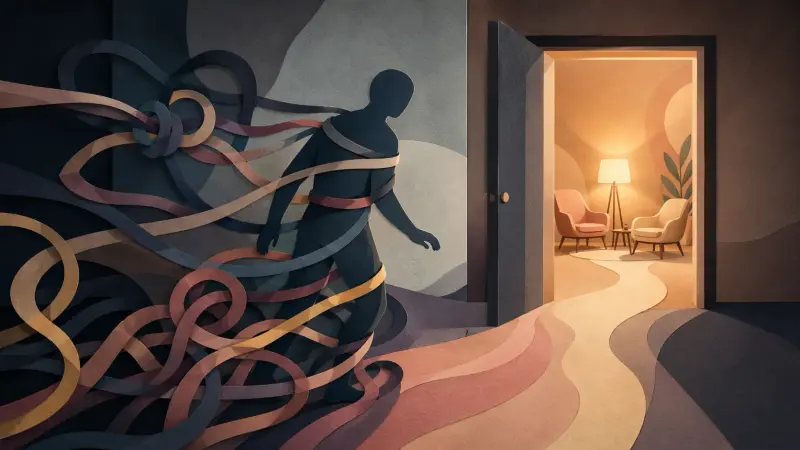
When the house grows quiet and the messages stop, small thoughts may begin to expand until they feel heavier than they really are, and what you managed during the day becomes much harder as bedtime approaches. This article from Tatmeen explains why anxiety increases at night, and how daily habits can overlap with physical tension and the buildup of postponed emotions. The problem is not always the night itself, but the space it leaves for everything that was put off throughout the day.
The Night Does Not Create Anxiety from Nothing
During the daytime, tasks, quick replies, and constant busyness help you postpone what is bothering you. You get things done, respond, drive, work, and keep up with what you need to do, so it seems to you that things are under control. But when everything quiets down, the mind no longer has anything to distract it, and the postponed fears appear as if they arrived all at once, even though they had been there in the background since the morning.
That is why some people feel as if they only fall apart after the children go to sleep, after work ends, or after the lights are turned off. This is not weakness or exaggeration, but a moment in which the effort you were making to stay composed finally stops. What seems at night like sudden anxiety is sometimes tension that quietly built up all day until it finally found space.
The Body Stays Awake Even If You Want to Sleep
Nighttime anxiety is not only about thoughts. The National Institute of Mental Health1 points out that anxiety may be linked to physical tension, difficulty sleeping, and a clear effect on daily functioning when it goes beyond ordinary, passing worry. That is why your body may feel on alert even when the room is quiet: tight shoulders, a slightly faster heartbeat, heightened attention to any sound, and difficulty surrendering to sleep.
This rhythm becomes even stronger when dinner is delayed, stimulants are excessive, or the phone stays close until the very last moment. At that point, the brain does not move gradually into rest, but stays in a state of readiness, reading the bodily sensation as if it were an alarm. Then the familiar cycle begins: you notice your heartbeat, you become anxious, your alertness rises further, and sleep feels farther away than it did just minutes earlier.
What Was Postponed During the Day Returns at Night
Some things never find their proper time in the rush of the day: a conversation that upset you, a bill you keep postponing, an unresolved family conflict, fear of tomorrow’s work, or sadness you gave no room to because you were busy simply enduring. At night, all of this returns in almost one form: a stream of possibilities, questions, and endless attempts to control what cannot be resolved in that moment.
That is why, at Tatmeen, we point out that reducing the matter to the phrase “I just overthink” may make you miss the real problem. Sometimes the issue is not overthinking alone, but getting used to postponing emotions and staying busy away from them until night becomes the time when everything is reckoned with at once. And if you only calm down after complete exhaustion or after hours of scrolling on a screen, this is not real rest so much as a temporary muting of inner noise.
Small Steps Before the Pace Rises
Before sleep, you do not need a perfect routine as much as you need to gradually lower the speed of the day. What usually helps is not forcing yourself to be calm, but reducing the fuel that feeds anxiety during the final hour.
Leave twenty minutes between the last task of your day and going to bed, with no work or heavy conversations.
Write down on paper what is occupying your mind right now, and what can be postponed until tomorrow instead of turning it over in your head.
Reduce phone use and stimulants late at night, especially if you know they heighten your alertness.
When a thought intensifies, name the feeling first: fear, pressure, guilt, or exhaustion, instead of immediately trying to solve everything.
These steps do not remove the deeper causes, but they reduce the mind’s momentum before sleep. The goal here is not to fall asleep quickly at any cost, but to give yourself a gentler landing so that the bed does not become a place for daily confrontation with your thoughts.
When It Becomes a Pattern That Needs Attention
If anxiety begins to repeat on most nights, and starts affecting your concentration, your patience, and your relationship with work, study, or the people around you, then it is no longer just a tiring day. Anxiety comes closer to being a problem that needs help when it becomes hard to control and begins to affect daily life, and it may be accompanied by insomnia, tension, irritability, and ongoing fatigue.
It also deserves more attention if you begin organizing your whole day around fear of the night, or if you deliberately delay sleep, or depend on constant distraction so that you do not have to be alone with your thoughts. At that point, support is not an exaggeration, but a way to understand whether what you are going through is related to growing anxiety, burnout, postponed sadness, or chronic stress that your body can no longer carry in the same silence.
Finally..
When the night turns from a time of rest into a time of confrontation, the problem does not need more harshness from you as much as it needs a clearer understanding of what is feeding it. You do not have to resolve it alone, and you do not need to wait until sleeplessness wears you down even more. And if this pattern continues,booking your first session through Tatmeen may be a practical step that helps you begin more calmly.
Frequently Asked Questions
Does anxiety before sleep mean I have a mental health disorder?
Not necessarily. Anxiety may appear at night with temporary stress, exhaustion, or the buildup of unresolved matters. What deserves more attention is repetition, difficulty controlling it, and its effect on both your sleep and your daytime life.
Why do I seem normal during the day and then struggle at night?
Because the daytime imposes a pace that keeps you busy away from much of what you feel. When things become quiet, distractions recede and what was postponed begins to surface, whether it is anxiety, sadness, or physical tension that never found space during the day.
Does trying to force sleep help?
Usually not. Pressuring yourself to fall asleep quickly may make you monitor your body and thoughts more closely, which raises tension even further. What is usually more helpful is calming the transition into sleep, not entering into a direct battle with insomnia.
A writer and researcher specializing in psychiatry, she focuses on mental health and the human emotions we experience but cannot always find the words to name. She writes about us—about humanity and the human experience—and simplifies complex topics to offer content that helps us better understand ourselves and life, ultimately making us feel less alone.
Every Tatmeen article is reviewed by care providers licensed by the Saudi Commission for Health Specialties, so what you read is accurate and trustworthy.
This article builds understanding and does not replace a licensed care provider.
Need someone to talk to?
Tatmeen's licensed care providers are available around the clock, and the app's urgent consultation connects you with one within minutes.
Download Tatmeen to explore care providers and booking options.
Smart matchingFour quick questions suggest the right care provider
Urgent consultationTalk to an available care provider within minutes
Free psychological measuresMore than 20 tests to understand how you are doing
Scan to download
{"data":{"id":"d6bfe804-afff-48c9-af3b-4548be935321","slug":"anxiety-disorder-regain-control-on-your-life","arTitle":"القلق الذي ينتظر الليل: لماذا تثقل الأفكار قبل النوم؟","enTitle":"Anxiety That Waits for the Night: Why Do Thoughts Feel Heavier Before Sleep?","thumbnailAltText":"Person on bed facing a swirling night sky of thoughts, lit by a small warm bedside lamp","estimatedReadingTime":4,"likesCount":213,"writer":{"id":"3ab72b74-f26f-4337-9b47-3114b0f90de5","arBio":"كاتبة وباحثة متخصصة في مجال الطب النفسي، تهتم بموضوعات الصحة النفسية وبالمشاعر الإنسانية التي نختبرها ولا نجد دائمًا الكلمات لتسميتها. تكتب عنّا؛ عن الإنسان وتجربته، وتبسّط الموضوعات المعقّدة لتقدّم محتوى يساعدنا على فهم ذواتنا والحياة أكثر، ويجعلنا نشعر بأننا بوحدة أقل.","enBio":"A writer and researcher specializing in psychiatry, she focuses on mental health and the human emotions we experience but cannot always find the words to name. She writes about us—about humanity and the human experience—and simplifies complex topics to offer content that helps us better understand ourselves and life, ultimately making us feel less alone.","user":{"slug":"ayat-alnajar","arFullName":"آيات النجار","enFullName":"Ayat Al-Najjar","publicProfileImageUrl":"https://cdn.tatmeen.sa/public/profile-images/02384455-68fa-40b6-ad05-609fde65cafa/21b9a610dde5dfc6d37af110c23e9c7ab3946be080c281beb000debf4f7d31a6.webp","publicProfileImage96Url":"https://cdn.tatmeen.sa/public/profile-images/02384455-68fa-40b6-ad05-609fde65cafa/21b9a610dde5dfc6d37af110c23e9c7ab3946be080c281beb000debf4f7d31a6-w96.webp","publicProfileImage192Url":"https://cdn.tatmeen.sa/public/profile-images/02384455-68fa-40b6-ad05-609fde65cafa/21b9a610dde5dfc6d37af110c23e9c7ab3946be080c281beb000debf4f7d31a6-w192.webp"}},"arContent":"","enContent":"","productionDocument":{"headings":[{"id":"article-section-the-night-does-not-create-anxiety-from-nothing","text":"The Night Does Not Create Anxiety from Nothing"},{"id":"article-section-the-body-stays-awake-even-if-you-want-to-sleep","text":"The Body Stays Awake Even If You Want to Sleep"},{"id":"article-section-what-was-postponed-during-the-day-returns-at-night","text":"What Was Postponed During the Day Returns at Night"},{"id":"article-section-small-steps-before-the-pace-rises","text":"Small Steps Before the Pace Rises"},{"id":"article-section-when-it-becomes-a-pattern-that-needs-attention","text":"When It Becomes a Pattern That Needs Attention"},{"id":"article-section-finally","text":"Finally.."}],"faqs":[{"question":"Does anxiety before sleep mean I have a mental health disorder?","answer":"<p><span style=\"color:#000000\">Not necessarily. Anxiety may appear at night with temporary stress, exhaustion, or the buildup of unresolved matters. What deserves more attention is repetition, difficulty controlling it, and its effect on both your sleep and your daytime life.</span></p>"},{"question":"Why do I seem normal during the day and then struggle at night?","answer":"<p><span style=\"color:#000000\">Because the daytime imposes a pace that keeps you busy away from much of what you feel. When things become quiet, distractions recede and what was postponed begins to surface, whether it is anxiety, sadness, or physical tension that never found space during the day.</span></p>"},{"question":"Does trying to force sleep help?","answer":"<p><span style=\"color:#000000\">Usually not. Pressuring yourself to fall asleep quickly may make you monitor your body and thoughts more closely, which raises tension even further. What is usually more helpful is calming the transition into sleep, not entering into a direct battle with insomnia.</span></p>"}],"beforeSourcesHtml":"","sources":[{"title":"NIMH: Anxiety Disorders","href":"https://www.nimh.nih.gov/health/topics/anxiety-disorders/index.shtml","hostname":"nimh.nih.gov"},{"title":"Sleep Foundation: Anxiety and Sleep","href":"https://www.sleepfoundation.org/mental-health/anxiety-and-sleep","hostname":"sleepfoundation.org"},{"title":"NHLBI: Sleep Deprivation and Deficiency","href":"https://www.nhlbi.nih.gov/health/sleep-deprivation/health-effects","hostname":"nhlbi.nih.gov"}],"afterSourcesHtml":"","blocks":[{"type":"html","html":"<p><span style=\"color:#000000\">When the house grows quiet and the messages stop, small thoughts may begin to expand until they feel heavier than they really are, and what you managed during the day becomes much harder as bedtime approaches. This article from Tatmeen explains why anxiety increases at night, and how daily habits can overlap with physical tension and the buildup of postponed emotions. The problem is not always the night itself, but the space it leaves for everything that was put off throughout the day.</span></p><h2 id=\"article-section-the-night-does-not-create-anxiety-from-nothing\" data-toc-heading tabindex=\"-1\"><span id=\"the-night-does-not-create-anxiety-from-nothing-1\" aria-hidden=\"true\"></span><span style=\"color:#000000\"><strong>The Night Does Not Create Anxiety from Nothing</strong></span></h2><p><span style=\"color:#000000\">During the daytime, tasks, quick replies, and constant busyness help you postpone what is bothering you. You get things done, respond, drive, work, and keep up with what you need to do, so it seems to you that things are under control. But when everything quiets down, the mind no longer has anything to distract it, and the postponed fears appear as if they arrived all at once, even though they had been there in the background since the morning.</span></p><p><span style=\"color:#000000\">That is why some people feel as if they only fall apart after the children go to sleep, after work ends, or after the lights are turned off. This is not weakness or exaggeration, but a moment in which the effort you were making to stay composed finally stops. What seems at night like sudden anxiety is sometimes tension that quietly built up all day until it finally found space.</span></p><h2 id=\"article-section-the-body-stays-awake-even-if-you-want-to-sleep\" data-toc-heading tabindex=\"-1\"><span id=\"the-body-stays-awake-even-if-you-want-to-sleep-2\" aria-hidden=\"true\"></span><span style=\"color:#000000\"><strong>The Body Stays Awake Even If You Want to Sleep</strong></span></h2><p><span style=\"color:#000000\">Nighttime anxiety is not only about thoughts. </span><a href=\"https://www.nimh.nih.gov/health/topics/anxiety-disorders\" target=\"_blank\" rel=\"nofollow noopener noreferrer\"><span style=\"color:#1155cc\"><u>The National Institute of Mental Health</u></span></a><span style=\"color:#000000\"> points out that anxiety may be linked to physical tension, difficulty sleeping, and a clear effect on daily functioning when it goes beyond ordinary, passing worry. That is why your body may feel on alert even when the room is quiet: tight shoulders, a slightly faster heartbeat, heightened attention to any sound, and difficulty surrendering to sleep.</span></p><p><span style=\"color:#000000\">This rhythm becomes even stronger when dinner is delayed, stimulants are excessive, or the phone stays close until the very last moment. At that point, the brain does not move gradually into rest, but stays in a state of readiness, reading the bodily sensation as if it were an alarm. Then the familiar cycle begins: you notice your heartbeat, you become anxious, your alertness rises further, and sleep feels farther away than it did just minutes earlier.</span></p><h2 id=\"article-section-what-was-postponed-during-the-day-returns-at-night\" data-toc-heading tabindex=\"-1\"><span id=\"what-was-postponed-during-the-day-returns-at-night-3\" aria-hidden=\"true\"></span><span style=\"color:#000000\"><strong>What Was Postponed During the Day Returns at Night</strong></span></h2><p><span style=\"color:#000000\">Some things never find their proper time in the rush of the day: a conversation that upset you, a bill you keep postponing, an unresolved family conflict, fear of tomorrow’s work, or sadness you gave no room to because you were busy simply enduring. At night, all of this returns in almost one form: a stream of possibilities, questions, and endless attempts to control what cannot be resolved in that moment.</span></p><p><span style=\"color:#000000\">That is why, at Tatmeen, we point out that reducing the matter to the phrase “I just overthink” may make you miss the real problem. Sometimes the issue is not overthinking alone, but getting used to postponing emotions and staying busy away from them until night becomes the time when everything is reckoned with at once. And if you only calm down after complete exhaustion or after hours of scrolling on a screen, this is not real rest so much as a temporary muting of inner noise.</span></p><h2 id=\"article-section-small-steps-before-the-pace-rises\" data-toc-heading tabindex=\"-1\"><span id=\"small-steps-before-the-pace-rises-4\" aria-hidden=\"true\"></span><span style=\"color:#000000\"><strong>Small Steps Before the Pace Rises</strong></span></h2><p><span style=\"color:#000000\">Before sleep, you do not need a perfect routine as much as you need to gradually lower the speed of the day. What usually helps is not forcing yourself to be calm, but reducing the fuel that feeds anxiety during the final hour.</span></p><ul><li><p><span style=\"color:#000000\">Leave twenty minutes between the last task of your day and going to bed, with no work or heavy conversations.</span></p></li><li><p><span style=\"color:#000000\">Write down on paper what is occupying your mind right now, and what can be postponed until tomorrow instead of turning it over in your head.</span></p></li><li><p><span style=\"color:#000000\">Reduce phone use and stimulants late at night, especially if you know they heighten your alertness.</span></p></li><li><p><span style=\"color:#000000\">When a thought intensifies, name the feeling first: fear, pressure, guilt, or exhaustion, instead of immediately trying to solve everything.</span></p></li></ul><p><span style=\"color:#000000\">These steps do not remove the deeper causes, but they reduce the mind’s momentum before sleep. The goal here is not to fall asleep quickly at any cost, but to give yourself a gentler landing so that the bed does not become a place for daily confrontation with your thoughts.</span></p><h2 id=\"article-section-when-it-becomes-a-pattern-that-needs-attention\" data-toc-heading tabindex=\"-1\"><span id=\"when-it-becomes-a-pattern-that-needs-attention-5\" aria-hidden=\"true\"></span><span style=\"color:#000000\"><strong>When It Becomes a Pattern That Needs Attention</strong></span></h2><p><span style=\"color:#000000\">If anxiety begins to repeat on most nights, and starts affecting your concentration, your patience, and your relationship with work, study, or the people around you, then it is no longer just a tiring day. Anxiety comes closer to being a problem that needs help when it becomes hard to control and begins to affect daily life, and it may be accompanied by insomnia, tension, irritability, and ongoing fatigue.</span></p><p><span style=\"color:#000000\">It also deserves more attention if you begin organizing your whole day around fear of the night, or if you deliberately delay sleep, or depend on constant distraction so that you do not have to be alone with your thoughts. At that point, support is not an exaggeration, but a way to understand whether what you are going through is related to growing anxiety, burnout, postponed sadness, or chronic stress that your body can no longer carry in the same silence.</span></p><h2 id=\"article-section-finally\" data-toc-heading tabindex=\"-1\"><span id=\"finally-6\" aria-hidden=\"true\"></span><span style=\"color:#000000\"><strong>Finally..</strong></span></h2><p><span style=\"color:#000000\">When the night turns from a time of rest into a time of confrontation, the problem does not need more harshness from you as much as it needs a clearer understanding of what is feeding it. You do not have to resolve it alone, and you do not need to wait until sleeplessness wears you down even more. And if this pattern continues,<u> </u></span><a href=\"https://tatmeen.sa/download/\"><span style=\"color:#1155cc\"><u>booking your first session through Tatmeen</u></span></a><span style=\"color:#000000\"> may be a practical step that helps you begin more calmly.</span></p>"}],"inlineCtaSignatures":[],"_experienceAliases":{"v":1,"fields":["html","bodyHtml"],"faqs":[0,1,2]}},"createdAt":"2026-06-27T21:00:00.000Z","updatedAt":"2026-07-03T17:30:41.075Z","disorderGroups":[{"id":"1e82772d-a1a7-4d29-b475-be9d6b67ae02","slug":"common-mental-issues","arName":"اضطرابات نفسية شائعة","enName":"Common Mental Issues"}],"reviewer":{"arFullName":"فريق تطمين","enFullName":"Tatmeen team","slug":"tatmeen-team","kind":"organization"},"productionArticle":true,"promotionAllowed":true,"preparedCover":{"src":"https://cdn.tatmeen.sa/public/article-lcp/article-lcp-v2/sha256-b8e5976a5b61f331d1cac00571818ef27fb07ea049d9ec7e96d41e5c443bb96f/800-2f8c6c63d7fd6c8eb63b409d4362760d90bc9b358d86ad081f698267b3cbe304.avif","fallback":"https://cdn.tatmeen.sa/public/article-lcp/article-lcp-v2/sha256-b8e5976a5b61f331d1cac00571818ef27fb07ea049d9ec7e96d41e5c443bb96f/800-3bc3f92f9fe4afe3214e52ce70a2c7fd83d02c1892a6bea5f94e8b13ab9d7e5f.webp","directUrl":"https://cdn.tatmeen.sa/blog-cover/Tatmeen-1782672377485.webp","isGolden":true,"avifSrcset":"https://cdn.tatmeen.sa/public/article-lcp/article-lcp-v2/sha256-b8e5976a5b61f331d1cac00571818ef27fb07ea049d9ec7e96d41e5c443bb96f/400-053ce4109d8b425c6929c5c845563452cb77e6df2c753d2c42d51bb3ef1694df.avif 400w, https://cdn.tatmeen.sa/public/article-lcp/article-lcp-v2/sha256-b8e5976a5b61f331d1cac00571818ef27fb07ea049d9ec7e96d41e5c443bb96f/640-5bad060feccb61f8c0486102a22d9d4678b69ef1088e9bc3094cd098669ec8aa.avif 640w, https://cdn.tatmeen.sa/public/article-lcp/article-lcp-v2/sha256-b8e5976a5b61f331d1cac00571818ef27fb07ea049d9ec7e96d41e5c443bb96f/800-2f8c6c63d7fd6c8eb63b409d4362760d90bc9b358d86ad081f698267b3cbe304.avif 800w, https://cdn.tatmeen.sa/public/article-lcp/article-lcp-v2/sha256-b8e5976a5b61f331d1cac00571818ef27fb07ea049d9ec7e96d41e5c443bb96f/1200-d076991574f4fb1afaa5c3d37370c1a5927822dff5cf5b49bd1547360c7cece5.avif 1200w","webpSrcset":"https://cdn.tatmeen.sa/public/article-lcp/article-lcp-v2/sha256-b8e5976a5b61f331d1cac00571818ef27fb07ea049d9ec7e96d41e5c443bb96f/400-69428e5d6946c93c55279489c9740f26cc2bf76eaa48623935d0770207ad50f6.webp 400w, https://cdn.tatmeen.sa/public/article-lcp/article-lcp-v2/sha256-b8e5976a5b61f331d1cac00571818ef27fb07ea049d9ec7e96d41e5c443bb96f/640-9e6fd0e09b7362e1315b178b58bf6bf4458f7626eba5ed4ec88cdb0daad4e19a.webp 640w, https://cdn.tatmeen.sa/public/article-lcp/article-lcp-v2/sha256-b8e5976a5b61f331d1cac00571818ef27fb07ea049d9ec7e96d41e5c443bb96f/800-3bc3f92f9fe4afe3214e52ce70a2c7fd83d02c1892a6bea5f94e8b13ab9d7e5f.webp 800w, https://cdn.tatmeen.sa/public/article-lcp/article-lcp-v2/sha256-b8e5976a5b61f331d1cac00571818ef27fb07ea049d9ec7e96d41e5c443bb96f/1200-f8dc70f74663bbac856a2c1f9b626914e322f22ef2aea5a28c9116f6d3beeff3.webp 1200w","phoneAvifSrcset":"https://cdn.tatmeen.sa/public/article-lcp/article-lcp-v2/sha256-b8e5976a5b61f331d1cac00571818ef27fb07ea049d9ec7e96d41e5c443bb96f/400-053ce4109d8b425c6929c5c845563452cb77e6df2c753d2c42d51bb3ef1694df.avif 400w, https://cdn.tatmeen.sa/public/article-lcp/article-lcp-v2/sha256-b8e5976a5b61f331d1cac00571818ef27fb07ea049d9ec7e96d41e5c443bb96f/640-5bad060feccb61f8c0486102a22d9d4678b69ef1088e9bc3094cd098669ec8aa.avif 640w, https://cdn.tatmeen.sa/public/article-lcp/article-lcp-v2/sha256-b8e5976a5b61f331d1cac00571818ef27fb07ea049d9ec7e96d41e5c443bb96f/800-2f8c6c63d7fd6c8eb63b409d4362760d90bc9b358d86ad081f698267b3cbe304.avif 800w","phoneWebpSrcset":"https://cdn.tatmeen.sa/public/article-lcp/article-lcp-v2/sha256-b8e5976a5b61f331d1cac00571818ef27fb07ea049d9ec7e96d41e5c443bb96f/400-69428e5d6946c93c55279489c9740f26cc2bf76eaa48623935d0770207ad50f6.webp 400w, https://cdn.tatmeen.sa/public/article-lcp/article-lcp-v2/sha256-b8e5976a5b61f331d1cac00571818ef27fb07ea049d9ec7e96d41e5c443bb96f/640-9e6fd0e09b7362e1315b178b58bf6bf4458f7626eba5ed4ec88cdb0daad4e19a.webp 640w, https://cdn.tatmeen.sa/public/article-lcp/article-lcp-v2/sha256-b8e5976a5b61f331d1cac00571818ef27fb07ea049d9ec7e96d41e5c443bb96f/800-3bc3f92f9fe4afe3214e52ce70a2c7fd83d02c1892a6bea5f94e8b13ab9d7e5f.webp 800w","width":800,"height":450},"previewTaxonomy":{"groups":[{"id":"1e82772d-a1a7-4d29-b475-be9d6b67ae02","slug":"common-mental-issues","arName":"اضطرابات نفسية شائعة","enName":"Common Mental Issues"}],"topics":[{"id":"4c10d5ae-1b63-4868-901f-df8e1ce7f0d7","slug":"sleep-disorders","arName":"اضطرابات النوم","enName":"Sleep Disorders","groupSlug":"common-mental-issues","href":"/blog/category/common-mental-issues/sleep-disorders/"},{"id":"4b322099-fefa-4ba7-a3d1-4130f206046a","slug":"anxiety","arName":"قلق","enName":"Anxiety","groupSlug":"common-mental-issues","href":"/blog/category/common-mental-issues/anxiety/"}],"tags":[]},"previewProviderRecommendations":[{"id":"278d5ac5-30ff-46ad-97be-c67cdd125836","slug":"dr-mohammed-alamari-8085","arFullName":"د. محمد العماري","enFullName":"Dr. Mohammed Alamari","publicProfileImageUrl":"https://cdn.tatmeen.sa/public/profile-images/278d5ac5-30ff-46ad-97be-c67cdd125836/69bdd11cb01784eed010eb9883403fd6ca4e4afcec739dcd6114fd8b85f133a8.webp","publicProfileImage96Url":"https://cdn.tatmeen.sa/public/profile-images/278d5ac5-30ff-46ad-97be-c67cdd125836/69bdd11cb01784eed010eb9883403fd6ca4e4afcec739dcd6114fd8b85f133a8-w96.webp","publicProfileImage192Url":"https://cdn.tatmeen.sa/public/profile-images/278d5ac5-30ff-46ad-97be-c67cdd125836/69bdd11cb01784eed010eb9883403fd6ca4e4afcec739dcd6114fd8b85f133a8-w192.webp","specialization":{"arName":"طبيب أسرة","enName":"Family Physician"},"profileImageUrl":"https://cdn.tatmeen.sa/public/profile-images/278d5ac5-30ff-46ad-97be-c67cdd125836/69bdd11cb01784eed010eb9883403fd6ca4e4afcec739dcd6114fd8b85f133a8-w192.webp","experienceYears":3,"consultantInfo":{"averageRating":{"average":4},"specialization":{"arGeneralName":"طبيب أسرة","enGeneralName":"Family Physician"}}},{"id":"dc4f4096-c96e-46ad-8e85-55c7104fbbf9","slug":"alya-alasiri-9292","arFullName":"علياء العسيري","enFullName":"Alya Alasiri","publicProfileImageUrl":"","publicProfileImage96Url":"","publicProfileImage192Url":"","specialization":{"arName":"أخصائي نفسي","enName":"Psychologist"},"profileImageUrl":"","experienceYears":4,"consultantInfo":{"averageRating":{"average":0},"specialization":{"arGeneralName":"أخصائي نفسي","enGeneralName":"Psychologist"}}},{"id":"6df31339-a6f5-4131-a603-3a7c7a34c143","slug":"joud-alodhayyani-9014","arFullName":"جود العتيبي","enFullName":"Joud Alotaibi","publicProfileImageUrl":"https://cdn.tatmeen.sa/public/profile-images/6df31339-a6f5-4131-a603-3a7c7a34c143/7bb005ef9d4315296aad2a7d142fb2af2cf89920a40b474fc5139b9530269282.webp","publicProfileImage96Url":"https://cdn.tatmeen.sa/public/profile-images/6df31339-a6f5-4131-a603-3a7c7a34c143/7bb005ef9d4315296aad2a7d142fb2af2cf89920a40b474fc5139b9530269282-w96.webp","publicProfileImage192Url":"https://cdn.tatmeen.sa/public/profile-images/6df31339-a6f5-4131-a603-3a7c7a34c143/7bb005ef9d4315296aad2a7d142fb2af2cf89920a40b474fc5139b9530269282-w192.webp","specialization":{"arName":"أخصائي نفسي","enName":"Psychologist"},"profileImageUrl":"https://cdn.tatmeen.sa/public/profile-images/6df31339-a6f5-4131-a603-3a7c7a34c143/7bb005ef9d4315296aad2a7d142fb2af2cf89920a40b474fc5139b9530269282-w192.webp","experienceYears":2,"consultantInfo":{"averageRating":{"average":3.5},"specialization":{"arGeneralName":"أخصائي نفسي","enGeneralName":"Psychologist"}}}],"previewCareProviders":[{"id":"09364052-c2a9-4c52-9717-7ce2093b8d0a","slug":"kholoud-alharbi-5221","arFullName":"خلود الحربي","enFullName":"Kholoud Alharbi","publicProfileImageUrl":"https://cdn.tatmeen.sa/public/profile-images/09364052-c2a9-4c52-9717-7ce2093b8d0a/4a0aeb81619e351b77f4323e3605a0a00acc7ca3c82ee7cc5ca2c9e8ef716049.webp","publicProfileImage96Url":"https://cdn.tatmeen.sa/public/profile-images/09364052-c2a9-4c52-9717-7ce2093b8d0a/4a0aeb81619e351b77f4323e3605a0a00acc7ca3c82ee7cc5ca2c9e8ef716049-w96.webp","publicProfileImage192Url":"https://cdn.tatmeen.sa/public/profile-images/09364052-c2a9-4c52-9717-7ce2093b8d0a/4a0aeb81619e351b77f4323e3605a0a00acc7ca3c82ee7cc5ca2c9e8ef716049-w192.webp","gender":"FEMALE","specialization":{"arName":"أخصائي نفسي","enName":"Psychologist"}},{"id":"6f037535-1dca-4b50-a8b2-5974b7323286","slug":"salah-althobaiti-9053","arFullName":"صلاح الثبيتي","enFullName":"Salah Althobaiti","publicProfileImageUrl":"https://cdn.tatmeen.sa/public/profile-images/6f037535-1dca-4b50-a8b2-5974b7323286/35b6bd7fad9b1e004c1835803eb9c1b56dcacd380685ec8bff141f0fb888005c.webp","publicProfileImage96Url":"https://cdn.tatmeen.sa/public/profile-images/6f037535-1dca-4b50-a8b2-5974b7323286/35b6bd7fad9b1e004c1835803eb9c1b56dcacd380685ec8bff141f0fb888005c-w96.webp","publicProfileImage192Url":"https://cdn.tatmeen.sa/public/profile-images/6f037535-1dca-4b50-a8b2-5974b7323286/35b6bd7fad9b1e004c1835803eb9c1b56dcacd380685ec8bff141f0fb888005c-w192.webp","gender":"MALE","specialization":{"arName":"أخصائي نفسي","enName":"Psychologist"}},{"id":"3cc806e8-616b-4884-9f21-a75b378580a2","slug":"aisha-al-hashim-8667","arFullName":"عائشة ال هاشم","enFullName":"Aisha Al Hashim","publicProfileImageUrl":"https://cdn.tatmeen.sa/public/profile-images/3cc806e8-616b-4884-9f21-a75b378580a2/27f523d03be4dcfa1f6a79f70c1773887434e698990d214cd990caec56a44798.webp","publicProfileImage96Url":"https://cdn.tatmeen.sa/public/profile-images/3cc806e8-616b-4884-9f21-a75b378580a2/27f523d03be4dcfa1f6a79f70c1773887434e698990d214cd990caec56a44798-w96.webp","publicProfileImage192Url":"https://cdn.tatmeen.sa/public/profile-images/3cc806e8-616b-4884-9f21-a75b378580a2/27f523d03be4dcfa1f6a79f70c1773887434e698990d214cd990caec56a44798-w192.webp","gender":"FEMALE","specialization":{"arName":"أخصائي نفسي","enName":"Psychologist"}},{"id":"db2ce1a0-9325-4471-b7ce-eb2e811c30a3","slug":"amer-qutub-2441","arFullName":"عامر قطب","enFullName":"Amer Qutub","publicProfileImageUrl":"https://cdn.tatmeen.sa/public/profile-images/db2ce1a0-9325-4471-b7ce-eb2e811c30a3/80580f99bfd7fe2b2a9cf8eed73ab532f5086d1efe053b0aa57358c1ce004261.webp","publicProfileImage96Url":"https://cdn.tatmeen.sa/public/profile-images/db2ce1a0-9325-4471-b7ce-eb2e811c30a3/80580f99bfd7fe2b2a9cf8eed73ab532f5086d1efe053b0aa57358c1ce004261-w96.webp","publicProfileImage192Url":"https://cdn.tatmeen.sa/public/profile-images/db2ce1a0-9325-4471-b7ce-eb2e811c30a3/80580f99bfd7fe2b2a9cf8eed73ab532f5086d1efe053b0aa57358c1ce004261-w192.webp","gender":"MALE","specialization":{"arName":"أخصائي نفسي","enName":"Psychologist"}},{"id":"94765496-dbdf-4631-a01b-7df5f788668d","slug":"abdullrahman-alhamoudi-3045","arFullName":"عبدالرحمن الحمودي","enFullName":"Abdulrahman Alhamoudi","publicProfileImageUrl":"https://cdn.tatmeen.sa/public/profile-images/94765496-dbdf-4631-a01b-7df5f788668d/2d49f6b6493c564afb6f50b6c3634231dff3a5cf8353acfab393d1b2a88037d1.webp","publicProfileImage96Url":"https://cdn.tatmeen.sa/public/profile-images/94765496-dbdf-4631-a01b-7df5f788668d/2d49f6b6493c564afb6f50b6c3634231dff3a5cf8353acfab393d1b2a88037d1-w96.webp","publicProfileImage192Url":"https://cdn.tatmeen.sa/public/profile-images/94765496-dbdf-4631-a01b-7df5f788668d/2d49f6b6493c564afb6f50b6c3634231dff3a5cf8353acfab393d1b2a88037d1-w192.webp","gender":"MALE","specialization":{"arName":"أخصائي نفسي","enName":"Psychologist"}},{"id":"618dba89-5b70-4b46-8304-741b7ac8ecd3","slug":"abdullah-mari-1311","arFullName":"عبدالله مرعي","enFullName":"Abdullah Mari","publicProfileImageUrl":"https://cdn.tatmeen.sa/public/profile-images/618dba89-5b70-4b46-8304-741b7ac8ecd3/6b4a3bfb59f8a304ca79083b32859b46baad2e1d692974a47c02c1f66bd11129.webp","publicProfileImage96Url":"https://cdn.tatmeen.sa/public/profile-images/618dba89-5b70-4b46-8304-741b7ac8ecd3/6b4a3bfb59f8a304ca79083b32859b46baad2e1d692974a47c02c1f66bd11129-w96.webp","publicProfileImage192Url":"https://cdn.tatmeen.sa/public/profile-images/618dba89-5b70-4b46-8304-741b7ac8ecd3/6b4a3bfb59f8a304ca79083b32859b46baad2e1d692974a47c02c1f66bd11129-w192.webp","gender":"MALE","specialization":{"arName":"أخصائي نفسي","enName":"Psychologist"}},{"id":"3b50a5d5-e795-407f-8676-fd7f0e1bb7a0","slug":"abdulaziz-bin-hudayan-4940","arFullName":"عبدالعزيز بن هديان","enFullName":"Abdulaziz Bin Hudayan","publicProfileImageUrl":"https://cdn.tatmeen.sa/public/profile-images/3b50a5d5-e795-407f-8676-fd7f0e1bb7a0/710ff0fe1fb00cdb5042092e27b7910b480a439b02251ecded62d7758eefce95.webp","publicProfileImage96Url":"https://cdn.tatmeen.sa/public/profile-images/3b50a5d5-e795-407f-8676-fd7f0e1bb7a0/710ff0fe1fb00cdb5042092e27b7910b480a439b02251ecded62d7758eefce95-w96.webp","publicProfileImage192Url":"https://cdn.tatmeen.sa/public/profile-images/3b50a5d5-e795-407f-8676-fd7f0e1bb7a0/710ff0fe1fb00cdb5042092e27b7910b480a439b02251ecded62d7758eefce95-w192.webp","gender":"MALE","specialization":{"arName":"أخصائي نفسي","enName":"Psychologist"}},{"id":"d4ffcb6b-90a7-45b6-b941-964866f4564b","slug":"dhaifallah-alhumaidi-1092","arFullName":"ضيف الله الحميدي","enFullName":"Dhaifallah Alhumaidi","publicProfileImageUrl":"https://cdn.tatmeen.sa/public/profile-images/d4ffcb6b-90a7-45b6-b941-964866f4564b/1817171c5828a9b57d6c30d12332cf154e335272548bc90a6e8456d74d356956.webp","publicProfileImage96Url":"https://cdn.tatmeen.sa/public/profile-images/d4ffcb6b-90a7-45b6-b941-964866f4564b/1817171c5828a9b57d6c30d12332cf154e335272548bc90a6e8456d74d356956-w96.webp","publicProfileImage192Url":"https://cdn.tatmeen.sa/public/profile-images/d4ffcb6b-90a7-45b6-b941-964866f4564b/1817171c5828a9b57d6c30d12332cf154e335272548bc90a6e8456d74d356956-w192.webp","gender":"MALE","specialization":{"arName":"أخصائي نفسي","enName":"Psychologist"}}],"previewDownload":{"href":"/download","title":{"ar":"خطوة واحدة لأجلك، ابدأ الآن","en":"One step for you, start now"},"description":{"ar":"حمّل تطبيق تطمين لاستكشاف مقدمي الرعاية وخيارات الحجز.","en":"Download Tatmeen to explore care providers and booking options."},"posterSrc":"/images/home/cta-ar-new-1.webp","videoSrc":"/images/home/cta-ar-new-1.mp4","videoPosterSrc":"/images/home/cta-ar-new-1.webp","videoPosterEnSrc":"/images/home/cta-en-new-1.webp","videoType":"video/mp4","appStoreHref":"https://apps.apple.com/us/app/tatmeen-%D8%AA%D8%B7%D9%85%D9%8A%D9%86/id6473836983","googlePlayHref":"https://play.google.com/store/apps/details?id=com.TatmeenApp.user&hl=en"},"previewRelatedArticles":[{"id":"dbdcbe3d-731d-48e7-bb17-fe1705dc2ec7","slug":"why-cancel-therapy-last-minute","route":"/blog/why-cancel-therapy-last-minute/","title":{"ar":"لماذا نشعر بالرغبة في إلغاء جلسة العلاج في اللحظة الأخيرة؟","en":"Why Do We Feel Like Canceling Therapy at the Last Minute?"},"image":"https://cdn.tatmeen.sa/public/article-lcp/article-lcp-v2/sha256-f2547fbf8473d769f2be468e53b712b5f33e8faa8545f8e39410fe713b64e47c/800-c810d1e4661aeb1cbd979626ebe53927ef61f1b907f3c9a8fdac8626b7bea9b5.webp","directImageFallback":"https://cdn.tatmeen.sa/blog-cover/Tatmeen-1776967264668.webp","arThumbnailAltText":"a person approaching the therapy session being held back by negative thoughts","thumbnailAltText":"a person approaching the therapy session being held back by negative thoughts","topic":{"label":{"ar":"اضطرابات نفسية شائعة","en":"Common Mental Issues"}},"readingTimeMinutes":5},{"id":"af904b56-631b-40d5-8a89-c6abf387235a","slug":"How-to-treat-anxiety-and-fear","route":"/blog/How-to-treat-anxiety-and-fear/","title":{"ar":"كيفية علاج القلق والخوف؟","en":"How to Treat Anxiety and Fear"},"image":"https://cdn.tatmeen.sa/public/article-lcp/article-lcp-v2/sha256-931de9b7b43c4633adaec24c0c8cf9efb725ada1d97ffc76d1aef5e51d9e139f/630-ac596fd9d80670a5122493befe493613483a9038c4cf168208d84bab6de3440b.webp","directImageFallback":"https://cdn.tatmeen.sa/blog-cover/1704726770215-Tatmeen-img-812","arThumbnailAltText":"Person grips their hair with both hands and looks ahead with wide eyes","thumbnailAltText":"Person grips their hair with both hands and looks ahead with wide eyes","topic":{"label":{"ar":"اضطرابات نفسية شائعة","en":"Common Mental Issues"}},"readingTimeMinutes":5},{"id":"0568d64f-6c91-4ff6-833e-21f8ac60810c","slug":"understanding-anxiety-symptoms-causes-treatment","route":"/blog/understanding-anxiety-symptoms-causes-treatment/","title":{"ar":"فهم القلق: الأعراض والأسباب وطرق العلاج","en":"Understanding Anxiety: Symptoms, Causes, and Treatment Methods"},"image":"https://cdn.tatmeen.sa/public/article-lcp/article-lcp-v2/sha256-4eed4f1d126cd3aba4f09886799d5f88594e70340069ee2c1f785bcb1440eadd/800-f85f9a2cc1afd3203d39b71739cdb7aa2e894f1fe18b44a6e670ee1875e93dca.webp","directImageFallback":"https://cdn.tatmeen.sa/blog-cover/Tatmeen-1777481890080.webp","arThumbnailAltText":"فهم القلق وأعراضه وأسبابه وطرق العلاج النفسي الفعّال","thumbnailAltText":"فهم القلق وأعراضه وأسبابه وطرق العلاج النفسي الفعّال","topic":{"label":{"ar":"اضطرابات نفسية شائعة","en":"Common Mental Issues"}},"readingTimeMinutes":5},{"id":"d368060c-48c2-4cfc-a22a-5ca36a7788f8","slug":"how-to-support-someone-with-anxiety-guide-friends-family","route":"/blog/how-to-support-someone-with-anxiety-guide-friends-family/","title":{"ar":"كيف تدعم شخصًا يعاني من القلق؟ دليل للأصدقاء والعائلة","en":"How to Support Someone with Anxiety? A Guide for Friends and Family"},"image":"https://cdn.tatmeen.sa/public/article-lcp/article-lcp-v2/sha256-d860dded1ce707e7f2198ed5ac20a35408c7fe857d12ed79ff6cbc11c5a91bf9/800-494f2740bf19a00baa57e53da64861abff5c03ccad0abee69e819c3b05e65f61.webp","directImageFallback":"https://cdn.tatmeen.sa/blog-cover/Tatmeen-1777567602720.webp","arThumbnailAltText":"كيف تدعم شخصاً يعاني من القلق دليل للأصدقاء والعائلة","thumbnailAltText":"كيف تدعم شخصاً يعاني من القلق دليل للأصدقاء والعائلة","topic":{"label":{"ar":"اضطرابات نفسية شائعة","en":"Common Mental Issues"}},"readingTimeMinutes":5}],"previewRelatedReadStates":{}},"locale":"en","device":"desktop","path":"/en/blog/anxiety-disorder-regain-control-on-your-life/","readingControls":false,"config":{"public":{"BUCKET_URL":"https://cdn.tatmeen.sa/","APP_BASE_URL":"https://tatmeen.sa","intercomAppId":"ppcnu9e3"}}}