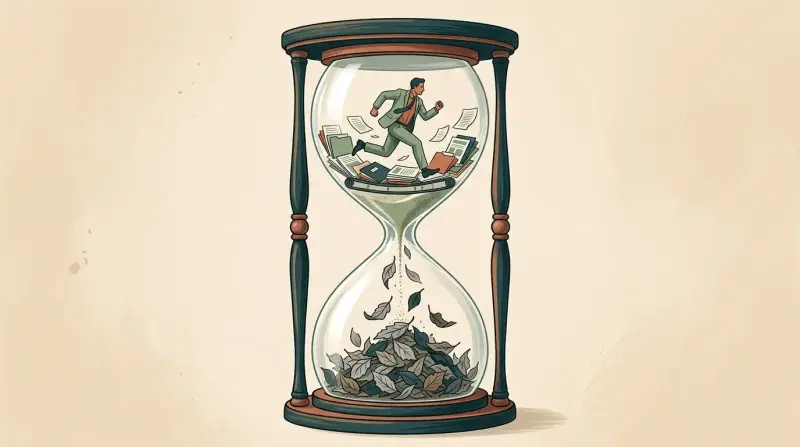
Job burnout refers to a state of chronic physical and emotional exhaustion, usually caused by prolonged exposure to work-related stress. People experiencing it feel drained by and emotionally detached from their work, among other signs. Job burnout can affect people in many different jobs and professions and may have negative effects on their mental health and overall work performance. However, seeking advice from a doctor or qualified mental health professional can help reduce or prevent job burnout if someone feels they are experiencing its symptoms.
What is job burnout?
Job burnout is defined as "a syndrome of emotional exhaustion, loss of enthusiasm, and low morale that leads to reduced productivity at work." Although burnout was initially diagnosed only among people working in "helping" professions, such as medicine, nursing, and social services, it soon became associated with other occupations. Fortunately, it has become better recognized, and some modern technologies can now help people by identifying places or environments where they may be at risk of burnout, determining whether they are showing its symptoms, and offering advice on how to prevent or reduce it.
Specialists have identified five levels or stages of job burnout, emphasizing the importance of not progressing beyond the first stage to avoid its harmful effects. In order, these stages are:
The honeymoon stage:
This stage is particularly associated with taking on a new job title or new responsibilities at work. At this point, there are no signs of job burnout at all. On the contrary, the person is enthusiastic and committed to their job, productive, and open to taking on every task and seizing every possible opportunity to do their best. They may also feel creative, optimistic, energetic, and ready for a challenge, which can lead them to take on more than they should. The risk during the honeymoon stage is that, without adopting relaxation strategies and taking regular breaks, the person may quickly progress to the next stage.
The onset of stress:
This stage begins when some days gradually become more stressful than others, when the person lacks time to meet their personal needs, and when they have less and less time for family and friends. Early signs of stress may also begin to appear, including difficulty concentrating, headaches, anxiety, changes in appetite, and even high blood pressure, to name a few.
Chronic anxiety:
Repeated exposure to high levels of stress may lead to the chronic stress stage. As a result, problem-solving skills decline further, and the person begins to feel that they have lost control and power. They may feel that their efforts produce no results and may procrastinate to avoid facing the pressure of their tasks. They may also receive no praise or recognition for their achievements, which can lead to feelings of inadequacy and failure. Chronic stress affects mental and physical health and intensifies the symptoms described in the second stage. The person may become ill more frequently, and even small things may make them aggressive, resentful, or sad. They may deny these problems and distance themselves from colleagues and social life. In extreme cases, some people may turn to alcohol or drugs to escape negative thoughts.
Job burnout:
This stage is job burnout itself. Failing to address the earlier stages or symptoms in time can lead to critical levels of exhaustion, making it difficult to cope with the demands of work. Persistent feelings of failure and helplessness may eventually lead to despair and disappointment, leaving the person indifferent toward their job. Physical symptoms may become more frequent and severe. In addition to ongoing exhaustion, persistent digestive problems, and chronic headaches, behavioral changes such as becoming quick to anger may also occur.
Habitual job burnout:
This occurs when the person is unable to recover from exhaustion and the condition and its symptoms become part of their lifestyle, making efforts to return to normal more difficult than ever. Beyond its effect on professional life, job burnout may also affect many other aspects of life, including personal relationships. The person may lose their enthusiasm and desire to do anything and may constantly feel sad and depressed. At this stage, professional help from a psychiatrist becomes especially important for overcoming the symptoms of job burnout.
Causes of job burnout
Job burnout can have different causes and often results from a combination of several factors. Some common causes include:
Workload and job demands:An excessive workload, overwhelming job demands, or unreasonable expectations can contribute to job burnout. When someone feels constantly exhausted and unable to manage their workload, it can lead to chronic stress and burnout.
Role conflict:When expectations conflict or lack clarity regarding a person's role and responsibilities, they may experience stress and job burnout. Unclear job expectations, conflicting demands from different sources, or frequent changes in responsibilities can lead to confusion, frustration, and a sense of profound exhaustion.
Lack of control and autonomy:When someone has little control over what happens within their work, cannot make final decisions, or lacks autonomy in their role, this may contribute to feelings of helplessness and frustration. A lack of control can also make the person feel that they have no influence over their work environment or that their efforts have no effect.
An imbalance between work and personal life:An imbalance between work and personal life can lead to job burnout. When someone feels that work consumes a great deal of their time and energy, leaving barely any time for personal interests, relationships, and self-care, it may lead to exhaustion and burnout.
Job insecurity:Uncertainty about job stability or fear of losing one's job can contribute significantly to job burnout. Constant concern about job security can create high levels of stress and anxiety, affecting a person's mental health and work performance.
A mismatch in values:A lack of alignment between personal and organizational values can lead to job burnout. When someone feels that their work does not align with their core values or that they are taking part in tasks they find unethical or meaningless, they may lose enthusiasm for the job and consequently experience burnout.
Lack of support:Inadequate support from supervisors, managers, colleagues, or the organization can contribute to job burnout. When someone does not receive the necessary resources, recognition, or emotional support at work, feelings of isolation and frustration may increase.
It is worth noting that these factors do not always occur in isolation. They can interact with and influence one another, leading to an accumulation of job burnout. In addition, personality traits such as perfectionism, high levels of self-expectation, and a tendency to prioritize work over personal well-being can make people more susceptible to burnout.
The difference between psychological burnout and job burnout
The terms "psychological burnout" and "job burnout" are often used interchangeably, but they can have slightly different meanings. Here is a breakdown of the difference:
Psychological burnout refers to a state of chronic exhaustion and distress that occurs when someone faces various pressures in life. It is a broader concept that includes job burnout and burnout in other areas, including work, personal life, relationships, and more. Psychological burnout reflects a more comprehensive state of emotional and physical depletion, loss of enthusiasm, and low morale across multiple areas. It is important to note that "burnout" is not a medical diagnosis.
Job burnout is a specific type of work-related stress: a state of physical or emotional exhaustion that also involves a sense of reduced productivity and a loss of personal identity. Job burnout focuses specifically on the experience of chronic exhaustion in the workplace. It also refers to the psychological and physical stress arising from prolonged exposure to work-related pressures, such as excessive workload, loss of control, and lack of support, as mentioned above.
In essence, psychological burnout encompasses job burnout along with burnout in other areas of life, while job burnout refers specifically to symptoms of psychological burnout associated with the work environment. In short, job burnout is a subcategory of psychological burnout, highlighting the effect of work-related factors on a person's well-being and performance.
It is important to note that although the terms "psychological burnout" and "job burnout" may have slightly different definitions, both refer to the same underlying concept of chronic exhaustion, distress, and reduced effectiveness resulting from prolonged exposure to stress.
Treating job burnout
Treating job burnout requires a multifaceted approach that addresses both the person's well-being and the environment in which they work. The following strategies may help with recovery:
Practiceself-care:Prioritize self-care activities that can improve your physical and psychological health. These may include exercising regularly, eating healthy and nutritious meals, getting enough sleep, and taking part in activities that bring you happiness and relaxation.
Set boundaries for yourself:Set clear boundaries between your work and personal life. Avoid taking on too many tasks, and make time for activities and relationships outside work. Disconnect from work-related devices and set aside periods for rest and relaxation.
Take control of your time:Improve your time-management skills so that you can prioritize your tasks more effectively, set realistic goals for yourself, and consequently avoid feeling burned out. Consider using productivity techniques or creating a structured schedule to manage your time effectively, either manually or through the various applications available for mobile phones and other smart devices.
Keep a journal:The purpose of keeping a journal, at least while you are recovering from job burnout, is to put whatever is in your head onto paper. Writing down what is happening in your life, how you feel about it, your goals, or even your to-do list can be highly therapeutic. You may also benefit from keeping a gratitude journal.
Take breaks:Include regular breaks in your working day to recharge your energy and renew your vitality. Short breaks, such as walking outside the office for a few minutes or practicing deep-breathing exercises, can help reduce stress and improve concentration.
Assess your work environment: Identify any factors in your work environment that contribute to job burnout. Consider discussing your thoughts with your manager, supervisor, or human resources representative to explore solutions or changes that could ease some of the pressure.
Prioritize your tasks:Review your work schedule regularly and identify the tasks that are most important and most closely aligned with your goals and convictions. Delegate tasks to others whenever possible, and learn to say no firmly to additional responsibilities that fall outside your role and could contribute to job burnout over time.
Seek control and autonomy:Whenever possible, try to gain more control and autonomy in your work. Discuss options with your supervisor, such as flexible working hours, greater variety in your tasks, or decision-making authority, to increase your sense of control and engagement.
Ask for support: Reach out to trusted colleagues, friends, or family members to discuss your feelings and what you are going through. Sharing the challenges you face can provide emotional support, help you gain a new perspective, and allow you to receive useful advice.
Consider making a change:If job burnout persists despite all your attempts and efforts to address it, you may need to consider changing your job or career path. Of course, such a decision should only be made after careful consideration and exploration of alternative options.
Seek professional help:Finally, if job burnout persists and significantly affects your mental health and work performance, consider seeking support from a mental health professional who can offer guidance, coping strategies, and personalized recommendations to help you overcome challenges associated with job burnout.
Remember that recovering from job burnout takes time, and it is essential to be patient and compassionate with yourself throughout the journey. Focus on building a healthy balance between work and personal life and prioritizing your well-being to prevent job burnout in the future.
Download the Tatmeen app for online psychological and family consultations from the Apple Store or Google Play. You can also register on the Tatmeen mental health website to access valuable information and practical tools for improving your psychological and family well-being.
Content writer and researcher at Tatmeen, writing in Arabic and English about mental health and everyday life, from relationships and stress to work, habits, and family.
Every Tatmeen article is reviewed by care providers licensed by the Saudi Commission for Health Specialties, so what you read is accurate and trustworthy.
This article builds understanding and does not replace a licensed care provider.
Need someone to talk to?
Tatmeen's licensed care providers are available around the clock, and the app's urgent consultation connects you with one within minutes.
Download Tatmeen to explore care providers and booking options.
Smart matchingFour quick questions suggest the right care provider
Urgent consultationTalk to an available care provider within minutes
Free psychological measuresMore than 20 tests to understand how you are doing
Scan to download
{"data":{"id":"109ad28f-ded7-4ce6-bd10-ae35eee902ee","slug":"Job-Burnout-and-Psychological-Burnout","arTitle":"الاحتراق الوظيفي – الأسباب والعلاج والفرق بينه وبين الاحتراق النفسي","enTitle":"Job Burnout: Causes, Treatment, and How It Differs from Psychological Burnout","thumbnailAltText":"Cartoon figure slumped at a computer desk in a dim office with smoke rising nearby","estimatedReadingTime":5,"likesCount":988,"writer":{"id":"d3defdb6-4a23-4b03-aad9-a1ecc054aae5","arBio":"كاتب وباحث محتوى في تطمين، يكتب بالعربية والإنجليزية عن الصحة النفسية والحياة اليومية، من العلاقات والضغوط إلى العمل والعادات والأسرة.\n","enBio":"Content writer and researcher at Tatmeen, writing in Arabic and English about mental health and everyday life, from relationships and stress to work, habits, and family.","user":{"slug":"fahad-almalik","arFullName":"فهد المالك","enFullName":"Fahad Almalik","publicProfileImageUrl":"https://cdn.tatmeen.sa/public/profile-images/a34c8028-5847-45de-ab83-a014942bb7d3/675415e988c16442a04af5d3b8899242613a955c44e0364314cc3ff74cbad082.webp","publicProfileImage96Url":"https://cdn.tatmeen.sa/public/profile-images/a34c8028-5847-45de-ab83-a014942bb7d3/675415e988c16442a04af5d3b8899242613a955c44e0364314cc3ff74cbad082-w96.webp","publicProfileImage192Url":"https://cdn.tatmeen.sa/public/profile-images/a34c8028-5847-45de-ab83-a014942bb7d3/675415e988c16442a04af5d3b8899242613a955c44e0364314cc3ff74cbad082-w192.webp"}},"arContent":"","enContent":"","productionDocument":{"headings":[{"id":"article-section-what-is-job-burnout","text":"What is job burnout?"},{"id":"article-section-causes-of-job-burnout","text":"Causes of job burnout"},{"id":"article-section-the-difference-between-psychological-burnout-and-job-burnout","text":"The difference between psychological burnout and job burnout"},{"id":"article-section-treating-job-burnout","text":"Treating job burnout"}],"faqs":[],"beforeSourcesHtml":"","sources":[],"afterSourcesHtml":"","blocks":[{"type":"html","html":"<p class=\"ql-align-right ql-direction-rtl\">Job burnout refers to a state of chronic physical and emotional exhaustion, usually caused by prolonged exposure to work-related stress. People experiencing it feel drained by and emotionally detached from their work, among other signs. Job burnout can affect people in many different jobs and professions and may have negative effects on their mental health and overall work performance. However, seeking advice from a doctor or qualified mental health professional can help reduce or prevent job burnout if someone feels they are experiencing its symptoms.</p><h2 class=\"ql-align-right ql-direction-rtl\" id=\"article-section-what-is-job-burnout\" data-toc-heading tabindex=\"-1\"><span id=\"what-is-job-burnout-1\" aria-hidden=\"true\"></span><strong>What is job burnout?</strong></h2><p class=\"ql-align-right ql-direction-rtl\">Job burnout is defined as \"a syndrome of emotional exhaustion, loss of enthusiasm, and low morale that leads to reduced productivity at work.\" Although burnout was initially diagnosed only among people working in \"helping\" professions, such as medicine, nursing, and social services, it soon became associated with other occupations. Fortunately, it has become better recognized, and some modern technologies can now help people by identifying places or environments where they may be at risk of burnout, determining whether they are showing its symptoms, and offering advice on how to prevent or reduce it.</p><p class=\"ql-align-right ql-direction-rtl\">Specialists have identified five levels or stages of job burnout, emphasizing the importance of not progressing beyond the first stage to avoid its harmful effects. In order, these stages are:</p><ol><li class=\"ql-align-right ql-direction-rtl\"><strong>The honeymoon stage:</strong></li></ol><p class=\"ql-align-right ql-direction-rtl\">This stage is particularly associated with taking on a new job title or new responsibilities at work. At this point, there are no signs of job burnout at all. On the contrary, the person is enthusiastic and committed to their job, productive, and open to taking on every task and seizing every possible opportunity to do their best. They may also feel creative, optimistic, energetic, and ready for a challenge, which can lead them to take on more than they should. The risk during the honeymoon stage is that, without adopting relaxation strategies and taking regular breaks, the person may quickly progress to the next stage.</p><ol><li class=\"ql-align-right ql-direction-rtl\"><strong>The onset of stress:</strong></li></ol><p class=\"ql-align-right ql-direction-rtl\">This stage begins when some days gradually become more stressful than others, when the person lacks time to meet their personal needs, and when they have less and less time for family and friends. Early signs of stress may also begin to appear, including difficulty concentrating, headaches, anxiety, changes in appetite, and even high blood pressure, to name a few.</p><ol><li class=\"ql-align-right ql-direction-rtl\"><strong>Chronic anxiety:</strong></li></ol><p class=\"ql-align-right ql-direction-rtl\">Repeated exposure to high levels of stress may lead to the chronic stress stage. As a result, problem-solving skills decline further, and the person begins to feel that they have lost control and power. They may feel that their efforts produce no results and may procrastinate to avoid facing the pressure of their tasks. They may also receive no praise or recognition for their achievements, which can lead to feelings of inadequacy and failure. Chronic stress affects mental and physical health and intensifies the symptoms described in the second stage. The person may become ill more frequently, and even small things may make them aggressive, resentful, or sad. They may deny these problems and distance themselves from colleagues and social life. In extreme cases, some people may turn to alcohol or drugs to escape negative thoughts.</p><ol><li class=\"ql-align-right ql-direction-rtl\"><strong>Job burnout:</strong></li></ol><p class=\"ql-align-right ql-direction-rtl\">This stage is job burnout itself. Failing to address the earlier stages or symptoms in time can lead to critical levels of exhaustion, making it difficult to cope with the demands of work. Persistent feelings of failure and helplessness may eventually lead to despair and disappointment, leaving the person indifferent toward their job. Physical symptoms may become more frequent and severe. In addition to ongoing exhaustion, persistent digestive problems, and chronic headaches, behavioral changes such as becoming quick to anger may also occur.</p><ol><li class=\"ql-align-right ql-direction-rtl\"><strong>Habitual job burnout:</strong></li></ol><p class=\"ql-align-right ql-direction-rtl\">This occurs when the person is unable to recover from exhaustion and the condition and its symptoms become part of their lifestyle, making efforts to return to normal more difficult than ever. Beyond its effect on professional life, job burnout may also affect many other aspects of life, including personal relationships. The person may lose their enthusiasm and desire to do anything and may constantly feel sad and depressed. At this stage, professional help from a psychiatrist becomes especially important for overcoming the symptoms of job burnout.</p><h2 class=\"ql-align-right ql-direction-rtl\" id=\"article-section-causes-of-job-burnout\" data-toc-heading tabindex=\"-1\"><span id=\"causes-of-job-burnout-2\" aria-hidden=\"true\"></span><strong>Causes of job burnout</strong></h2><p class=\"ql-align-right ql-direction-rtl\">Job burnout can have different causes and often results from a combination of several factors. Some common causes include:</p><ol><li class=\"ql-align-right ql-direction-rtl\"><strong>Workload and job demands:</strong>An excessive workload, overwhelming job demands, or unreasonable expectations can contribute to job burnout. When someone feels constantly exhausted and unable to manage their workload, it can lead to chronic stress and burnout.</li><li class=\"ql-align-right ql-direction-rtl\"><strong>Role conflict:</strong>When expectations conflict or lack clarity regarding a person's role and responsibilities, they may experience stress and job burnout. Unclear job expectations, conflicting demands from different sources, or frequent changes in responsibilities can lead to confusion, frustration, and a sense of profound exhaustion.</li><li class=\"ql-align-right ql-direction-rtl\"><strong>Lack of control and autonomy:</strong>When someone has little control over what happens within their work, cannot make final decisions, or lacks autonomy in their role, this may contribute to feelings of helplessness and frustration. A lack of control can also make the person feel that they have no influence over their work environment or that their efforts have no effect.</li><li class=\"ql-align-right ql-direction-rtl\"><strong>An imbalance between work and personal life:</strong>An imbalance between work and personal life can lead to job burnout. When someone feels that work consumes a great deal of their time and energy, leaving barely any time for personal interests, relationships, and self-care, it may lead to exhaustion and burnout.</li><li class=\"ql-align-right ql-direction-rtl\"><strong>Job insecurity:</strong>Uncertainty about job stability or fear of losing one's job can contribute significantly to job burnout. Constant concern about job security can create high levels of stress and anxiety, affecting a person's mental health and work performance.</li><li class=\"ql-align-right ql-direction-rtl\"><strong>A mismatch in values:</strong>A lack of alignment between personal and organizational values can lead to job burnout. When someone feels that their work does not align with their core values or that they are taking part in tasks they find unethical or meaningless, they may lose enthusiasm for the job and consequently experience burnout.</li><li class=\"ql-align-right ql-direction-rtl\"><strong>Lack of support:</strong>Inadequate support from supervisors, managers, colleagues, or the organization can contribute to job burnout. When someone does not receive the necessary resources, recognition, or emotional support at work, feelings of isolation and frustration may increase.</li></ol><p class=\"ql-align-right ql-direction-rtl\">It is worth noting that these factors do not always occur in isolation. They can interact with and influence one another, leading to an accumulation of job burnout. In addition, personality traits such as perfectionism, high levels of self-expectation, and a tendency to prioritize work over personal well-being can make people more susceptible to burnout.</p><h2 class=\"ql-align-right ql-direction-rtl\" id=\"article-section-the-difference-between-psychological-burnout-and-job-burnout\" data-toc-heading tabindex=\"-1\"><span id=\"the-difference-between-psychological-burnout-and-job-burnout-3\" aria-hidden=\"true\"></span><strong>The difference between psychological burnout and job burnout</strong></h2><p class=\"ql-align-right ql-direction-rtl\">The terms \"psychological burnout\" and \"job burnout\" are often used interchangeably, but they can have slightly different meanings. Here is a breakdown of the difference:</p><p class=\"ql-align-right ql-direction-rtl\">Psychological burnout refers to a state of chronic exhaustion and distress that occurs when someone faces various pressures in life. It is a broader concept that includes job burnout and burnout in other areas, including work, personal life, relationships, and more. Psychological burnout reflects a more comprehensive state of emotional and physical depletion, loss of enthusiasm, and low morale across multiple areas. It is important to note that \"burnout\" is not a medical diagnosis.</p><p class=\"ql-align-right ql-direction-rtl\">Job burnout is a specific type of work-related stress: a state of physical or emotional exhaustion that also involves a sense of reduced productivity and a loss of personal identity. Job burnout focuses specifically on the experience of chronic exhaustion in the workplace. It also refers to the psychological and physical stress arising from prolonged exposure to work-related pressures, such as excessive workload, loss of control, and lack of support, as mentioned above.</p><p class=\"ql-align-right ql-direction-rtl\">In essence, psychological burnout encompasses job burnout along with burnout in other areas of life, while job burnout refers specifically to symptoms of psychological burnout associated with the work environment. In short, job burnout is a subcategory of psychological burnout, highlighting the effect of work-related factors on a person's well-being and performance.</p><p class=\"ql-align-right ql-direction-rtl\">It is important to note that although the terms \"psychological burnout\" and \"job burnout\" may have slightly different definitions, both refer to the same underlying concept of chronic exhaustion, distress, and reduced effectiveness resulting from prolonged exposure to stress.</p><h2 class=\"ql-align-right ql-direction-rtl\" id=\"article-section-treating-job-burnout\" data-toc-heading tabindex=\"-1\"><span id=\"treating-job-burnout-4\" aria-hidden=\"true\"></span><strong>Treating job burnout</strong></h2><p class=\"ql-align-right ql-direction-rtl\">Treating job burnout requires a multifaceted approach that addresses both the person's well-being and the environment in which they work. The following strategies may help with recovery:</p><ol><li class=\"ql-align-right ql-direction-rtl\"><strong>Practice</strong> <strong>self-care:</strong>Prioritize self-care activities that can improve your physical and psychological health. These may include exercising regularly, eating healthy and nutritious meals, getting enough sleep, and taking part in activities that bring you happiness and relaxation.</li><li class=\"ql-align-right ql-direction-rtl\"><strong>Set boundaries for yourself:</strong>Set clear boundaries between your work and personal life. Avoid taking on too many tasks, and make time for activities and relationships outside work. Disconnect from work-related devices and set aside periods for rest and relaxation.</li><li class=\"ql-align-right ql-direction-rtl\"><strong>Take control of your time:</strong>Improve your time-management skills so that you can prioritize your tasks more effectively, set realistic goals for yourself, and consequently avoid feeling burned out. Consider using productivity techniques or creating a structured schedule to manage your time effectively, either manually or through the various applications available for mobile phones and other smart devices.</li><li class=\"ql-align-right ql-direction-rtl\"><strong>Keep a journal:</strong>The purpose of keeping a journal, at least while you are recovering from job burnout, is to put whatever is in your head onto paper. Writing down what is happening in your life, how you feel about it, your goals, or even your to-do list can be highly therapeutic. You may also benefit from keeping a gratitude journal.</li><li class=\"ql-align-right ql-direction-rtl\"><strong>Take breaks:</strong>Include regular breaks in your working day to recharge your energy and renew your vitality. Short breaks, such as walking outside the office for a few minutes or practicing deep-breathing exercises, can help reduce stress and improve concentration.</li><li class=\"ql-align-right ql-direction-rtl\"><strong>Assess your work environment</strong>: Identify any factors in your work environment that contribute to job burnout. Consider discussing your thoughts with your manager, supervisor, or human resources representative to explore solutions or changes that could ease some of the pressure.</li><li class=\"ql-align-right ql-direction-rtl\"><strong>Prioritize your tasks:</strong>Review your work schedule regularly and identify the tasks that are most important and most closely aligned with your goals and convictions. Delegate tasks to others whenever possible, and learn to say no firmly to additional responsibilities that fall outside your role and could contribute to job burnout over time.</li><li class=\"ql-align-right ql-direction-rtl\"><strong>Seek control and autonomy:</strong>Whenever possible, try to gain more control and autonomy in your work. Discuss options with your supervisor, such as flexible working hours, greater variety in your tasks, or decision-making authority, to increase your sense of control and engagement.</li><li class=\"ql-align-right ql-direction-rtl\">Ask for support: Reach out to trusted colleagues, friends, or family members to discuss your feelings and what you are going through. Sharing the challenges you face can provide emotional support, help you gain a new perspective, and allow you to receive useful advice.</li><li class=\"ql-align-right ql-direction-rtl\"><strong>Consider making a change:</strong>If job burnout persists despite all your attempts and efforts to address it, you may need to consider changing your job or career path. Of course, such a decision should only be made after careful consideration and exploration of alternative options.</li><li class=\"ql-align-right ql-direction-rtl\"><strong>Seek professional help:</strong>Finally, if job burnout persists and significantly affects your mental health and work performance, consider seeking support from a mental health professional who can offer guidance, coping strategies, and personalized recommendations to help you overcome challenges associated with job burnout.</li></ol><p class=\"ql-align-right ql-direction-rtl\">Remember that recovering from job burnout takes time, and it is essential to be patient and compassionate with yourself throughout the journey. Focus on building a healthy balance between work and personal life and prioritizing your well-being to prevent job burnout in the future.</p><p><br /></p><p class=\"ql-align-justify ql-direction-rtl\">Download the Tatmeen app for online psychological and family consultations from the Apple Store or Google Play. You can also register on the Tatmeen mental health website to access valuable information and practical tools for improving your psychological and family well-being.</p><p><br /></p>"}],"inlineCtaSignatures":[],"_experienceAliases":{"v":1,"fields":["html","bodyHtml"]}},"createdAt":"2024-01-08T21:00:00.000Z","updatedAt":"2026-08-11T04:45:02.303Z","disorderGroups":[{"id":"53f7e813-a9ad-451e-9864-f807bed91a9f","slug":"work-and-career","arName":"العمل والوظيفة","enName":"Work & Career"}],"reviewer":{"arFullName":"فريق تطمين","enFullName":"Tatmeen team","slug":"tatmeen-team","kind":"organization"},"productionArticle":true,"promotionAllowed":true,"preparedCover":{"src":"https://cdn.tatmeen.sa/public/article-lcp/article-lcp-v2/sha256-cc05c403836aff0cedde3ca0d6e57d83d571875d2479b207486f54b1c499f9f1/600-fd8efd394f55c8e296d8b63b9b5ad3e83faeb136f48d62945542e4f520c6a739.avif","fallback":"https://cdn.tatmeen.sa/public/article-lcp/article-lcp-v2/sha256-cc05c403836aff0cedde3ca0d6e57d83d571875d2479b207486f54b1c499f9f1/600-c97d405543f1d80ebe6ae73e4131221f98d7fc583078bc30a2c9982dbb795707.webp","directUrl":"https://cdn.tatmeen.sa/blog-cover/1706455914689-Tatmeen-144.jpg","isGolden":true,"avifSrcset":"https://cdn.tatmeen.sa/public/article-lcp/article-lcp-v2/sha256-cc05c403836aff0cedde3ca0d6e57d83d571875d2479b207486f54b1c499f9f1/400-c81fdc3f838e458e13a74f63095b9c2a3a32897e1a32487b81bd54fdaae08877.avif 400w, https://cdn.tatmeen.sa/public/article-lcp/article-lcp-v2/sha256-cc05c403836aff0cedde3ca0d6e57d83d571875d2479b207486f54b1c499f9f1/600-fd8efd394f55c8e296d8b63b9b5ad3e83faeb136f48d62945542e4f520c6a739.avif 600w","webpSrcset":"https://cdn.tatmeen.sa/public/article-lcp/article-lcp-v2/sha256-cc05c403836aff0cedde3ca0d6e57d83d571875d2479b207486f54b1c499f9f1/400-c2be24bc5cd58103866a3df93bb66e948708ec4eab43053cff85174f6f73fe48.webp 400w, https://cdn.tatmeen.sa/public/article-lcp/article-lcp-v2/sha256-cc05c403836aff0cedde3ca0d6e57d83d571875d2479b207486f54b1c499f9f1/600-c97d405543f1d80ebe6ae73e4131221f98d7fc583078bc30a2c9982dbb795707.webp 600w","phoneAvifSrcset":"https://cdn.tatmeen.sa/public/article-lcp/article-lcp-v2/sha256-cc05c403836aff0cedde3ca0d6e57d83d571875d2479b207486f54b1c499f9f1/400-c81fdc3f838e458e13a74f63095b9c2a3a32897e1a32487b81bd54fdaae08877.avif 400w, https://cdn.tatmeen.sa/public/article-lcp/article-lcp-v2/sha256-cc05c403836aff0cedde3ca0d6e57d83d571875d2479b207486f54b1c499f9f1/600-fd8efd394f55c8e296d8b63b9b5ad3e83faeb136f48d62945542e4f520c6a739.avif 600w","phoneWebpSrcset":"https://cdn.tatmeen.sa/public/article-lcp/article-lcp-v2/sha256-cc05c403836aff0cedde3ca0d6e57d83d571875d2479b207486f54b1c499f9f1/400-c2be24bc5cd58103866a3df93bb66e948708ec4eab43053cff85174f6f73fe48.webp 400w, https://cdn.tatmeen.sa/public/article-lcp/article-lcp-v2/sha256-cc05c403836aff0cedde3ca0d6e57d83d571875d2479b207486f54b1c499f9f1/600-c97d405543f1d80ebe6ae73e4131221f98d7fc583078bc30a2c9982dbb795707.webp 600w","width":600,"height":400},"previewTaxonomy":{"groups":[{"id":"53f7e813-a9ad-451e-9864-f807bed91a9f","slug":"work-and-career","arName":"العمل والوظيفة","enName":"Work & Career"}],"topics":[{"id":"3a6a3a7d-d389-4690-8fde-bb73eb053467","slug":"job-burnout","arName":"الاحتراق الوظيفي","enName":"Job Burnout","groupSlug":"work-and-career","href":"/blog/category/work-and-career/job-burnout/"}],"tags":[{"id":"9d6e68c1-9bb5-4364-a082-963aaf55f77f","slug":"burnout-stress","arName":"الاحتراق والإرهاق والضغط النفسي","enName":"Burnout Fatigue & Stress"},{"id":"a52f4363-76ff-4a4d-8969-b9b985cb7608","slug":"workplace-leadership","arName":"مكان العمل والقيادة","enName":"Workplace & Leadership"},{"id":"c2a6e8d3-de9c-435f-8c95-9727e7db14cc","slug":"explainer-awareness","arName":"دليل توعوي / شرح","enName":"Explainer / Awareness Guide"}]},"previewProviderRecommendations":[{"id":"deb6b1c3-c452-46e3-abf0-c2698984c77b","slug":"shereen-seddiq-8815","arFullName":"شيرين صديق","enFullName":"Shereen Seddiq","publicProfileImageUrl":"","publicProfileImage96Url":"","publicProfileImage192Url":"","specialization":{"arName":"أخصائي نفسي","enName":"Psychologist"},"profileImageUrl":"","experienceYears":3,"consultantInfo":{"averageRating":{"average":5},"specialization":{"arGeneralName":"أخصائي نفسي","enGeneralName":"Psychologist"}}},{"id":"3ff47c5a-5bec-49d1-9727-b47774e45fbf","slug":"sarah-almaimani-5607","arFullName":"سارة الميمني","enFullName":"Sarah Almaimani","publicProfileImageUrl":"","publicProfileImage96Url":"","publicProfileImage192Url":"","specialization":{"arName":"أخصائي نفسي","enName":"Psychologist"},"profileImageUrl":"","experienceYears":5,"consultantInfo":{"averageRating":{"average":5},"specialization":{"arGeneralName":"أخصائي نفسي","enGeneralName":"Psychologist"}}},{"id":"1c342b76-4e9d-4a37-a0db-5bbc9f378893","slug":"rana-habani-3055","arFullName":"رنا حباني","enFullName":"Rana Habani","publicProfileImageUrl":"https://cdn.tatmeen.sa/public/profile-images/1c342b76-4e9d-4a37-a0db-5bbc9f378893/fb6066962c7f406410ec0879fe059fbd48fe77f1eaca4086754969447f278259.webp","publicProfileImage96Url":"https://cdn.tatmeen.sa/public/profile-images/1c342b76-4e9d-4a37-a0db-5bbc9f378893/fb6066962c7f406410ec0879fe059fbd48fe77f1eaca4086754969447f278259-w96.webp","publicProfileImage192Url":"https://cdn.tatmeen.sa/public/profile-images/1c342b76-4e9d-4a37-a0db-5bbc9f378893/fb6066962c7f406410ec0879fe059fbd48fe77f1eaca4086754969447f278259-w192.webp","specialization":{"arName":"أخصائي نفسي","enName":"Psychologist"},"profileImageUrl":"https://cdn.tatmeen.sa/public/profile-images/1c342b76-4e9d-4a37-a0db-5bbc9f378893/fb6066962c7f406410ec0879fe059fbd48fe77f1eaca4086754969447f278259-w192.webp","experienceYears":3,"consultantInfo":{"averageRating":{"average":0},"specialization":{"arGeneralName":"أخصائي نفسي","enGeneralName":"Psychologist"}}}],"previewCareProviders":[{"id":"09364052-c2a9-4c52-9717-7ce2093b8d0a","slug":"kholoud-alharbi-5221","arFullName":"خلود الحربي","enFullName":"Kholoud Alharbi","publicProfileImageUrl":"https://cdn.tatmeen.sa/public/profile-images/09364052-c2a9-4c52-9717-7ce2093b8d0a/4a0aeb81619e351b77f4323e3605a0a00acc7ca3c82ee7cc5ca2c9e8ef716049.webp","publicProfileImage96Url":"https://cdn.tatmeen.sa/public/profile-images/09364052-c2a9-4c52-9717-7ce2093b8d0a/4a0aeb81619e351b77f4323e3605a0a00acc7ca3c82ee7cc5ca2c9e8ef716049-w96.webp","publicProfileImage192Url":"https://cdn.tatmeen.sa/public/profile-images/09364052-c2a9-4c52-9717-7ce2093b8d0a/4a0aeb81619e351b77f4323e3605a0a00acc7ca3c82ee7cc5ca2c9e8ef716049-w192.webp","gender":"FEMALE","specialization":{"arName":"أخصائي نفسي","enName":"Psychologist"}},{"id":"6f037535-1dca-4b50-a8b2-5974b7323286","slug":"salah-althobaiti-9053","arFullName":"صلاح الثبيتي","enFullName":"Salah Althobaiti","publicProfileImageUrl":"https://cdn.tatmeen.sa/public/profile-images/6f037535-1dca-4b50-a8b2-5974b7323286/35b6bd7fad9b1e004c1835803eb9c1b56dcacd380685ec8bff141f0fb888005c.webp","publicProfileImage96Url":"https://cdn.tatmeen.sa/public/profile-images/6f037535-1dca-4b50-a8b2-5974b7323286/35b6bd7fad9b1e004c1835803eb9c1b56dcacd380685ec8bff141f0fb888005c-w96.webp","publicProfileImage192Url":"https://cdn.tatmeen.sa/public/profile-images/6f037535-1dca-4b50-a8b2-5974b7323286/35b6bd7fad9b1e004c1835803eb9c1b56dcacd380685ec8bff141f0fb888005c-w192.webp","gender":"MALE","specialization":{"arName":"أخصائي نفسي","enName":"Psychologist"}},{"id":"3cc806e8-616b-4884-9f21-a75b378580a2","slug":"aisha-al-hashim-8667","arFullName":"عائشة ال هاشم","enFullName":"Aisha Al Hashim","publicProfileImageUrl":"https://cdn.tatmeen.sa/public/profile-images/3cc806e8-616b-4884-9f21-a75b378580a2/27f523d03be4dcfa1f6a79f70c1773887434e698990d214cd990caec56a44798.webp","publicProfileImage96Url":"https://cdn.tatmeen.sa/public/profile-images/3cc806e8-616b-4884-9f21-a75b378580a2/27f523d03be4dcfa1f6a79f70c1773887434e698990d214cd990caec56a44798-w96.webp","publicProfileImage192Url":"https://cdn.tatmeen.sa/public/profile-images/3cc806e8-616b-4884-9f21-a75b378580a2/27f523d03be4dcfa1f6a79f70c1773887434e698990d214cd990caec56a44798-w192.webp","gender":"FEMALE","specialization":{"arName":"أخصائي نفسي","enName":"Psychologist"}},{"id":"db2ce1a0-9325-4471-b7ce-eb2e811c30a3","slug":"amer-qutub-2441","arFullName":"عامر قطب","enFullName":"Amer Qutub","publicProfileImageUrl":"https://cdn.tatmeen.sa/public/profile-images/db2ce1a0-9325-4471-b7ce-eb2e811c30a3/80580f99bfd7fe2b2a9cf8eed73ab532f5086d1efe053b0aa57358c1ce004261.webp","publicProfileImage96Url":"https://cdn.tatmeen.sa/public/profile-images/db2ce1a0-9325-4471-b7ce-eb2e811c30a3/80580f99bfd7fe2b2a9cf8eed73ab532f5086d1efe053b0aa57358c1ce004261-w96.webp","publicProfileImage192Url":"https://cdn.tatmeen.sa/public/profile-images/db2ce1a0-9325-4471-b7ce-eb2e811c30a3/80580f99bfd7fe2b2a9cf8eed73ab532f5086d1efe053b0aa57358c1ce004261-w192.webp","gender":"MALE","specialization":{"arName":"أخصائي نفسي","enName":"Psychologist"}},{"id":"94765496-dbdf-4631-a01b-7df5f788668d","slug":"abdullrahman-alhamoudi-3045","arFullName":"عبدالرحمن الحمودي","enFullName":"Abdulrahman Alhamoudi","publicProfileImageUrl":"https://cdn.tatmeen.sa/public/profile-images/94765496-dbdf-4631-a01b-7df5f788668d/2d49f6b6493c564afb6f50b6c3634231dff3a5cf8353acfab393d1b2a88037d1.webp","publicProfileImage96Url":"https://cdn.tatmeen.sa/public/profile-images/94765496-dbdf-4631-a01b-7df5f788668d/2d49f6b6493c564afb6f50b6c3634231dff3a5cf8353acfab393d1b2a88037d1-w96.webp","publicProfileImage192Url":"https://cdn.tatmeen.sa/public/profile-images/94765496-dbdf-4631-a01b-7df5f788668d/2d49f6b6493c564afb6f50b6c3634231dff3a5cf8353acfab393d1b2a88037d1-w192.webp","gender":"MALE","specialization":{"arName":"أخصائي نفسي","enName":"Psychologist"}},{"id":"618dba89-5b70-4b46-8304-741b7ac8ecd3","slug":"abdullah-mari-1311","arFullName":"عبدالله مرعي","enFullName":"Abdullah Mari","publicProfileImageUrl":"https://cdn.tatmeen.sa/public/profile-images/618dba89-5b70-4b46-8304-741b7ac8ecd3/6b4a3bfb59f8a304ca79083b32859b46baad2e1d692974a47c02c1f66bd11129.webp","publicProfileImage96Url":"https://cdn.tatmeen.sa/public/profile-images/618dba89-5b70-4b46-8304-741b7ac8ecd3/6b4a3bfb59f8a304ca79083b32859b46baad2e1d692974a47c02c1f66bd11129-w96.webp","publicProfileImage192Url":"https://cdn.tatmeen.sa/public/profile-images/618dba89-5b70-4b46-8304-741b7ac8ecd3/6b4a3bfb59f8a304ca79083b32859b46baad2e1d692974a47c02c1f66bd11129-w192.webp","gender":"MALE","specialization":{"arName":"أخصائي نفسي","enName":"Psychologist"}},{"id":"d8fb937b-ad65-4b6f-a65b-276ad8258fed","slug":"azza-alharbi-7286","arFullName":"عزه الحربي","enFullName":"Azza Alharbi","publicProfileImageUrl":"https://cdn.tatmeen.sa/public/profile-images/d8fb937b-ad65-4b6f-a65b-276ad8258fed/378a8ab30f4087833263c41fb2c3102028cbe6bb9655172d7b3439ee1d6b0800.webp","publicProfileImage96Url":"https://cdn.tatmeen.sa/public/profile-images/d8fb937b-ad65-4b6f-a65b-276ad8258fed/378a8ab30f4087833263c41fb2c3102028cbe6bb9655172d7b3439ee1d6b0800-w96.webp","publicProfileImage192Url":"https://cdn.tatmeen.sa/public/profile-images/d8fb937b-ad65-4b6f-a65b-276ad8258fed/378a8ab30f4087833263c41fb2c3102028cbe6bb9655172d7b3439ee1d6b0800-w192.webp","gender":"FEMALE","specialization":{"arName":"أخصائي نفسي","enName":"Psychologist"}},{"id":"d4ffcb6b-90a7-45b6-b941-964866f4564b","slug":"dhaifallah-alhumaidi-1092","arFullName":"ضيف الله الحميدي","enFullName":"Dhaifallah Alhumaidi","publicProfileImageUrl":"https://cdn.tatmeen.sa/public/profile-images/d4ffcb6b-90a7-45b6-b941-964866f4564b/1817171c5828a9b57d6c30d12332cf154e335272548bc90a6e8456d74d356956.webp","publicProfileImage96Url":"https://cdn.tatmeen.sa/public/profile-images/d4ffcb6b-90a7-45b6-b941-964866f4564b/1817171c5828a9b57d6c30d12332cf154e335272548bc90a6e8456d74d356956-w96.webp","publicProfileImage192Url":"https://cdn.tatmeen.sa/public/profile-images/d4ffcb6b-90a7-45b6-b941-964866f4564b/1817171c5828a9b57d6c30d12332cf154e335272548bc90a6e8456d74d356956-w192.webp","gender":"MALE","specialization":{"arName":"أخصائي نفسي","enName":"Psychologist"}}],"previewDownload":{"href":"/download","title":{"ar":"خطوة واحدة لأجلك، ابدأ الآن","en":"One step for you, start now"},"description":{"ar":"حمّل تطبيق تطمين لاستكشاف مقدمي الرعاية وخيارات الحجز.","en":"Download Tatmeen to explore care providers and booking options."},"posterSrc":"/images/home/cta-ar-new-1.webp","videoSrc":"/images/home/cta-ar-new-1.mp4","videoPosterSrc":"/images/home/cta-ar-new-1.webp","videoPosterEnSrc":"/images/home/cta-en-new-1.webp","videoType":"video/mp4","appStoreHref":"https://apps.apple.com/us/app/tatmeen-%D8%AA%D8%B7%D9%85%D9%8A%D9%86/id6473836983","googlePlayHref":"https://play.google.com/store/apps/details?id=com.TatmeenApp.user&hl=en"},"previewRelatedArticles":[{"id":"1067db3c-2ba9-42ce-aad2-0fdbaa6ad8a3","slug":"designing-workplace-burnout-prevention-program","route":"/blog/designing-workplace-burnout-prevention-program/","title":{"ar":"تصميم برنامج وقائي من الاحتراق الوظيفي في بيئة العمل","en":"Designing a Preventive Burnout Program in the Workplace"},"image":"https://cdn.tatmeen.sa/public/article-lcp/article-lcp-v2/sha256-e8d536be87767bade292465ca8981d80d1f2e7b22ada428b07a865f7db826ca8/800-9496b23c5c4cd0500cc5489e7ad6dca35c6527eaddf98a22305dcb68af439e02.webp","directImageFallback":"https://cdn.tatmeen.sa/blog-cover/Tatmeen-1776706282123.webp","arThumbnailAltText":"هيكل هندسي يتحول لنبتة خضراء يرمز لبرنامج الوقاية من الاحتراق الوظيفي","thumbnailAltText":"هيكل هندسي يتحول لنبتة خضراء يرمز لبرنامج الوقاية من الاحتراق الوظيفي","topic":{"label":{"ar":"العمل والوظيفة","en":"Work & Career"}},"readingTimeMinutes":5},{"id":"fe11c434-7bb7-4a85-be74-4f1b6d05b8ff","slug":"workaholism-hard-work-becomes-burnout","route":"/blog/workaholism-hard-work-becomes-burnout/","title":{"ar":"إدمان العمل: متى يتحول الاجتهاد إلى استنزاف نفسي؟","en":"Workaholism: When Does Hard Work Become Psychological Burnout?"},"image":"https://cdn.tatmeen.sa/public/article-lcp/article-lcp-v2/sha256-5954a7783be161d12c9da45545ef14b2bd497f16204a5bdadd2bb7a8e54a5d5e/800-d05d2faab5cb1f8d9e0ca0d7e873ae69055620df765374c8c9cef3626172a71b.webp","directImageFallback":"https://cdn.tatmeen.sa/blog-cover/Tatmeen-1776791730390.webp","arThumbnailAltText":"an hourglass resembling workaholism","thumbnailAltText":"an hourglass resembling workaholism","topic":{"label":{"ar":"العمل والوظيفة","en":"Work & Career"}},"readingTimeMinutes":5},{"id":"76adc912-eaa8-40ff-95bc-8535105766a7","slug":"passion-fading-boredom-depression-burnout","route":"/blog/passion-fading-boredom-depression-burnout/","title":{"ar":"انطفاء الشغف: التمييز بين الملل والاكتئاب والاحتراق الوظيفي","en":"Passion Fading: Distinguishing Boredom, Depression, and Workplace Burnout"},"image":"https://cdn.tatmeen.sa/public/article-lcp/article-lcp-v2/sha256-d48b595cdd996858bf7837013727d18c398b8b5d5730a99d050ffb01cea6b94e/800-12e7905755697645bf445b8f317643c58835e75959b597c762a6518f1b5c61b0.webp","directImageFallback":"https://cdn.tatmeen.sa/blog-cover/Tatmeen-1780067068783.webp","arThumbnailAltText":"a person sitting in her office feeling exhausted and burnt out","thumbnailAltText":"a person sitting in her office feeling exhausted and burnt out","topic":{"label":{"ar":"اضطرابات نفسية شائعة","en":"Common Mental Issues"}},"readingTimeMinutes":5},{"id":"7b57c9a2-3930-40da-a1bb-7d83799a2309","slug":"post-achievement-depression-success-emptiness","route":"/blog/post-achievement-depression-success-emptiness/","title":{"ar":" اكتئاب ما بعد النجاح: لماذا يأتي الفراغ بعد الإنجاز؟","en":"Post-Achievement Emptiness: Why Success Can Feel Hollow"},"image":"https://cdn.tatmeen.sa/public/article-lcp/article-lcp-v2/sha256-a19a73ef9273d300cb96467436c409cc60f5c91f9ed41af55c66ce2c291a233a/800-27f9f00a82f4db2c96f3411cf873e63c1bac7f8ff2e21a719c7cb2d7ef609dd1.webp","directImageFallback":"https://cdn.tatmeen.sa/blog-cover/Tatmeen-1780667064529.webp","arThumbnailAltText":"a person standing on top of a mountain feeling empty after achieving what he was after","thumbnailAltText":"a person standing on top of a mountain feeling empty after achieving what he was after","topic":{"label":{"ar":"اضطرابات نفسية شائعة","en":"Common Mental Issues"}},"readingTimeMinutes":5}],"previewRelatedReadStates":{}},"locale":"en","device":"desktop","path":"/en/blog/Job-Burnout-and-Psychological-Burnout/","readingControls":false,"config":{"public":{"BUCKET_URL":"https://cdn.tatmeen.sa/","APP_BASE_URL":"https://tatmeen.sa","intercomAppId":"ppcnu9e3"}}}